

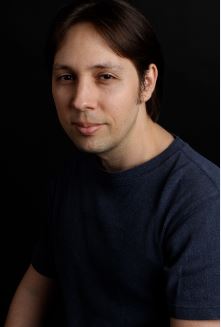
 We have talked to David J. Peterson best known for creating the Dothraki and Valyrian languages for the HBO series Game of Thrones.
Q: Have you always been fascinated by languages?
No, actually. I grew up speaking English with Spanish as a family language, and because I wasn’t picking it up as well as I was English, I rejected it for many years, and never had any interest in any other languages. It wasn’t until late in high school that I suddenly caught the bug and decided I wanted to learn every language on the planet. I’d started studying four or five by the time I started creating languages (i.e. conlanging).
Q: How did you end up with this job?
David Benioff and Dan Weiss contacted the Language Creation Society (LCS), and the LCS put together an application that took the form of a competition. I applied along with many others, and after two rounds of judging, I was the last one standing. It was the first competitive process ever utilized for a created language; all the other jobs were just handed out.
Q: Has it been a dream come through working with a big TV production like Game of Thrones?
There are pros and cons, but the pros outweigh the cons. One of the major cons, though, is that I’m on deadlines. When you’re creating a language for yourself, you have all the time in the world to perfect and ensure that every lexeme does exactly what you want it to. Since TV shows have deadlines, sometimes whatever I’m working on simply has to be finished. I’ve learned a lot about time management vis-à-vis conlanging since I started working on Game of Thrones.
Q: How was the process of taking what is in the books and developing that into real spoken languages?
It wasn’t too bad, since there wasn’t as much material in the books as there is in other series. Furthermore, what was there seemed to me to hang together fairly well and producing a coherent system wasn’t as difficult as it might have been. If anything, the existing material limited the options I had to choose from when it came to constructing a grammar (i.e. Dothraki could have been a lot wilder had there only been names and no language bits in the books). That wasn’t a bad thing, though, as I think both Dothraki and Valyrian ended up looking a lot more familiar to speakers of Western languages than I might have made them otherwise.
Q; Have you used any past experiences with creating languages as well as existing languages in the process of creating these new ones?
The language creator I am today is an outgrowth of the language creator I was. Everything I learned about language creation I learned from other language creators—primarily from the Conlang Listserv, an e-mail-based forum for language creators. I’ve been creating my own languages since 2000 and studying the languages others have created all the while, improving my skills and growing as a language creator. Compared to Dothraki, the first language I created is a kids’ toy (usually the case for someone creating their very first language). Working with other language creators has helped advance the state of the art. As far as I’m concerned, I still measure myself by the achievement of other great language creators like John Quijada, Sylvia Sotomayor, Matt Pearson, Sally Caves, Doug Ball, Henrik Theiling, etc.
Q: When you see the final result with Daenerys Targaryen mastering your language on screen, did it end up as you envisioned?
More or less, yes. Dany’s Valyrian is outstanding. I was extraordinarily pleased with how that came off last season (season 3). Dothraki was, I think, a learning process for the entire cast—one they’ve now perfected, as evidenced by Valyrian. There were some highlights and lowlights, but overall, the actors, the writers, the crew—everyone have really embraced the languages, which is quite gratifying. They don’t treat it as an afterthought or a gimmick: they’ve really taken the whole linguistic aspect to the show quite serious, and elevates the quality of the show as a whole, I think.
Q: It seems like Dothraki already starts to take on a life of its own outside the series, how do you feel about that?
It’s always nice to have people recognize and appreciate the work you’ve done. If anything, I can’t keep up; some people’s fluency is outstripping my own. It’s one thing to create a language; quite another to learn it to fluency. I need to take time to study.
Q: Were you a fan of the Game of Thrones books before you got involved in the project?
I hadn’t read the books beforehand. I’m all caught up now, though.
Q: Have you interacted with George R.R. Martin in this process?
No, George R. R. Martin is now probably one of the busiest people on the planet. I think he appreciates the work I’ve put in, but he has no time to work with me on anything.
Q: What other projects are you working on?
I just finished translating material for season 4 of Game of Thrones, and am just gearing up for a long summer working Defiance, which is preparing to start shooting its second season. I’ve also signed on to create a language and do translations for the show Star-Crossed on the CW, which is just getting started on its first season.




Amazing work, Mr. Peterson. It is appreciated.