 Welcome to SFFWorld, many thanks for giving us some time here. In your own words, who is Simon Kurt Unsworth?
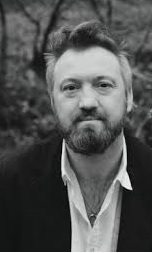
Thanks for inviting me in! As for this question…hmmm. Difficult one, because who we are changes depending on our circumstances, doesn’t it? And we’re different people regularly, sometimes from day to day. We’re all one person at work and another at home, one person with their parents and another with their children, aren’t we? Still, I’ll give it a go… Some days, Simon Kurt Unsworth is a tall, bearded horror writer. Other days, he’s a tall, bearded husband and father. Sometimes he’s a son, sometimes an employee. Most days, he’s an uneven mix of all these things and more. In the main, he’s a man living in a place he loves with people he loves, and this makes him happy.
 For those not familiar with your Thomas Fool series, can you tell us a bit about it?
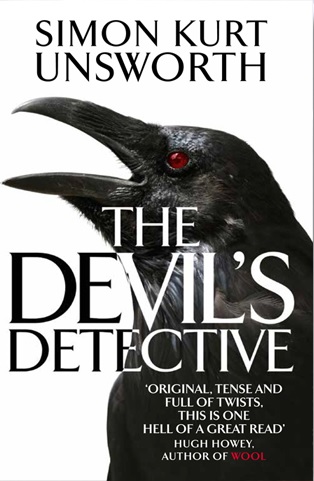
Thomas Fool is an Information Man (a kind of policeman) in a very idiosyncratic version of Hell, which is no longer a place of burning lakes of oil and tortures, but now functions like a society teetering on the brink of collapse (think the New York of 1970s giallo movies, or from Carpenter’s Escape From New York, add demons to the mix and you’re partway there). As the first book starts he’s almost entirely unsuccessful at his job but is asked to investigate a series of murders that are brutal even by Hell’s standard,s whilst also carrying out a set of essentially ceremonial tasks for the Bureaucracy that runs Hell. By the second novel, Fool is commander of the Information Office, getting better at his job but still in Hell, when he’s sent to Heaven on what’s ostensibly a trade mission but becomes something much odder and terrifying as the days pass. The books are violent, dark and bitter and full of the most grotesque demons I could find in all my research. There’s demonic sex, physical and verbal abuse, dead bodies being made to talk, a man turning into a thing of plants and flowers, ghosts, riots, wars and angels being altogether too nice. I think they’re a fun read.
How did you get the idea for this series in the first place? What inspired the Thomas Fool character?
The idea for the first book has been in my head for over twenty years. I was sitting in an ex-girlfriend’s flat, bored and staring out of the window, when I had a sudden image of a train, on fire, rumbling along the street with its windows full of screaming faces and I just knew that the train was in Hell, and that there had been a murder and an unnamed policeman was being made to investigate. At about the same time I saw one of those TV news items where they make little dramatisations, this one about a ghost that apparently haunts Muncaster Castle called Tom Fool. In his earthly life, he was a court jester (he gave us the word ‘tomfoolery’, fact fans!) who was suspected of murder, and his ghost is said to play mean little tricks on people, and suddenly (for no reason that I could readily discern), my policeman had a name, and the rest of it played out from there.
In terms of his character, I wrote Thomas to represent how I suspect I’d be in a situation in which I have no power and no security. He’s my version of an everyman hero, or antihero, one who hopefully grows and develops through both books. His bafflement and fear are mine and, I hope, everyone else’s.
Your version of Hell is not the traditional view. There is structure, it’s a place that’s evolving and it has bureaucrats. How did you go about creating your version of Hell?
This is going to be really irritating and sound very ‘look at me, aren’t I a great author!’, but it pretty much appeared fully-formed in my head when I started to have the idea about a crime story set in Hell. I’d always thought that the most frightening thing would be to live somewhere with no security, where every day was a day of danger and frustration but where there was just a sliver of hope that things might improve, that today might be the day that you catch a lucky break, so that became my Hell. I wanted to present a society run for the benefit of the few at the expense of the many, in which the many were ground down and battered and mostly beaten but still had ways of escape, even if those ways were random and almost unattainable. When I wrote the book, I fleshed it out by adding in all the tiny annoyances and irritations that bug me daily and then I just magnified them to make them more hellish.
In The Devil’s Evidence, the second book in the series Thomas Fool finds himself involved in solving crimes in Heaven. Why did you want to explore this part of your universe and what new goals did you set yourself with the second book?
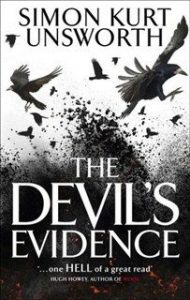 In part it was purely practical – another book set solely in Hell would have felt like repetition and I don’t like to cover the same ground twice, so I felt I had to move Fool and his colleagues somewhere new. Hell itself has changed, of course, and presents new challenges for its inhabitants but the addition of Heaven was the next logical step because it’s the flipside of where Fool and the others are. Heaven itself was fun to create, because I started to think about how Heaven is represented and the possible tensions between what ‘heaven’ means for the dead humans and what it might mean for the other inhabitants, the angels and other non-human beings. I kept thinking of Monty Python’s Heaven (from The Meaning of Life, with Graham Chapman’s magnificent lounge singer serenading diners with lists of good films on TV and other heavenly delights) and thinking that it might end up being oppressive living somewhere like that, where having fun and enjoying yourself was almost a rule. From there it was a simple step to wonder how corrupt worms might infiltrate the most perfect of places and again, to wonder how various groups might react to those worms, and to then put Fool in the middle of it all and watch things burn…
What are your future plans for the series?
Well, I know exactly how it ends and I know happens to Fool and how he gets there! In truth, I’m not sure how many times I’ll want to write about Fool because there’s a point at which it risks becoming a repeating story simply set in different places which I think would bore both me and the readers, but in theory I can send him anywhere and to any mythology or afterlife via the Flame Gardens so if I can think of original or at least unusual things for him to do I can keep writing about him. I do have an idea about him sailing the seas of limbo in search of pirate demons, and some thoughts about how he might get involved in the hunt for a monk with a very bad attitude, but past that I’ve not got any specific plans for him as yet. Watch this space…
How did you start writing, have you always wanted to be a writer?
I started at school as part of English classes, which is a similar story for most writers I suspect. The first time I wrote anything that obtained a good response was when I was 13 and I wrote a terrible Stephen King rip-off haunted house story called ‘The Twisted Cross’ which the teacher (the eminently good judge of talent Mr Pearsall, who always wore pink ties) liked and gave a good mark to. Next, I wrote a rip off of the film Alligator (and the book Croc) without actually including an alligator of crocodile, which he also liked (although did warn me that he’d seen the film too, and not to push it with the next thing I wrote for his class) and from there I was off. Writing, I found, was free, got me good marks and it was fun.
I’ve imagined being published ever since Mr Pearsall’s first positive feedback, and it was with me every day even when I wasn’t writing (for a number of years I wrote then stoped then wrote then stopped, always blaming ‘life’ for getting in the way). I wrote, in very large black letters, “GET PUBLISHED” on a wall as a new year’s resolution on the last day of 1999, but it wasn’t until around 2001 that I started to write seriously (and by seriously, I mean every day, and then showing the stuff I’d written to people who would give me honest, critically useful feedback) and sending things out for consideration. It took a while, but I made it in the end.
What books inspired your career as an author, and what authors do you enjoy now?
Ah, this is about four or five questions in one! The problem with answering it is that I’m not simply influenced by books (I don’t imagine anyone is, not exclusively), but by books and stories and films and 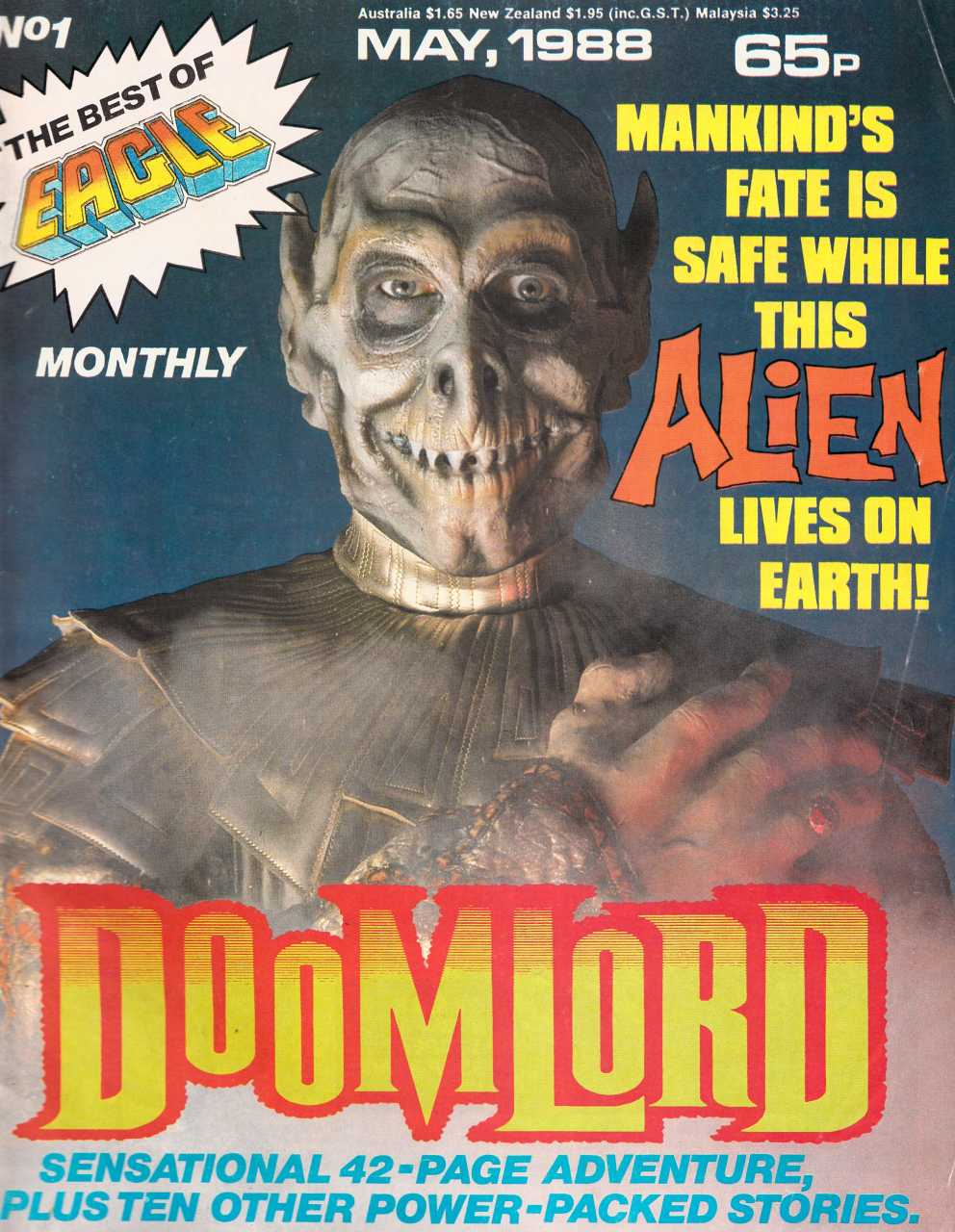 music and TV and the theatre and the things I see I around me and the people I meet and the things I read in the paper and just about every other thing in my life. It also requires me to differentiate between the things I merely like and the things that I can trace a direct line from to a piece of my own work (usually in the sense of thinking “Ah, this story is an attempt to emulate/rip off this earlier thing!”). But, seeing as you’re asking me, I suppose it breaks down like this:
Historical written influences (horror): M R James, Stephen King (obviously), TED Klein, Junji Ito, Alan Moore, Michael Slade, Usborne book’s Mysteries of the Unknown Ghosts Monsters and UFOs (no, it has no punctuation on the cover, it’s not me getting it wrong), Nigel Kneale and Doomlord.
Historical written influences (non-horror): Spike Milligan, J G Ballard, Raymond Chandler and Willard Price.
Historical influences (other media): early John Carpenter, on-form Stephen Spielberg, Mike Harding (both for the comedy and the folk music), Bill Hicks, The X Files, The Mighty Boosh, Monkey (whose nature, you may remember, was irrepressible), The Young Ones, Misfits, True Detective and Sapphire and Steel.
Influences (non-specific): Folk music, my son Ben (he gives me story ideas all the time), landscapes, sleepless nights, my wife Rosie (she keeps me sane), drinking beer in hot baths and swimming in the sea.
Current influences/things I’m enjoying that I might try to emulate/rip-off in the future: Grady Hendrix (both Horrorstor and My Best Friend’s Exorcism are great examples of what you can do with a story when you let it grow in unexpected directions and are visual treats), Stephen Volk, Kim Newman’s Anno Dracula series, Christopher Fowler’s Bryant and May books, and Matt Berry’s music.
Ask me this question next week and my answer’ll certainly change; that’s the nature of influences, I think.
What’s next? Do you have more new and exciting projects you’re working on?
Well, apart from the various Fool ideas I’m toying with, I have a new collection of short stories out from Black Shuck Books, Diseases of the Teeth, later this year which I’m very proud of, and I’m hoping to edit an anthology of new horror fiction some time in the next year or so. My first collection, Lost Places, is being re-released at some point soon as well, and I may try and find a home for my portmanteau ghost story collection, Quiet Houses. I’ve just started a new novel, tentatively called Blissland, but I don’t know what, if anything, that’ll lead to and I’m intending to get back to writing and finishing a film script I started a long time ago with my friend, the actor Ian Brooker (who was in the quite marvelous film The Casebook of Eddie Brewer, which you should all go and buy now). Plus, I’ve got kids to raise and a wife to love, so I’ll be busy for a few years yet I think.
* * * * * * *
Interview by Dag Rambraut – SFFWorld.com © 2016