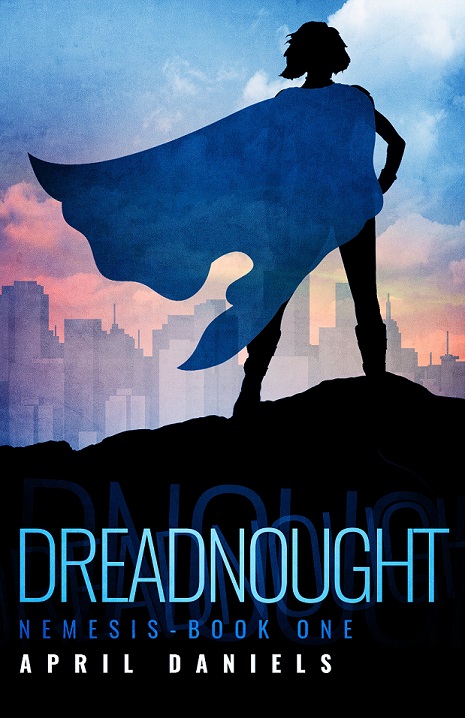
Reading Dreadnought then learning a bit about you, leads me to realize “ordinary” is the last possible word one could use to describe you, in all the best ways. What’s the “back cover” version of April Daniels?
I have no idea what “back cover” means in this context. An adolescence of growing up in Los Angeles, with its notoriously seedy free “newspapers” and the ads featured on their back pages makes me think you’re asking something horribly invasive. Let’s presume that’s a misunderstanding and take a stab at something more family friendly:
My childhood is almost perfectly split in half. Until I was 10, I lived in Ashland, Oregon. If you’ve heard of that town, it’s probably because of the annual Shakespeare festival. I got to watch Geordi LaForge step out of my TV and do a play with words I could barely understand. We lived close to this beautiful old library, and so even at the age of six or seven, I was heading down there on my own quite a lot to read and pick up something to take home. Lithia Park was there, too, and me and my friends had a lot of fun running around and exploring. It was a disgustingly idyllic place to grow up, and I wish I could have stayed.
But my mother got sick and we lost everything and had to move in with my grandmother down in Los Angeles. Los Angeles is a terrible place. Do not go there. The back half of my childhood was a grim experience, and as soon as I could I left SoCal and have since only returned to periodically visit family members and friends still down there. Currently I live in Portland, which yes, really does have things like train conductors with waxed mustaches and entire city blocks made up of food carts.
With Dreadnought, you waste little time getting to the point of the story: Danny Tozier is struggling with her gender identity, she is bestowed the mantle of a great superhero, gets all she wished for and her world goes to shit. Some novels will lull the reader into the various issues the protagonist will encounter, why throw them all the major issues right up front?
Your goal on page 1 is to get the reader to want to reach page 5. By the end of page 5, they should want to finish the chapter, and by the end of the chapter they should want to buy the book. That’s why. That’s literally the only reason why the book is so heavily front-loaded. When you’re writing novels in a world with the Internet, video games, movies, and more, all of which are competing for your reader’s attention and are far more flashy and visually arresting than words on a page, you cannot screw around. You don’t have time. This is especially true for YA readers, many of whom are still in school, which means they are constantly being bombarded by new information. They want to know what the book is about right away, and it’s just good customer service to let them see you won’t waste their time getting to the parts where things happen.
Superhero fiction is growing subset of (prose) Speculative Fiction. It has been here a while if not as popular as say, Space Opera or Epic Fantasy. However, with George R. R. Martin now a Name Brand and the “rediscovery” of his Wild Cards novels, Brandon Sanderson’s popular Reckoners novels, to name just a few, the market seems to be ready for more superhero fiction. It seems the timing is just about perfect for your novel as that trend is growing in popularity as is the awareness and growing desire for non-cis/binary protagonist. How do you see these two things converging?
Hopefully by making me a lot of money. I am optimistic, but it definitely does feel like being an underdog. I had one agent turn the manuscript down explicitly because the superhero angle was hard to sell, and now about three years later it seems like maybe the worm has turned, but maybe not. Superheroes have always been the little genre that could, but for some reason didn’t. We will see if things are different this time around.
You’ve subverted quite a few superhero tropes with this novel, one of which is the idea of legacy heroes. Sure, Dick Grayson took over for Batman for a while but Bruce Wayne returned. Anybody who thought that Ben Reilly was going to be Spider-Man for more than a couple of years was fooling themselves. But Danny*IS* Dreadnought, she’s not handing back the mantle to her predecessor. Was that a trope you were trying to smash, or was it just a natural outcome of what your other storytelling intentions were?
That came out of a few things. First, I wanted it to be clear that death is permanent in this universe. Obviously, those of us writing prose superhero stories have a big debt we owe to Marvel and DC, but those companies have cheapened death in their own stories to the point where even the old saying “nobody stays dead except Bucky, Jason Todd, and Uncle Ben” has been obsolete for years. Death is basically a joke in mainstream comics now.
So the easiest way to make it clear that I was breaking from that tradition was to have a whole bunch of dead Dreadnoughts in the background. Danny is going into a high-risk business, and there’s no ambiguity about that. The first time we see a superhero, he’s been mortally wounded and dies a few moments later.
Second, kids getting into superheroes these days are probably using the glut of superhero movies as their entry point. Much how in the 90s, my gateway to heroes was the excellent DC Animated Universe, most of today’s teenagers probably got on board with one of the Marvel movies. But then when they go to read the comics, they discover that there’s so many differences, and a huge, impenetrable backstory, and that for every major hero, multiple people have fought under that name. For me, that was a really frustrating experience. Imagine being 10 years old and wanting to get into Spider-Man comics only to open one up and find the Clone Saga inside. Yeah. That actually happened to me. I didn’t connect with comics when I was young because I was being given really mixed signals about who was important in the world.
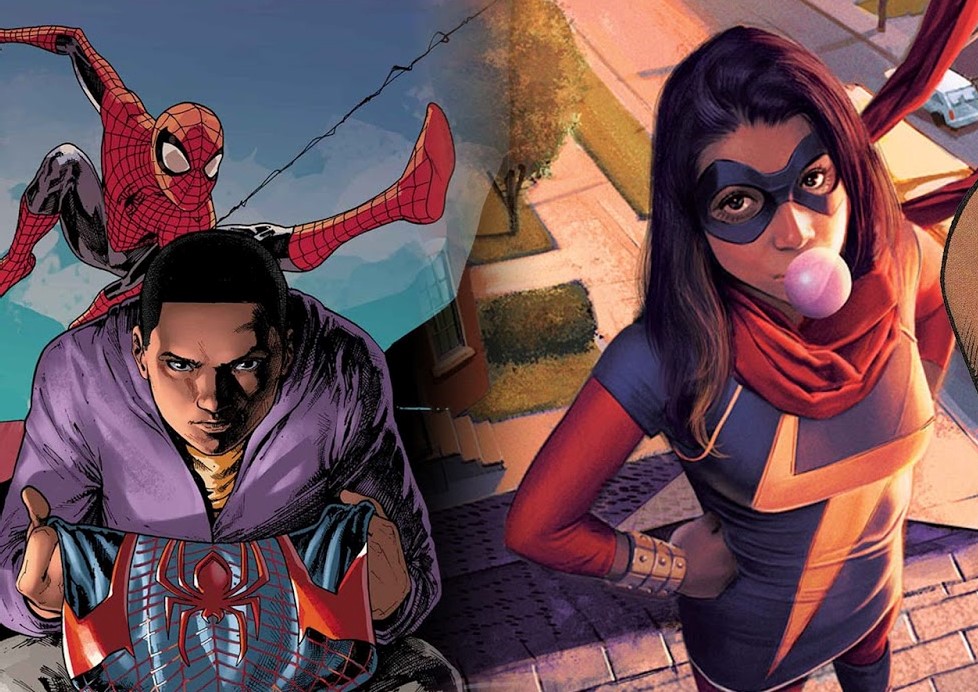 Things are a little different now, and it seems like characters such as Miles Morales and Kamala Khan are really making their mark and being given their due, but there’s always the chance that a new editor will come in and “shake things up” by restoring the old characters to prominence. As a consequence, the new comic heroes that kids are growing up reading today have this sword of Damocles hanging over them. Even if that wasn’t true, the simple fact of being a legacy hero sends a subtle message that the stories today will never be as important as the stories yesterday. I think young readers are very comfortable with the idea of legacy heroes, it makes a lot of sense to them, and the idea of legacies helps create a sense of depth and history. There’s great reasons to have them. But it’s still frustrating as hell to be constantly reminded that “your” hero is following a pattern set down by an older (and probably whiter, straighter, and male) character who might come swooping back at any time to steal the spotlight.
So I made sure that Danielle is a legacy hero who won’t be overshadowed by her predecessors, because he’s DEAD.
How closely does the Danny Tozer you originally envisioned match the Danny Tozer who made it to the final draft readers can meet on January 24, 2017?
They’re pretty close, I think. To be honest, I didn’t have a super clear idea who she was when I sat down to write, except that I wanted her to be fairly optimistic and excited to be a superhero. She ended up being saddled with a lot more family problems than I had initially anticipated, so she’s sort of got to work for her optimism, but that gives her a dogged pluck that really works well I think.
 What was the most difficult story element for you to polish off and what came the easiest?
A character named Graywytch, hands down, was the trickiest part of the book to get right. It’s not too much of a spoiler to tell you she’s an anti-trans bigot, and in her first incarnation she spoke almost entirely in actual TERF quotes. These were real things that real people had said.
Nobody believed that anyone would say these things. They were that hateful and vile. It took three or four revisions to polish her down to something readers would accept, and judging by early reviews, some readers still find her difficult to believe. But listen: people like that exist. They really do.
The easiest, I think would be the villain’s plot, which to be honest, I hadn’t described in more detail than “And then Utopia does something something something which provokes the final battle.” Somehow, I never ended up painting myself into a corner even though I didn’t understand what Utopia wanted to do until I was more than halfway done with the first draft.
Writers often put at least a portion of themselves into the characters and stories they create. How much of April is in Danny?
Danielle has a real hard time growing up, as did I. My struggles were not with an abusive home life, but instead a lot of abuse at school that started after we moved down to LA. We call it bullying because that helps us minimize it and pretend it’s not important, but it was abuse. It was really cruel, deliberate, and protracted abuse that the school ignored because there’s no liability risk involved as long as the kids aren’t throwing punches. If two kids went to fists at my school, the administration would land on them like the wrath of God. But short of that, they didn’t care. I ended up cutting a lot of school. In one year I have 48 unexcused absences, and it probably saved my life. (I strongly encourage kids who don’t feel safe at school to cut class and go to the public library instead. Look for homeschooling resources to see if you can teach yourself what you need to learn to test out of high school early. It’s your life. Fight for it.) The period between 1996 and 2000 was a bad time, and it really shaped me in a lot of ways.
So a lot of her social dynamic and her way of seeing the world as a series of threats to be managed and precautions to take came out of my own experiences. The way she swings wildly between invincible confidence and hesitant vulnerability is straight out of my own realization that, because I was always on the outside looking in, I could do my own thing and never have to worry what people thought about it. On the other hand, I was still on the outside looking in. Her willingness to completely abandon relationships once they turn sour is another thing I had to learn the hard way.
I dunno, I feel like it’s hard to get a more cogent answer out to this question, because is such a tangled mess of unresolved problems for me. I can say that I made a distinct effort to make Danielle her own person. She’s got interests that bore me and desires I don’t share and is far more comfortable with defying authority than I was at that age. Also, she can fly.

(http://msaprildaniels.tumblr.com/)
Perhaps the obvious question for with regard to a prose story about superheroes would relate to translating that character to graphic form. What artist would be the “dream” artist for a Dreadnought comic and which comic book character would you like Danny to meet in the four-color pages?
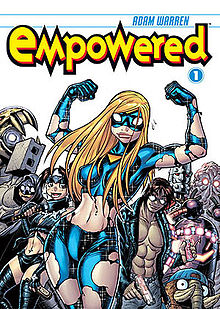 I’m a little embarrassed to say that I don’t follow comic artists very closely. Adam Warren and Stephen Sejic are the only two whose work I can identify on sight, and I think that’s got a lot to do with them both also being their own writers much of the time—and it’s writers who I pay attention to.
I guess if I was going to have Danny run into an established comic character, I’d want her to chat with Warren’s Empowered. Empowered, the series, was a huge influence on the early character sketches of Dreadnought and the world she lives in, and I toyed with the idea of giving Emp a vague, brief cameo in the sequel. Or, rather, I wanted to include the version of her who breaks the fourth wall during chapter breaks: Danny was going to go to a superhero convention and see a blonde woman in a blue bodysuit staring off into nowhere talking to herself, and would ask who she was, only to be told that the woman was “Metaphysical Emp” and she was best left alone. I ended up cutting the joke because it introduced a lot of distracting questions and only a minority of my readers would get it anyhow.
Similarly, which superhero would you like to see Danny team up with, where they obviously would punch each other for a bit before realizing they have a shared enemy?
I don’t like that trope. It implies that superheroes punch first and ask questions later, which isn’t very heroic. I envision superheroes as following an idealized version of the escalation of force ladder that police are supposed to use. The first step in that ladder is usually a friendly chat. Obviously, many cops fall short of that ideal, but that’s the standard by which I judge the moral worth of the different heroes that I put in my books. Do they make reasonable attempts to defuse a situation before resorting to violence? Having chosen violence, or having accepted that violence has been trust upon them, do they ensure that their attacks are proportional to the threat they face? Someone who would mistake another hero for a villain and just go in swinging would probably not have good answers for these of these two questions.
The moral appropriateness of the use of force is always at the front of my mind when I’m writing an action scene, and Danny herself has an innate sense of fairness that makes these principles second nature to her. If another “hero” started attacking her over a misunderstanding, she would have such a low opinion of that person that she would probably refuse to work with them, citing their incredibly poor judgment and low moral standards. She would probably go to their licensing board and try to get their license yanked. (Yes, there are superhero licensing boards in this world. They’re not a big deal in the first book, but make a larger appearance in the second.)
Violence is dangerous. The haphazard application of violence is immoral. Danielle is not perfect and makes errors, but if there is any moral core to these stories it is this theme of showing respect for violence of all sorts. The two-heroes-fight-and-then-join-forces thing doesn’t really work in a world where death is permanent and serious injuries often leave people with lifelong disabilities.
Anything else you’d like to share with SFFWorld’s readers?
Please buy this book. I need the money.
You all should buy this book, it is great.