
Here’s our now traditional Review of the Year, pointing out what we liked most. In Part 3, its:
Science Fiction Books
(Part 1 looked at Fantasy Books, Part 2 looked at Horror Books, Part 4 will look at Film and TV.)
————————————————————
Mark Chitty: Generation Ship by Michael Mammay

Mammay’s Generation Ship is one of those novels that comes along with a familiar concept at its heart yet delivers so much more than expected. Looking at the tail-end of a long voyage to a new home and the discovery that the planet they are heading for seems to be ticking all the required boxes, tensions begin to rise on board the Voyager as factions form with their own views of how to proceed. Mammay just nails the characters, the setting, the science fiction of it all. I couldn’t stop reading this and it was hands-down the best SF I read this year. Great stuff.

Starter Villain by John Scalzi
I can almost always rely on John Scalzi to deliver a fun, quick, and interesting read that will bring the humour along with the ideas. Starter Villain is no different, and from the first time I met Charlie I just knew I was going to enjoy his ride. Scalzi can make anything entertaining and fun to read, but the idea of taking someone like Charlie, struggling to get by, and drop him into this world of villains and smart cats just makes for a good time.

Critical Mass by Daniel Suarez
In this sequel to Delta-V, Daniel Suarez once again shows how adept he is at creating a believable hard SF story while also making it a great page-turning read. With humanity now moving into space more permanently, and the fallout from these events hitting the returned crew of billionaire Nathan Joyce’s asteroid mission hard, the political landscape of Earth is changing. Not only is this interesting on pretty much every level, Suarez hits the delivery across the board. Sometimes it’s slow going, but the build up and pay off are completely worth the time.

Infinity Gate by M.R. Carey
Carey’s Infinity Gate is the start of a new series, one where the Pandominion rule across thousands of worlds, but they’re all Earth across different universes. From the early moments where Hadiz discovers interdimensional travel it’s clear that this could be something good, and it does not disappoint. A change pf perspective halfway through does mix things up, giving a different viewpoint on the story, and giving us a deeper glimpse into those against the Panominion. All-in-all a solid story that has so much potential.

Moths by Jane Hennigan
Hennigan’s Moths is a trope I like, but one that often feels too familiar – an event that affects a proportion of world’s population. In Moths the culprit is that of the title, and those affected are only men who, once infected, either die or turn violent, leaving the world to adapt to this problem. With men locked up and controlled to avoid infection, the women create their own society to control this problem. But there really is more to it all, and Mary soon finds herself in a troubling position. Hennigan manages to deliver a personal story with depth in a world that feel all-too-possible, and does so very well.
Honourary Mentions:
 Antimatter Blues by Edward Ashton
Sequel to Mickey7, and good fun much like its predecessor. Expanding more on the sentient life of the planet, and the political conflicts within the colony, makes this an easy and entertaining read from start to finish.

Defiant by Brandon Sanderson
Sanderson’s conclusion to his Skyward saga nails the landing by pulling everything that has gone before into a non-stop and action-packed story. Not only this, he deals with the political and social events of the setting well, and despite being aimed at a younger audience it hits all the marks of good science fiction.

Earthside by Dennis E Taylor
Sequel to Outland, and taking a deeper look at the settlers and colony in Rivendell, though it does tread some similar ground to Outland. Interesting and enjoyable, and sets up possible further books in this setting well.

Brute Force by Scott Meyer
Can you say Stab!? Because that is one of the more prominent words in this tongue-in-cheek novel from Scott Meyer. A well used concept that is given the traditional Meyer twist, and with laugh-out-loud moments and genuine interesting ideas.
Mark Yon: Here’s something I’ve only just realised – for the past few years, I’ve read and enjoyed more SF than Fantasy or Horror. This year, I’m surprised to realise that I’ve not read anything like as much SF as Fantasy or Horror, and most of what I’ve read has not been outstanding. I’ve actually enjoyed ‘old’ SF more than the ‘new stuff’, although there has been some surprises, admittedly, and some old favourite authors too.
With that in mind, I’d unreservedly recommend:
This may be my favourite traditional-SF of the year. A story of multiverses and strange creatures, making a heroine of a sentient rabbit-like creature! I was impressed by the story’s ambition, if only a little disappointed by the sudden cliffhanger ending. The second book (Echo of Worlds) is due in June next year. I said that “It takes some nerve to combine multiple universes with artificial intelligence, interdimensional warfare and sentient rabbits, a mix that reads quite bizarrely when you write it in text. There’s a lot of plates spinning here. But it is to Mike’s credit that it works. Bold, imaginative, and downright exciting – Infinity Gate is a barnstormer of a Space Opera – but with a cliffhanger ending that will make you want the next book NOW. I think that it is up there with Artifact Space as one of my favourite SF novels of recent years.”

The Mountain in the Sea by Ray Nayler
The inclusion of this one may be a little confusing as it came out in October 2022 in the US, but didn’t get to us in the UK until January 2023, so I’ve included it here. An SF book for scientists. This one has it all – heavy science, intense philosophising and above all an understanding that alien intelligence may not be as far away as we think. I can’t help thinking that Arthur C Clarke would have loved it. I said that “For its thoughtful depth, its dealing with big ideas such as the manner and matter of intelligence and communication and its education about the oceans, it is very, very good. This one reminded me not only of Arthur C Clarke’s work – the role of Tibetans in this story is up there with The Fountains of Paradise – but also the depth of Ted Chiang’s work in its ruminations on what is intelligence and our ability to communicate. Another one I can see in the award nominees this year.” And indeed, since writing that it has been a Nebula Award nominee and a winner of the Locus Magazine Award for Best First Novel, 2023.
I’ve reviewed over 50 books this year, and there’s been a few that I’ve really liked, whilst others I have been less complimentary about. Nevertheless, there’s some books that I’d recommend, but readily admit are not for everyone:
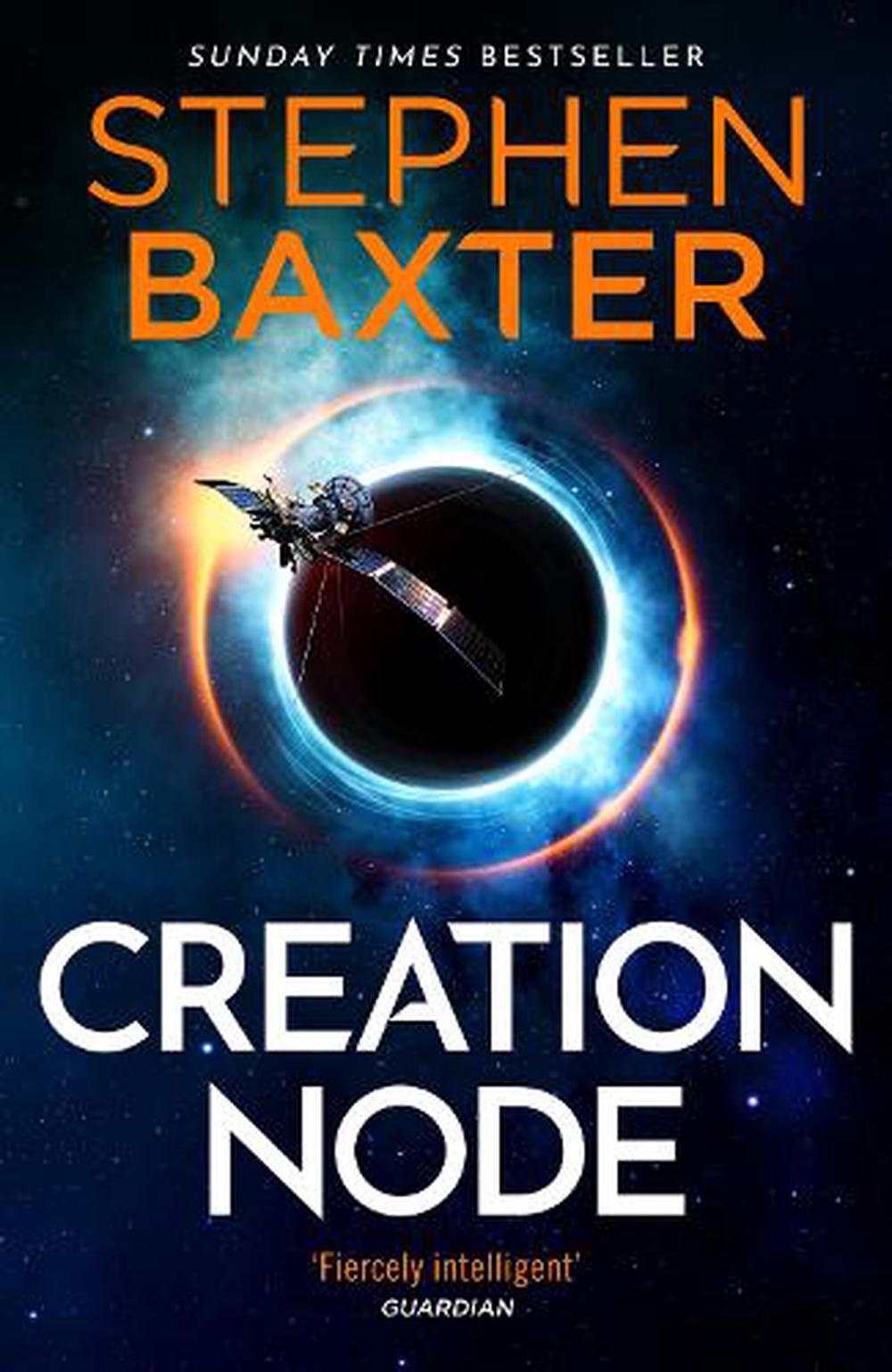
Creation Node by Stephen Baxter
Another year, another Baxter! This one dealt with alien first contact and more BIG ideas. It wasn’t entirely successful for me, but I said that “ I appreciated the hugeness of it all, which kept me thinking long after I’d finished the book. I can’t say that Stephen skimps on the big science-fictional ideas… Regular fans of his work may love it.”

This one starts so well. Justin can clearly write! I think that your enjoyment of it depends on how much you can buy into the twist towards the end. Regular SF readers tend to groan, non-regular readers, to whom such an idea is new, are less critical. That being said, there’s a lot here to like. I said that “I can see that this is a book where you don’t need to worry about the destination, but can enjoy the journey. And don’t get me wrong, The Ferryman shows a writer of obvious skill who can write in depth, adding great details and nuances of character. There’s more than enough to keep a reader entertained, even if you are unsure of that ending.”
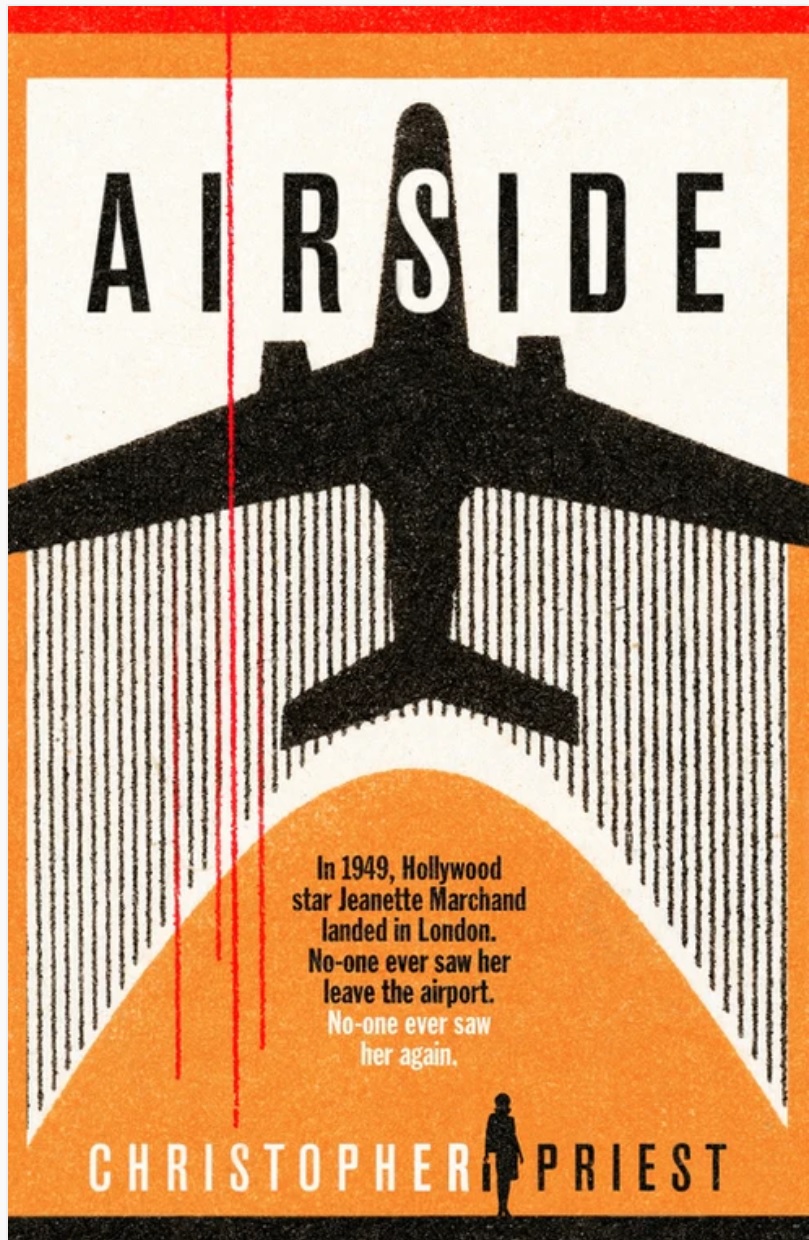
It has been noticed that I’m a fan of Christopher’s twisty-turny “is this real?” narratives. This one definitely goes where I wasn’t expecting. It may make you think of airports in a new light. One for the J G Ballard fans, I think. I said that “Like most of Priest’s books, this is one that may sit in the brain for a while after reading, raising thoughts and ideas that the reader will keep coming back to. In that respect, it is another success.”

And a big shout out to Jodi Taylor, whose St. Mary’s books are still a welcome read every time I pick one up. SF for non-SF readers.




Don’t usually read SF novels but have ordered Infinity Gate and Airside from the library.See if they can lure me away from my beloved anthologies!
Thank you for letting us know, Patricia! Hope they work for you as they did us!