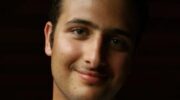
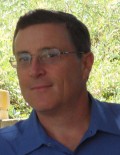
 Douglas E. Richards is the New York Times and USA Today bestselling author of WIRED, its sequel, AMPED, THE CURE (available now for pre-ordering) and six middle-grade adventures enjoyed by kids and adults alike.
Can you tell us a bit about Wired and Amped and what inspired you to write this story?
I’ve written numerous science pieces for National Geographic KIDS magazine. A few years ago, my editor there asked me to do a story on the human brain. As I prepared the article, I was struck by just how amazing the brain really is, far surpassing even the best supercomputers. While it may seem like computers are better, this is only because our brains aren’t wired to perform tasks that computers do. For tasks like facial recognition, processing the endless high-def data coming from our senses, catching a baseball, and so on, the brain rules. Autistic savants, who can memorize entire phonebooks, or find square roots of any number instantly, provide a window into the raw power of the human mind. So I wondered, what if you could optimize the brain to achieve savant-like capabilities in all areas of thought and creativity? This line of thought led directly to Wired.
When you write stories like this I imagine it is hard to keep the logic bulletproof, how do you plan your writing to accomplish this?
I just start with a broad premise and then perfect it along the way, making sure the logic is as sound as I can make it (which usually entails pulling out fistfuls of hair as I try to figure everything out).
Tell us a bit about The Prometheus Project Series?
The Prometheus Project series is about an ultra-secret team of scientists exploring the greatest discovery ever made: an abandoned alien city, filled with advanced science and technology. When a brother/sister pair learn about this project, they become members of the team, and of course save the day in every installment.
This one is more for the young readers. Is the response you get very different from the more adult books you’ve written?
Yes. But I’ve been surprised (and delighted) that the vast majority of adults who read these books really seem to love them as well.
Can you give us a sneak peek into your upcoming book, The Cure?
The Cure is coming out September 17 from Tor/Forge (but is available now for pre-ordering). Tor/Forge is the perfect publisher for this book, because the novel is a mainstream thriller that also tackles major science-fictional themes (and Tor is a giant in the SF realm). The Cure explores the ramifications of startling new research showing the brains of psychopaths differ from those of normals, partially accounting for their total lack of conscience and empathy, and suggesting a genetic contribution to a disorder responsible for untold atrocities throughout history. Anyone who has interest can find the synopsis on Amazon or B&N, and they can find an excerpt of the first few chapters at Tor.com. (note: while this excerpt has considerable information about psychopaths and the science of psychopathy, the science fiction part doesn’t get rolling until about a fourth of the way into the book).
You have written both for children and adults, which do you find most challenging?
Definitely children. When writing for adults, I can totally let myself go with respect to vocabulary, sentence complexity, and plot sophistication.
How do you market your books?
I really don’t. I’m very much a Cinderella story. I was a biotechnology executive, and I left the field to pursue my dream of writing. While the kids books I wrote received considerable critical acclaim (including a glowing review in Asimov’s Science Fiction magazine), as an Indie author, it was nearly impossible for me to get them into bookstores where they needed to be to reach kids. Despite this, I sold tens of thousands of them—but never enough so that I could really make a living. As a last ditch effort, I wrote Wired in 2009. While there was very strong interest in the book from Simon & Schuster and others, they ultimately all passed. So finally, after many years, I gave up on my dream and was forced to return to biotech.
But in 2011, I began to notice the rise of eBooks. So I decided to dust off the Wired manuscript and put it online, hoping for ten or twenty readers. It went viral almost immediately. It was crazy. Amazing. For several months Wired was selling well over two thousand copies a day. The book went on to spend five weeks on both the New York Times and USA Today bestseller lists, and ended the year as the top selling novel on Amazon in two major categories: science fiction and technothrillers. We’ve all seen things go viral, but when it’s happening to you it’s mind-blowing, especially when it happens after you’ve lost all hope. I felt like the luckiest person in the world, and still do. Needless to say, I decided giving up on my dream may have been a bit hasty.
You recently gave away Wired for free on Amazon. What’s your thought on this type of promotions?
There is no question in my mind that word of mouth was entirely responsible for the success of Wired. The only thing I did to promote the book was give it away as often as I could. My thinking was, since my name was Douglas E. Richards and not George R.R. Martin or Orson Scott Card, my only chance to break out of the pack of millions of titles available was to give copies away, and hope the recipients loved the book and told their friends about it. Since I feel I owe everything to the early readers who received the book for free, I’ve continued to do giveaways every few months, even after the book became a New York Times bestseller. Alas, Wired is now available only on Amazon, because they won’t let you do a giveaway unless you are exclusive with them. Believe it or not, I’ve given away well over a hundred thousand copies so far, which I believe has helped Wired stay among the top five paid titles in its Amazon categories after more than two years.
Do you ever write non-fiction?
Yes, in addition to National Geographic KIDS magazine, I’ve written numerous essays for the BBC, Earth & Sky, and others, most having to do with using science fiction to ignite kids’ interest in science.
What is the hardest thing about writing?
For me, it’s the plotting. It’s very important to me that my books are fast paced and action packed, but also have plenty of twists and turns and surprises. Along with this, I feel it is important to include science, ethics, philosophy, and reflections on the human condition to give readers plenty of food for thought. The plotting for me can be torture, and I’m frequently stuck for weeks at a time. The writing, on the other hand, once I finally figure out the plot, is great fun.
What are your thoughts on good/bad reviews?
Wow, after receiving thousands of reviews, I could write a book on the subject. In my own experience, no matter how many good reviews you get, bad reviews still hurt. But the truth is that you can’t appeal to everyone, and in fact, you really don’t want to try. I could read the greatest romance novel ever written, and I’m not going to like it. Doesn’t mean it isn’t great, just that romance novels aren’t my thing. Not everyone has to like your book, but those that do need to be passionate about it. In the early days, when I got a scathing review, I would go to the Amazon pages of my favorite all-time books and read some of their one-star reviews. It made me feel better to know that even works I considered masterpieces weren’t immune from this sort of criticism.
How do you define success as an author?
If you write a book and enjoy doing so, and your work makes an impact on even one other person, I believe you are a success. But since my dream was to write full time, I didn’t feel successful until I had achieved a certain level of commercial and financial success as well (since I kept failing to win the lottery J). This being said, there are many authors who’ve written brilliant novels that never find an audience, so putting out quality work isn’t enough—you have to also be very lucky. I plan to never forget how huge a roll luck has played in my writing career.
For your own reading, do you prefer ebooks or traditional paper/hard back books?
I prefer physical books. Nothing beats the feel and the reading experience of an actual book. This being said, when you go on a long trip/vacation, it’s great to be able to bring a hundred books along with you on a ten-ounce device. And if I hadn’t started reading most of my books on a Kindle, I wouldn’t be able to fit in my house by now.
What kind of books do you read, any favourite authors?
I have always loved science fiction. Since 2011, however, I mostly read non-fiction. Given the type of books I like to write, I’m always trying to cram as much information about science, ethics, behavior, philosophy, etc. into my head as a I can (not to mention reading endless books about the subject of psychopathy for The Cure).
What’s next?
Much of what I do going forward will depend on the success of The Cure. (Feel free to Friend me on Facebook at Douglas E. Richards Author for updates, by the way). Right now, I’m holding my breath until the end of the year, seeing what kind of reception I’ll get in the physical book world. I have to admit to being a little nervous, so if any of you do end up reading and enjoying the book, I’d be grateful if you’d tell a five or ten thousand of your closest friends J
No matter what, though, Tor/Forge has been amazing. They have been an absolute pleasure to work with from start to finish, and having the chance to actually meet the legendary Tom Doherty, who founded both Ace books and Tor books, and chat about the history behind the publication of such groundbreaking works as Ender’s Game, has been surreal.