JunkMonkey
Registered User
- Joined
- Jun 8, 2007
- Messages
- 2,642
Every year I say I will start a diary keeping track of all the books I read. Like I do with every film I have watched. This year I will actually do it:
January:
February
March
January:
- La Loi de Mandralor by Peter Randa Fleuve Noir n° 249 (1964)
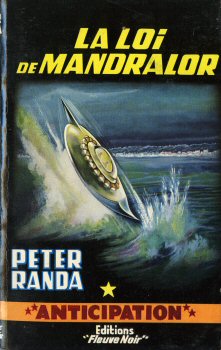
One of the drawbacks of plucking an old Fleuve Noir paperback from the shelves, and then just diving in, is that sometimes you find yourself two chapters into a sequel before you realise it IS a sequel. Earlier books in this imprint don't have blurbs either on the back or in the front matter. The back cover will more often than not just be an advert for a different book or series, and that's it. The only clue you have as to what to expect inside the pages comes from the front cover art which, as anyone who knows even the slightest thing about pulp cover art's relationship with the book's contents knows is a pretty pointless way of trying to judge anything. La Loi de Mandralor it very quickly became clear is a sequel - not that I have the first book on my shelves.
In the first book, from what I could gather from some helpful flashbacks and characters needlessly telling each other stuff that they already knew about, our narrator is from the planet Mandralor whose society was prone to sending out explorers in suspended animation in extremely well equipped interstellar craft. When the ship found an inhabited planet the explorer was woken up and explored, while the ship auto-destructed and left the explorer alone to follow 'The Law of Mandralor' of the title, which forbade interference with the planet's development. Quite what the 'Elders of Mandralor' (or indeed anyone!) got out of this one way Prime Directive type setup escaped me. Maybe it was better explained in the first book... or maybe I just missed something.
Interestingly this Prime Directive type idea comes in a book from 1962 , five or so years before it was first mentioned in a season one episode of Star Trek. Not that I am in any way saying Roddenberry lifted the idea from what would have been, to him, a (very) obscure foreign language SF book but it is heartening to see that French pulp SF authors weren't just churning out rehashed 'cowboys in space' plots but were (maybe) coming up with some ideas of their own.
For whatever reasons (but mostly because he's the hero of an SF book and that's what heroes of SF books do) in the previous book our narrator hero questioned this weird rule and had set out alone pursued by another couple of less questioning of the status quo classmates. Together they encountered a gelatinous THING (it's called that in the original " La CHOSE qui se trouvait dans les sautes...") which at some point absorbs one of the less questioning classmates (the one our hero isn't in love with), steals their ship and sets off to threaten humanity with our hero (and the girl) in hot pursuit - well - in cold pursuit because everyone is in suspended animation.
At the start of this book proper our hero (and the girl) wake up in orbit around a very Mandralor like planet which may very well be Mandralor! They have no idea how long they have been in suspended animation while their ship chased the THING around the cosmos it could be millennia later as far as they knew. The ship the THING was in is empty and it has made it down to the surface. Hero and girl go down to find they are on Earth in the middle of the 20th century. They meet cute with a girl reporter who may or may not be described as whatever the French for 'feisty' is, but is certainly up for some jolly adventures with beings from another planet. (Especially hot hunky ones like our hero.) They learn French from her via telepathy; she learns how to shoot a disintegrator pistol and off they go. But how to find the THING that has absorbed their friend and is out to gobble up the whole human race? A newspaper report about a small village in Switzerland doing a Midwich piques their interest. Of they go, find the THING which is rapidly absorbing units of the Swiss army and end up destroying the village and killing a lot of mindcontrolled people. The good guys are now International Enemy Number One and whatever is eating the Toblerone munchers is their fault. Lots of running around and gunplay later their old friend forces his way to the surface of the THING and gets in touch. He wants to become human again. He can control the THING to an extent. If they turn him human again (by launching him back into space and doing Fantastic Four Cosmic Ray science on him) he will help them destroy the THING once and for all. They launch him off. The THING isn't as dormant as everyone thought, takes over our heroes and is about to gobble up the girls when they are all saved by their friend returning from space like a carefully set up Deux Ex Machina, completely human again but with superior THING controlling mindal powers. Zap! Zap! Zap! They destroy the THING. They destroy their ship, and all get married then, in accordance with the Primo Directive try not to mess with human development too much - though they do give the occasional nudge to some interesting lines of research when they see them.
Fin
Workmanlike.
There were some obvious markers put down to set up an 'Ancient Astronauts' type sequel which never happened. - Rayons Pour Sidar by Stefan Wul GALLIMARD Folio SF n° 289 - originally FN Anticipation, n° 90 (1957)
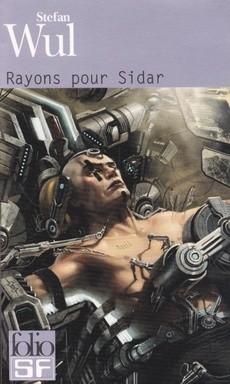
The second of Wul's eleven novels written for Fleuve Noir and the last of the eleven which I read. And what a fun little novel it is too. Utter bonkersness from start to finish.
The book takes place on a planet orbiting Proxima Centuri, the 'Sidar' of the title. The planet has been colonised by humans and the indigenous population are portrayed as the kind of happy, innocent childlike 'Natives' of early Tarzan movies. For one thing none of them seem to grasp the concept of the personal pronoun and always refer to themselves using their own name. We open with a human making his way through the dangerous jungle with a native guide. He is on his way to his isolated factory which is being run by his robot duplicate. In this society all humans get a robot companion for life made in appearance as a duplicate of themselves. He stops off at the local Colonial Officer's compound (we are really in Sanders of the River territory here - only in space). The human population is supposed to be evacuating Sidar. The planet has been ceded to the rat-like Xressians who we know are nasty because they are rat-like, and have an X in their name. Quite who has decided the Human race has to cede Sidar to the Xressians isn't made clear at all. It just has been decided. The old Colonial Officer has decided he isn't going to leave. This is his home - the happy smiling natives look up to him as a father figure etc. etc. He gives our hero a map of the area with location of the factory on it and a very plot convenient X marking the spot where his own robot companion died many years before crushed by a landslide.
Our hero's native bearers desert him and he gets trapped in a confusing maze of dried gullies when he encounters the body of one of the giant creatures that haunt the region. He is just about to back away when the body convulses and his robot double cuts its way out of the beast's belly. Or at least half of him does; the upper half. The beast had bitten him in two and the legs are nowhere to be found. Our hero drags his robot self to the nearby factory and drops him in a bath to wash out all the beast's digestive juices before they do irreparable damage. Our hero goes back outside to pick up his gear - and gets himself killed by the local natives. Three spears in the chest. Very dead. The robot manages to get out of the bath recovers the body and shoves it in the deep freeze. There is, he knows, the possibility of reviving his master if he can get him to a decent medical facility. He builds himself a wheeled crinoline-type walker and, realising that won't do across any of the terrain they will have to traverse, pulls the body of his master out of the fridge, saws it in half, and wires himself into the hero's legs.
Still not complete he decides to go back to the Colonial capitol via the plot convenient X on the map site and see if he can salvage a pair of lungs/bellows from the old robot's corpse. He wraps the hero's head in a super-efficient, solar powered thermal blanket and sets out. Nearing the X marks the spot, he comes across a native village worshipping an idol - which turns out to be the head of the old robot. The old robot is not as dead as he had been due to the natives sticking a branch in his ear and accidentally pushing two wires together and switching him back on again. Sometimes when the wind blows he dies again, then comes back to life when the wind changes. This is one of his good days.
Now encumbered with two heads to carry (one robotic, the other frozen) but after a bit of robocannibalism a working voice-box he arrives at the Colonial Officer's compound just as the Xressians arrive. They sneak into the village and because the Colonial Officer happens to have a complete medical facility in his hut our hero isn't dead any more and has his old legs back while the robots get a rebuild.
There was a point to our hero's journey. He is a brilliant physicist and had come up with one fantastically overly complex plan to save the planet. Proxima Centuri's 'E' radiation (I don't know either) reflected off the red moon and then filtered through negatively ionised Martian crystals will penetrate to Sidar's Duterium core converting the Deuterium to hydrogen. This will make the planet lighter and by also liberating a shedload of neutrinos (which will shoot out like a rocket exhaust) they should be able to push the planet out of orbit.... and if he gets the timing right they'll get it shunted right into our own Solar System... (Stop laughing! by the internal logic of this book this is one of the more sensible ideas.) But how would they get enough negatively ionised Martian crystals in one place without raising the Xressians' suspicions? I know.
"This is crazy but it just might work; why don't we pay the local natives in mirrors to harvest wild fruit for us? Mirrors made from.. "
"Negatively ionised Martian crystals!"
Did I mention earlier in the book our hero held off a tribe of savage spear-waving bloodthirsty natives by playing a Bach toccata at them on a mouth organ and scaring them off?
It's one of those kind of books. I really think Wul had a lot of fun writing this one. I loved it! - Emperor Fu Manchu by Sax Rhomer - the second Fu Manchu I have read and I am really starting to wonder why I bothered. They really are dreadful books but worse than that, they're boring. Most of this book seemed consist of people waiting for other people to come back from wherever they had gone, anxiously wondering where they were, and then not being told when whoever it was went returned from wherever it was they had been. Two western characters who could 'pass for Chinese' spent an interminable amount of time in each other's company not suspecting the other wasn't who they said they were but managed to fall in love anyway - one of them ending up with a Chinese name, the English translation of that Chinese name, and her English birth name - all of which were used interchangeably (sometimes, I think, all three on the same page).
And I have still to work out what the hell it is makes Fu Manchu the villain. In the first book I read, Drums of Fu Manchu - written in 1939, the scheme our heroes foiled was his plot to assassinate thinly disguised portraits of Hitler and Mussolini who, Fu Manchu was convinced, were going to lead the world to war. In this one (1959) his scheme was to bring down the 'evils' of International Communism; a sentiment our British Secret Service hero heartily endorsed but did his utmost to oppose anyway because... because... why? - Bureau de l'invisible by Jean-Gaston Vandel FN n° 61 (1955)
"Grand prix du Roman Science-Fiction 1955"
Behind this awful non-event of a cover (which has nothing to do with anything in the book - though it is considerably less misleading than the cover of the 1976 reissue):
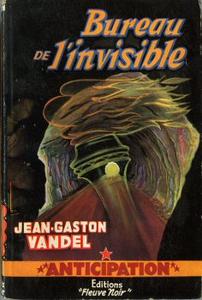

« Merde ! J'ai oublié mes gants ! »
...is the title page, which announces:
Cool! I thought, a prize-winning novel! This should be good....
Jean-Gaston Vandel
Bureau de l'invisible
Grand prix du Roman Science-Fiction 1955
Halfway through reading the book I went and checked that title page again. No, I hadn't misread: 'Grand prix du Roman Science-Fiction 1955'. I concluded that the other books in competition that year must have been pretty rubbish. When I'd finished I went aGoogle-hunting to find out who, and what else, had won this prestigious accolade. I could find very little anywhere other than it had been awarded to two other books: in 1954 to Jimmy Guieu's L'Homme de l'espace and in 1956 to Stefan Wul's Retour à "O"*. All three books were published, by some amazing coincidence, by... Fleuve Noir. (I'm sure there was much Gallic giggling in their marketing department when they came up with that little idea.)
The book opens in the London of the not too distant future with a young woman visiting an address in Baker Street: the offices of the newly-opened Invisible Agency. She'd read their small ad in the newspaper and they may be her only hope.... her daughter is dying and she needs her husband to return before she does - but her husband is a spy working for the Secret Service and she doesn't know how to contact him... "Ah! but he's not a spy is he?" says the mysterious man who interviews her at the Invisible Agency. "He's a thief who has absconded with oodles of cash - but have no fear, you are innocent of any involvement with his crimes so we will take your case." (I paraphrase - but not much.) In Monte Carlo the husband gets a sudden compulsion to return home. So he does; and, after 28 pages, he, his wife, and the dying daughter just totally vanish from the rest of the narrative as if they had never been.
Then a rich industrialist requires their help. "I'm afraid I'm trying to kill myself by accident. I keep waking up in the middle of the night on the third floor balcony of my house... about to throw myself off!" The Invisible Agency take the case and, by group remote-viewing mystical psycho-woo magic, determine that the rich industrialist's wife's lover (the rich industrialist's doctor) is also using remote viewing mystical psycho-woo magic to try to compel him to commit suicide. Luckily our heroes' woo-fu is stronger than the off page villain's woo-fu and there is a battle of what I pictured to be turbaned mystics doing hand wavy finger wiggly impressions of Bela Lugosi playing Chandu the Magician for the long distance control of the industrialist's somnambulist body . (An image helped along by one of the Invisible Agency's team being called 'Hamid' and being constantly referred to as 'The Hindoo'.) The team working together remotely hypnotise the doctor into not loving the wife any more and at page 61 they disappear from the book never to return.
When they are not working for clients a couple of the team are translating mysterious writing on a mysterious alien?/trans-dimensional? object one of them found on some hitherto unexplored desert plateau. Translating consists of one of the team peering at the miniscule writing through a microscope and copying it out bigger then giving it to Hamid who goes into a trance and plays with a Ouija board while what he spells out in English is transcribed. They've just got to a terribly important and exciting bit about being able to hypnotise whole planets by projecting woo at the sun and altering its wavelengths when they get another client.
The new client tells them he believes his sister was murdered by her now dead husband - could they help? No problem say our heroes and set off in their Scooby-mobile to the place where the woman was drowned in the lake of her now abandoned country home. They materialise her from beyond the grave, and her husband too who admits he killed her but regretted it - so he writes out and signs a confession using Hamid's automatic writing skills to make it in his own handwriting. The one snag in the ointment is that the woman didn't have a brother and the confession is going to be used by the racketeer who pretended he is, to blackmail the dead husband's second wife - with me?
Once they have the confession the racketeer and his associates decide they want their money back from the agency. They set up a complex alibi which involves flying to Bristol and swapping places with some identically dressed confederates who will be noisy around the night clubs. The bad guys fly back to London and burgle the agency but are foiled when the Scooby gang (who all live in the Baker Street clubhouse) project images into the bad guys' minds and make them fall down the stairs when they make them not see the top step etc. The baddies flee, taking with them the alien artifact and the suitcase full of transcribed notes which, for some reason, they have decided are valuable. They fly back to Bristol as per the original plan, to pick up their van and find out what they were supposed to have been doing in public while they were robbing the good guys. They then fly back to London. Which seems like a hell of a lot of work for a thousand quid to be shared between six people but that's inflation for you.
While they are flying to Bristol Hamid has an attack of the vapours. Some overwhelming sense of SOMETHING threatens to turn his brain to psychic mush something is coming. Something from outside of the Solar System- this is not the first time this feeling has has happened to him but by the gods it's really bad now! The gang decide the best way to save him from brainmushing is to put him in a state of swami-like near suspended animation - so they strip him naked throw him in a bath of ice-water... and when the ice runs out they fold him up and shove him in the fridge.
Then! Sirens go off. Everyone rushes out into the street and the BBC early warning system announces that the Soviet Union has fallen asleep and a wave of unconsciousness is sweeping westward with the rising sun! Everyone is to go inside, not commit suicide, and turn off the gas. Our heroes rush inside and concoct a hyper-anti-soporific and, coked to the eyeballs, watch as a vast featureless rectangularish cuboidaly THING! floats into view over London. There's a sudden minor earthquake and it vanishes. People stop falling asleep and everyone wakes up and wonders why a house in London has suddenly disappeared. Only we know it was the bad guys' hide-out that had vanished and the THING had come to pick up the lost alien object. Luckily for the Scooby Gang, Hamid survived his sojourn in the fridge (and they had memorised all their notes).
End
The final bit wasn't badly done. The inevitable inexorable creeping death bit. Reminded me of The Purple Cloud and the Niven story Inconstant Moon but the rest of it was pretty rubbish.
*Not that my 1956 copy of it mentions this fact anywhere. - Gilded by Vicious - a not very good self published book I got given in return for a review: https://www.librarything.com/work/35206598/book/304547676
- A Universal History of Infamy by Jorge Luis Borges - because it’s the thinnest Penguin Classic within reach on my bedside TBR pile and because he has the cunning decency to flatter his audience by writing in the introduction:
I mean, who wouldn't be seduced by such flattery?Sometimes I suspect good readers are blacker and rarer swans than good writers. - Le Tour du monde en quatre-vingts jours by Jules Verne in the free to air, Librevox audiobook which was, for the most part, pretty well read. I have never actually read (or listened to) the original before; knowing it only from film versions and by that general cultural osmosis that makes you think you've read something without ever having picked up a copy. I really enjoyed it. The story clips along, the characters are actually interesting, the final twist that resolves everything is beautifully set up in plain sight at the start of the book, and Verne's habit of getting sidetracked by meticulously listing things actually plays an integral part of the narrative and doesn't look like page filling which is sometimes does. And parts of it are actually (intentionally) funny. For one thing I was surprised to realise the Indian princess character (Mrs Aouda) wasn't made up for the 1956 film version (as played by Shirley McClaine) but was there in the book.
My enjoyment did however come to a grinding halt when I fell down what I suspected was a gaping plot hole. The book is set in 1872. It says so in the opening sentence. During the course of the novel the hero, Phileas Fogg, is pursued (then accompanied) by a British policeman convinced Fogg is a thief. Fix has an arrest warrant in his pocket which is useless unless used on British controlled soil. His attempts to use it in Hong Kong and Singapore failed, and there was not enough time to get an extradition order when they crossed America. The ship they are all on taking them to Liverpool runs out of fuel so instead of making directly for Liverpool they disembark at Queenstown (Cobh), Ireland, take the train to Dublin and then a ferry to Liverpool, still in time to reach London before the deadline. Once on English soil, Fix arrests Fogg. Huh? In 1872 all of Ireland was part of the UK and The Republic of Ireland only became independent in 1922. Fix could have used the warrant as soon as Fogg set foot in Queenstown. Later reading through that passage (as opposed to listening) I realise Verne did realise that this was a problem (that Ireland was just the British territory Fix had been waiting for) and fudges the issue with a quick (out of character) hesitation on Fix's part. - Tu Mourras moins bête by Marion Montaigne - a chunky non-fiction (sort of) comic book about how people wouldn't survive most of the dumb things characters do in movies - because science. A fun (if sometimes gory) little read which I just learned has spawned a TV series:
Tu mourras moins bête - ARTE
Le Professeur Moustache et son assistant Nathanaël expliquent les phénomènes scientifiques du quotidien. De la bande dessinée à la vidéo, c'est le pari tenu de cette série qui répond à des questions scientifiques avec humour grâce à la plume de Marion Montaigne et la voix truculente de... www.youtube.com
Any book that has General De Gaulle telling the post-war French populace that, to replace the fallen dead, they need to 'Niquez comme des lapins' has got my vote. - Planéte a vendre by F Richard Bessiere FN 232 (1963)
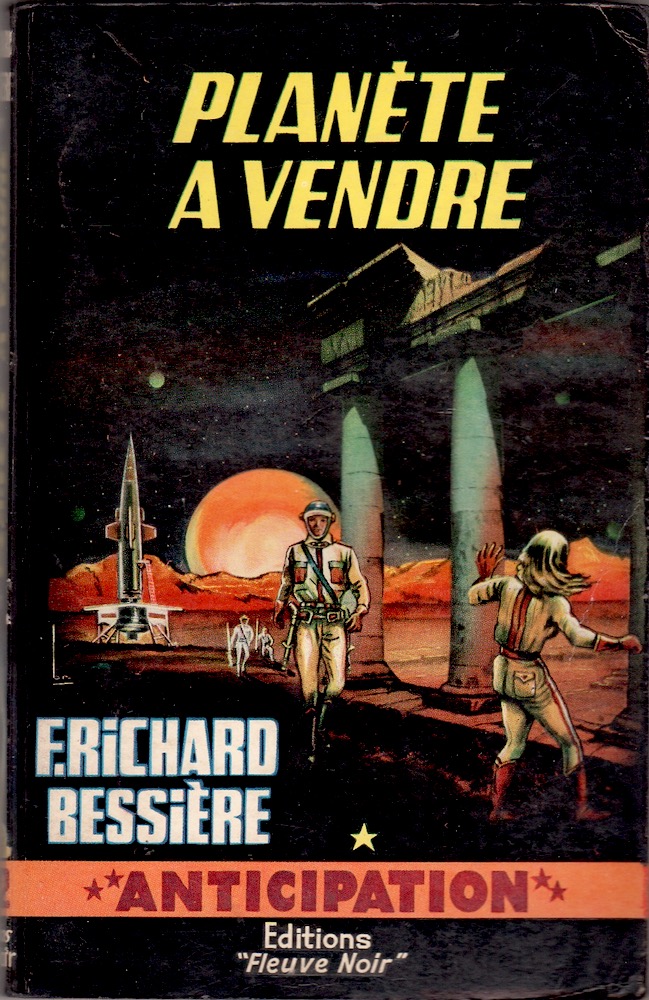
New York Newspaperman Sydney Gordon (why his name is spelled with a y, 'Sydney', which was, even at the time, usually the girly of spelling it, and not with an i, 'Sidney', I have no idea) gets given a birthday present by his wife. It's an ancient Egyptian statuette of the Pharaoh Sourakhamon which (because it's an ancient Egyptian artifact) comes with a curse and a warning lifted from Stevenson's The Bottle Imp* which says that the owner should sell the statue for exactly half of the price they bought it or the bad luck that comes with the statue will bedevil them all their lives. This presents a bit of a problem to our hero as his wife only paid one cent for it - though come to think of it, why isn't she the one that the curse falls upon? Mind you, French women only got the vote 18 years before this book was published; I guess the argument whether married women could actually own things or whether they were the property of their husband hadn't been settled yet...
Syd's researching into the history of the ownership of the statue does indeed lend credibility to the story as previous owners have been financially ruined, died in mysterious circumstances, or gone mad (or all three - though obviously not in that order). As he does his research a series of mishaps, including his car being stolen, happen to Syd. Then, just as he is really scratching his head about how to sell the thing for less than one cent, the thing gets broken and a terribly mysterious scrap of hieroglyph covered papyrus falls out.
Syd rushes the papyrus round to his brainy friend who, I suspect, is a recurring character; one of those useful savants who are an expert in EVERYTHING. Whatever his speciality the brainy friend soon translates the manuscript and tells Syd it was a message from Pharaoh Sourakhamon to his son. Pharaoh Sourakhamon was the leader of one of those Graham Hancockian, highly advanced civilisation unknown or unrecognized by "mainstream" archaeologists who had, at the time of writing the papyrus, just lost a war with the highly advanced civilisation unknown or unrecognised by "mainstream" archaeologists next door. "My son," the message reads, "I am captured by Memphis-Khan and his Arian minions, but the main part of our mighty space armada has escaped as planned to our secret hideout on the planet Xeres. It's yours now. Go join the fleet, regroup and come back to retake this miserable planet from the miserable Vedic hordes and their superpowerful fundamental universal force manipulation trickery!"
"Golly gosh!" says Syd.
"I should say so," says the savant "because this scrap of papyrus means you are the proud inheritor of the planet Xeres."
Double golly gosh with sprinkles!
While all this has been going on there are news reports of something strange happening in the Pacific Ocean. A new island has appeared from nowhere with no volcanic activity. Syd is summoned to cover the story by another of his friends who just happens to be the lead scientist studying the thing. So off he and his wife go - losing the luggage and other misfortunes along the way.
They, Syd his wife, scientist chum and his wife, are flown to the island on a helicopter. The island on closer examination turns out to be a giant metal thing that has obviously been underwater for a long time. They land and explore. They find an airlock and enter. They step through a glowing door... and wake up somewhere else. Well our heroes wake up, the helicopter pilot who did get a name but no lines just dies because he'd outlived his usefulness to the plot.
Wherever they are it wasn't Kansas; it's a barren sandy desert, after climbing to the top of a dune they are rescued by the crew of a passing flying machine and flown to a futuristic (but very Egyptian looking) city and taken before the supreme leader. Now there's a thing that always confuses me about books like this. Why is it that as soon as our hero steps across the border to a new realm or unknown planet he is immediately whisked away for a one on one interview with the tribal leader/president/king/emperor/holy high poobah or whatever is ultimately in charge? They never spend six months in a dingy border town detention camp or struggling with layers of tedious bureaucracy it always "Look! A stranger Take him to the palace!"
So they get taken before the local Pharaoh, and are kitted out with telepathic translators (why a homogenous society made up entirely of Egyptian refugees would need to develop such a device is never explained). They are informed that yes, they are indeed on the planet Xeres which is 44 light years from Earth and since nothing can travel faster than light it has taken them 44 years to get here as measured from Earth. Syd and his wife are more than a little upset to realise that the four year old son they left behind is now older than they are and may well be dead from old age by the time they get back (even if they set out immediately and arrive home 'tomorrow'). It also transpires that they left Earth just before the Xerian invasion fleet, which had set out 44 years prior, had arrived. Did they succeed in conquering Earth? No one knows and won't know for another 44 years.
Because Syd has the papyrus in his pocket they are not all immediately executed but instead kept in some comfort while they wait for news of the invasion.
Some unspecified time later Barny and Topper, two Earthmen, arrive to join them. The Xerian invasion had been successful and these two were scientists who, under Xerian control, had cut the travelling time between the two planets down to five years with the hope of getting it down to no time at all. Needless to say a couple of chapters later they do better than that and travel backwards in time. After a brief stop over in revolutionary France for repairs they end up arriving in ancient Egypt just in time to witness, then get caught up in, the fall of Pharaoh Sourakhamon's Graham Hancockian super-civilization and then! just to pop a cherry on the cake - Syd ends up in the cell next to Sourakhamon as Sourakhamon seals the cursed papyrus in the statuette. A wee bit of bish bash bosh and the statuette and several superfluous minor characters are disintegrated by small arms fire ray gunning.
Syd meeting up with his comrades finds they have (off the page) destroyed the fleet heading for Xeres and, as far as anyone could work out, history had been put right without the cursed statuette to mess things up. Returning to their own time they slip back into their own lives as if nothing had happened - apart from Barny and Topper who revert to being the children they were when the Xerians invaded.
Fin
Knockabout nonsense with no great message. Some okay jokes but I'm still trying to make the maths of the to and froing from Earth to Xeres work - and keep failing miserably. There is no way it can. Even if our heroes' arrival and the invasion fleet arrived at their destinations simultaneously years would still have to go by before the two scientists who arrive on Xeres only months after our heroes grew up to be the men they are. One of them states he was in the same orphanage as Syd's son. And then add another five years in transit?
*Which, in turn, I now find out was lifted from an earlier play (called 'The Bottle Imp') which in its turn was inspired by a German story (called something in German) collected by the Brother Grimm.

February
- Tales From a Long Room by Peter Tinniswood - very short collection of absurdist cricketing tales which was mildly amusing. I might have found it funnier if I knew anything at all about cricket.
- The Persian Boy - Mary Renault's dense but insanely readable 'autobiography' of Alexander the Great's eunuch lover. Read in three sittings. Renault has long been on my 'I must get round to one day' list.
- The Time Machine by HG Wells as an audiobook (in a French translation) as I worked - which has now made me want to reread it in a real book again. Pages, paper, real words in front of my eyes.... It's okay listening to a book but it's not the same.
- Le Gardien du cristal by Jean-pierre Garen
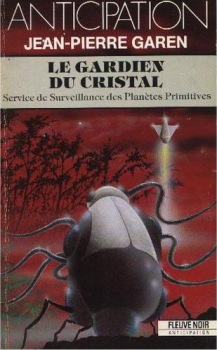
- which was awful: a real B movie western plot with a villain taking over a frontier town on a barely colonised planet and then kidnapping, and trying to force our hero's GF to sign over the deeds to the diamond mine just outside of town. All very predictable. The way our heroes overpower their opponents and then just casually execute the helpless bad guys because they are inconvenient is alarming - these are our heroes? The fact that nearly every female character was the victim of an on-page rape attempt raised a eyebrow too. One, the villainess lover of the chief bad guy (who she killed by setting off the grenade attached to his chest by our hero's sidekick robot) gets herself gang-raped and then killed after she shoots one of her attackers dead. Thinking about it maybe not a B western; more a spaghetti western. Our author just watched a couple of Terence Hill and Bud Spencer movies and just swapped out the hardwear: Colts for zap guns and horses for gravsleds... The 'Guardian of the Crystals' of the title is an ancient device left by a long-forgotten race which used the planet as a penal colony aeons before. It only comes shoehorned into the story, seemingly as an afterthought, when our author presumably realised he had to SF-up his plot a bit and as a way to get our heroes out of the dynamited mine they'd got themselves trapped in.
The book is part of a series our heroes are trouble shooters for the Primitive Planets Surveillance Service - Dear gods! There were over 40 books! This was number 21.
- Keep the Giraffe Burning by John Sladek - short story collection of surreal stuff which I'm still not sure I understand even after having read at least three times over the years. Very funny in places though.

March
- Don't Go to Sleep in the Dark - a collection of short stories by Celia Fremlin from the early 1970s Some nicely done stuff though they were feeling a little samey by the end of the collection.
- Monsieur Lecoq by Émile Gaboriau - a beautifully read Audiobook from Librivox which has to be the most gloriously enjoyable high Victorian melodramatic nonsense I can remember ever having come across; murders (shootings and poisonings), plots, counter plots, wicked Counts, revenge, peasant revolts, daring escapes from prison (contrived by the jailers for various reasons), executions, besmirched family names, more incriminating letters than the Epstein Files, madness, accusation and counter accusation, mysterious characters running around in disguise, unrequited love, buried treasure, blackmail, deathbed confessions, duels, cross country manhunts, a baby conceived out of wedlock (needless to say the mother - the nearest thing we get to a heroine in the book - dies but not before she has ensured her child is carried far away from all the intrigue but she dies (poisoned) before she can tell the woman (an erstwhile friend) who has poisoned her where the baby is after asking her (her own poisoner) to look after the child (...it's one of those books), attempted suicide, and more mind-boggling coincidences that I can enumerate, and more than one plot convenient and unexplained plummet from a high place - seriously! one loose-end character is written out, off page, with the author just telling us he 'fell of a cliff' with no other explanation than that. (I never did work out who cut the rope during the second prison escape.)
I seriously suspect the author wrote the epilogue because he realised he'd missed 'having a character pull off a false beard and moustache to reveal who they are' off his Melodrama Trope Bingo Card. To add further joy, the book was all told in that, "But wait! let's go back five years and find out what happened to character X! Unbeknownst to anyone else, X just happened to overhear the fatal conversation between Y and Z and then, jumping to his own (wrong) conclusions about what they were talking about, sets in motion a whole new series of events involving minor characters who, in their turn will be returned to at a later date to see what skulduggery they got up to when they had finished the minor part they had to play in X's perfidious scheme. One vital clue the detective was working from at the end of the book was his realisation that one of the character's parrot didn't have a German accent!
Part two of the book takes place before part one and details the events leading up to the violent episode in chapter one which starts the whole ball rolling*. I had real trouble keeping up with the flashbacks within flashbacks at times. But I did notice what I suspect was a stonking great continuity error in the book in that two people burst open the same locked and bolted door within a few moments of each other without anyone having called a carpenter (or even closed the door) in the interim.
I loved it.
*A narrative Structure Conan Doyle used (borrowed?) for the Sign of Four - I don't know how common this story structure was in Victorian literature but it's a good one. - A Wizard of Earthsea - pretty good.
- Don't Go to Sleep in the Dark a collection of short stories by Celia Fremlin. Some nicely done stuff though they were feeling a little samey by the end of the collection.
- Les Enfants du capitaine Grant (Audiobook from Librevox.) by Jules Verne which is the usual Vernian travelogue disguised as adventure with a scarcely sketched bunch of characters traversing great distances - this time in search of the survivors of a shipwreck - while giving each other long and tedious lectures. Highlights so far include the moment where our heroes, having crossed the whole of South America on foot and horseback, are suddenly caught up in a huge flash flood. To avoid being drowned they all climb the only tree in sight. They have just settled themselves in comfortably and prepared to defend their new home against "Indians and other animals" (sic - just one of many incidents of less than casual racism in the book) when one of them has a massive brainwave and realises they have all misinterpreted the cryptic message that sent them on their adventure. They are on the wrong continent! they should be in Australia! And at that point a huge storm blows up, the tree is struck by lightning and bursts into flames - they are just trying to decide whether it would be better to be burnt alive or drown when they notice the waters around the base of the tree are swarming with rapacious caymans...!
But!
A whirlwind suddenly appears and whisks all the reptiles away - apart from one.
Which they shoot...
...then the tree falls over.
I think I have finally reached a limit; the whole (very long) book was an endless, tedious cut and paste of travelogues, natural history text books interspersed with a sustained exercise in shark jumping with incredible co-incidence piled on incredible co-incidence, upon incredible co-incidence. The breaking point for me, I think, was when Verne's obsession with volcanoes reached its apotheosis. Towards the end of the book our heroes find themselves in New Zealand, trapped on top of a mountain, surrounded by screaming, gesticulating cannibalistic Māori who want to kill them for having shot dead one of their chiefs for daring to touch a White woman. The Māori will not climb the mountain because it is 'taboo'. Faced with the prospect of starving to death on the mountain top - sneaking out at night was tried and proved impossible - the group's tedious savant Paganel* - notices the mountain is, just a few inches down below the surface level of the soil, unnaturally hot. Steam jets out of a hole made by a disturbed rock. Aha! he cries. and, with a will and no little effort, the trapped adventurers prise loose the biggest boulder they can find and unleash a stream of lava which fries enough of the Māori to let them escape. I'd really got to hate this bunch of shits by the end of the book.
That's me done with Verne for a bit.
* Who when asked will give chapter-long histories of European exploration of anywhere you care to name with names and dates of every White man who ever went south of the equator with the day by day account of the longitude and latitude of their peregrinations, their shoe size, inside leg measurement, and the regularity of their bowel movements.
etc. etc. - L'homme de Nulle Part by Fred Noro - a 1964 pulp spy novel which goes through it's pulp spy novel sex, car chase, disguises, and gun-battle routines with a minimum of fuss. I doubt if I will remember a word of it in a week apart from this one sentence; the winner of The prestigious JunkMonkey Bizarre Simile of the Month award for April 2026:
'Une minute passa, lente comme un escargot rhumatisant.'
'A minute passed, slowly like a rheumatic snail.'
- Lake of the Wind

Tidying up the village bookswap place yesterday I picked this up in passing and realised had never read a Harlequin Romance or any others of that ilk. It didn't take me many pages to realise I never will again. But I finished it. If I didn't know this book was published in 1971 I would have assumed it was AI produced. It has that same weird superficial, inconsequential, uncanny valley gloss that colours AI 'writing'. The plot is Nancy Drew simplicity - not that I have ever read any Nancy Drew books*. Two school teachers on holiday find themselves at the edge of a mystery involving the hidden loot from a bank robbery... who is the midnight prowler breaking into the summer homes? Who is the mysterious old man who lives in the ramshackle house? Who is the mysterious stranger looking for work? Why does blond, blue-eyed, handsome hunk Kit think it's acceptable to smoke his pipe at a restaurant table as the two heroines tuck into a lovely meal? ("Reassuringly masculine aroma" my arse.) Why does our heroine 'lovely' Tracy Danford keep polishing her guitar so assiduously? I read it in one sitting. It took me an hour or so - it probably took less than that to write.
There are no horses in the book.
[*]The Lost Continent: The Story of Atlantis (1899) by C. J. Cutcliffe Hyne Which I came across mentioned online somewhere, thought "that sounds interesting I'll see if I can find a copy" then saw that it was on Gutenberg.org just as I was wrestling with how to download books on to my newly acquired out of date Kindle...
I'm glad I didn't pay money for it.
It is compulsively awful.
The plot: Deucalion a warrior priest (and, as it turns out later in the book, a virgin) is summoned back to Atlantis from spending 20 years being the governor of one of Atlantis’s colonies. The empress - the first woman to have ever ruled - needs a husband and he's it (for reasons that don't really get explained). He's not keen on the idea but he is ordered to marry her by the head of his order. Atlantis is under siege by discontented citizens. Everything is going to pot because the new empress is A: a woman. B: not a man. Deucalion meets a rebel manic pixie dream girl who falls in love with him and who he later buries alive (on the order of the jealous empress) after giving her a suspended animation potion. The Empress finds out that her rival is not as dead as she had supposed and waxes wrathful. Deucalion flees. Deucalion comes back. All has gone to even more pot than before while he was away and the last of the priestly old guard are being besieged in their fortress of solitude. Deucalion agrees to help them but only if they first help him rescue his girlfriend from being under a big rock in the middle of town. They agree and arrange an earthquake. Deucalion rescues his girlfriend, brings her back to life - and loses the war with the empress. As a final act, the priest shove Deucalion and his girlfriend into a big, well stocked barrel and sink Atlantis as the empress's forces batter down their last defences.... the end.
Highlights included our hero burying his beloved alive under a stone throne but slipping her a suspended animation drug and coming back nine years later and getting her out again. He spent those nine years sitting up a tree feeling sorry for himself because the plot had to move on without him and the author couldn't think of anything else to do with him. The author chose here to ignore the massively easy way out he'd set up for himself. All through the book we are told that Atlantis was the only civilisation worth a damn with outpost colonies in Egypt and Yucatan (which seems a bit of an odd combination till you realise they've both got Pyramids and our author fills Atlantis with them too). Everywhere else is populated by ugly brutish savages. We are told many many times how ugly brutish. and stupid, 'fit only to be slaves', the population of Europe is. Europeans are ugly. Europeans are stupid. Just before he goes and sits up a tree for nine years our hero is offered the opportunity of sailing with an escaping bunch of Atlanteans aiming to form a colony on the newly discovered islands to the north of Europe: the 'Tin Isles'. Huzzah! In the most blatant bit of British exceptionalism I have read for a while - the jolly old British Empire was, it turns out, the direct result of us Brits being descended from the god-kings of Atlantis and not 'brutish', 'ugly' Europeans! Why there isn't a bloody big pyramid on Salisbury Plain instead of a mere tatty looking ring of rocks is a good question I need answered! A couple of chapters of expelling brutish Picts to the far corners of Britain before sailing for home would have been far more fun and a lot more believable than a bit of moping around not being eaten by giant lizards (this book has dinosaurs).
Our bad girl villainess, Phorenice, was almost interesting. And, for the time, I guess quite a radical character. She's a bit Rider Haggard's Ayesha, a bit Flaubert's Salammbô, and a great big dollop of Boudica. A girl from a peasant background who, with cunning guile and ruthless determination, becomes first empress then self-proclaimed sole goddess of Atlantis (thus pissing off the old polytheistic priesthood who in a fit of the sulks sink Atlantis by magic rather that let her have her fun). She's prone to having people executed for the slightest reason and is quite capable of killing people herself - as she does with great relish when she and the hero are attacked by discontented fishermen. She does a real Red Sonja, leaps into the fray and hacks away and skewers people with skill and relish.
There's toing and froing, and several layers of unbelievable coincidence piled one on top of another - the young rebel woman our hero just happened to rescue from being eaten to death after she had been tossed into a pit of sabre tooth tigers by bored guards, turns out, not only to be the twin sister of the Empress's chief handmaiden but also the daughter of the high priest of our priestly hero's order. Later (after some more ultra-coincidence heavy toing and froing) our hero and bad girl empress are trapped on the howdah of a panicked mammoth which leaps into the harbour just at the point where 'the great sewers, which science devised for the health of the city in the old King’s time, vomit[ed] their drainings' and into 'the solid matter ... quickly deposited as an impalpable sludge.'“Your back to mine, comrade,” cried she, with a laugh, and then drew and laid about her with fine dexterity. Bah! but it was mere slaughter, that first bout.
The crowd hustled inwards with such greediness to seize what they could, that none had space to draw back elbow for a thrust, and we two kept a circle round us by sheer whirling of steel. It is necessary to do one’s work cleanly in these bouts, as wounded left on the ground unnoticed before one are as dangerous as so many snakes. But as we circled round in our battling I noted that all of Phorenice’s quarry lay peaceful and still. By the Gods! but she could play a fine sword, this dainty Empress. She touched life with every thrust.
eeeeeew!
Needless to say they are rescued by a passing galley with two newly minted prisoners on board one of whom, the woman, is none other than sabretooth tiger pixie rebel girl. It's a small continent. She's the one our hero later buries alive because she won't renounce her love for him
Actually written down like that this all sounds jolly exciting but it's all delivered in a stodgy, self-consciously arch, pseudo archaic style that is supposed to invoke the idea that it really was written by an ancient Atlantean but just comes over as camp twaddle.
Phorenice laughed as she swam. “You handle yourself like a sore man, Deucalion. I owe you something for lending me the cushion of your body.
By my face! There’s more of the gallant about you when it comes to the test than one would guess to hear you talk. How did you like the ride,
sir? I warrant it came to you as a new experience.”
“I’d liefer have walked.”
The book uses that well-worn Victorian formula framing device of the discovery of ancient documents. Not that it returns to the framing device at the end so it's not really a 'framing' device just a kickstarter. People declaim at each other in lllloooong paragraphs. Here's our hero
“My friend,” I made answer, “my brother in all but blood, there is no man living in all Atlantis or her territories to whom I had liefer hand over my government. For twenty years now have I ruled this country of Yucatan, and Mexico beyond, first under the old King, and then as minister to this new Empress. I know my colony like a book. I am intimate with all her wonderful cities, with their palaces, their pyramids, and their people. I have hunted the beasts and the savages in the forests. I have built roads, and made the rivers so that they will carry shipping. I have fostered the arts and crafts like a merchant; I have discoursed, three times each day, the cult of the Gods with mine own lips. Through evil years and through good have I ruled here, striving only for the prosperity of the land and the strengthening of Atlantis, and I have grown to love the peoples like a father. To you I bequeath them, Tatho, with tender supplications for their interests.”
...and breath...
No more Victorian fiction for me for a bit.
Last edited: