

I’ve reread only a few books in my time, but one series that earned that elusive honor was The Lost Fleet series by Jack Campbell, a.k.a. John G. Hemry. I had a chance to talk with Jack/John and here is what he had to say.
Welcome to SFFWorld, Jack. Some may not know that your actual name is John G. Hemry. Why did you decide to publish under a pen name?
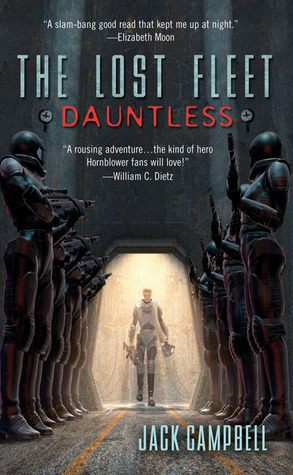 I didn’t so much decide to publish under a pen name as decide that the only way I’d continue to be published was under a pen name. At the time, much of the bookstore market had been cornered by B&N and Borders, who both ordered books based on software that allegedly predicted demand based on past sales but low-balled their orders (e.g. if an author’s last book sold ten copies, the software would only order say eight copies of the next). While my initial Stark trilogy had sold moderately well, the follow-on Sinclair/JAG in Space series struggled to find an audience. That meant the big book chains ordered fewer and fewer copies of each new book. If only one or two copies got ordered per store, it was effectively impossible then for a book to take off. But, if a “new” writer appeared, the bookstores would order a bunch of copies (even if everyone knew the “new” writer was actually an old writer, because no one told the software). Both my publisher and my agent expressed strong opinions that I should become a new writer to give my next book a chance. I chose Jack for my father and my son, and Campbell for some ancestry. And, fortunately, Dauntless took off, with not remarkable initial sales that steadily climbed due to word of mouth and continue to this day. Since Jack Campbell continues to sell many more books than John Hemry, the pen name remains.
I like the idea of changing your name to trick the bookstores into buying more books. Its actually quite diabolical. Are there any other book selling tricks we may not know about?
None that are guaranteed! You need some degree of luck, some degree of skill, and a lot of perseverance to sell books. A good cover always helps, so if you’re doing it yourself invest in something that looks professional and will interest people who see it. Be nice to people, too. That never hurts. But the most basic trick is “Never give up. Never surrender.” Because the only way to have a chance of winning is to keep playing no matter how bad the odds look.
What inspired you to become a writer?
Like many people, I wanted to become a writer because I loved to read, and because I was delusional enough to think that other people might like to read the stories I came up with. That dream was postponed through my Navy career, but during that time I acquired a tremendous amount of experience and knowledge that would eventually prove to be invaluable for my stories. Upon finally leaving the Navy, I decided it was time to make a serious effort at writing. The first few years involved a very steep learning curve, but as my wife said, if you don’t keep trying you’ll never know if you could do it. The irony of all this is that once someone becomes a full-time writer they have a lot less time available for reading, so the initial love has to give way to the labor of creating.
I read on your website you are taking a break from The Lost Fleet and are writing a prequel trilogy called The First Stars. How has the writing been and when can we expect to see the first book?
 The writing has been complicated a bit by, among other things, a detached retina, but is now nearly done for the first novel (Vanguard). It has been fun for me to explore The Lost Fleet universe in the period when humanity was exploding among the stars, settling many worlds and outrunning the old systems that had maintained law and order. In a Wild West environment, the ancestors of some men and women familiar from The Lost Fleet along with others have to deal with a lot of unexpected challenges. My understanding is that Vanguard should come out in June, 2017.
Speaking of The Lost Fleet, The Lost Stars: Shattered Spear was recently published. What is next in store for Iceni and Drakon?
As with The Lost Fleet, I need to take a pause with The Lost Stars to figure out where best to go next. Having done so many books in both series in a fairly short time, I have to take a little while to figure out what comes next. I think it’s important to continue to tell fresh stories and not repeat, so I want to take the time to do that right. That said, there will be some Lost Fleet/Lost Stars stories coming out next year in the form of a Lost Fleet comic series being developed by Titan. It will feature original stories written by me that cover events taking place outside the scope of the novels.
A Lost Fleet comic? That sounds awesome. Do you know who the artist(s) will be yet?
The last I heard it will be Andre Siregar. He’s done the initial pages that I have seen. I hope to get an update from Titan soon on the status of the comics. There will be two five-book series, each telling one story. The first five tell a story called Corsair, and show the fate of someone that people have wondered about since the first The Lost Fleet book, Dauntless.
Your science fantasy series The Pillars of Reality is an Audible exclusive so I’m curious, do you write these stories differently knowing that people will hear the stories first before they ever read them?
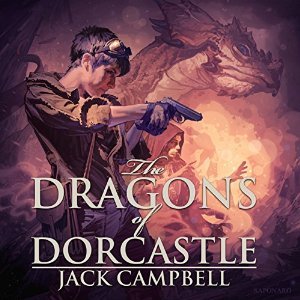 I originally wrote the books not knowing that would be the publishing arrangement, so they reflect my usual way of writing. Of course the books later come out as ebooks and trade paperbacks after the audiobook exclusivity period has ended. One thing I did discover is that audiobooks complicate an already difficult problem with backstory. In any series, you have to provide enough information about the setting and what has gone before so that anyone picking up a later book in the series first will still be able to figure out what’s going and enjoy the story. The longer the series, the harder that is to do without resorting to the dreaded information dump. But audiobooks offer a further problem in that, whereas in hardcopy or ebooks a reader familiar with the information can just skip over it, in an audiobook the “reader” must listen through the whole thing. That makes it even more important to break up the backstory into small pieces that don’t disrupt the flow of the story. I’ve been trying to do a better job of that, and will apply that to all future books since audiobooks have grown to become a big part of the market.
And because I am a big fan of alternate history, I noticed you also published The Last Full Measure where the United States has become a military dictatorship by the 1860s. What got you interested in alternate history and can we expect more works like The Last Full Measure?
I think I’ve always been interested in alternate history. The more anyone knows about history, the more they start thinking about all of the what-ifs and all of the might-have-beens. I’ve written a number of alternate history stories, most of which originally appeared in Analog Magazine. One (“Swords and Saddles”) was a tribute to H. Beam Piper that I wrote after realizing that very few science fiction stories are set in Kansas and very few science fictions stories feature the US mounted cavalry. I wrote “Joan” after Greg Bear challenged me to write a story about Joan of Arc. There is a series of stories featuring a TI (Temporal Interventionist) in which unusual events in history are explained as the footprints of time travelers. And, of course, “Betty Knox and Dictionary Jones in the Mystery of the Missing Teenage Anachronisms.” “Swords and Saddles” is still available in my novella collection of the same name, and my other alternate history stories are in my Borrowed Time collection. For reasons I don’t quite understand my short fiction muse went on walkabout a few years ago, drastically cutting down on my short story output, but I hope to do more of those stories when inspiration returns.
Any advice for aspiring authors?
The old advice is still the best advice, to read as much as you can and write as much as you can. Learn how others told stories, by reading, and learn how to write stories in the only way that works, by writing. It is a difficult field to break into, and even though there are a lot more avenues to being published today that means there are lot more works out there vying for the attention of readers. It is a given that works will be rejected, so any writer has to be able to deal with a lot of rejection and a lot of criticism. You have to keep trying. Once you start writing a lot, you’ll start analyzing everything you read and watch, and that’s a good thing. You’ll see what you think works, and what you think doesn’t work. And if you go through deleted scenes on a movie and hear the explanations for why scenes were dropped or removed, it offers more valuable lessons on story-telling. Lastly, there are a lot of places to meet writers. In addition to the usual science fiction/fantasy conventions, more and more of the media conventions like the various ComicCons or Dragoncon or Akon in Dallas have writers there, usually with panels where they talk about writing. Those are a great place to meet writers and get whatever they can offer.
*****
Interview by Matt Mitrovich – SFFWorld.com © 2016




Great interview! Love his books, though apparently I’ve only read two of his series…..