
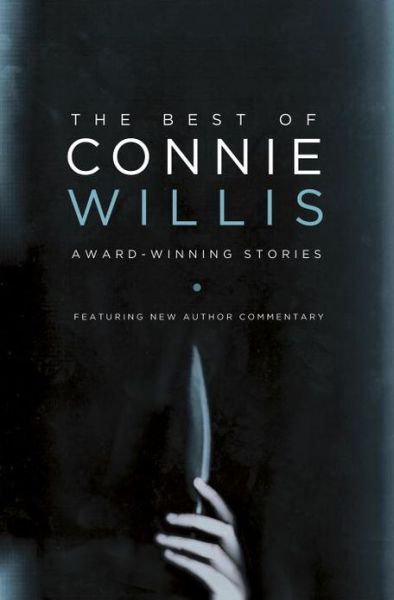
 The Best of Connie Willis by Connie Willis
Published by Ballantine/Del Rey Books, July 2013 (Review Copy received)
ISBN: 978 0 345 54064 5
473 pages
Review by Mark Yon
It’s not a secret at SFFWorld that I’m a fan of Connie Willis’s writing. Mind you, I’m not the only one.
Connie has accumulated eleven Hugo Awards and seven Nebula Awards at the time I’m typing this, more than any other living writer, and has the distinction of becoming anSFWA Grand Master in 2011. She was also inducted into the Science Fiction Hall of Fame in 2009.
Such awards often reflect a great deal of hard graft and honing a writer’s skill over many years. This is also true of Connie. Her first story was published in 1970. This book attempts to distil nearly 45 years of writing into one volume. It’s not easy, and I’m sure there are others that could have been included. But as ‘Best-of’s’ go, it’s a good selection, being the Award-Winning Stories.
There are 10 stories, the 2006 Worldcon Guest of Honor Speech and her Grand Master speeches (both given and as an alternative version) included. As the editor of the book points out, Connie is nearly as well known for her presence on the US convention circuit as she is for her writing, so her speeches are nearly as entertaining.
What may also make this a must-buy for those who know the stories is both the Introduction by Connie and an Afterword by Connie for each of the ten tales. Like the speeches, they are, as you might expect, emotional, filled with warmth, wit and great self-deprecation, as well as clearly showing a deep everlasting love for the genre. Connie’s Introduction to her stories and how she came to read (and write) SF is about as eloquent an homage to older writers as you can get. The Afterwords end each of the tales nicely.
To the stories, then. They are (in order):
A Letter from the Clearys (Nebula Award winner 1983)
At the Rialto (Nebula Award winner 1990)
Death on the Nile (Hugo Award winner 1994)
The Soul Selects Her Own Society (Hugo Award winner 1997)
Fire Watch (Hugo & Nebula Award winner 1983)
Inside Job (Hugo Award winner 2006)
Even the Queen (Hugo and Nebula Award winner 1993)
The Winds of Marble Arch (Hugo Award and World Fantasy Award winner 2000)
All Seated on the Ground (Hugo Award winner 2008)
Last of the Winnebagos (Hugo and Nebula Award winner 1989)
With such an Award winning assemblage, it is difficult to criticise any of them. Connie herself does a little – in her Introduction Connie claims that A Letter from the Cleary’s owes a lot to Ward Moore’s Lot (an early favourite), Even the Queen and At the Rialto have a debt to Heinlein in terms of style. Personally I do think the lady doth protest there a little too much. Whilst the influences are there, Connie has taken those influences and turned them to something with her own style, although I think they take a little time getting there.
It is probably the oldest stories that are least effective. A Letter from the Cleary’s remind the reader of a time when nuclear annihilation was quite possible in the 1980’s, but its point is pretty obvious. Similarly, At the Rialto is a less successful tale, being a sometimes-amusing screwball comedy, creating humour by combining scientific theory with the horrors of attending conventions. It’s not a chucklefest, but I did appreciate the jarring juxtaposition of experimental science with the razzmatazz of downtown Hollywood. They’re OK, but in both cases, in my opinion, Connie has done better.
With Death on the Nile the stories become a little more memorable. It is a lengthier piece that begins as a human-relationships tale and ends up as a Twilight-Zone-esque psychological horror. The Soul Selects Her Own Society is a not-too-serious alternate history, combining Emily Dickinson with, amongst others, HG Wells. As the tale continues, some of the links made by the fictitious ‘writer’ increasingly show the creation of a bizarre thesis at work. The story shows a deftness and depth that At the Rialto lacks, although a detailed knowledge of the other authors work might ensure a better understanding of the humour. The Afterword does help here, and might actually work better as an Introduction.
By Fire Watch we are into rich territory. The author has clearly found her niche and the stories here are richer, and more memorable. Fire Watch is one of my own personal favourites of Connie’s, a time-travel tale that reuses some characters that we have first met in Doomsday Book. Here it tells of the difficulties of keeping London’s St Paul’s Cathedral from being destroyed during the firebombing in the Blitz of the 1940’s. It is both unashamedly emotional and almost reverential in its love of history, of old art and religious buildings, as well as evoking a respect for the ordinary people doing a difficult job. One of the strengths of this collection, enhanced by the message within the Afterword.
Inside Job is a lengthy (but great) modern tale of fake mediums in California, written in a fast, sparky style, very reminiscent of the 1930’s comedy movies. It entertainingly looks at the question, “What happens when a fake spiritualist begins channelling an old skeptic?” It’s a contemporary version of the old film comedies such as His Girl Friday or Spencer Tracy/Katherine Hepburn’s collaborations (the genre of which Connie loves.)
Even the Queen is a near-future tale about being a woman in a world of gender equality that makes some great points about the biological aspects of women, culture and religion without resorting to hectoring rhetoric. And a great Afterword, too.
The Winds of Marble Arch is one of my favourites: a modern tale that is sad, funny, and full of lots of little touches that reflect London and England at its best (and worst), as well as commenting on the transitional nature of life. It shows a love of the London Underground (yes-really!) and London as a city. Her Afterword here explains her love for an iconic railway system, and is delightful. Another strength of this collection.
The last couple of tales in the collection are very enjoyable, although to my mind less so than Marble Arch.All Seated on the Ground is another long story, an amusing and unashamedly romantic one of alien first-contact that uses singing as a means of possible communication. I was amazed at Connie’s knowledge of Christmas carol lyrics, although this is partly explained by Connie in her Afterword.
Finally, Last of the Winnebagos is a tale about a near future where large road vehicles (such as the titular Winnebago) and petrol/gasoline are going. It’s a lengthy tale that is deceptive in its telling. It begins as if it is about the last RV, but really it is about a dystopian future where dogs have died out due to a pandemic, the newparvo virus. Our lead character, photojournalist David McCombe, is haunted by the death of his dog due to a road accident fifteen years ago. Although it begins as if it was another one of Connie’s lighter-toned narratives, it changes about a third of the way in into a darker tale, with the story becoming something about loss and the emotional impact of dealing with a shock event. In the end, it’s a much more complex tale than I thought it was going to be, with elements that only make sense on a re-reading. Its tenor in places is so bleak that I can see why it has been left until the end of this collection, a tone only relieved by the lighter, sparkier scripts of her acceptance speeches.
Speaking of which, the acceptance speeches are very nice, and eloquently put, but tell us little that hasn’t already been said in the book’s Introduction. Consider them as additional items of interest, but really non-essential.
In summary, although some have dated better than others, pretty much all of the stories here are worth reading. There are amusing tales, quirky tales, elegiac tales and memorable tales. What is striking reading them in such a collection is the range of story included. As you might expect from the author of Doomsday Book and Black Out/All Clear, there are time travel stories, but there are also stories about (as Connie puts it in her Introduction), “psychics, RV’s, the Pyramids, the post office, Annette Funicello, mystery novels, Kool-Aid, tomato plants and the footprints out in front of Grauman’s Chinese Theatre.”
It is this variety that keeps a booklover reading, I think.
If you’ve not read Connie’s work before, this is a great place to start. It’s not entirely even, but there are great riches in here, stories full of emotion, filled with warmth and sadness, great drama, witty dialogue, characters you will care about and moments that you will remember for a long time afterwards.
If nothing else, I think this will whet your appetite for more Connie. I would suggest Doomsday Book(despite the awful title, one of my all-time favourite books), Black Out/All Clear (really one lengthy book) and To Say Nothing of the Dog, should you wish it.
Whatever you decide, my advice here is to go and read. You will not, in my opinion, regret it.
Mark Yon, June/July 2013



Black Out and All Clear are amazing books.Yes it really is one big story divided into two books.I really enjoyed how the books gave you a real feel for World War Two England,mixed in a good solid time travel story and plenty of emotion and thought.Great characters,tear jerker moments and a solid finish.
If you like Black Out/All Clear, PI, then I’d also suggest Fire Watch in this collection. Domesday Book is still one of my all-time favourites, though.