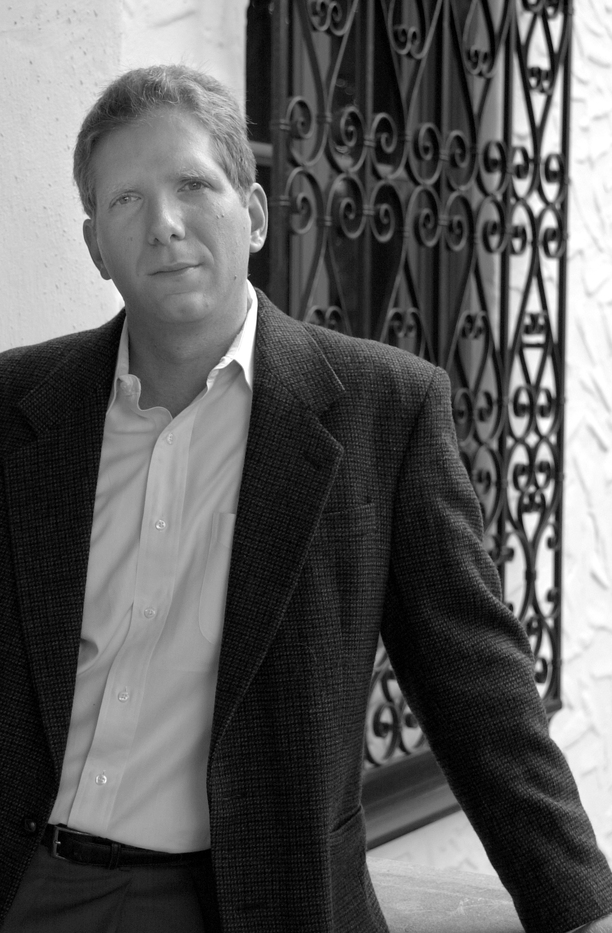
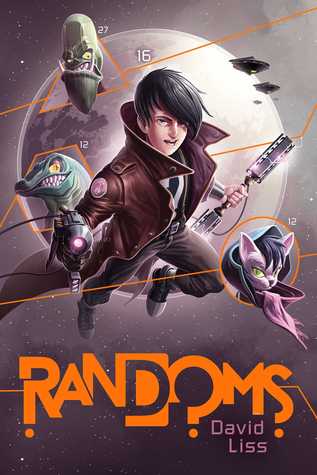
“A science fiction superfan finds himself on his very own space adventure when he’s randomly selected to join an alien confederacy”. We’ve talked to David Liss about his new novel, Randoms.
First of all can you tell us a bit about your new novel, Randoms?
The premise behind this book is that there are huge, multi-world, multi-species galactic civilizations out there. One of them, the Confederation of United Planets, likes to begin planting facts about itself in the popular culture of developing so if they are offered membership, the facts about galactic life don’t’ seem so strange. In other words, comment elements in popular science fiction are often based on reality. Every few years, four adolescents from four worlds are chosen to spend a year aboard their capital city, which is on an ancient space station – really more of an orbital platform – so their compatibility can be measured. Three people are selected because they possess some qualities admired in the Confederation and the fourth of each group is chosen at random.
When Earth is tapped by the confederation, the random they select is Zeke Reynolds, lifelong sci fi geek, so it seems like this is the chance of a lifetime. Unfortunately, things go wrong pretty quickly, and Zeke finds himself isolated by the other humans and on the outs with the most power aliens in the Confederation, and hated by the Confederation’s most dangerous enemy. He ends up joining forces with the randoms from the other alien species to uncover the truth behind why they are all really there on the space station.
Can you give us some insight into your main character, Zeke Reynolds?
Zeke is kind of an everyman fanboy whose life has become difficult. When the novel begins, his father has been dead for several years and his mother’s just been diagnosed with a degenerative neurological disease, so while he tries to remain cheerful, he’s living with pretty bad things on the horizon. His primary method of diversion is through entertainment – books, movies, tv shows, comics, and games.
Cat People, where did that idea come from?
I came up with the idea of Randoms when I still had a couple months of work left on my last novel The Day of Atonement. I was itching to get to work on the new project, so while I finished up the old one, I would often make lists in my head of references I wanted to make sure I included in the book – nods to movies or television shows or various genre conventions. I was thinking about the nekos – cat girls – you sometimes find in anime and I figured, why not throw one of those in there. The whole species of cat people grew out of that momentary impulse. Once I started writing the principal character, Tamret, I realized I was having too much fun to stop. Plus, I like cats. There is one in my way literally as I type this.
 What goals might you have set for yourself when writing Randoms and how do you feel about the end result?
This is a book that I wrote without any thoughts about how it might fit into the market. I had the idea, I had a bunch of scenes and set pieces I knew I wanted to include, and the whole thing came out in a whirlwind. Mostly, I hoped the end result would be something that other genre fans would enjoy. Beyond that, I just wanted to have fun and get the vision in my head into novel form.
You’re most known for your historical fiction, why the shift to YA Science Fiction?
I’ve been working in other genres and media for years now. I’ve written historical fantasy, horror, and comics, so I’m not entirely new to genre fiction. That said, I’ve always loved science fiction and at some point I was going to take a crack at writing in the genre. Perhaps to frustration of my publisher, I’ve jumped around a lot over the course of my career. On the other hand, I’ve always tried to write what I want to write. Otherwise, what’s the point. If you’re writing stuff you don’t enjoy, you might as well be doing something else.
Can you tell us a bit about the process that led up to this book being published?
I wrote the book fairly quickly and sent it to my agent, who I think wasn’t quite sure what to make of it. But she sent it out, and we were lucky enough to end up with a great editor at a great publisher.
How did you start writing? Was there a particular book or moment in your life that spurned you on?
I am one of those people who always wanted to be a writer. For as long as I can remember, I’ve loved narrative in pretty much any form – novels, comics, film, tv, games. When I graduated from college, I tried writing a novel, but I took the fact that writing is hard to mean that I couldn’t actually do it. After a few years in advertising, I ended up going to graduate school to study 18th century British literature, and after a few years there, I decided to take another crack at fiction writing. It turned out the analytical thinking skills, as well as the brutal culture of produce-or-be-destroyed, really helped me in figuring out how to construct a novel and how to keep going when things became a little difficult.
What has been most surprising to you in your writing and publishing career so far?
How uncomfortable my work makes a lot of people. If I’m at a party, or talking to parents of my kids’ friends, and I tell them what I do, they often react with confusion and disgust. I might as well tell people I’m a professional necrophiliac.
Have you ever struggled between what you would like to happen to a character and what you considered more sensible to occur? Can you tell us when and what did you do at last?
People often talk about hearing their characters’ voice, but I think that’s a silly way to frame it. My feeling is that you do a different kind of thinking when you are actually writing. You access a different part of your brain, so you often get new ideas when you’re writing a scene. If I think of something really interesting for a character to do or experience, I often run with it. Those moments of narrative energy are the heart and soul of good story-telling, so it’s important not to squander them just because they don’t’ mesh with existing plans. I like to work with an outline, but I also believe strongly in adjusting the outline as I go along.
What sort of challenges, as a writer, might you have faced before your first book was published? Any insights you would be able to share for those aspiring writers seeking advice?
I sold my first book in a very different time. The industry was much more adventurous than it is now. I hear so many aspiring writers, often ones whom I know have good manuscripts, say they’ve been rejected by editors or agents who like the book but don’t know how to sell it. Everyone is looking for something new, but they are also afraid of new things. The only safe way to go is to write the story you want to write in the way you want to write it – and hope you can find someone who gets your vision. Trying to write something you don’t like or work in a style that’s uncomfortable for you will only end up producing something no one, even the writer, likes.
You have also been involved in comics, can you tell us a bit about that experience and how that is different from writing books?
I’ve always been a comics fan, and I love working in the medium. The process is pretty straight-forward. I write a script, which looks a lot like a film script, except it is broken into static panels. After going through the editorial process, the script is passed on to the artist, who creates images based on my descriptions.
When I first started in comics, I had to get over the novelist’s impulse to over-write. Comics are a visual medium, and I had to learn to tell stories using images as my primary resource. Words had to be secondary. Once I got the hang of it, however, it became pretty fluid. I love that I can write an issue in a relatively short period of time, and weeks later start to see images. A few months after that, the book is on sale. This is very different than the long writing, and pre-publication time, in the novel publishing world.
For your own reading, do you prefer ebooks or traditional paper/hard back books?
It’s not something I love about myself, but I prefer reading ebooks. I like to own physical books, but the reading experience is much more enjoyable for me in the electronic form. I love that I can go on vacation with dozens of books – no need to choose or lug around pounds and pounds of alternative choices.
What kind of books do you read, any favourite authors?
I tend to be drawn into voice-driven fiction, so for me style is more important than anything else. I think of myself as someone who loves science fiction, fantasy, and suspense novels, but I have to find the way a story is told for the cool concepts or plot mechanisms to entertain me. I think my favorite authors are those who are both great stylists but who also dip into genre fiction – people like David Mitchell, Haruki Murakami, and Michel Faber.
What do you do when you’re not writing, any hobbies?
I am super boring. I work, I spend time with the family, I read. I like to cook and drink wine. Are those hobbies?
What’s next, what are you working on now?
I’ve just sent off the manuscript for the sequel to Randoms, and I am polishing a historical fantasy novel for adults. I also have a few comics projects that I can’t discuss as well as various short story deadlines looming. I love having interesting projects to work on, but sometimes the volume of what I have coming due makes me want to curl up and weep.
* * * * * * *
Interview by Dag Rambraut – SFFWorld.com © 2015