S.A. Chakraborty is receiving a great deal of acclaim for her debut novel, City of Brass, which published a couple of weeks ago (November 14, 2017), and rightly so, just check out my review. The novel is powerful with wonderfully drawn characters and a fantastic setting. S.A. was kind enough to take some time out of her busy schedule to participate in this interview.
Congratulations on City of Brass, your debut novel being published. Would you mind giving readers of SFFWorld.com a brief summary of the book and a bit about yourself?
Thank you! The City of Brass is my debut, a historical fantasy that take places in the eighteenth-century Middle East about an Egyptian con artist who finds out the magical world she’s never believed very much exists…and that it’s got some plans for her.
What was the first thing that came to for City of Brass, a character or characters? The world?
Very much the world. The story actually began as a world-building project, sort of “historical fan-fiction,” rather than a novel. I’ve always been a history buff, and it was simply a fun way to mash up some of my favorite bits of history with magic. I’d write out little historical accounts or short stories playing in various places and times of the world. It was only later that the characters and actual plot came!
While the setting is both historical and has real world locations (Cairo, where the novel begins), there’s also the City of Brass which lends the title of the novel. The novel has a wonderful sense of place, the world feels vibrant and alive. Did you visit Cairo or any of the surrounding areas to get a first-hand look at the locales?
I did. I studied abroad in Cairo when I was in college and packed my schedule with history classes. I’m particularly indebted to one of my historical architecture professors who took us all over the city and had some rather colorful opinions on every place we visited; in particular, she wasn’t very pleased with what the Ottomans did with cemeteries—a line that made it into the book!
What was the most challenging element of the novel for you to fine tune and what came the easiest?
Writing Dara—my ancient, recalcitrant and very complicated warrior—was most challenging. There is very little I can say about Dara without spoiling things, but let’s just say I was looking to upset some tropes about the “noble yet defeated” warrior and show how that might truly damage a person. Easiest? The world-building. I’d done so much of this research out of my own personal interest already that it was more an issue of leaving things out than having to track down more details.
It seemed every few pages Dara was surprising Nahri with something new about himself. Nahri was surprised by some things she learned about herself, did any of the character surprise you by the time their story in the novel was progressing?
A side character did, Ghassan al-Qahtani: Ali’s father and Daevabad’s savvy king. In my mind, Ghassan is a tyrant; whatever political stability he’s aiming for isn’t worth the violence and oppression he’s willing to perpetrate. But I became a parent myself while working on the book, and that was an element I wanted to bring out in Ghassan; that for however ruthless he is, there are hints that he struggles to apply that same brutal pragmatism to his children.
Would it be too much of a spoiler to reveal which character or element of the story underwent the least amount of transformation from first draft to final, published novel.
I think Nahri has stayed closest to her origins. My hustler turned doctor, a woman who smiles sweetly while fleecing her marks and one with little tolerance for her more irritating patients, Nahri sprang pretty fully-formed in my head, and the story took off when she did. Her goals have shifted, but her spirit has remained the same.
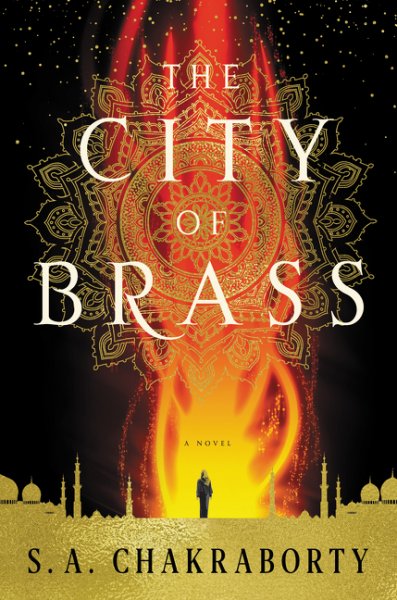 Not many authors can say their book went to auction before being signed. How did that align with your expectations when you finished the book?
It blew past them! To be honest, I didn’t expect anything like the reception the book has been receiving. I was so new to all this and didn’t quite imagine a novel that began as a nerdy world-building experiment with the Islamic Golden Age had much commercial appeal. I was happily surprised and delighted when I had multiple agents offering and then downright floored when it went to auction (after, of course, having to ask my agent what that meant and if it was a good thing). But it’s been wonderful. I’m so happy to see so many people enjoying my world and characters. I received some fan art last week, and I can’t even tell you how giddy it made me feel!
What kind of assumptions do set out to defy, from the type of novel you’ve written, to who you are, to being from New Jersey (like myself)? Which of those assumptions are most enjoyable defying?
I don’t know that I’m necessarily trying to defy any assumptions. I’m comfortable enough in my identity and community to enjoy what I’m doing and try to focus on the work. And I’m proud of my New Jersey roots. I’ve lived in New York City for about a decade now, but my heart will always belong to the Garden State across the river.
The standard question for fantasy writers (or any writers, really): which writers influenced you the most?
This a hard question! I think writers need to read widely; there’s so much we can learn from how others approach craft. Offhand, I think first of Naguib Mahfouz’s masterful handling of complicated family dynamics and how politics affect ordinary people. Laila Lalami writes the best historical fiction that I’ve ever read, with characters who’ll grab you from across the centuries. On the speculative end, N.K. Jemisin’s The Inheritance Trilogy really brought me back to fantasy; the way in which she reflected both the immense power of her characters—actual gods!—along with their arrogance, vulnerability, and very complicated personal lives was amazing.
Have you taken part in any real life writer’s groups or online writer’s groups?
I’ve been involved in the Brooklyn Speculative Fiction Writers’ Group for several years. They’re a great group, and I wouldn’t have made it this far without them. I think writers’ groups are a fantastic resource. If you want to publish, you’ll have to show your work to someone, and it helps to work with people who know what they’re doing.
Thanks for taking the time to answer some questions for the readers of SFFWorld.com, do you have any last words you’d like to impart?
No, but thank you so much for this opportunity!