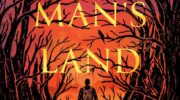
A rich, powerful family seemingly untouchable by the law or competition, the Berishas have a reputation as a sinister family. Are they blessed? Are they cursed? Eldest daughter (and second of three Berisha children) Maris feels she is better suited to take over from patriarch Zef, rather than her older brother Dardan. Her younger sister Nora is inconsequential, too concerned with making things right and hoping to redeem the Berisha name. Well, something dark just might have been helping to protect the Berishas and Maris wants in on the family deal, she’s more ruthless than Dardan. In other words, more like father Zef than Zef wants to admit.

The Berisha family runs one of the largest import-export companies in the world, and they’ve always been lucky. Their rivals suffer strokes. Inconvenient buildings catch on fire. Earthquakes swallow up manufacturing plants, destroying harmful evidence. Things always seem to work out for the Berishas. They’re blessed.
At least that is what Zef, the patriarch, has always told his three children. And each of them knows their place in the family—Dardan, as the only male heir, must prepare to take over as keeper of the Berisha secrets, Maris’s most powerful contribution, much to her dismay, will be to marry strategically, and Nora’s job, as the youngest, is to just stay out of the way. But when things stop going as planned, and the family blessing starts looking more like a curse, the Berishas begin to splinter, each hatching their own secret scheme. They didn’t get to be one of the richest families in the world without spilling a little blood, but this time, it might be their own.
Family secrets start to come out. At the start of the novel, a whistleblower who once worked for the Berisha family is set to be a key witness against the Berishas. The family is concerned, but the night before this traitor is about to testify, he is found dead in his hotel room. The story is that this whistleblower/informant hanged himself, but something more sinister may have occurred.
As my opening paragraph suggested, Maris is the main point of view character in Fiend. Far from likeable, to say she’s got a nasty attitude is an understatement. She thinks very little of her siblings, has a boy toy on the side who she keeps a secret, and she’s described as physically unattractive – in look and demeanor she is very much her father’s daughter. Despite all of this, I found myself feeling empathy for her. She seems the one who is most suited to take over the Berisha empire from the aging Zef, but only men can be the clan leader, the women are to marry and bear a male heir. Rather archaic, but Maris’s frustrations and hope for ascension to the top of the clan and business, and any shred of emotion or fatherly love from Zef gives her a depth of empathy that balances out the unsavory character traits.
Zef continually states how he is protecting Maris from being the head of the clan, the burden that comes with it is something he does not want her to bear. Zef even moved out of the family home into a secluded apartment to protect his family from this burden. Part of that “protection” is keeping his family away from him because of his legendary, nightmarish temper. Rivals of the Berisha’s know of Zef’s temper and how crossing him or igniting that anger leads to some dark consequences.
There are familial rumors of a “protector” who has prevented any fall from grace for the Berishas and their business, a “protector” that has perhaps had a hand in the demise of enemies of the Berisha clan. There is even a long-held myth about a darkness that has been with the Berisha clan for hundreds of years, this darkness has kept the Berishas elevated, feared, and isolated. Maybe having a protector is more of a curse.
Fiend is a brisk, short novel (almost novella length), but Katsu manages to pack a great deal within the pages – archaic sexism, corporate corruption, and classism among others. These themes are woven powerfully and natural into the story. Interspersing flashbacks into the modern-day events allows Katsu to imbue a great deal of depth and history to the Berisha family.
I got the feel of this story being a modern fable and folk-horror. I particularly loved the passage when a brief history of the Berisha clan going back to the old country of Albania. That particular scene was revelatory for me, added weight to the story, and enhanced the fable-like feel of the story I was already feeling.
Fiend is a wonderfully dark story that magnificently draws a very thin line between dark fantasy and the reality of the world in which we live.
On a personal note, I grew up next to an Albanian family named Berisha. Let’s just say I feel a slightly uncomfortable resonance with the fictional Berisha family depicted in Fiend and the Berisha clan that lived next to me and in and around my hometown.
© 2025 Rob H. Bedford
Hardcover | G.P. Putnam’s Sons
September 2025 | 256 Pages
Excerpt: Fiend Excerpt
Review copy courtesy of the publisher, G.P. Putnam’s Sons