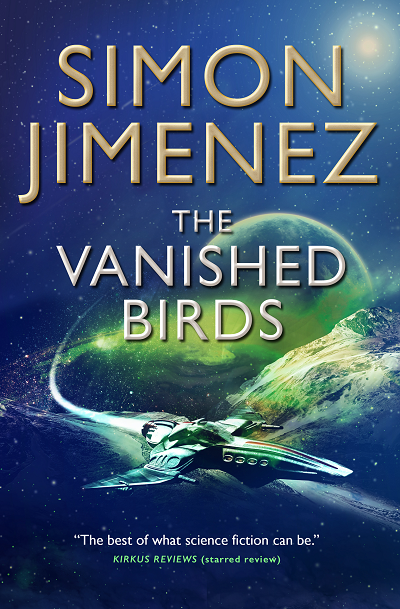
 This is a Space Opera with ambitions – a big sprawling universe with loads of great ideas, likable characters and great pace.
The setup is slowly drip-fed to the reader. Humans have left Earth, ruined by Humanity’s greed, and expanded across the galaxy to space stations perhaps unsurprisingly run by corporate businesses. Imagine your world and your life being run by Apple or Amazon (actually, not that different to today then!)
These worlds are connected by spaceships that travel at faster-than-light speeds in Pocket Space. One of the outcomes of such travel is that time is dilated, so that a few months travel in an FTL is decades on the planets. There are obviously consequences of this.
The story begins by telling of Kaeda on a planet that harvests the dhuba plant. Every sixteen years or so the planet is visited by spaceships that take their harvest away. Kaeda meets Nia every sixteen years, from him being a teenager to old age. Space travellers like Captain Nia Imani seem ageless to the residents of the planets they visit.
The story then moves to follow Nia, who is the Captain of the spaceship Debby. She wants to take care of and guard a young boy, a mute refugee Captain Nia has bonded with.
During the Debby’s return to its space station base, we are told of the station’s creator. Centuries-old genius Fumiko Nakajima is a genius who was instrumental in help humanity escape Earth in the 22nd century by designing the four space stations that now exist beyond the home planet. In a way she is the person most responsible for human expansion into space. We are given her backstory along the way. She now exists as some sort of mysterious Svengali, manipulating events and circumstances.
On Nia’s return to Pelican Station she is contacted by Nakajima, who knows that the young boy has a secret ability that corporate leaders will try to exploit, and that protecting the child will bring peril and suffering to Captain Nia and her crew.
There is a deal struck – and Nia and her crew (some of which are new) agree to take the boy, now named Ahro, to the outer reaches for up to fifteen years where he can grow up and not be found. The result is that we get to travel around a bit and the book becomes picaresque as it does so.
Eventually the boy develops unique skills which has consequences for himself, the crew he has bonded with and Nakajima’s worlds.
The plot, structured around time dilation and the tricks it can play with perception, is packed with reveals, surprises, and unexpected twists.
But most of all it is about the characters. Simon writes a Space Opera with heart that will make you want to know more about them. Even the bad guys are interesting and more nuanced than the typical caricature. Even if we are horrified by what they do, we understand their motives for doing so.
The Vanished Birds is Space Opera but written for a new contemporary audience. Whilst it uses elements that long-time readers may recognise, there’s enough of an original spin on this to keep this fresh and those pages turning. It’s an interesting debut, and one that readers new to the genre will like, I think.
The Vanished Birds by Simon Jimenez
Published by Titan Books. June 2020
400 pages
ISBN: 978-1789093926
Review by Mark Yon