A marriage of convenience, a distant husband, a large estate where the owner knows less about its history than those who maintain the estate…those elements and more come together in an ethereal and creepy fashion in Isabel Cañas’s debut novel, The Hacienda.
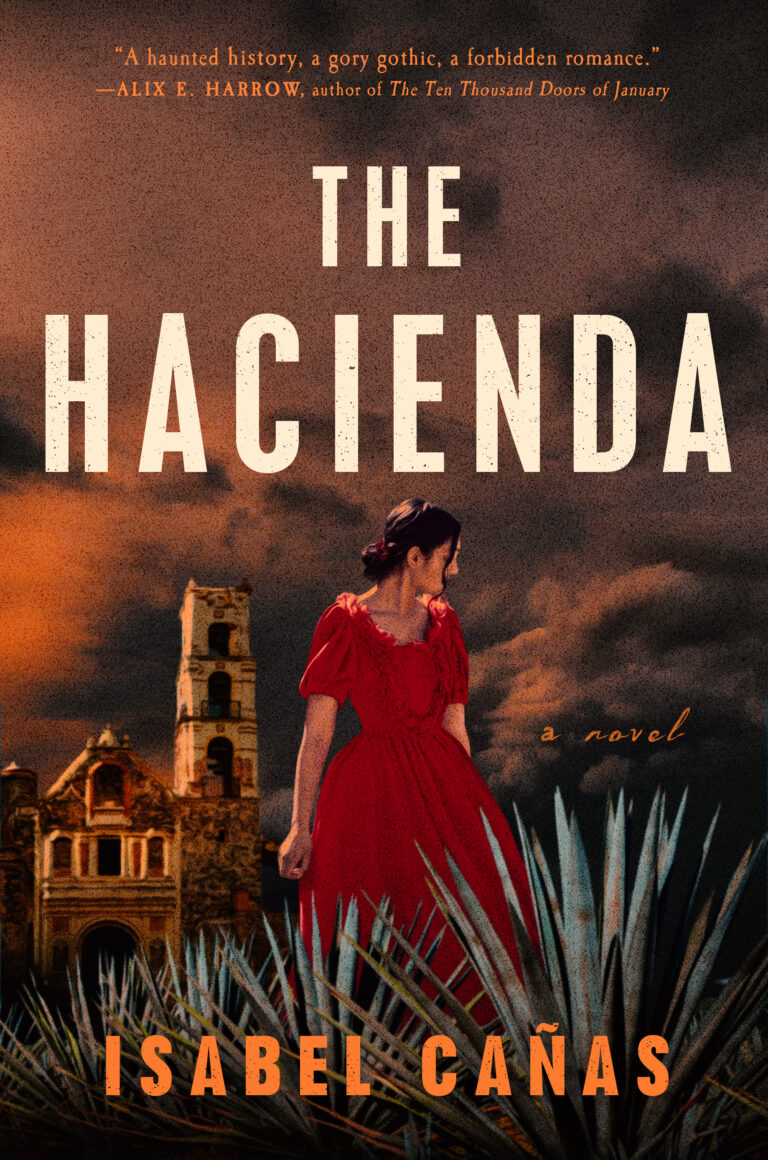
During the overthrow of the Mexican government, Beatriz’s father was executed and her home destroyed. When handsome Don Rodolfo Solórzano proposes, Beatriz ignores the rumors surrounding his first wife’s sudden demise, choosing instead to seize the security that his estate in the countryside provides. She will have her own home again, no matter the cost.
But Hacienda San Isidro is not the sanctuary she imagined.
When Rodolfo returns to work in the capital, visions and voices invade Beatriz’s sleep. The weight of invisible eyes follows her every move. Rodolfo’s sister, Juana, scoffs at Beatriz’s fears—but why does she refuse to enter the house at night? Why does the cook burn copal incense at the edge of the kitchen and mark the doorway with strange symbols? What really happened to the first Doña Solórzano?
Beatriz only knows two things for certain: Something is wrong with the hacienda. And no one there will save her.
Desperate for help, she clings to the young priest, Padre Andrés, as an ally. No ordinary priest, Andrés will have to rely on his skills as a witch to fight off the malevolent presence haunting the hacienda and protect the woman for whom he feels a powerful, forbidden attraction. But even he might not be enough to battle the darkness.
Far from a refuge, San Isidro may be Beatriz’s doom.
Beatriz, a mestiza woman, is devastated by her father’s death during the Mexican War of Independence, which also led to her home being destroyed. Her father, General Hernandez, was betrayed, which makes the pain even more difficult. Feeling she has few options available to her, Beatriz agrees to marry Don Rodolfo Solórzano when he takes a liking to her during a society event. He also happened to be on the opposite side of her father’s fight for independence which sets up a barrier between Beatriz and her mother. There are whispers about Rodolfo’s first wife’s mysterious death, but Beatriz’s drive to find a home drowns out those proverbial whispers as well as her mother’s misgivings about marrying the man who may have had a hand in her father’s demise.
With Rodolfo often away from the estate, Beatriz is given authority over the staff, the opportunity to redecorate, and the wherewithal to make the hacienda her home. She finds some cooperation in the residents but can’t get a good feel on Rodlofo’s sister, Juana. As Beatriz thinks she’s settling into the estate, she begins hearing things, she sees strange and harrowing things as she seeks to make the home her own. She seeks td he aid of a priest to help her, she thinks she needs an exorcism, but Father Andrés, while helpful, proves to be more than just a simple priest.
I won’t reveal more of the plot, but rather expound upon the pleasures of Cañas’s writing and storytelling. I immediately felt as if I was inside Beatriz’s head, I was drawn to her character and her plight. The way Cañas conveys the hacienda through Beatriz’s eyes is a delight, I was transported me to the grounds of the estate alongside Beatriz. Cañas also flavors the atmosphere with a lingering paranoia that grows into a mounting sense of dread that made it difficult for me not “just read one more chapter.”
Something I didn’t realize before reading this book was stigma associated with people who are labeled “mestiza.” (I know I’m likely diluting that idea) It was an underlying current in the novel that helped to inform who Beatriz is, especially in relation to the people who spent the majority of their life in and around Hacienda San Isidro. She also very naturally integrates the element of colonialism into the story and the often toxic power dynamics inherit in such an “ism.”
Many ghost stories or stories of a haunting are about more than just the location, in this case, Hacienda San Isidro, being haunted. The characters bring a cloud grief or haunted presence with them. While Beatriz isn’t dragged down by the darkness that led to her marrying Rodolfo, it most definitely informs her decision to live there. Other characters bring their own particular haunted past to the confluence of events that comprise this novel. Again, to reveal much more would rob, you the reader, of enjoying their revelations as Isabel Cañas intended.
While I haven’t read Daphne du Maurier’s Rebecca (I know, I’m failing), everything I hear about the story resonates with the story Cañas reveals in The Hacienda. There are gothic elements to the story and I found resonance with Guillermo del Toro’s somewhat under-appreciated Crimson Peak. …and no, I’m not making the comparison just because both del Toro and Cañas are of Mexican descent, although that background perhaps informs both of those stories to a degree. Rather, both The Hacienda and Crimson Peak feature characters in a larger-than-life residence in a desperate situation, with familial hauntings and a dark past informing the character’s actions.
What impresses me most is that The Hacienda is Cañas’s first published novel. She has an enchanted pen when it comes to the prose, telling the story from Beatriz and Andrés points of view that was extremely inviting. Every story element meshed together wonderfully, there were times when I could really feel the care and deliberate way a writer constructed their story and Cañas manages to do that without making it seem like just a constructed thing – the story is a natural, living, breathing thing.
I loved this book. Cañas knocked it out of the proverbial park with The Hacienda. An intimate, enchanting, dark, and dread-filled horror novel whose dark themes are balanced by the determination, fortitude, and empathetic nature of the characters the writer has created.
Highly recommended
© 2022 Rob H. Bedford
Hardcover | 352 pages
Tor Books | May 2022
Excerpt: https://crimereads.com/excerpt-the-hacienda/
Author Website: https://www.isabelcanas.com/