It’s getting to be a crowded place, this area of fantasy devoted to Asian-inspired fantasy. There’s a lot of it about: R F Kuang’s Poppy War Series, Fonda Lee’s Jade Bone Series, not to mention books by authors such as Elizabeth Lim, Shelley Parker-Chan, and Malinda Lo and others – feel free to add more yourself.
Whether it is modern-day world using Chinese traditions (Fonda Lee’s Jade City) or a Shogun-esque ancient world (The Poppy War) it is undoubtedly popular.
The Poet Empress does seem to be loosely connected to these as it is set in a world not-named China, but with a culture very similar to it, filled with Emperors, Empresses, peasants, poverty-stricken villages, mention of the Silk Road and a rigidly hierarchical class society of dynasties with long-lasting traditions (as well as magic and Chinese dragons!) it is easy to think to it as an Asian-inspired society. When recently asked to briefly describe what the book was like in a sentence, I said “Think Game of Thrones but with Chinese dragons!”
At a basic level, this is true. The story begins like it is going to be one of those ‘rags-to-riches’ stories where the hero/heroine manifests their own destiny. Wei, the person around whom this story is focussed, is after all, by her own description, an unattractive and unconfident young village peasant who is plucked out of nowhere to become engaged to the next Emperor (once his ailing father dies.)
This is not without danger. Prince Terren, her fiancé, is known to kill people on a whim. Born into a life of privilege, he is a thoroughly horrible man. His idea of entertainment involves him cutting and torturing Wei most nights before using magic to heal her physical wounds.
This is all rather (deliberately) unpleasant. It’s not for nothing that this book carries a ‘trigger warning’: “Please be advised that the book contains depictions of physical and sexual violence, which includes physical and sexual abuse of minors and torture; substantial alcohol use; and violence committed by an intimate partner. Readers sensitive to these elements, please read with care.” I don’t normally mention such things, but here I feel that it is justified. The graphically violent parts made me wince in places.
Wei feels trapped, unable to give up and yet in a position that is untenable. To help herself she becomes determined to do something in secret which is forbidden for women – learn to write. Words here have magic powers and if written in a certain way, at a certain time, could lead to her torturer’s death.
Obviously, there is a high degree of risk. Wei could be be permanently killed at any time, and she is aware that her ‘failure’ would also lead to the death of her family and people in the village she came from.
She also at the same time has to negotiate the social circles of the other concubines who, coming from the rich and influential Houses see her as a usurper.
Her relationship with Terren changes too, as in her search for hidden details that would make her heart-poem spell more potent, she finds out the reasons for his actions. For much of the book there is a “will she- won’t she?” idea that she might just forgive her torturer in some kind of Stockholm syndrome-type response.
At this stage we therefore have a lot of elements readers may recognise – characters who begin in a bad place but who are determined to make things better; characters who overcome physical and sexual violence and violence committed by an intimate partner; politics, gender issues, dominant males and submissive females.
By the end of the book though all of this is resolved, and the ending is both rather appropriate and even satisfying. It is not what I was expecting.
In summary then, The Poet Empress is a startlingly good debut novel. Shen manages to balance the use of fantasy-esque vocabulary and Asian concepts of family, society and morals with accessibility and pace. The prose is unique enough to be a fantasy, yet accessible enough for the plot to develop without having to give detailed notes along the way. It flows well, the characters are understandable, the world-building is very good.
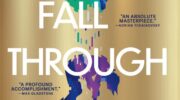
If you are new to reading such material, this is a great one to start with, and there’s a lot that I think will grab your attention. (Mind you, the lovely cover may help.)
In summary, this one’s a very promising debut with potential to do very well, as long as it can be seen to stand out in the crowd. I think it will – The Poet Empress deserves your attention. Despite my initial concerns, this one is worth reading to the end. As my first Fantasy read for 2026, I think we’re off to a good start.
© 2026 Mark Yon
Hardback | Gollancz
THE POET EMPRESS by Shen Tao
January 2026 | 400 pages
ISBN: 978-139 9628 969