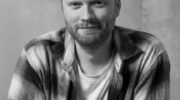
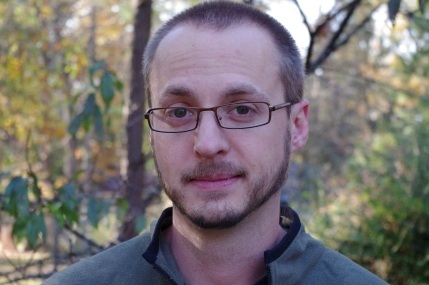
 Jay Posey is the author of the Duskwalked series. We’ve talked to him about his new book Morningside Fall.
For the benefit of those not familiar with your Legends of the Duskwalker series, can you tell us a bit about it?
It’s a post-apocalyptic Western with cyberpunk elements. In the first book, titled Three, a lone gunslinger named Three reluctantly agrees to escort a dying woman, Cass, and her young son Wren, to the boy’s father in a distant sanctuary. Things get complicated when people from Cass’s past pursue them; even moreso when Three finds out who they are and why they’re after the mother and her son.
The second book, Morningside Fall, picks up about a year later, and focuses on Wren and Cass as they deal with the drastic changes to their lives after the events of the first book.
You’ve built on the first book, but at the same time strayed away from it also. Can you give us some insight into Wren’s character in Morningside Fall?
In Morningside Fall, Wren’s trapped between two worlds. On the one hand, he’s been elevated to a position of authority in a powerful city. On the other hand, he’s still just a boy, trying to make sense of his place in a world of grown –ups. He’s got wisdom and maturity beyond his years, but at the same time he doesn’t have much confidence in himself. As much as he wants to do the right thing, he’s not always sure what that really means.
What are your expectations when you now are about to release the second book in the series, Morningside Fall.
I’m really not sure what to expect. I kind of thought I’d have a better grasp on this whole thing after the first book was published, but since I’ve never published a second book before, this is kind of a new thing for me, too. I didn’t really have to worry about disappointing anyone but myself with Three since no one knew what to expect from me in the first place, so I’m a little on edge with Morningside Fall, knowing there are fans out there who are waiting to see what’s next. I hope everyone loves it, though that’s probably too much to expect.
How do you feel you have evolved as a writer from your first book?
I’m getting a little more comfortable with the idea of writing long works. It’s still a daunting process, but I feel a little more resilient as a writer than I did the first go-round.
Post-apocalyptic stories are quite popular nowadays, but you’re world is different in many ways. Maybe a good way to describe it is a lack of a world as such. How do you feel you have managed to create something unique in this post-apocalyptic setting?
Well, I actually think the Duskwalker world is fairly rich, but I definitely chose to go a minimalist route when it comes to describing everything. My goal for the series was to provide enough of the setting for the audience to understand what was going on and to get the right texture of everything, but also to leave enough room for readers to contribute to their own vision of the world. I wasn’t necessarily concerned with making sure everyone imagined every detail exactly the way I pictured them, and I hope that sort of reader collaboration enabled people to have a more personal experience than they might have otherwise.
What sort of challenges, as a writer, might you have faced before your first book was published? Any insights you would be able to share for those aspiring writers seeking advice?
Whew, I don’t think we’ve got room to cover all the challenges a new writer can face. I guess I would say there’s no such thing as an aspiring writer … you’re either writing or you’re not. You might not be published yet, or you might not have hit whatever milestone you’re hoping to hit, but if you’re doing the work, you should feel really, really good about yourself, because lots of folks aren’t.
And make sure you’re writing the things that you feel good about producing. There are so many variables beyond your control when it comes to the publishing world, there’s not much point in trying to chase trends or predict the Next Big Thing. But if you can complete a work that you’re truly proud of, that’s a genuine accomplishment you can enjoy regardless of how many copies it sells.
Have you ever struggled between what you would like to happen to a character and what you considered more sensible to occur? Can you tell us when and what did you do at last?
Absolutely. In Morningside Fall, there’s a moment when two characters are planning to sneak off from the main group to do something risky. I’d had that moment planned for a long time, and it was a pivotal one, so I thought for sure it was going to go down according to the outline. But when I was actually writing the scene, the two characters got to the door, and there was a third character there. I wrote it on the page before I even thought about it, and then stopped and thought “No, wait, that’s not right!” But no matter how much I tried to figure out a way around it, I realized that it was the only proper way for it to go, based on who that third character was.
Ultimately I had to change the plan and follow wherever that new story moment led, because it really did feel right. That’s both the magic and the terror of writing … sometimes your characters know themselves better than you do.
Do you think that the cover plays an important part in the buying process?
It might well be the most important part in the buying process. There are just so many books out there vying for our attention. It’s nice to say that you can’t judge a book by its cover, but you can’t judge a book if you don’t even notice it in the first place either.
What are your thoughts on good/bad reviews?
Reviews are something I’m still trying to come to terms with as a creator. Of course I genuinely want everybody to love my work. If you’ve spent your valuable time reading something I wrote, I sincerely do not want you to feel like it was a waste. I’m also one of those people that if you give me 4.5 stars out of 5, I’ll be disappointed that you didn’t have a 5-star experience.
If I can identify trends across multiple reviews, whether good or bad, that’s sometimes helpful to me to recognize what I should try to correct or what I should continue to do in future works, but a lot of times I’ve found that I’m just overly-sensitive to what people say. Even a side comment in a 5-star review like, “A few too many commas for my tastes, but otherwise excellent!” will haunt me if I let it and make me paranoid about comma usage for days. Even now I’m wondering about my punctuation usage in this interview. Should there have been a comma after “Even now”? Gah!
I do appreciate the fact that people are willing to share their thoughts on my work, though. If someone leaves a review that gains me a new reader, that’s great. If someone else leaves one that keeps another person from wasting their time on something they definitely wouldn’t enjoy, that’s great too. I’m just still trying to learn not to take it all so personally, on either count.
How do you define success as an author?
That’s a great question. I probably should’ve done that before I started out on this whole crazy journey. I used to think if I could just get published, I’d be a success. Then it was if I could just sell a certain number of copies. Then it was if I could just win some awards.
I think for me, though, it’s going to be a much longer term thing; if I can look back on my career however many years or decades from now, and I can see that I’ve left a positive impact on people and on our culture, that I’ve built up more than I’ve torn down, and that I’ve left some kind of uplifting legacy, that’d be a pretty huge success.
But I’ve already had the chance to talk to some young fans who’ve been moved or inspired by my work, and knowing that I’ve contributed to some lives that way is already a success for me.
What do you do when you’re not writing, any hobbies?
When I’m not writing, I’m mostly feeling guilty that I probably should be. But I like to spend time with my family, and read, and I’m a musician so I like to fiddle around making noise too. I’m also a gamer, though I don’t spend quite as much time doing it these days as I’d like to.
What’s next, what are you working on now?
I’m currently working on Book Three in the Duskwalker series, and also putting together notes for a new project that I’ll be announcing one of these days.
Thanks for letting me stop by!
—
More about Jay Posey at http://jayposey.com/
* * * * * * *
Interview by Dag Rambraut – SFFWorld.com © 2014