 Well, this one surprised me. First of all, it made me realise that it is 35 years since I sneaked into a cinema, underage, to watch the first movie in this franchise. (If I remember right, it wasn’t very busy.) I was impressed by the story, the imagery, the sheer horror of it all, though I had no inkling of what a franchise this would become. In 2014 the franchise is estimated to be worth at least $500 million, with books, comics and computer games to add to the roster.
So it may be about time for a revaluation of the movies that began it all in the first place. Alien the Archive is another of those very heavy, coffee-table books, printed on glossy, heavy stock. It looks at each of the main ‘classic’ movies in turn, from Alien to Alien Resurrection (no room for those Predator/Alien crossovers here.)
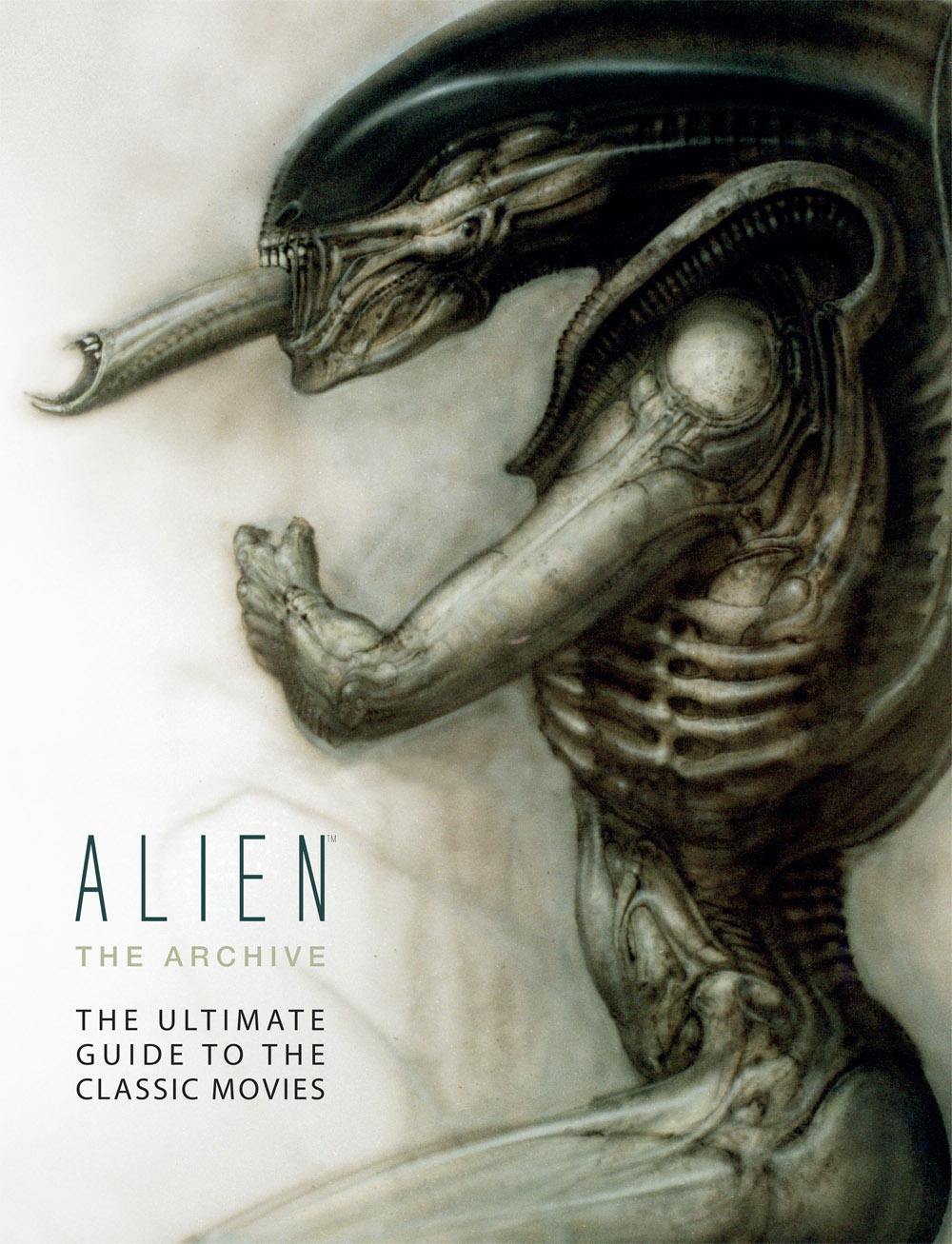
The cover is one of those infamous Giger sketches. Indeed, the whole book is dedicated to the Alien artist, who died in 2014, whose influence throughout is paramount. Even James Cameron, when working on Aliens, is quoted as saying, “Even though Giger wasn’t directly involved, his ghost sort of hovered about.”
The book begins with an introduction from Sigourney Weaver, Ellen Ripley from the series, who through a conversation tells of from humble beginnings how important Ripley became, not just to Sigourney but to film media itself. Ripley is a feminist icon of the 20th century, originally created at a time when strong female leads in cinema were not de rigueur.
The book generally is what you’d expect, a combination of text and photographs showing production props, sets and film stills. There’s interviews with the already-mentioned Sigourney Weaver, some of the other cast, concept artists and technicians and some nice production photos from all of movies, some of which I’ve not seen before. Most of this is culled from other publications, although the way it is put together is intelligent and thoughtful.
One point that wasn’t really covered here but I would have liked to see more of was the burgeoning parallel development of film memorabilia, although most of this may be covered in other books.
As the book goes through the films chronologically, it is perhaps to be expected that fans will want information on the first two movies (Alien and Aliens) in particular, and the book delivers on these counts. Each film is subdivided into sections, including specific parts on the props (weaponry, spaceships, sets) and, of course, the aliens themselves. I liked the blueprints and assembly photos of the drop ship and the APC from Aliens myself, with the realisation that basically it was an engine and big wheels and nothing else.
As the films became less commercially successful, the text accounts become less detailed, though it was interesting reading comments about why Alien3 was so troubled and why it was so poorly received, having a slew of quality directors and scriptwriters assigned to it. Alien3 had three different directors at one point and at least ten different screenwriters, including William Gibson. One version intriguingly was a version without Ripley, another concentrated on male character Marine Hicks to reset the franchise – a sort of Alien: the Next Generation, if you like.
The book also tells why the film studio decided to take a chance on Alien: Resurrection, what they hoped it would do and also perhaps why it didn’t, despite being a much less troubled production than Alien3. Many now well-known directors were approached, from Joss Whedon (who wrote a script) to Danny Boyle, Peter Jackson and David Cronenberg before settling on French film-maker Jean-Pierre Jeunet. Jeunet, it was hoped, would give the franchise a different perspective and a reinvigoration of the franchise, with consequential benefits. Bringing Sigourney Weaver back (not an option initially) also seems to have been both a driving force and a defender of the movie.
Seeing the movies as part of a sequence, the book shows how the Alien evolves as the films become bigger, the franchise more popular and the budgets more mind-numbingly enormous. From the first movie’s fairly humble beginnings, (I think it is fair to say that the success of the first movie was rather unexpected), by Alien Resurrection the whole mythos seems to have been developed.
The book finishes on an optimistic note, that the series has gone on to other media and that whatever form it takes, the cultural influence of the Alien franchise has and will remain forever. There is still a demand and a thirst for more.
Alien: the Archive is a glorious look at some iconic movies that set a standard for many others. For those new to what the fuss is about, perhaps new to the Blu-rays or coming from the computer games, this book gives you some idea. For those of us who’ve been around a bit longer, it gives some interesting and unusual viewpoints into the franchise and film-making in general. A great present for the fan.
Alien: the Archive
The Ultimate Guide to the Classic Movies
Published by Titan Books
ISBN: 978 1 78329 1045
320 pages
Review by Mark Yon, November 2014