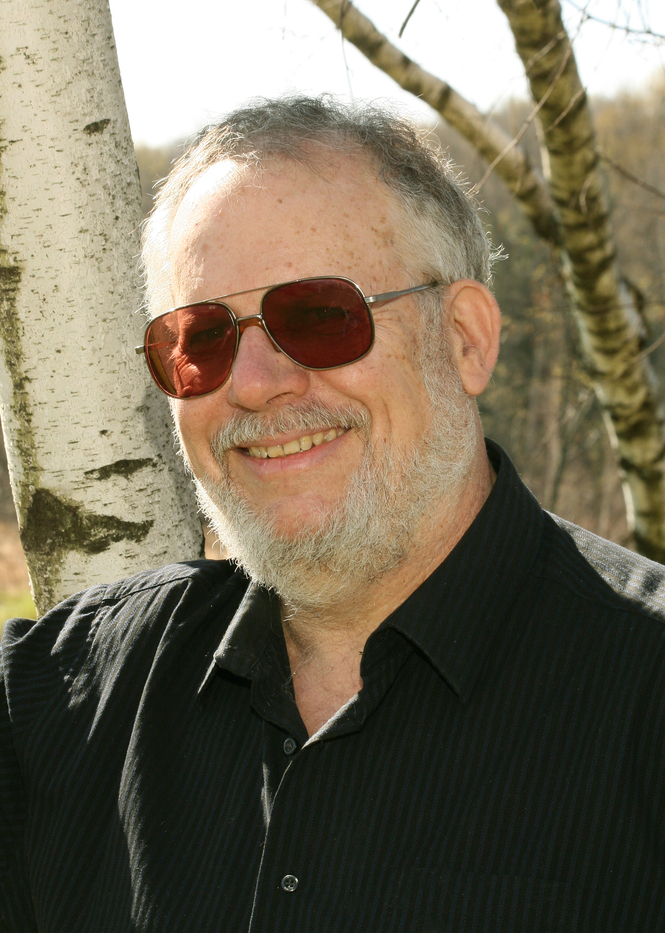
 Mysterious underground volcanic forces and a savage plot to alter the Earth’s climate. A sixteen-year-old Viking girl, a German geologist from World War II, and a former Secret Service agent protecting a female volcanologist. We’ve talked to Chris Angus about his new release, The Gods of Laki.
Can you tell us a bit about your new novel, The Gods of Laki and give us some insight into your main characters?
I seem to be drawn to remote, barren landscapes. Maybe it has something to do with my Scottish ancestry. My books have been set in Greenland, the barren plateaus of central Asia and the continent of Africa in the early 20th century when much of it was still unexplored. As readers of my other books will know, I enjoy moving about in history in a sort of epic style. It’s a real challenge to develop plots with characters and locations that overlap in time and then connect it all at the end in a surprising and unexpected climax. It’s a bit like putting a puzzle together.
My early Viking characters arrive in Iceland in the tenth century to find a hostile and forbidding landscape. They must deal not only with the harsh climate and scarce resources but also with an unexpected presence beneath the volcano, Laki. Here, in the vents and lava tubes that permeate the sub-landscape of the volcanic chain, resides a force older than mankind, one that seems to extend life, but only at a terrible cost.
Skip forward to WW II and German efforts to control Iceland and the shipping lanes of the North Atlantic. But even as they explore the subterranean mysteries of the island, they too begin to realize there is something else that resides beneath the volcanic surface. Fritz Kraus, a young German geologist with experience in Iceland, is picked by Hermann Goering to plot an outrageous attempt to cause eruptions in the Laki chain that will, he believes, result in widespread eruptions, devastate England with poisonous gases and affect the outcome of the war. In the process, Hitler himself becomes involved as he begins to expect there may be life extending properties in the region which could benefit his plans for the creation of a master race.
In the present day, a retired U.S. Secret Service agent who now works in developing thermal energy resources in Iceland, is called to the office of the Senate Majority Leader who wants to hire him to protect his daughter, a volcanologist working in Iceland, who has raised the ire of a host of forces, including Iranians set on taking over the island’s economy and the German Conference of Bishops, among others.
The Viking shaman known as Amma relates her tales of the spirit of Laki in stories that have come down in the Icelandic sagas. Soon, the search is on to release the Holy Grail powers of Laki, leading to the destabilization of the volcano’s subglacial lakes and lava flows and to a revelation that will shake the foundations of world religions.
What inspired you to write this story?
I got to combine a whole treasure trove of my personal interests in writing this book: The geology of volcanoes, subglacial lakes and Iceland in particular, the history of the Vikings and the Icelandic sagas, WW II with its global reach and its plethora of evil characters, the latest developments in the science of life extension and so on. When I was thirteen, my parents took me to live in Istanbul for a year. We spent two whole summers touring around Europe. I’ve been fascinated by European history ever since and have used that passion in most of my books.
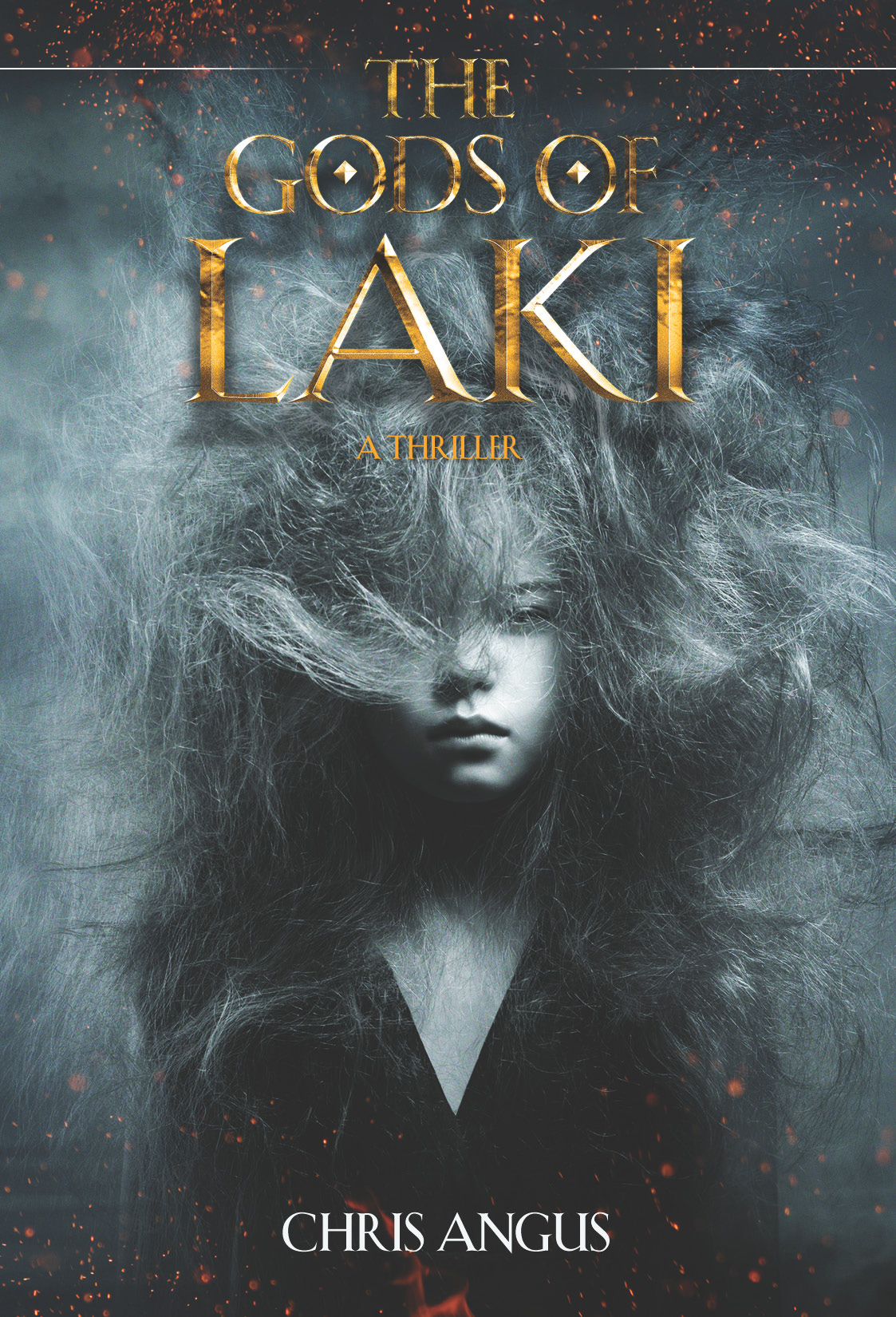 What goals might you have set for yourself when writing The Gods of Laki and how do you feel about the end result?
As with all my books, my goal is to write a riveting story while at the same time offering the sort of historical settings and detailed scientific and medical information that my readers will find just as fascinating as I do. I always learn things with each book I write and I think my readers do too but without feeling I’m forcing substance down their throats. There are some great mystery writers out there, many who write series. But I can only read about so many autopsies, crime scenes and criminal data base systems without getting just a wee bit tired of it all. I can promise my fans they will read about things they’ve never thought about before. I’m also interested in the motives of the people I write about, whether it’s the crazy schemes of a Hermann Goering, the fanaticisms of religious leaders or the personal motives of greed, love, revenge or perhaps, as in The Gods of Laki, the desire to be immortal.
How did you start writing? Was there a particular book or moment in your life that spurned you on?
I come from a writing family. When I was growing up, I would come home from school to a house noisily filled with my parents and older sister all pecking away on typewriters in their separate rooms. I really had no choice but to join in. My father and mother were both university professors of English literature. My mother wrote a well-received series of murder mysteries in the 1960s. When I was about 28, she became too ill to continue and so with her blessing I tried to take over the series. I wrote three more murder mysteries using her characters. They were never published, but this is what got me hooked on writing and I moved on to a genre that appealed to me more: thrillers. However, I have recently returned to the mystery and my book MISERY BAY will be out next spring.
Have you ever struggled between what you would like to happen to a character and what you considered more sensible to occur? Can you tell us when and what did you do at last?
This was an issue in my book WINSTON CHURCHILL AND THE TREASURE OF MAPUNGUBWE HILL. Churchill is a fascinating character. He came complete with his own set of foibles, a renowned temperament and the courage of one who simply couldn’t imagine himself dying before he had completed his life work. As my protagonist, I had him taking part in the action during WW II. This was hardly a sensible thing to imagine a leader doing. What could be crazier than the Prime Minister of England heading to the wilds of East Africa to confront the Nazis in hand to hand combat at the height of the war in order to save the life of his daughter? But while the actions might seem extraordinary, they fit in every way with Churchill’s “damn the torpedoes” mindset.
What is your favorite and least favorite part of the writing process, and why?
I suspect like many writers I most enjoy revising and editing my books. It’s almost impossible to convey the sense a writer gets when he re-reads something for the hundredth time and discovers a better way to say what he had in mind. This sort of tweaking never ends. I find myself doing it even after the book has been published. It’s also rewarding when you discover some bizarre fact that you can weave into the tale, sometimes in a way that may change the entire direction of the book. This happened in my book LONDON UNDERGROUND when I read about the incredible scientific work done by the Nobel Prize winning scientist Alexis Carrel, who did the first coronary artery bypass on a dog before WW I.
The toughest part is always the first draft, sitting down to that empty page. But then, suddenly, the story takes hold and you find you can’t get the words out fast enough. So this is hard but also, perhaps, the most rewarding feeling a writer can have.
What sort of challenges, as a writer, might you have faced before your first book was published? Any insights you would be able to share for those aspiring writers seeking advice?
It’s been almost twenty years since I published my first book. The entire industry has changed since then. I used to send hard copies in the mail. Now everything is done online. There was no social media then, to speak of. Now, publishers insist that writers do as much of that as possible, as well as their own editing, proofreading, etc. Everything is harder, finding an agent, finding a publisher, getting attention. Also, publishers aren’t willing to spend any money at all now to promote unknown authors. It’s all on the author and author expenses have leaped as we have to run promotions, pay for social media advertising, pay for computer software, websites, etc. It’s a whole new ball game. You’ve really got to be dedicated to the work and even then, I’m sorry to say, your odds aren’t good.
How do you go about the marketing aspect and especially related to your online presence? Anything you’ve seen work better than other things?
You can’t just be a writer anymore. I spend an enormous amount of time on social media and website planning, as I mention above. It’s hugely distracting to have to stop writing something when you are really going well in order to address all these other things. I also have to line up my own reviewers and find writers willing to write blurbs for my books. All of this stuff publishers used to do. So far, I have not found any way to prove to myself that all this social media is having any effect. It’s very ephemeral, which just serves to make it all the more exasperating.
For your own reading, do you prefer ebooks or traditional paper/hard back books?
I have never read an ebook. Maybe I’m a dinosaur, but I still love reading hardcover books. I like the heaviness of them, the smell of them, the sense of permanence they give.
What kind of books do you read, any favorite authors?
I read pretty eclectically. I love history and keep up on the latest developments in science and medicine. I read lots of thrillers, just to see what other authors are doing. Mostly, I don’t like what I read. Many books are too formulaic, poorly written with utterly unbelievable plots and cartoon characters. I think my books have much more depth and are based as much as possible on current science, history and current affairs, including the current affairs of whatever time period I set the book in. I probably read or at least start reading five books for every one I complete. Keeping the reader’s attention is the first duty of the writer. Growing up and coming from a very literary family, I read all the classics. Nowadays I read very little literary fiction. There seems to be way too much angst going on. I prefer a good, nail-biting story with lots of fascinating history. As a child, I was usually totally engrossed in books about adventure. I read Tarzan, H. G. Wells and Lord of the Rings.
What do you do when you’re not writing, any hobbies?
I began my writing career focusing on the environment and especially the Adirondacks of New York State, near where I live. I published hundreds of articles, essays and reviews on the subject along with my first several books. I still love the Adirondacks, though I don’t write about it as much anymore. But that influence shows up in my fiction, as when I had a character in my book FLYPAPER that was based on a famous Adirondack guide, pilot and conservationist named Clarence Petty, whose biography I wrote. I still canoe, ski and hike in the mountains. I often get good ideas or can unravel a difficult plot problem while I’m doing these activities.
What’s next, what are you working on now?
I just finished a sequel to my book FLYPAPER. I’ve also just finished a mystery set in Nova Scotia, the home of my ancestors. The characters in that book struck both me and my publisher as good material to turn into a series. I’ve written the first two in a series of young adult books which have yet to be published.
* * * * * * *
Interview by Dag Rambraut – SFFWorld.com © 2015