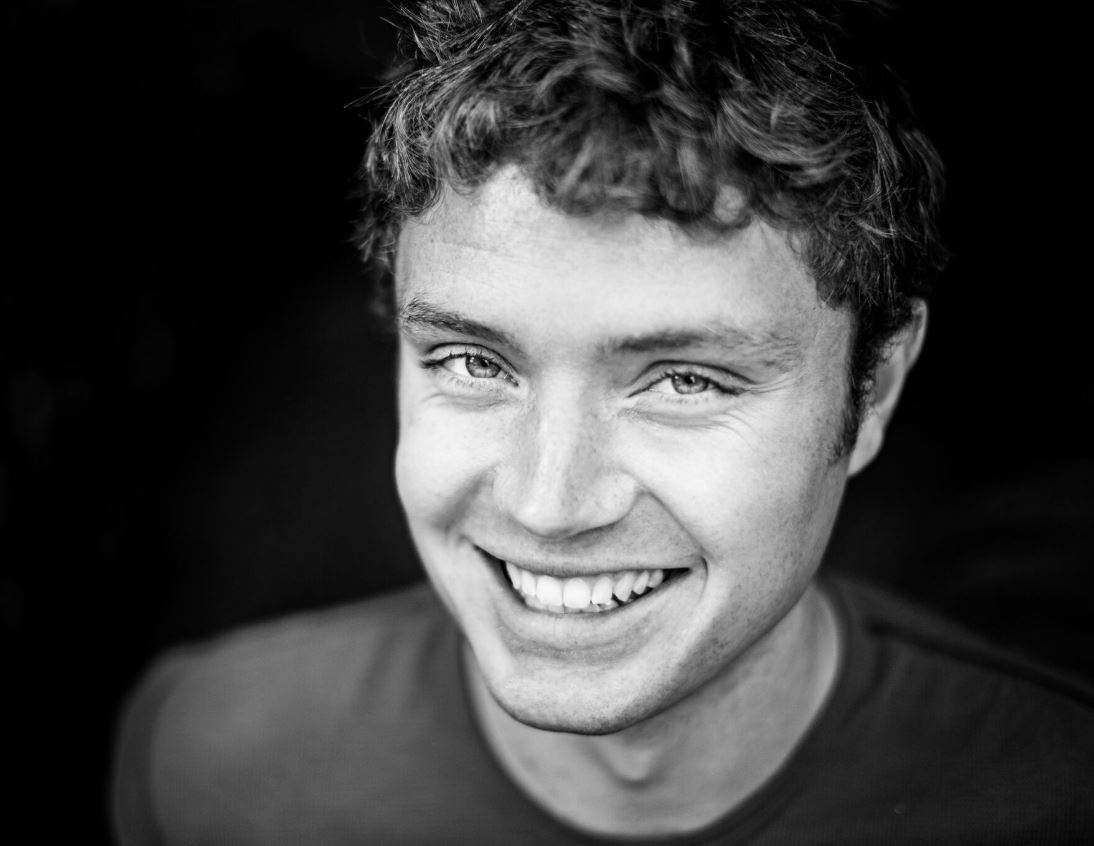
Welcome to SFFWorld, Eliot. Cumulus is your fourth book, can you tell us a bit about it? Where did you get the inspiration from?
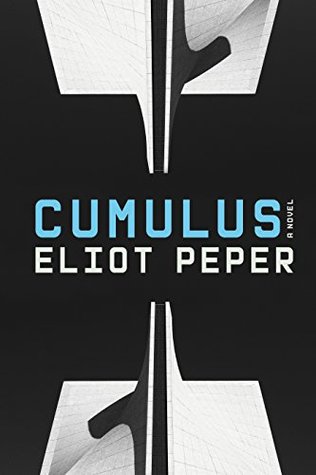
Cumulus takes place in a near future San Francisco Bay Area ravaged by economic inequality and persistent surveillance. It’s a dark, gritty cyberpunk thriller that wrestles with privacy, geopolitics and the gap between the promise of new technologies and the messiness of implementing them in the real world.
I’ve spent years worked at a venture capital firm and a number of startups and many of the scenarios illustrated in the story feel almost inevitable to me. That’s not to say I’m predicting the future. It’s just that when you immerse yourself in what people are actually building today, new and very different worlds become very easy to imagine.
The other half of the inspiration for Cumulus comes from living in my neighborhood. I grew up in Oakland and moved back a few years ago. We’re in the global hub for new technological and economic growth, but many parts of the city feel like a different universe. Just as the Bay Area profits from the tech boom, we still struggle with endemic poverty, violent crime, crumbling public services, and so many other social issues that resist simple solutions.
We love our neighbors and kids regularly bike up and down our tree-lined street. But we had a triple homicide on our block last year and last month there was a drive by shooting 40 feet behind my wife and I as we were walking on a busy street in broad daylight. It’s a strange historical moment to be living in.
What is it with the intersection of technology and society you find fascinating?
Technology has enabled humans to build civilizations. It’s how we went from being hunter gathers, to farmers, to empire builders, to Snapchatters. But technology isn’t static and when it changes, the ripple effect often redefine civilization and change the shape of our lives.
Technologists might know how something works, but no one person can appreciate the extent of impact of what they might be creating. Did Henry Ford realize how the automobile would change urban planning in Los Angeles? Did Alan Turing think about how algorithms would one day be used to pilot weaponized autonomous drones?
The more useful the technology, the wider the impact. Those impacts have implications for all of our personal, professional, and communal lives. We might hate politics, but politics is ultimately how all of us try to get along as we live our lives. When technological change starts impacting human communities, politics will (and should) get involved. That weird and turbulent intersection never ceases to pique my interest.
That’s also why I’m donating the first six months of proceeds from Cumulus to the Electronic Frontier Foundation (EFF) and Chapter 510. EFF fights to protect a free and open internet. Chapter 510 is a literacy nonprofit serving underprivileged youth in Oakland. These organization are the real heroes. Their hard work helps to avert the dark future that Cumulus depicts.
Was it a given that it had to have a Bay Area setting?
Oakland feels like a confluence of many of the social, economic, and technological challenges the US and the world are wrestling with right now. It’s a microcosm in which you can identify themes that many people are thinking about. It just felt right for this story.
What goals might you have set for yourself when writing Cumulus and how do you feel about the end result?
Writing a novel can feel like a single extended existential crisis. Inevitably, there are points at which I doubt myself and question everything. If I spend enough time just sitting with it, or maybe banging my head against the wall, things have a way of working out. I’m at the beginning of my writing career and have an enormous amount to learn about storytelling. With every book, I try to focus on a new area of craft to refine. At the end of the day, I’m thrilled with howCumulus came together and have been delighted by the reader response.
You also have to tell us a bit about your Uncommon Series.
The Uncommon Series is a trilogy that follows a college dropout who founds a tech startup and takes it from garage to IPO and gets caught up in an international conspiracy along the way. It’s the #1 top-rated financial thriller on Amazon has earned a cult following in Silicon Valley.
The story wrestles with how new technologies like machine learning can fix big problems, but also cause them. The United Nations estimates that organized crime brings in $2 trillion a year in profits and the black market makes up 15–20% of global GDP. Mafias and cartels all over the world are early adopters of many new technologies that give them advantages over competitors, civilians, and law enforcement. Scandals like the Panama Papers are becoming more and more commonplace. The startup in the story finds itself mired in that milieu, even as the best friends who created the software are trying to figure out how to build a company.
What made you want to move into Science Fiction?
It didn’t feel like a move! I’ve always been a voracious SFF reader. In addition to being entertaining, speculative fiction is like traveling to foreign countries. It throws our own assumptions about the world into sharp relief.
Technically, The Uncommon Series is more technothriller than SFF, but it transports the reader into a strange and wonderful world of high-stakes entrepreneurship and tech-savvy gangsters. Although Cumulus sits more squarely in the SFF category, the creative process didn’t feel very different. The story still required characters, action, intrigue, and world-building. I always optimize for story, not genre.
How did you start writing? Was there a particular book or moment in your life that spurred you on?
I’ve always loved reading. I was the kid who had a pile of books checked out from the library. But I didn’t start writing until I was 26 years old. At the time, I was working for a venture capital fun as a drop-in operator for a number of tech startups. I thought it was such a perfect setting for adventure: high-powered personalities, world-changing technology, fortunes won and lost, etc. There are obviously mountains of nonfiction business books, but I couldn’t find any good adventure stories set in that world. It seemed like too rich of a canvas to go unexplored, so when I couldn’t find any novels to read, I decided to sit down and write one.
What books inspired your career as an author, and what authors do you enjoy now?
I’m a huge fan of William Gibson, Neal Stephenson, and David Mitchell. I love Michael Lewis, Haruki Murakami, and Don Winslow. I can’t get enough of Guy Gavriel Kay, Paolo Bacigalupi, and Yuval Noah Harari. This is a dangerous question, I could go on forever.
What’s next? What projects are you working on at the moment?
My fifth novel, Neon Fever Dream, comes out in August 2016. It’s about a dark secret hidden in the swirling dust and exultant revelry of Burning Man. I’m super excited about the characters and the story and can’t wait to hear what readers think. Once that’s out, I’ll sink my teeth into a new story.
*****
Interview by Dag Rambraut – SFFWorld.com © 2016