Known for her popular YA horror novels in the Bloody Mary universe, Hillary Monahan is the author of Snake Eyes, the third book in the Gods & Monsters series by Abaddon Books. Neatly skirting the line between urban fantasy and horror, Snake Eyes is the story of lamia Tanis Barlas, caught in a battle between two mythological enemies, while daring to fight for the freedom to live her own life away from the clutches of her monstrous mother.
Hillary, welcome to SFF World! I loved your main character in Snake Eyes, with her uniquely twisted moral compass. What led you to choose the myth of the Lamia as your basis for the novel?
This is going to sound counterintuitive, but I’m equally terrified of/fascinated by snakes and I thought maybe writing about LOTS of them would conquer the fear. I was wrong, mind you, especially since I added sentience and all of the baggage I did, but in theory it was a great plan. Plus I watched that absolutely terrible Claymation “Clash of the Titans” too much as a kid and the poorly fashioned Medusa was my favorite part.
Tanis lives in a world where ‘good’ and ‘bad’ are entirely relative. There is no real black and white; the entire novel is painted in gritty tones of gray. Was this a choice you made due to Tanis’ monstrous nature, or is playing in this ‘gray zone’ something you enjoy in general?
It’s more a personal philosophy coming forward? I don’t believe anyone is all good or all bad. Tanis makes decisions that would be, on the surface, horrific, but if you walked in her shoes, wouldn’t you make the same? Or damned close to it? We can say the noble thing to do would be to sacrifice herself or run away but that goes against a very basic self-preservation tenet. SNAKE EYES also tackles, to some extent, cycles of abuse. Often, staying and surviving is painted as a victim’s only option, and when you hear a thing repeated enough, especially since childhood, you start to believe it.
 Snake Eyes is the third in the Gods & Monsters series, which includes work by Chuck Wendig and Steven Blackmoore. What was it like working within an established series? How much freedom did you have, and how did the experience compare to working independently?
I was told from the very beginning that I was allowed to write my own standalone novel, so that’s what I did. Fortunately, Chuck and Steven are writerly friends, so tips of the hat to their work were easy to do, especially when answers to questions I had was only a DM away. It was fun including, for example, Amanda, and referencing what happened in Chuck’s book. I don’t know that I’d ever be able to submerge myself totally in another’s universe to write it? But this afforded me enough freedom it was workable.
You write across a number of genres: YA contemporary (such as your new release, Dead Little Mean Girl, under the pen name Eva Darrows), horror, urban fantasy, and even adult romance (under Thea DeSalle). Do you find your work tends to have a common thread, or are these all completely distinct ventures?
I tend to write female dominated casts; I was raised by my mother and grandmother growing up, so you see a lot of that in the books. All genders are there, but at the heart is often a strong female relationship. Humor’s there, too, as it’s my coping mechanism of choice. When it’s dark and broody, I crack jokes to get through.
Although you have dabbled in adult fiction, most of your work is Young Adult. What is it about writing for a teen readership that you find appealing? And are there any specific issues you’ve come up against when writing horror for teens?
I write the books I would have wanted to read as a teen? I skipped right from Christopher Pike up to Stephen King. There were no steps between. It was silly, young-ish YA slashers and straight to Pennywise. In retrospect, I realized there should have been an intermediate read there, particularly an intermediate focusing on girls who’ve notoriously been treated poorly by the horror genre. Also? I just like teen readers. They’re honest and fun and insightful, and spending time with them at signings/panels is always such a pleasure.
Dark fiction is clearly something you enjoy working with. Is this a long-time love, or something you were drawn to when you began writing?
I’ve always been a gloom cookie. My first book love was WHERE THE WILD THINGS ARE and it didn’t take long to get me to SCARY STORIES TO TELL IN THE DARK. Roald Dahl was a yes. IN A DARK, DARK ROOM was a yes. My grandmother had a ton of Chas Addams’ cartoon collections so I was reading The Addams Family when I was still in single digits.
I love the premise of your popular Bloody Mary books. What led you to choose that particular bit of folklore to write about? Do you have any more work planned for that universe?
My town had a spin on Bloody Mary called Mary Jane. According to local lore, when our middle school burned down in the 1950s, a girl named Mary Jane was trapped in a bathroom and died there. If you went into the new school’s bathroom (relatively new) and said her name three times in the dark, she’d appear in the mirror and scratch you. My middle school years? We tormented each other with this stuff, so when I was looking for fodder for my first solo effort YA, going back to a source of childhood/teen trauma seemed like a good idea.
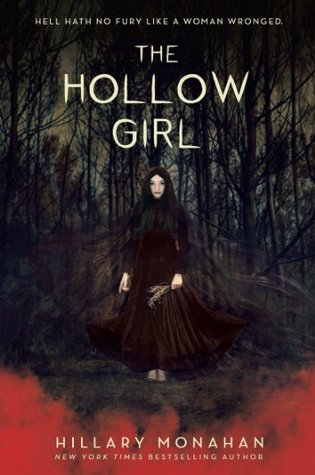 Could you tell us a little about your 2017 releases, Dead Little Mean Girls, and your upcoming horror novel The Hollow Girl?
DEAD LITTLE MEAN GIRL is a book I wrote after I realized we used the term mean girl to unpeople unlikable girls. We remove their agency—dehumanize them. And while mean girls and bullies are atrocious, often they’re girls wearing their own pain and struggles on their sleeves. They might need the most help of all.
THE HOLLOW GIRL is a far, far more personal write. My grandmother told me a story she wanted to write about ten years ago, but she passed away before she could get to it (she was a wordsmith by trade, too.) She never said she was/we were Romani, but the cultural indicators were there, so I decided to pen the book with my own spin, incorporating what I knew of her personal practices and a lot of research/Roma input. It had its challenges; writing horror centering the Roma that doesn’t play into problematic gadje tropes is a lot of work, but I’m hopeful I pulled it off.
What are you working on at the moment?
I’m digging into my next YA novel for Harlequin Teen, titled BELLY. The premise of it is: “what happens when you meet The Right Guy and you’re five months pregnant after a random hookup?” It’s a romcom I pitched as Juno meets The Gilmore Girls.
And one for fun: if you could be any monster from mythology or folklore for a day, what would you choose to be? And why?
Probably a harpy. I’m likened to one enough, and I’d get a really cool set of wings out of the deal.
* * * * * * *
Interview by Juliana Spink Mills – SFFWorld.com © 2017