Non Fiction being currently read

I just keep telling myself worst case 5 more years...

I'm afraid it can get much worse than that. What troubles me is that Trump and his enablers act as if they expect never to face accountability for their deeds. Because, perhaps, they mean to see that the day of reckoning never comes.
 
I'm still reading Stephen Asma's excellent The Evolution Of Imagination.
Great for authors & artists generally.
 
Adam Hochschild's King Leopold's Ghost.
A good book to reread. For example, I had forgotten that Leopold was also a paedophile (chapter 6 first paragraph).
 
Books by Grievance Studies Affair authors:

41-R87uxAuL._SX329_BO1,204,203,200_.jpg

Just delivered: How to Have Impossible Conversations: A Very Practical Guide by Peter Boghossian (@peterboghossian) & James Lindsay (@ConceptualJames)

41PHSo6aPmL._SX332_BO1,204,203,200_.jpg

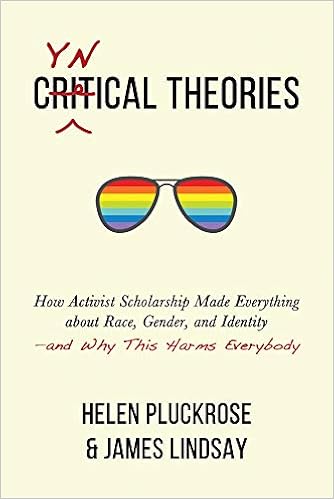
This week I preordered Cynical Theories: How Activist Scholarship Made Everything about Race, Gender, and Identity―and Why This Harms Everybody by Helen Pluckrose (@HPluckrose) & James Lindsay (@ConceptualJames)
Out May 5th, 2020, this is one I am really looking forward to.
 
51wj4k4mhYL._SX310_BO1,204,203,200_.jpg

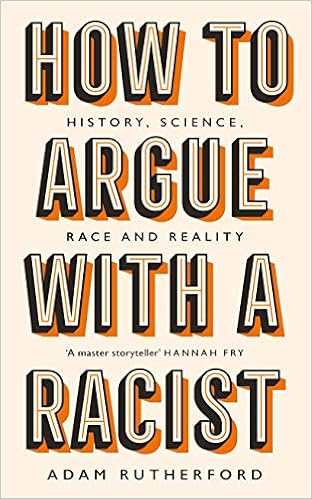
I ordered a copy of Adam Rutherford's How to Argue With a Racist: History, Science, Race and Reality at my local bookshop this morning. Out 6 February, 2020. American edition should be out in April under the slightly different title How to Argue With a Racist: What Our Genes Do (and Don't) Say About Human Difference.

Race is real because we perceive it. Racism is real because we enact it. But the appeal to science to strengthen racist ideologies is on the rise - and increasingly part of the public discourse on politics, migration, education, sport and intelligence. Stereotypes and myths about race are expressed not just by overt racists, but also by well-intentioned people whose experience and cultural baggage steer them towards views that are not supported by the modern study of human genetics. Even some scientists are uncomfortable expressing opinions deriving from their research where it relates to race. Yet, if understood correctly, science and history can be powerful allies against racism, granting the clearest view of how people actually are, rather than how we judge them to be.

HOW TO ARGUE WITH A RACIST is a vital manifesto for a twenty-first century understanding of human evolution and variation, and a timely weapon against the misuse of science to justify bigotry.
 
I was struck by that recent rendition of the appearance, based on her genome, of a Danish girl from about 6,000 BCE. Her eyes were blue, but her skin was dark. Apparently the genes for white skin didn't come along until well after the last ice age.
 
51H1R7--KJL._SX331_BO1,204,203,200_.jpg

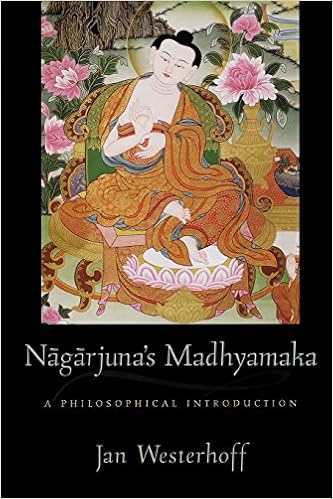
I'm about to reread a favourite book on Buddhist philosophy. Jan Westerhoff's Nāgārjuna's Madhyamaka: A Philosophical Introduction.

61ek-iyEBwL.jpg

I also ordered his latest book on Buddhism (from 2018) The Golden Age of Indian Buddhist Philosophy.

51UngccReKL.jpg

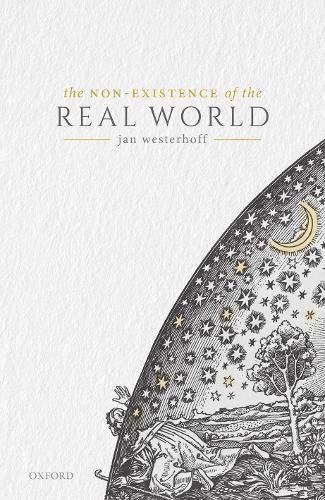
And then there is this book out 22 April, 2020 in the UK and 26 May, 2020 in the USA: The Non-Existence of the Real World. Looks really interesting if you are interested in Buddhist philosophy.

Does the real world, defined as a world of objects that exist independent of human interests, concerns, and cognitive activities, really exist? Jan Westerhoff argues that we have good reason to believe it does not. His discussion considers four main facets of the idea of the real world, ranging from the existence of a separate external and internal world (comprising various mental states congregated around a self), to the existence of an ontological foundation that grounds the existence of all the entities in the world, and the existence of an ultimately true theory that provides a final account of all there is. As Westerhoff discusses the reasons for rejecting the postulation of an external world behind our representations, he asserts that the internal world is not as epistemically transparent as is usually assumed, and that there are good reasons for adopting an anti-foundational account of ontological dependence. Drawing on conclusions from the ancient Indian philosophical system of Madhyamaka Buddhism, Westerhoff defends his stance in a purely Western philosophical framework, and affirms that ontology, and philosophy more generally, need not be conceived as providing an ultimately true theory of the world.
 
The Curve of Binding Energy: A Journey Into the Awesome and Alarming World of Theodore B. Taylor
by John McPhee. Goodreads

This was written in 1973, so is a bit dated now, but still for me an interesting read. As well as the risk of missing nuclear fuel finding its way into terrorist nuclear devices, there is discussion of Project Orion, which was Taylor's idea, and could have (maybe) had us on Mars by the second half of the 1960s.
 
41N2RDCD5ZL.jpg

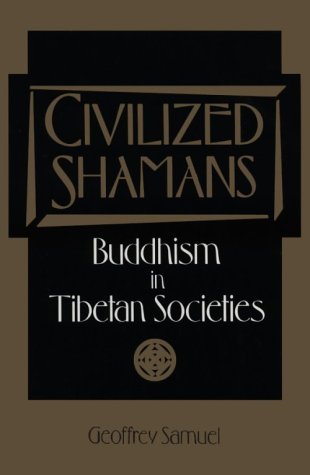
Civilized Shamans: Buddhism in Tibetan Societies by Geoffrey Samuel.
Must be over twenty years since I read this. I no longer owned a copy, but was lucky to find a 'like new' copy of the 1993 US hardcover through a Dutch antiquarian for a fair price.
 
The music book I mentioned wasn't that great - okay, but dry.
I skipped a few sections.
Not sure what to read next.
 
I am finally reading William Dalrymple's The Anarchy about the East India Company's plunder and colonization of the Indian subcontinent. The man can write gripping history. How did you end up liking the book, Windy?
 
I liked it a lot, but then I took a master's degree in history after my degree in engineering physics.

It might be a bit dry for general consumption... but if you liked the Anarchy I am sure you will like this one too.
his stuff is well researched and presented.
Enjoy
Windy
 
I liked it a lot, but then I took a master's degree in history after my degree in engineering physics.

It might be a bit dry for general consumption... but if you liked the Anarchy I am sure you will like this one too.
his stuff is well researched and presented.
Enjoy
Windy
I took classes in Indian history, religion, philosophy, Sanskrit, and Classical Tibetan in university, so it's an abiding interest. Particularly Buddhism, which had long ended in India at this time, so what little I once knew about the period described in The Anarchy, I have since forgotten.
 
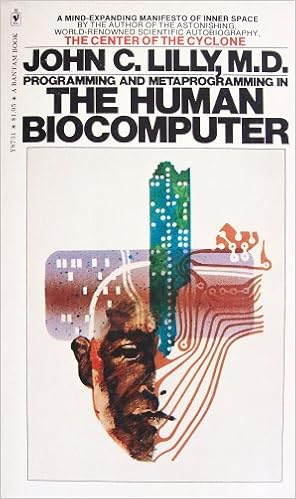
I just started reading Programming and Metaprogramming in the Human Biocomputer, by John C Lilly.

I think I came across this in school but it went over my head. Now I get it a bit more. I watched Altered States and researched it for my podcast and found out that it was based on Lilly's work, so decided to give this book another go.

51gcKSy5RWL._SX294_BO1,204,203,200_.jpg


I will let you all know if I manage to upgrade my metaprograms into a new level of consciousness.
 
Classics & Contemporaries by S. T. Joshi.

A collection of Joshi's reviews from the 1980s into the early 2000s, mainly dealing with Lovecraft related fiction and literary criticism. Joshi is a sharp, erudite and insightful critic, though he can be controversial because he has the tendency to make good/bad judgments on works that don't entertain him. Thus he's harsh on most Cthulhu Mythos works not written by HPL. Not that most of it is undeserving of that harshness, but it's really not hard to imagine that some readers crave variations on stories and are satisfied with that. His implicit -- and sometimes more than implicit -- condemnation of that readership is a bit overboard.

What's good about the reviews is that he eschews most of the critical vocabulary that can make some of his books a bit of a slog, while giving a representative idea of the basis for his commentary and criticism. This is a n intriguing, thought-provoking read, and probably a good introduction for anyone interested in following up on his scholarly and critical works.

Randy M.
 
Just read
A Lit Fuse: The Provocative Life of Harlan Ellison by Nat Segaloff
Ellison's reputation as a pugnacious sob was well deserved. Read his intros in Dangerous Visions if you have any doubts.
Segaloff's book is not exactly a tribute, but he obviously admired Ellison. I would have preferred that it included a straight up chronology of HE's career in addition to the fascinating vignettes from his life. A lot of it is based on conversations with the subject - plus many other interviews.
A large book. I am lucky to have the advantage of access to several of the best public libraries in the country as NESFA Press charges a hefty $35.
 
I'm reading Max Hastings's All Hell Let Loose, a one-volume history of the Second World War, in which my father was a sergeant in the British Army and my mother a telephone operator in Liverpool (which meant she went work some evenings dodging Luftwaffe bombs).

I know quite a bit about the war, but this book contained facts I've never come across before. I bought the book last year and read most of it, then left it in storage as I went from one house-sit to another. I'll finish during the current gig.
 
51UN3C3Z75L.jpg

William Dalrymple's Return of a King: The Battle for Aghanistan. The second of three Dalrymple's I am planning to read this year. The Last Mughal will be next.

In the spring of 1839, the British invaded Afghanistan for the first time. Led by lancers in scarlet cloaks and plumed shakos, nearly 20,000 British and East India Company troops poured through the high mountain passes and re-established on the throne Shah Shuja ul-Mulk.

On the way in, the British faced little resistance. But after two years of occupation, the Afghan people rose in answer to the call for jihad and the country exploded into violent rebellion. The First Anglo-Afghan War ended in Britain's greatest military humiliation of the nineteenth century: an entire army of the then most powerful nation in the world ambushed in retreat and utterly routed by poorly equipped tribesmen.

Return of a King is the definitive analysis of the First Afghan War, told through the lives of unforgettable characters on all sides and using for the first time contemporary Afghan accounts of the conflict. Prize-winning and bestselling historian William Dalrymple's masterful retelling of Britain's greatest imperial disaster is a powerful and important parable of colonial ambition and cultural collision, folly and hubris, for our times.
 

Sponsors


We try to keep the forum as free of ads as possible, please consider supporting SFFWorld on Patreon


Your ad here.
Back
Top