Countdown to Halloween 2011!

More from Randy: a personal favourite of mine, too!

The Haunting of Hill House by Shirley Jackson

No live organism can continue for long to exist sanely under conditions of absolute reality;

Eleanor accepts an invitation to Hill House from Doctor Montague, an amateur psychic investigator has also invited Theodora who, like Eleanor, in the past has displayed sensitivity to psychic phenomena. Joining the Doctor, Eleanor and Theodora is Luke, the son of the house’s owner, acting as the family’s representative as the Doctor Montague examines the famously haunted house.

even larks and katydids are supposed, by some, to dream.

Since her mother’s death, Eleanor has had to move in with her sister and her sister’s husband. Eleanor had yearned for freedom, but so far is unsure what to do with it; she has no plans for her future. The invitation seems like a chance to do something, to break from her past, and so she takes her sister’s car without permission and drives to Hill House.

Hill House, not sane, stood by itself against its hills, holding darkness within; it had stood so for eighty years and might stand for eighty more.

From Theodora to Luke to the Doctor, Eleanor tries to make a connection. All are amiable but Eleanor’s need is great …

Within, walls continued upright, bricks met neatly, floors were firm, and doors were sensibly shut; silence lay steadily against the wood and stone of Hill House,

… and the longer she stays, the more appealing Eleanor finds Hill House.

and whatever walked there, walked alone. (first paragraph)

The Haunting of Hill House has stood for over fifty years as arguably the finest novel of the supernatural produced in the English language in the 20th century. Jackson, building on the template of Henry James’ short novel, Turn of the Screw, does not discount the supernatural, but focuses tightly on Eleanor’s psychology, on her motivation and the behaviors it leads to. Jackson doesn’t skimp on the other characters, either, each of whom has secrets and quirks that make them human and alienate them from Eleanor and from each other.

The Haunting of Hill House has been filmed twice. I strongly urge avoiding the 1999 version. The first filming, released in 1963, was directed by Robert Wise (The Day the Earth Stood Still; West Side Story) who had learned from Orson Welles (Wise editing Citizen Kane) and Val Lewton for whom Wise directed his first movie, The Body Snatchers, an adaptation of a Robert Louis Stevenson short story. Wise’s movie stays close to the novel until near the end, and then only veers away slightly and reasonably in dealing with the character of the Professor’s wife. The 1963 film is well-cast and includes a fine performance by Julie Harris as Eleanor.

Besides The Haunting of Hill House, Jackson wrote many short stories, some of which fall in the realm of horror. The best known, of course, is “The Lottery,” which was unexpectedly successful and controversial (see Jackson’s article on this, “Biography of a Story”) but she also wrote “The Summer People,” “The Bus,” “The Demon Lover” and “One Ordinary Day, with Peanuts,” among others, all of which I’d strongly recommend.

Other haunted buildings of interest: “The Tearing of Greymare House” by Michael Reeves (House Shudders & Haunted Houses: The Greatest Stories ed. Martin Greenberg), “The Haunters and the Haunted“ by Sir Edward Bulwar-Lytton (Great Tales of Terror and the Supernatural ed. Herbert Wise & Phyllis Cerf; The Mammoth Book of Haunted Houses ed. Peter Haining; The Penguin Book of Ghost Stories: From Elizabeth Gaskell to Ambrose Bierce ed. Michael Newton); “The Wall of Clouds” by Sarah Monette (The Bone Key); “The Hungry House” by Robert Bloch (The Early Fears; The Weird ed. Jeff & Ann Vandermeer)
 
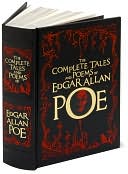
I do so love my Poe collection, though.

I have a lovely Easton Press edition of Poe:

$%28KGrHqN,!lME2EiNnWRBBNm5cREq+!~~_35.JPG


110297575476-1.jpg


but I've been told the Barnes and Noble edition is very nice too...


73240931.JPG


Mark
 
Nice! Mine is a Castle Books one, which means nothing to me. It's the biggest book I own, though, being slightly bigger than my Peter F. Hamilton HC.
 
Must admit, I've never been that fussed about Poe's poetry (ha!) though I do appreciate the point often made that Poe, like Lovecraft, were unappreciated and that both writers only 'made it big' after their deaths.

So too Robert E. Howard, who wrote 'weird stuff' as well as Conan...

Mark
 
See, with Poe I reckon a lot of people just think "The Raven" and think he's the best ever for it. I'm not saying you do, but it's how I see it.

If you haven't, read The Tell-Tale Heart. That's a stunning piece.
 
I'mmmmmm baaaaaack!

Hi, all.

I've returned from vacation and again ready to talk October reading.

Raggedyman: I never did read one of his novels, but several years ago I went through a brief phase of reading Charles Grant's short stories. All were readable and quite a few were good. He was, or at least was tagged as, a proponent of "quiet horror" in the days when splatterpunk was supposed to be the coming thing, and I do recall his stories creeping up on you rather than blasting you with violence. I should dig out some of his work and reacquaint myself. The Black Carousel sounds like a spin off from Bradbury's title Dark Carnival, his first collection (from Arkham House) and, of course, a carousel plays a big part in his novel, Something Wicked This Way Comes.

Rob: Every time it comes up, it surprises me to realize I've never made it completely through a King story collection. I've read a fair amount, but never cover-to-cover. I can't say why, though sometimes I feel I see his sources too clearly to enjoy some of the stories I've read.

Loerwyn: I agree about "The Tell-Tale Heart," and it's a story that's tailor-made for reading aloud -- when I was in ninth grade a TA did this for Halloween, the windows blacked out, a lit candle on the table she sat at, and she wore a flowing black dress that wouldn't have been out of place in a Vincent Price movie. Great fun, and possibly the point at which I became most interested in Poe. My favorite, though, is "The Fall of the House of Usher."

I hope to have the next post in place this afternoon.


Randy M.
 
Last edited:
“The Hungry House” by Robert Bloch

(The Early Fears; The Weird ed. Jeff & Ann Vandeermeer)

At first there were two of them – he and she together. That’s the way it was when they bought the house. (first paragraph)​

A young couple buys their first house, an old house needing some repair. They are mildly surprised they have found such a good house until they begin to feel a presence.

This story would make an interesting companion piece to John Collier’s “Bird of Prey” (a future post) – and maybe Oliver Onions’ “The Beckoning Fair One”; an early scene is reminiscent of a scene from Onion’s story – since it, too, is about a young couple in their new house. There is a different socio-economic feel, though: First published in 1951, Bloch’s post-WWII couple has nowhere else to go; their money tied up in this house, they are at least temporarily trapped. Bloch creates an oppressive atmosphere, small incidents feeding a slowly dawning comprehension and apprehension.

This is more of a mood piece than I usually expect from Bloch, whose reputation largely lies with his sense of graveyard humor. That said, Bloch was one of the most important American writers of horror to come after H. P. Lovecraft, with whom he corresponded late in Lovecraft’s life and who encouraged his writing. Like Lovecraft, most of Bloch’s major works of horror fiction were in short form (all the stories mentioned in this paragraph are also in The Early Fears, but he wrote a great deal besides these]: “Yours Truly, Jack the Ripper” (The Dark Descent ed. David Hartwell – outside of Psycho this is Bloch’s best-known work); “The Cloak” (American Fantasy Tales ed. Peter Straub); and his Hugo winning story, “That Hell-Bound Train” (Sympathy for the Devil ed. Tim Pratt)

Most other pulp writers of Bloch’s generation wrote horror in addition to, or as a small part of their fantasy and/or s.f. work, while Bloch (who wrote some s.f. and some fantasy) gravitated more toward mystery/crime. A stint in advertising and branching out into crime/mystery guided Bloch away from his early Lovecraftian approach, toward a shorter, quicker paced style and structure, also removing him from the company of Lovecraft's antiquarian characters and placing him firmly among more common characters, including a share of carnys, con-men and grifters.

As a novelist Bloch wrote only crime novels until the late 1970s, often with macabre elements, most notably, Psycho, based loosely on murders committed by Ed Gein (as was the movie Texas Chainsaw Massacre). Bloch’s sense of humor and wit made him popular in s.f. fandom and he often served as emcee at fannish events. That sense of humor informed many of his stories so that they read like templates for EC comics horror, often ending in a pun. An example of Bloch’s graveyard humor, appropriated by several later writers including Stephen King, came when Bloch was being pressed by a reporter about why he would write such gruesome, macabre work: (paraphrasing) “Look, I have the heart of a small boy,” he said. “I keep it in a jar on my desk.”

Another novel of interest by Robert Bloch: American Gothic (based loosely on the activities of the serial killer, H. H. Holmes)

Other fine stories by Robert Bloch: “The Mannikin”; “Enoch”; “Return to the Sabbath”; “The Cheaters”; “Talent”; “Notebook Found in a Deserted House”; “The Skull of the Marquis de Sade”; “The Yougoslavs” (the last four are not in The Early Fears, the others are; while his old paperback collections used to be easy to find in second hand bookstores, they no longer seem to be)

Two anthologies of haunted house stories: The Mammoth Book of Haunted Houses ed. by Peter Haining (this includes Bloch’s “House of the Hatchet”); House of Fear: An Anthology of Haunted House Stories ed. Jonathan Oliver [I haven’t read much of the former; those two or three stories were enjoyable. I only just recently bought the latter and hope to include a story or two from it in future posts.]

Other mood pieces: “The Festival” & “The Hound” by H. P. Lovecraft (The Call of Cthulhu and Other Weird Stories; H. P. Lovecraft: The Fiction); “The Foghorn” by Ray Bradbury (Ray Bradbury Stories Volume 1; The Stories of Ray Bradbury; American Supernatural Tales ed. S. T. Joshi); “His Mouth Will Taste of Wormwood” by Poppy Z. Brite (Wormwood; Cthulhu 2000 ed. Jim Turner: this is a good piece to read after reading Lovecraft’s “The Hound,” since it draws on and expands that story); “When the Zombies Win” by Karina Sumner-Smith (The Best Horror of the Year: Vol. 3 ed. Ellen Datlow)
 
Last edited:
Ah, Lovecraft....

I've got a couple of the Del Rey paperback editions, some very battered UK paperbacks from the 1980's, the two Gollancz Black library editions and the Library of America edition.

There's a Barnes and Noble 'complete' collection that I fancy and looks great, but evidently it's riddled with errors. A new edition is due soon.

Mark

I have one of the earlier B & N editions as well as older Arkham House editions that came out before S. T. Joshi edited them. As I understand, there may be a leather-bound (faux-leather, perhaps) edition coming soon from B & N.

While on vacation I started a Lovecraft-inspired novel that I should finish next week. I'll write that up as soon as possible for a post here. It's still on the stands, so this will even be timely.


Randy M.
 
Before I start, I feel I owe Randy a “thank you” for giving me his blessing with this.

I spoke with Randy about the books he was doing, and to my complete lack of surprise, I knew a book he didn't. With his advice, I set about writing my own piece. I fear it will pale in comparison to his own well-researched and more knowledgeable posts, but I gave it a go anyway. The book I've chosen is...

John Saul's The Blackstone Chronicles
6555h.jpg


Blackstone – A small New England town whose long-buried secrets and sins are coming back to life. To haunt. To terrorise...

From the top of Blackstone's highest hill, the old Blackstone Asylum casts its shadow over the village. Built in the 1890s, the Asylum has been vacant for many years. But now, the wrecker's ball is poised to strike, smashing into the old stones – and unleashing a terrible evil, an unholy fear long locked within these cold walls.

Soon, strange gifts – a doll, a locket, a handkerchief – begin to appear on the doorsteps of the town's finest citizens. Each carries a mysterious history. Each brings a horrifying power to harm. And Blackstone, if it is to survive this horror, must discover and atone for the sins of its fathers...

Well, this series and me go way back. My dad bought a collection of games one day, and in it was a game called John Saul's Blackstone Chronicles: An Adventure in Terror. I played through that game a number of times, even managing to complete it in an hour and a half at one point. The game advertised the books, and I knew I had to have them. Managing to source a copy of the complete book from a local book store, I was over the moon to have it. Ignoring the Goosebumps books and other similar novels, I had my first ever horror book. For that alone, and the hours I spent on the game, this book is one that means a lot to me.

In the preface, Saul credits Stephen King's The Green Mile with allowing this book to exist. Why? Well, to paraphrase Saul, King revitalised serialised books and as such it allowed Saul to finally tell the story of Blackstone and its inhabitants. It's also quite a fitting tribute as Saul exhibits a very King-like approach to the town of Blackstone, and not just due to it being set in the heart of Lovecraftian country.

The story is set in roughly 1997, and moves into 1998 over the year or so across which the events unfold. Our main point of view comes from Oliver Metcalf, the chief editor of the Blackstone Chronicle, a local newspaper. He lives in the shadow of the abandoned asylum, built originally by his grandfather as a stately home, before being converted into an aslyum for a short period of time. Through Oliver we learn a lot about the history of the town, but also about its citizens and how they interact. Blackstone is a very tight-knit community and everyone seems to know everyone else, but such familiarity breeds gossip, a continual thorn in Oliver's paw.

I think the blurb above really sums up what the book is about. In the asylum, many shocking and barbaric acts happened, and innocent people were killed for little reason. The pain and anguish of those people is fed into those items, and as they wind their way back to the families they're linked to, they release it with a devastating effect on Blackstone as a whole. Due to the small size of the town, every event seems even more upsetting and horrific because there's nothing else going on, and everyone takes notice.

Insanity is one of the key themes of the book, and Saul uses it to great effect. The initial victims were sent to the asylum as they were seen to be abnormal or insane (or were just sinners in the eyes of their families), and often if they weren't insane they would quickly become so due to the treatments, but it's also one aspect of the curse that befalls Blackstone.

The Blackstone Chronicles is, in my opinion, a horror book well worth picking up. It's perfect for any King fan, or anyone who likes their horror in a slightly surreal form. The history behind the town is interesting, the characters are all believable and feel real, and each piece is short enough to keep the book feeling fresh.
 
Hi, Loerwyn.

Thanks for the post. And, really, no blessing needed. I hope everyone who reads the thread feels free to chime in and offer their take on a story, novel or movie. And, as long as I'm on the subject, I have no problems with anyone disagreeing with me, either: Potential readers should get the chance to hear the counter-argument.

About Saul, I have never gotten around to his work I suppose because I couldn't get a good read on him, who his audience was, were the books really effective -- reviews haven't always been kind. And after getting burned by reading a couple of other popular writers even his popularity put me off.

But I like the premise of the Chronicles. It reminds me of the remake of the movie House on Haunted Hill, which was a lot of fun and pretty good until right near the end when they went CGI crazy. (Further, Geoffrey Rush in the Vincent Price role, even made-up to look a bit like him, just appeals to my sense of humor.) I will keep my eyes open for this. Apparently all the short novels were eventually published in one volume, like The Green Mile -- at least, that's what I get from the cover you included and what I see on Amazon.


Again, thanks for contributing, Loerwyn. Really, I've talked to people with a huge knowledge of horror and the darker works of fantasy, and I'm not that expert. I can use all the help I can get.


Randy M.
 
That cover is indeed the singular volume, which is also the same edition I have sat next to me. I should have mentioned that in my piece! There's no point buying the short ones as the single one isn't even that big, about 500 pages, plus having it all in one makes it all the sweeter.

I've not read any of Saul's work beyond Blackstone, so it could be a load of rubbish. I've not read any Barker beyond Abarat, either. I would urge you to give Blackstone a go, though. I personally can't find any flaws with it, but then again I'm not well-read in horror.

Just to give you an idea of how well used this book is, I took a picture of my copy. It's moved house with me a few times, it's been to Greece and possibly even Scotland.
img0001ki.jpg


I think the quality of my copy is horrific in its own way ;)
 
Or that I just didn't take care of my books when I was younger. I found a dog-eared page. And yes, I hung my head in shame.

As you should. Tsk, tsk, tsk.


I hope Mark and Rob will forgive me -- I try to keep external links to a minimum -- but since these last few posts have been about haunted ... structures? edifices? ... I thought I'd pass along a link to an interview with Jonathan Oliver, editor-in-chief of Solaris Books, and the editor of House of Fear: an Anthology of Haunted House Stories,
http://readhorror.co.uk/interviews/jonathan-oliver-interview-part-i/

There are several suggestions for reading in this that I hope to follow up on, not least Oliver's unmitigated enthusiasm for Ramsey Campbell's The Grin of the Dark, a novel I've meant to get to for a couple of years. Plus, Oliver's discussion of Shirley Jackson's The Haunting of Hill House, brief as it is, is quite insightful.

Randy M.
 
Fright Night (1985; 2011)

Welcome to Fright Night. … For real. (a line from both movies)​

Charley, a teen, realizes his new neighbor is a vampire. Jerry, the vampire, knows that Charley knows and offers to let Charley and his mom and all his friends live if Charley will just let him be. Of course, you can’t let vampires live. But Jerry is very old and very skilled and he will not die easily. How does a teen contend with that?

Fright Night is one of my favorite 1980s horror films. Nothing too graphic, although a couple of topless scenes might discourage parents from showing it to pre-teens; nothing too bloody, though there is some blood; make-up that, even now, is mostly convincing, as are the special effects; further, the movie features fine performances from Roddy McDowell and Chris Sarandon along with solid performances from the other cast members in support of an intelligent, taut and suspenseful script the wittiness of which makes the film feel like a precursor of Buffy the Vampire Slayer.

The new version, released just this summer, streamlines the time it takes for Charley to realize and admit Jerry is a vampire, and Jerry’s warning is also briefer, maybe a bit more oblique. In the original part of the fun was experiencing a little of life in Charley’s suburb, but as though the director didn’t want to wait to get to the action, that is mostly jettisoned in the new version. On the plus side, Charley’s mom is played by Toni Collette and is more independent and stronger than the mother in 1985; on the minus side, Collette disappears from the movie about mid-way (the reason for this seemed weak to me; mileage may vary). Meanwhile Colin Farrell is probably the most charming bar-rat of a vampire in cinema history, and I don’t mean that as criticism – he’s one of the strengths of the movie – and David Tennant was wise not to try and be as sympathetic as Roddy McDowell; his interpretation of Peter Vincent, now a magician instead of a former horror movie star, is rather like Cris Angel as portrayed by Russell Brand, and it works. Still, in spite of three or four scenes that come together nicely, and a comic turn by Sandra Vergara that energizes the middle of the movie (most of her scenes are with Tennant and their chemistry is terrific), this isn’t on a par with the original. If you can push aside your memories of the earlier version, Fright Night 2011 may be enjoyable on its own terms, but it is not an improvement.

Other entertaining vampire films: Nosferatu (1922); Dracula (1932); Dracula’s Daughter (1936); Horror of Dracula (1958); Black Sunday (1961); Love at First Bite (1979); The Hunger (1983); Near Dark (1987); The Lost Boys (1987); From Dusk ‘til Dawn (1996) – Note: most of these, especially those released after 1960 (except Love at First Bite, maybe) are not suitable for young children.

Film horror with Roddy McDowell: The Legend of Hill House

Film horror with Chris Sarandon: Child’s Play; The Resurrected

Vampire TV: The Night Stalker (1972 – first appearance of Carl Kolchak); Buffy the Vampire Slayer (1997-2003)


Three fine vampire anthologies: A Whisper of Blood ed. Ellen Datlow (the recent republication of this by Barnes & Noble is a compilation of two anthologies, the original A Whisper of Blood and Blood is Not Enough); Love in Vein & Love in Vein 2 ed. Poppy Z. Brite. (I haven’t read these cover to cover. Most of the contents of the Datlow, and all but one story [far as I can tell] in the Brite anthologies were original to those books. The selection of stories I’ve read and the number of stories from them that show up in other, later anthologies, make these important for anyone interested in vampire fiction.)

FYI, another Ellen Datlow vampire anthology I haven’t read yet (like there was already a shortage … ), new on the shelves: Blood and Other Cravings, mostly featuring stories original to this book, authors include Kathe Koja, Margo Lanagan, Steve Rasnic Tem, Melanie Tem, Reggie Oliver, Carol Emshwiller, John Langan, Michael Cisco, Kaaron Warren, Elizabeth Bear, Richard Bowes, Steve Duffy, Barry Malzberg & Bill Pronzini, Barbara Roden, Nicole LeBoeuf, Lisa Tuttle, and Laird Barron


Randy M.
 
I absolutely love Fright Night, the original. Whenever it comes on late at night, and it does with a fair bit of frequency, I have to watch it. Sarandon is creepy and classy at the same time.

I haven't seen the new one in protest of how much I love the first. However, since I like Tennant so much, I'll eventually watch it.

Another 1980s horror movie I liked quite a bit was House with William Katt (The Greatest American Hero) and George Wendt (Norm from Cheers). I haven't seen it in years, but remember it being a nice mix of creeps and humor.
 
I absolutely love Fright Night, the original. Whenever it comes on late at night, and it does with a fair bit of frequency, I have to watch it. Sarandon is creepy and classy at the same time.

I haven't seen the new one in protest of how much I love the first. However, since I like Tennant so much, I'll eventually watch it.

Another 1980s horror movie I liked quite a bit was House with William Katt (The Greatest American Hero) and George Wendt (Norm from Cheers). I haven't seen it in years, but remember it being a nice mix of creeps and humor.

Thanks for the reminder, Rob. I haven't thought of, or seen House in years, but remember it as funny and goofy with just a bit of creepiness.


Randy M.
 
Both Fright Night (the original) and House (not the TV series!) were at the cinema when I worked there as a student. Was fun watching audiences reactions, love Roddy McDowell. Fond memories of both films, with one exception: I really didn't like the character of Charley's friend who was turned into a vamp by Jerry.

Loved the poster for House:

housej.jpg


Hmm: Movies to watch this year in the Hobbit household: Stephen King's IT with Tim Curry as the clown; and Salem's Lot with David Soul. Neither as cheesy as I thought they would be.

Mark
 
Last edited:

Sponsors


We try to keep the forum as free of ads as possible, please consider supporting SFFWorld on Patreon


Your ad here.
Back
Top