Current Non-Genre Reading III

Haven't read these but good to hear you like them. Cornwell is usually a good bet as his research is second to none.

Now I've amassed all of the Long War series by Cameron, I'm ready to get started on Killer of Men.
Some good reading ahead of you!
Indeed! I bought The Great King, planning to pick up the tale where I left off. What I didn't count on is a nasty reading-slump that set in early this month. I've not read squat since then. Admittedly, I'm overdue, having gone the whole of 2021 sans slump.
 
Just finished "Excalibur" . The 3rd and final novel of Bernard Cornwell's "The Winter King" Trilogy. This was a darn good read. Cornwell's characterizations, pace and storyline makes for the kind of book that is hard to put down. Highly recommend this iteration of the King Arthur mythos. Adding this one into my very short list of favorite Arthurian stories.
 
Still on a historical fiction kick and jumping into C.J. Adrien's Viking Saga, "Lords of the Wind".

A new author for me, but it looks interesting. Will let you folks know how it goes.
 
Just finished "Excalibur" . The 3rd and final novel of Bernard Cornwell's "The Winter King" Trilogy. This was a darn good read. Cornwell's characterizations, pace and storyline makes for the kind of book that is hard to put down. Highly recommend this iteration of the King Arthur mythos. Adding this one into my very short list of favorite Arthurian stories.

Good to read you enjoyed it, Raf. A good follow up to the Arthur series might be Cornwell's
The Grail Quest series. I loved it.
 
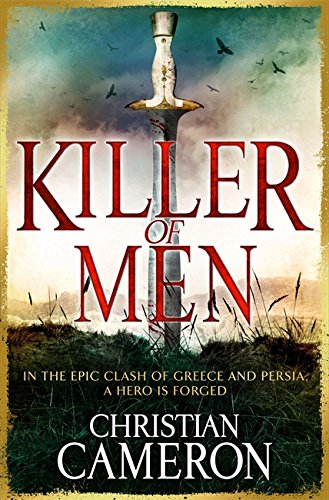
Killer of Men

51-F1uCNl3L.jpg


I’ve been aware of this series for a few years now and have been meaning to read it, but it took Decrepit&Senile’s and Raf’s reviews to give me the nudge to get on with it.

Killer of Men follows Arimnestos, a young man from Plataea in Ancient Greece, and his growth as a fighter in the battles between the city states and later against the Persians. One things for sure, there’s enough action in here to satisfy any lover of historical or military fiction. Because the story is set over 2500 years ago at the time of the Ionian Revolt, its distant culture so different from our own almost renders it as fantasy. The belief systems of the time also add to the sense of dislocation from the modern world. That’s not to suggest the story is fantasy, because it’s not; it’s a historical tale set in a time of unfolding, true events. And it succeeds in that it manages to balance Arimnestos’s story within those true events.

Although entirely told in first person the story works well, and I didn’t mind it being related by Arimnestos in his later age, either. I’m fully invested in the story at the moment so I’ll start Marathon, the next in the series, right away. Also, the fact that it’s almost certainly about the Battle of Marathon makes it a must read.
 
Still on a historical fiction kick and jumping into C.J. Adrien's Viking Saga, "Lords of the Wind".

A new author for me, but it looks interesting. Will let you folks know how it goes.

I don't know. It may be that coming off the heels of a really good storyteller like Cornwell, I might be unfairly comparing the styles. Cornwell's writing all but leapt off the page and made me feel his characters as they lived. Good writing affects me that way.

But the characters and situations in this book are just not coming to life for me. I just read the words, but I don't feel them. Think I'm going to put this one down for now.
 
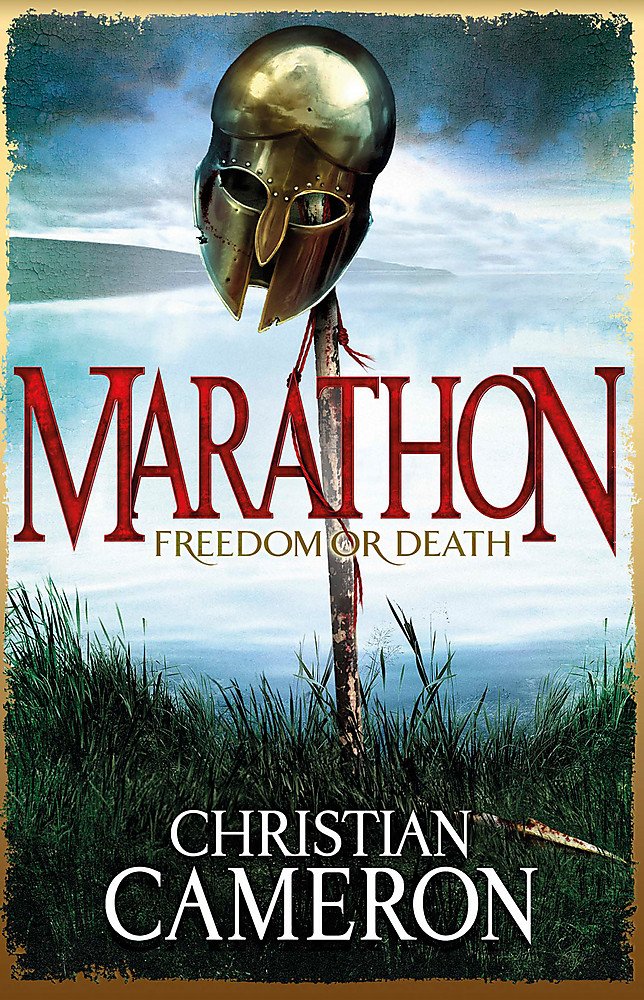
Marathon

7168OGmVkHL.jpg


I enjoyed this one even more so than the first book. Arimnestos takes part in the sea Battle of Lade, the relief and defence of Miletus, returns to Greece, gets married, deals with Simon son of Simon and takes part in the Battle of Marathon. All good boys’ own stuff - except it’s for adults. Saying that does diminish it somewhat, which would be wrong, because it gives a fascinating insight into a developing democratic society where political manoeuvring and self interest are rife, and where notions of honour and achievement are tied in with beneficence and the grace of the gods. All in all, another great read and I’m looking forward to the next one!
 
Marathon

7168OGmVkHL.jpg


I enjoyed this one even more so than the first book. Arimnestos takes part in the sea Battle of Lade, the relief and defence of Miletus, returns to Greece, gets married, deals with Simon son of Simon and takes part in the Battle of Marathon. All good boys’ own stuff - except it’s for adults. Saying that does diminish it somewhat, which would be wrong, because it gives a fascinating insight into a developing democratic society where political manoeuvring and self interest are rife, and where notions of honour and achievement are tied in with beneficence and the grace of the gods. All in all, another great read and I’m looking forward to the next one!

The next book in the series (Poseidon's Spear) is my favorite, I think. I'm in no way a sailor or waterman...I think I learned more about boats & sailing in general in that book than anything I've ever read.
 
Last edited:
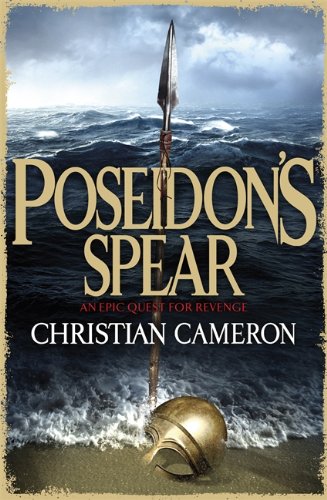
Poseidon's Spear

51HI-Rl+LLL.jpg


This was another great read in the Long War series. During a lull in the Greco-Persian Wars following the Battle of Marathon, Arimnestos finds himself enslaved on a brutally run Carthaginian ship, and then as a member of a fellowship of pirates who decide to make their fortune by preying on Phoenician shipping and their valuable tin. This leads them beyond the Pillars of Hercules into the Western Sea, along the coasts of Iberia and Gallia and up to the shores of Alba (Britain). It all makes for another exciting adventure that stretches across the western Mediterranean and the Atlantic coast, and even takes in a journey down the Seine back to the Med. But to me what this story brought home most of all was the prevalence of slavery and how it permeated through nearly all Mediterranean society. I’m sure that slavery wasn’t unique to this period, or for those preceding or following it, but it really opened my eyes to the fine line between slavery and freedom that many people trod.

Anyhow, I’m up for the next in the series without even considering a break. It’s rare that you find a series that keeps dragging you back one book after another, but the Long War series is certainly one of them. Great stuff!
 
After a reading slump, I'm better than half way through a reread of Ross Macdonald's The Underground Man, which in my personal mystery/crime pantheon is cheek by jowl with The Maltese Falcon, The Long Goodbye and The Last Good Kiss. 1960s Macdonald was an incisive interrogator of the California dream, California wealth and the effect of both on family.
 
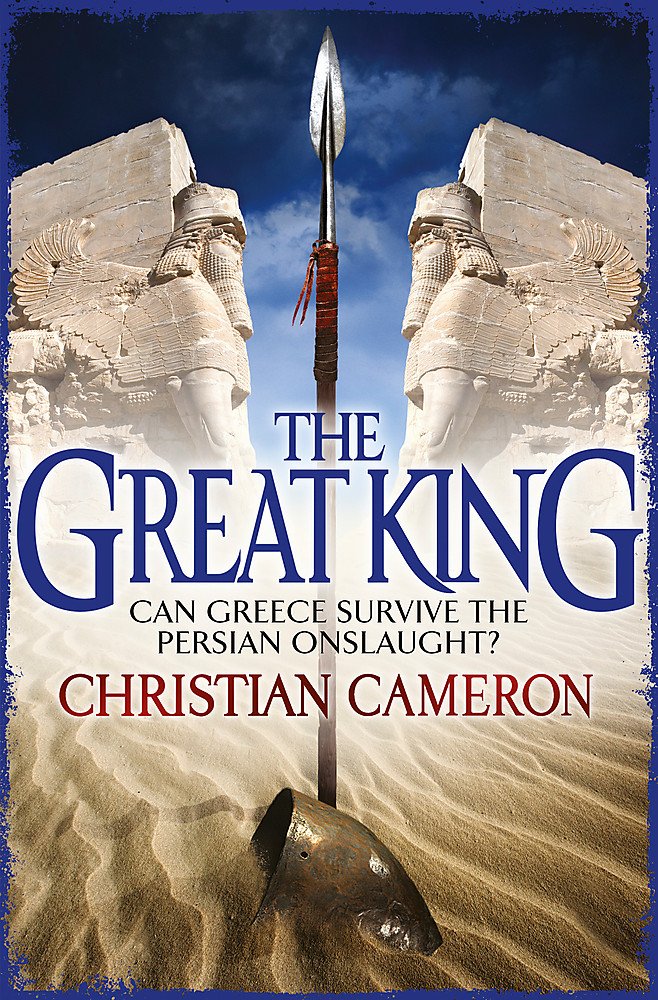
The Great King

71VkWchIXyL.jpg


It’s ironic that when one thinks about great or significant battles that took place many years ago, one tends to think that the victors succeeded because of superior training or strategy – especially in those battles where a superior force was defeated by a lesser one, such as at Agincourt – and this is true to some extent. But when, like in The Great King, you learn of the Greek’s makeshift preparations, tenuous alliances and provincial self-interests, you wonder how they ever managed to prevail in the end. The Great King tells of the Persian invasion of Greece and the initial encounters at Thermopylae and Artemisium. Arimnestos is once again in the thick of it but even he despairs of the Greek states ever being able to come together to resist the huge Persian force. The first half of the book relates the journey of Arimnestos and a Spartan embassy to treat with the Great King, and also takes in an Olympiad along the way. And it’s all very readable, even if at times the despair is palpable, but that is to be expected given the dire situation they are in.

Overall, The Great King was another enjoyable read and I’m looking forward to reading how it all works out in the last two books of the series.
 
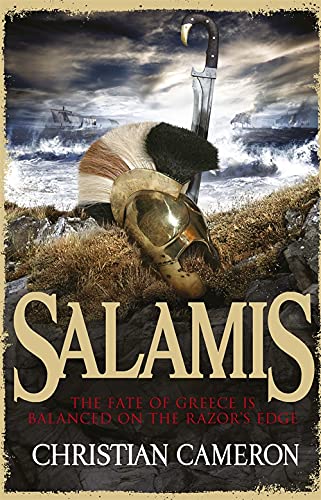
Salamis

51gxIWgUccS.jpg


When the huge Persian army enters Attica and Boeotia, the people abandon their cities and flee to the Peloponnes. The ships of the alliance of Greek states gather on the beaches of the island of Salamis, vastly outnumbered by the Persian fleet on the mainland opposite them. Dissension amongst the Greeks threatens to undermine the alliance, and Arimnestos does what he can to keep it together.

Cameron does a good job of relating the Battle of Salamis and Arimnestos’s part in it, and through Arimnestos he also raises the question of Thermistocles’s devotion to the cause. However, whether any of his communications with Xerses were treasonous or designed to gain an advantage is left open to debate. Even so, it all adds to the sense of uncertainty as to the eventual outcome of the war. Which leads me to the last book in the series and what almost certainly will cover the Battle of Plataea, and I am sure it will be a fitting conclusion to a fine series!
 
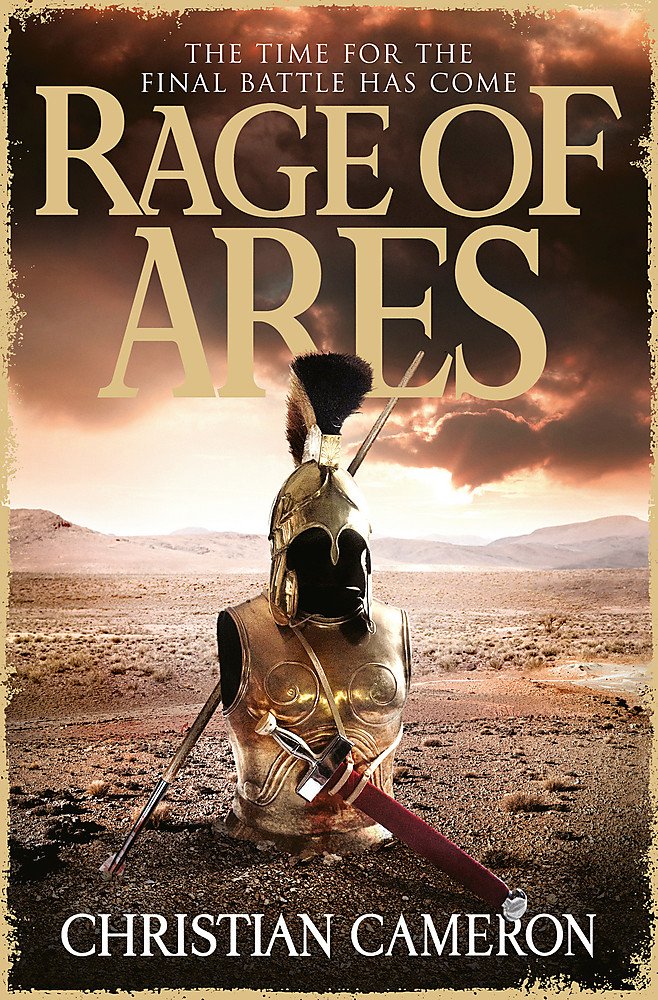
Rage of Ares

71sTwPouk+L.jpg


The Greek victory at the Battle of Plataea followed by the destruction of the remnants of the Persian fleet at Mycale are recounted by Arimnestos in this book and rounds off The Long War series. It’s been a very enjoyable ride, full of adventure and derring-do as well as providing a fascinating insight into this period of classical antiquity. I like the look of the Chivalry series by Cameron but having read Bernard Cornwell’s Grail Quest series I fear it would be treading similar ground, so I think I will do the Tyrant series next. But I have twenty or more other books to get through first!
 
Wow!
And I thought that I got hooked into series.
I have always been a history nerd, eventally getting a degree in the subject. Never got much into historical fiction other than Mary Renault, Robert Graves, Hornblower as a kid, and a touch of Cornwell more recently. Always thought that I should read more. Also thought that I should look into the Marcus Didius Falco detective novels combining a couple of likes. Enjoyed the faux Byzantian alt history by Turtledove. And oddities from Poul Anderson.
Any reccs of other than battle history AC? Or from others?
 
The Long War series does hinge on key battles, pogo, but is not solely about them. Much of the books is about the politicking that goes on and, well...just everyday life in Ancient Greece. If you're not sure you think they're for you, try the first one and go from there. Other recommendations are Ken Follett's Kingsbridge series, pretty much anything by Conn Iggudlen and, if you like to combine history with detective fiction, there's a ton of that particular genre out there, such as The Name of the Rose by Umberto Eco . A good friend of mine loves these but I've tried a few and they're not really my type of thing.
 
Wow!
And I thought that I got hooked into series.
I have always been a history nerd, eventally getting a degree in the subject. Never got much into historical fiction other than Mary Renault, Robert Graves, Hornblower as a kid, and a touch of Cornwell more recently. Always thought that I should read more. Also thought that I should look into the Marcus Didius Falco detective novels combining a couple of likes. Enjoyed the faux Byzantian alt history by Turtledove. And oddities from Poul Anderson.
Any reccs of other than battle history AC? Or from others?
Pogo,

A couple of books that have stayed with me over the years and sit highly on my TBRR pile (To Be Re-Read)

"Gospel" by Wilton Barnhardt / Not historical fiction in the sense of character in those times, but rather a romp through ancient history / comparative religions by 2 rather memorable characters.


"The Far Pavilions" by M.M. Kaye. A novel about the collision of 2 cultures and the people that lived it. Britain & India in the 1800's.


"The Lions of Al-Rassan" by Guy Gavriel Kaye

 
Last edited:
"The Lions of Al-Rassan" by Guy Gavriel Kaye

Got this one lined up, Raf. That and Ysabel, which I understand is much more of a fantasy than his historically centred novels.
 
  • Like
Reactions: Raf
Got this one lined up, Raf. That and Ysabel, which I understand is much more of a fantasy than his historically centred novels.

I haven't read "Ysabel" yet, AC. I've been going back and forth on that one...some reviews seem to classify it as YA and I've not made the leap yet.
 
I haven't read "Ysabel" yet, AC. I've been going back and forth on that one...some reviews seem to classify it as YA and I've not made the leap yet.
I 'have' read Ysabel. It's the Kay novel that least impresses me. Nothing wrong with it. It simply seems to have been written for a class of readers to which I don't belong. I don't know that I would or wouldn't associate with "YA". It's still Kay. Just not quite the Kay I'm partial to. Then again, you might disagree. As to "Lions of Al Rassan", it gets my strongest recommendation.
 

Sponsors


We try to keep the forum as free of ads as possible, please consider supporting SFFWorld on Patreon


Your ad here.
Back
Top