
You are using an out of date browser. It may not display this or other websites correctly.
You should upgrade or use an alternative browser.
You should upgrade or use an alternative browser.
Current Non-Genre Reading III
- Thread starter Hobbit
- Start date


suciul
Read interesting books
- Joined
- Dec 24, 2005
- Messages
- 3,759
Finished A Beautiful Ferocity- Cullen Celtic's Cabaret book 2 by Jean Grainger and it was excellent; my Goodreads review below:
Starting where For all the World ends, I enjoyed A Beautiful Ferocity even more than its predecessor as it is tighter, lots of things happen and the pages really turn by themselves. At the end of the previous volume with Peter seemingly absorbed in the operations of his cabaret in London and writing effusively in his letters about the sultry Spanish dancer Aida, May decided to take matters in her own hands and leave her house in Ireland to come there and force Peter's hand in a way or another, though of course knowing her, there was only one way in the end. While it takes tragedy and what almost amounts to bribery, namely using her trust funds which could be accessed on marriage before she attains the required age to fund the cabaret and keep it viable, May gets her way as expected, while in the meantime and as intimated at the end of the first volume, tragedy strikes also from another quarter forcing Nick's hand too. And so it goes, as we follow our characters, with a few twists and turns mostly connected with the Irish uprising against English rule but not only.
While both the personal and political keep getting even more complicated, the cabaret becomes seemingly prosperous at least for now and we have to see what will happen in the next volume which has become another highly awaited novel.
Overall an excellent book, even better imho than the first series volume - which tends to be less usual since the first volume always has the advantage of newness - and comparable with the best from the author, so I highly recommend it and of course the first volume too
Starting where For all the World ends, I enjoyed A Beautiful Ferocity even more than its predecessor as it is tighter, lots of things happen and the pages really turn by themselves. At the end of the previous volume with Peter seemingly absorbed in the operations of his cabaret in London and writing effusively in his letters about the sultry Spanish dancer Aida, May decided to take matters in her own hands and leave her house in Ireland to come there and force Peter's hand in a way or another, though of course knowing her, there was only one way in the end. While it takes tragedy and what almost amounts to bribery, namely using her trust funds which could be accessed on marriage before she attains the required age to fund the cabaret and keep it viable, May gets her way as expected, while in the meantime and as intimated at the end of the first volume, tragedy strikes also from another quarter forcing Nick's hand too. And so it goes, as we follow our characters, with a few twists and turns mostly connected with the Irish uprising against English rule but not only.
While both the personal and political keep getting even more complicated, the cabaret becomes seemingly prosperous at least for now and we have to see what will happen in the next volume which has become another highly awaited novel.
Overall an excellent book, even better imho than the first series volume - which tends to be less usual since the first volume always has the advantage of newness - and comparable with the best from the author, so I highly recommend it and of course the first volume too
Started the final novel in the "Long War" series by Christian Cameron..."Treason of Sparta". Will review after I finish, but I don't expect anything less from this excellent author. Except, perhaps some sort of closure for this oustanding series.
suciul
Read interesting books
- Joined
- Dec 24, 2005
- Messages
- 3,759
Started the final novel in the "Long War" series by Christian Cameron..."Treason of Sparta". Will review after I finish, but I don't expect anything less from this excellent author. Except, perhaps some sort of closure for this oustanding series.
Plan to read Treason of Sparta soon too and expect same
Back on topic, I finished The Secret They Hid by Roberta Kagan, the opening novel of a new series that starts in Germany before the first WW; liked it well enough that I plan to read the second book (An Innocent Child) slated for next month; it was very fast moving and with great energy so the pages turned by themselves, though a bit too melodramatic and black and white (heroes and heroines are heroes and heroines, villains are villains so to speak) but quite engaging so I would definitely recommend it.
The blurb:
All's not fair in love and war.
As the Great War rages, two brothers, Leo and Alex, are ensnared in a captivating love triangle with the stunning Adelaide. While Leo is the unwavering protector, Alex, the enigmatic seducer, ultimately captures Adelaide's heart.
Their lives are further complicated by a baby girl of hidden Jewish lineage—a secret burden Leo chooses to bear alone. When the brothers are drafted to war, their world is torn apart, leaving Adelaide to navigate the treacherous waters of survival and betrayal.
As years go by and the landscape of their homeland changes with Hitler's rise, the family secrets become a ticking time bomb. Margot's true lineage, hidden in plain sight, becomes the very thing that may tear the family apart.
Started the final novel in the "Long War" series by Christian Cameron..."Treason of Sparta". Will review after I finish, but I don't expect anything less from this excellent author. Except, perhaps some sort of closure for this outstanding series.
Finished "Treason of Sparta"by Christian Cameron. Arimnestos of Plataea is up to his old tricks.. Once again taking to the sea with old and new friends to join the Allied Greek & Spartan fleets. To, ostensibly, take the fight back to the Persians and liberate the Ionians along the way. That's the plan, though the double dealing Spartans are again up to their political machinations. No one is sure whose side they are actually on.
While the Greek & Spartan politicians argue. Arimnesto's gang raids and burns the shipyards of Tyre. The largest sea trading capitol of Persia. A move that finds he and his ships booted from the Alliance by the Spartan Commander. Which frees Arimnestos to sail to Ionia and liberate those islands. Eventually getting them to join the alliance.
This was a great read. As usual, Cameron's heroes and villains come to life on the page in such a way that it is difficult put the book down. This one was a real page turner for me. And to top it all off, the biggest surprise of the book was a short note by Cameron that the series will continue with tales of Arimnestos's Africa trading adventures.


psikeyhackr
Live Long & Suffer
- Joined
- Feb 12, 2008
- Messages
- 3,408
Just got it from the library:
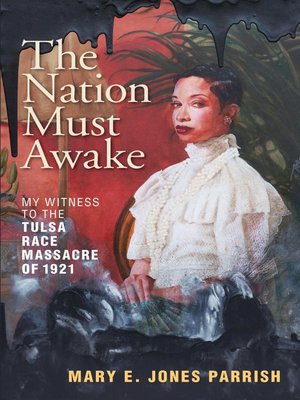
 www.overdrive.com
Going to have to read a paper book. So...PRIMITIVE!
eBook - The Nation Must Awake
Mary Parrish was reading in her home when the Tulsa race massacre began on the evening of May 31, 1921. Parrish's daughter, Florence Mary, called the young journalist and teacher to the window. "Mother," she said, "I see men with guns."The two eve...
www.overdrive.com
Going to have to read a paper book. So...PRIMITIVE!
suciul
Read interesting books
- Joined
- Dec 24, 2005
- Messages
- 3,759
Started "The Assyrian", by Nicholas Guild. New historical fiction author for me. Initially liking the writing style and prose. But really too early to say much more.
Really liked that one and especially its sequel and conclusion Blood Star, so hopefully you will enjoy it. As I noted in my Goodreads review from 2015 when I read it, the book would have impressed me even more were I to have read it earlier, close to its 1987 publication - not quite at the level of the classics of its subgenre (long lost exotic or anyway strange cultures) like Aztec by Garry Jennings, or The Egyptian and The Etruscan by Mika Waltari but still excellent.
I finished Treason of Sparta by C Cameron which is actually advertised as the first book of a new series Broken Empire (with two sequels hopefully to come) and I liked it more than Rage of Ares which was a good series ending but kind of repetitive (at least I thought it was a series ending and well, technically it was since now we start a new one after all; it even had an epilogue that went beyond the timeline of this one for that matter, though Treason of Sparta nicely sidesteps that); however, I still thought it had a degree of repetitiveness in it (like both Salamis and Rage of Ares) and wasn't quite at the level of the first 4 Arimnestos books which were all awesome (and different) in their ways.
Still, it brought to some extent closure to the first arc of Arimnestos's journey, the liberation of Ionia to which he dedicated so many decades ago under the leadership of Miltiades and Athens and which seemed lost after the devastating defeat at Lade, but now is close to being realized under Athens' reinvigorated leadership including Miltiades son Cimon, despite Sparta's obstinacy which as the title put it verged on treason. This being said the next book promises to be about Arimnestos' journey to the African east coast and India and that should be something different, so I am really looking forward to it.
I'm about 3/4 through "The Assyrian" and I'm enjoying it quite a bit. Haven't had much time to read this week, but I hope to move on to "Blood Star" this weekend. I didn't check the publication date for these Guild books. I didn't know they were that old. Has he done anything similar in subsequent years?
I have several of Waltari's novels in my Kindle as well. Yes, looking forward to more adventures with Arimnestos as well.
I have several of Waltari's novels in my Kindle as well. Yes, looking forward to more adventures with Arimnestos as well.
suciul
Read interesting books
- Joined
- Dec 24, 2005
- Messages
- 3,759
I'm about 3/4 through "The Assyrian" and I'm enjoying it quite a bit. Haven't had much time to read this week, but I hope to move on to "Blood Star" this weekend. I didn't check the publication date for these Guild books. I didn't know they were that old. Has he done anything similar in subsequent years?
I have several of Waltari's novels in my Kindle as well. Yes, looking forward to more adventures with Arimnestos as well.
N Guild wrote a few more classical historical novels as far as I can see, one about Philip of Macedon (Macedonian), one with Sparta (Spartan Dagger) and one about Joshua of Nazareth (Ironsmith) - looked through them but never really tried to read them, though The Macedonian looks interesting.
I always recommend Aztec by Gary Jennings as "the" novel about exotic cultures (sadly it was so successful that the author and after his passing, writers hired by his estate, felt compelled to write a bunch of sort of sequels of varying quality, including some truly dreadful ones by the hired writers which of course I had to read all and get quite annoyed at the latter ones- at least whatever Gary Jennings wrote had that narrative quality that makes you turn pages that few novelists really have and Journeyer (Marco Polo) and Raptor (the fall of the Roman Empire and the rise of Ostrogoths under Theodoric) are also awesome.
For a different perspective on Arimnestos's story, Gore Vidal's classic Creation (narrated by a half-Persian, half-Greek childhood friend and lifelong companion of the Great King Xerxes, in his old age to his great nephew, young Democritus - the future famous philosopher - as he was a sort of Persian Ambassador to Athens in the 450-440's) presents the Persian side of the story, though it is about much more (as the narrator, who was also the grandson of Zoroaster, travels to India and China too, meets Confucius, Buddha etc)
As for Mika Waltari, he remains one of my all-time favorite writers, though his combination of idealism, cynicism and very picaresque and very naive heroes, manipulated by almost everyone in their lives (The Etruscan, The Egyptian, The Roman, The Adventurer - Michael the Finn, obviously a Finnish guy like the author though in the age of Luther, Suleiman the Magnificent, Barbarossa etc) are different than the usual intrepid heroes like Arimnestos say
Back on topic, now reading a weirder non-genre novel, Brute Art by Christopher Harris who wrote a few superb historical novels (False Ambassadors, Mappamundi, Memoirs of a Byzantine eunuch) and little else - this one i wanted to try for a long time but was hard to find, luckily now is very inexpensive on Kindle
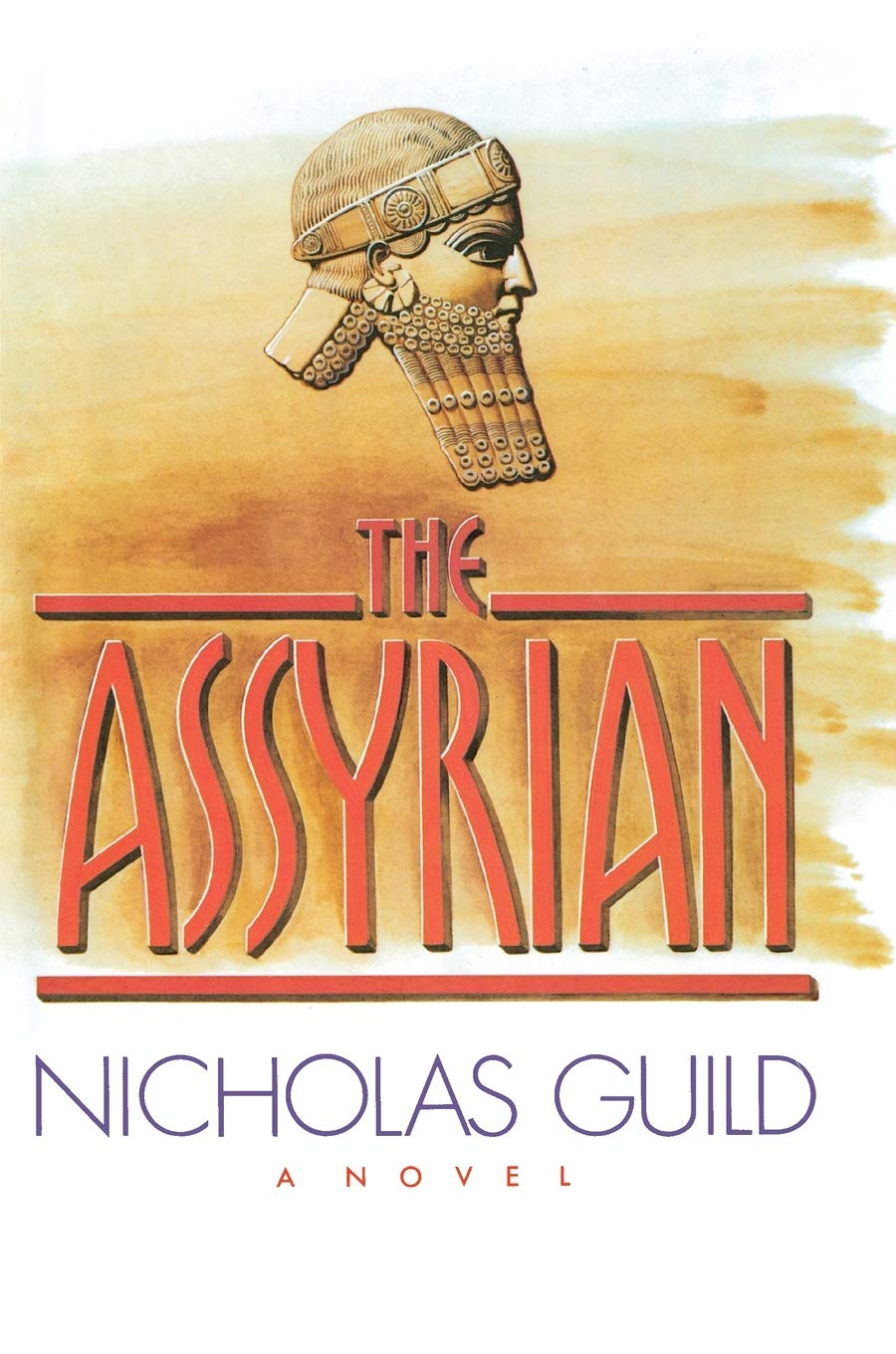
Finished the "The Assyrian" by Nicholas Guild. The Kingdom of Assyria was a group of united city states in Mesopotamia from 900BCE to 600BCE. Located in the norther part of Mesopotamia in a land mass consisting of Iraq and parts of Iran, Kuwait, Syria & Turkey.
Interesting note though. The natives of that land called their country "Ashur" and they were men of "Ashur" in their language. Ashur being the God they worshipped. The Greeks, not being able to pronounce "sh" sound named the empire "Assyr". Hence the people were then Assyrians to the rest of the world.
A first person story told by Tiglath Ashur. Named after the God by his Father, King of Ashur. 3 sons all being schooled by the King's courtier's. Only one may inherit. The other 2 to be gelded and to serve in other ways at Court. On that day, Tiglath's older brother is chosen as heir. After gelding one brother, they courtier moves towards Tiglath. Who attacks him, steals his knife and slashes several who come near him. Eventually convincing the watching King that he would be a better soldier than gelded courtier.
The Assyrian Empire is one of conquest and royal gamesmanship as nobles and commoner alike try to gain favor with the King. Brutality and slavery are common. Tiglath and his half brother Esarhaddon are best friends, yet rivals who eventually come to hate each other over who rules after their father's murder.
Like any good piece of historical fiction the author manages to put you there in those times. Grimly descriptive in it's treatment of women as chattel and slaves as less than human. A window into a crueler time, to be sure. But a good story nonetheless. On to the 2nd novel of the series, "The Blood Star".

Finished the 2nd and final book in Nicholas Guild's, "The Assyrian" series, "The Blood Star". Banished by his brother and told that he had 5 days head start before assassins were sent after him. Ashur and his slave / friend Kephehalos steal a boat and flee down the Tigris and eventually the Euphrates rivers trying to get the body now known as the Persian Gulf. Back then, it was just "The Bitter Water".
As Ashur and Kephalos begin a journey that takes them through Chaldea, Arabia, Egypt, Greece and eventually ending up as farmers on the Sicilian isle of Naxos for several years. Eventually Ashur's brother (the King of Assyria) repents and send a message for Ashur to come home. And full circle, with a lot of adventures in between, Ashur once again becomes a Prince of Assyria as he assists his brother in trying to prevent a civil war.
Really good read that crosses the width and breadth of Mesopotamia. I liked this novel better than the first one. But both are great reads.
suciul
Read interesting books
- Joined
- Dec 24, 2005
- Messages
- 3,759
Finished I Am Rome by Santiago Posteguillo, the first book in his series about Julius Caesar and it was a huge disappointment; read and greatly enjoyed his Scipio Africanus series as well as the first two from the Domitian and Trajan series which were very good too, especially the first (unfortunately the second had the tendency that in I Am Caesar is taken to pure invention that just breaks any suspense of disbelief to reinterpret history in highly unlikely ways so the third has never been a priority). My Goodreads review below:
Very disappointing - the history is mangled beyond recognition and the characters do not have much relation with the historical personages (for example Pompei is portrayed as the conqueror of Asculum when he was a teenager in his father's army, the consul Strabo who actually did that, not to speak that Labienus was Pompey's companion and comrade in arms not of Caesar until the two broke off and Labienus joined Caesar's army much later ; there is no mention of Scaurus the Princeps Senatus and Marius' main oponent though, not personal enemy like Numifdicus or Catullus, in the Forum until his death of old age, nor of Marius strokes and of the Optimates massacres on his orders - and not on Cinna's - just before his death, most notable being the murder of Caesar's uncle Catullus the most noted enemy of Marius after Numidicus death, more so than Sulla, not to speak of his son's massacres of the Optimates before he left Rome to fight Sulla including the murder of his father in law the noted Censor and Orator Scaevola, the nonentity Dolabella is presented as a main mover and shaker etc; the book has energy but the history is so egregious to make it almost unreadable
Very disappointing - the history is mangled beyond recognition and the characters do not have much relation with the historical personages (for example Pompei is portrayed as the conqueror of Asculum when he was a teenager in his father's army, the consul Strabo who actually did that, not to speak that Labienus was Pompey's companion and comrade in arms not of Caesar until the two broke off and Labienus joined Caesar's army much later ; there is no mention of Scaurus the Princeps Senatus and Marius' main oponent though, not personal enemy like Numifdicus or Catullus, in the Forum until his death of old age, nor of Marius strokes and of the Optimates massacres on his orders - and not on Cinna's - just before his death, most notable being the murder of Caesar's uncle Catullus the most noted enemy of Marius after Numidicus death, more so than Sulla, not to speak of his son's massacres of the Optimates before he left Rome to fight Sulla including the murder of his father in law the noted Censor and Orator Scaevola, the nonentity Dolabella is presented as a main mover and shaker etc; the book has energy but the history is so egregious to make it almost unreadable

Decrepit&Senile
Registered User
- Joined
- Aug 5, 2009
- Messages
- 323
Thus far this month (Nov 2023) I have completed three reads. Two are light-weight fillers to help me survive a strong reading slump that began immediately after completing Tad William's Into the Narrowdark last month.
The first of these is Experiences of a Bandmaster by John P Sousa. This is no more than a set of reminiscences of "oddities" that occurred while Sousa was head of first the U.S. Marine Band then later his own touring commercial concert band. It's very short, more something you'd see as a feature article in an old-style periodical than a stand-alone publication. I don't see it as appealing to anyone beyond a niche audience interested in the history of the American (U.S.) concert/military band movement. I am admittedly part of this tiny niche. That said, some individual reminiscences were familiar to me, some not. Being a Project Gutenberg free download, it was worth the investment.
Next up, another free Project Gutenberg D/L; Alice's Adventures in Wonderland. I expected to like it better than I did. It seems to me that, compared to Baum's Oz books, but not the post-Baum Oz books, AAiW is noticeably more heavily biased toward young readers. I am not a young reader, despite an often-infantile brain. I found it thoroughly decent, but not something I'll go out of my way to read again.
Lastly; If You Don't Buy This Book, Everybody Dies, by Tracy Smothers and John Cosper. This is another kitchen-table book on loan from my brother. It chronicles the life (to-date) of the "pro" wrestler Tracy Smothers. To my surprise, I quite enjoyed it, certainly more so than I expected to. It might be my favorite wrestler bio loaned me by my brother. (There is at least one non-bio book dealing with the wrestling industry that I prefer.) Unlike other wrestler bios I've read, Smothers sticks to the straight and narrow, dealing almost exclusively with his life as a wrestler, and those no-wrestling jobs he held to supplement his income. Family life, once past his pre-wrestling youth, is hardly touched on at all. I find this approach refreshing, and totally apt for someone as committed to his "art" as Smothers was for almost the entirety of his working life. This is again a niche title, but one I can comfortably recommend if you fall into its niche.
The first of these is Experiences of a Bandmaster by John P Sousa. This is no more than a set of reminiscences of "oddities" that occurred while Sousa was head of first the U.S. Marine Band then later his own touring commercial concert band. It's very short, more something you'd see as a feature article in an old-style periodical than a stand-alone publication. I don't see it as appealing to anyone beyond a niche audience interested in the history of the American (U.S.) concert/military band movement. I am admittedly part of this tiny niche. That said, some individual reminiscences were familiar to me, some not. Being a Project Gutenberg free download, it was worth the investment.
Next up, another free Project Gutenberg D/L; Alice's Adventures in Wonderland. I expected to like it better than I did. It seems to me that, compared to Baum's Oz books, but not the post-Baum Oz books, AAiW is noticeably more heavily biased toward young readers. I am not a young reader, despite an often-infantile brain. I found it thoroughly decent, but not something I'll go out of my way to read again.
Lastly; If You Don't Buy This Book, Everybody Dies, by Tracy Smothers and John Cosper. This is another kitchen-table book on loan from my brother. It chronicles the life (to-date) of the "pro" wrestler Tracy Smothers. To my surprise, I quite enjoyed it, certainly more so than I expected to. It might be my favorite wrestler bio loaned me by my brother. (There is at least one non-bio book dealing with the wrestling industry that I prefer.) Unlike other wrestler bios I've read, Smothers sticks to the straight and narrow, dealing almost exclusively with his life as a wrestler, and those no-wrestling jobs he held to supplement his income. Family life, once past his pre-wrestling youth, is hardly touched on at all. I find this approach refreshing, and totally apt for someone as committed to his "art" as Smothers was for almost the entirety of his working life. This is again a niche title, but one I can comfortably recommend if you fall into its niche.
I'm currently reading Arthur Miller's play The Crucible - construed by several critics to be an allegoric comment on the Red Scare and McCarthyism, an era in American history primarily characterized by its anti-communist stance. Miller wrote the play to portray how baseless rumors and accusations can erode the foundations of society. Unlike his other plays, The Crucible is deeply rooted in real events. The play charts the course of the Salem witch trials, which were conducted in the Massachusetts Bay Colony during 1692–93.

Westy
The Fifth Dominion
- Joined
- Mar 27, 2010
- Messages
- 4,483
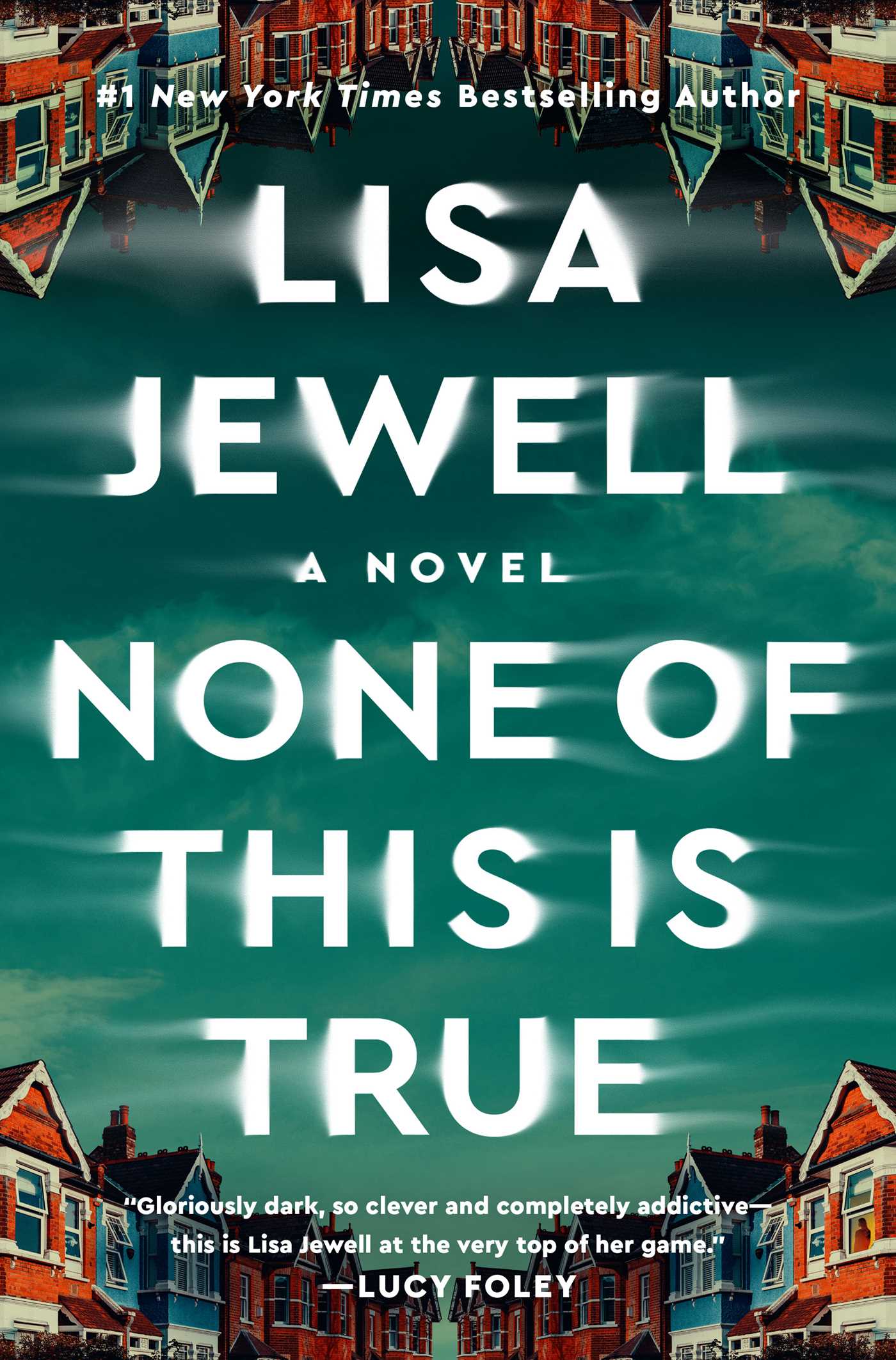
I read None of This Is True by Lisa Jewell, a "psychological thriller about a woman who finds herself the subject of her own popular true crime podcast".
It was a really engrossing read, one of those page turners you want to keep reading to find out how it ends. The only downside was the ending wasn't the sudden twist reveal I was expecting, but a gradual resolving of events for the last 50-100 pages. Still great overall though.

I got back to my Michael Connelly reading and finished Two Kinds of Truth. According to Goodreads, this is Harry Bosch #20. Harry gets into a couple of new situations that he hasn't been in before. I appreciate that in the 20th story. Recommended.

pogopossum
Swamp Critter
- Joined
- May 26, 2020
- Messages
- 1,621
Reading Killer of Men by Christian Cameron. Almost done.
Slow, but them so am I. It got a little lost among several SFFs. When I picked it up again, really got into it.
Have ordered Marathon, the second book in the series. Thanks to Raf for his commentary. He gives credit to Decrepit & Senile. This comment is an attempt to pass it on.
Reading history via fiction is something that most SF readers have done. Some SF writers have also gone there. Poul Anderson for one. Like futuristic fiction and even some fantasy, historical fiction uses context to provide a solid base for the development of character. Greece or medieval Britain can be just as outre as the future or a forgotten fantasy world - and for true nerds (talking about myself) as interesting in the accurate development of the past and the addition of detail to what we knew.
If you read Mary Renault or Robert Graves when you were younger try Cameron for someone who embeds his characters in the nitty gritty of the times. Other choices?
Here's a list. LINK
Or re-browse the above posts for relatively current suggestions.
edit: I neglected to mention a quirky series about a detective in Imperial Rome. Marcus Didius Falco - by Lindsey Davis. Enjoyed them all, but for the character more than the history. Try The Iron Hand of Mars. Or any of the 20 novels.
edit the second. Just noted that I didn't describe Killer of Men.
You shouldn't have to go back & read Raf or D & S. summaries.
It places a boy from Platea, immediately adjacent to ancient Thebes, in the middle of the Ionian Revolt, the first round of the Greco-Persian wars. Betrayed and sold into slavery he gradually develops the talent stated in the title. The book speaks to the simplistic view of Greece as the cultured civilisation of history and Persia and its dependencies as barbarians.
Slow, but them so am I. It got a little lost among several SFFs. When I picked it up again, really got into it.
Have ordered Marathon, the second book in the series. Thanks to Raf for his commentary. He gives credit to Decrepit & Senile. This comment is an attempt to pass it on.
Reading history via fiction is something that most SF readers have done. Some SF writers have also gone there. Poul Anderson for one. Like futuristic fiction and even some fantasy, historical fiction uses context to provide a solid base for the development of character. Greece or medieval Britain can be just as outre as the future or a forgotten fantasy world - and for true nerds (talking about myself) as interesting in the accurate development of the past and the addition of detail to what we knew.
If you read Mary Renault or Robert Graves when you were younger try Cameron for someone who embeds his characters in the nitty gritty of the times. Other choices?
Here's a list. LINK
Or re-browse the above posts for relatively current suggestions.
edit: I neglected to mention a quirky series about a detective in Imperial Rome. Marcus Didius Falco - by Lindsey Davis. Enjoyed them all, but for the character more than the history. Try The Iron Hand of Mars. Or any of the 20 novels.
edit the second. Just noted that I didn't describe Killer of Men.
You shouldn't have to go back & read Raf or D & S. summaries.
It places a boy from Platea, immediately adjacent to ancient Thebes, in the middle of the Ionian Revolt, the first round of the Greco-Persian wars. Betrayed and sold into slavery he gradually develops the talent stated in the title. The book speaks to the simplistic view of Greece as the cultured civilisation of history and Persia and its dependencies as barbarians.
Last edited:
suciul
Read interesting books
- Joined
- Dec 24, 2005
- Messages
- 3,759
Finished the recent historical adventure from Colin Falconer, Ends of the Earth and I quite enjoyed it; like with the other adventure books of the author (read a few and enjoyed them mostly to an extent or another), a bit of over-the-top stuff, villains with hats naming them such, heroes and heroines that are heroic and way too modern attitudes on occasion stop it from being on par with the top historical fiction around, but its turn the page energy, lively action and entertainment value makes it a good fast read which I definitely recommend.
Burb:
From the bestselling author of Silk Road comes a brand-new, sweeping action epic about the lost legion of Carrhae. Set against a sprawling canvas of Parthia, the Han dynasty, the Seven Seas of ancient Arab traders, and Rome in the last days of the Republic, this is historical adventure on a breathtaking scale. Roman Empire, 53 In the wake of catastrophic defeat at the battle of Carrhae, Roman tribune, Valerius, is taken prisoner at the far reaches of the Parthian Empire. It is the ends of the earth, and he vows to somehow find a way home. In Rome, Pompey and Caesar battle for absolute power in the last days of the Republic, and senators plot to take sides, as the city convulses into riot and civil war. No one is safe. Valerius soon realises that if he ever does find his way back, his problems will be far from over. Dark secrets will not stay buried. Politics and intrigue bend to no man. And standing between him and his wife is the man who abandoned him to die on the battlefield
Burb:
From the bestselling author of Silk Road comes a brand-new, sweeping action epic about the lost legion of Carrhae. Set against a sprawling canvas of Parthia, the Han dynasty, the Seven Seas of ancient Arab traders, and Rome in the last days of the Republic, this is historical adventure on a breathtaking scale. Roman Empire, 53 In the wake of catastrophic defeat at the battle of Carrhae, Roman tribune, Valerius, is taken prisoner at the far reaches of the Parthian Empire. It is the ends of the earth, and he vows to somehow find a way home. In Rome, Pompey and Caesar battle for absolute power in the last days of the Republic, and senators plot to take sides, as the city convulses into riot and civil war. No one is safe. Valerius soon realises that if he ever does find his way back, his problems will be far from over. Dark secrets will not stay buried. Politics and intrigue bend to no man. And standing between him and his wife is the man who abandoned him to die on the battlefield
Sponsors

We try to keep the forum as free of ads as possible, please consider supporting SFFWorld on Patreon

Your ad here.

