Current Non-Genre Reading III

Empire of Silver

9780007201808-uk.jpg


When Genghis Khan dies, his third son, Ogedai, becomes the ruler of the Mongol empire. After the Chin emperor and his army are pushed out of their lands into Song territory, the Mongol armies push eastwards into Europe.

Well, this the fourth book in the Conqueror series was quite an education as I had little knowledge of the true extent of the Mongol invasions, especially so as they took place in a period I thought I knew fairly well. Which, I suppose, is a side benefit of reading historical fiction - you gain some knowledge as well as getting great stories. The clash between Knight Templars and Mongol horsemen wasn’t one I had even considered before reading this book and it opened my eyes to the nous and military ambitions of the great khans and their generals. Very interesting it was too, and all wrapped up in probably the best of the series so far. Just one more book to go now.
 
Pompeii

51VZHN2B03L.jpg


Pompeii tells the story of the eruption of Mount Vesuvius in AD 79, and the fictional involvement of Marcus Attilius Primus, an aquarius (water engineer) who is sent to take charge of the 60 mile long Aqua Augusta aqueduct following the mysterious disappearance of the previous supervisor. Through Attilius, the story charts the lead-up to the eruption (which begins with a disruption to the water supply) and running alongside this is Attilius’s investigation into the disappearance of his predecessor.

Overall, this was a darn good read. The aquarius angle was really interesting, especially so as I knew hardly anything about the huge water projects the Romans put in place. The story also features the Roman scholar, Pliny, whose detailed descriptions of the eruption are still referred to today. Though the eruption is the main event, I liked the build up more, proving that in stories the journey can be just as important as the destination.

Pompeii was another great read by a very good author.
 
Pompeii was another great read by a very good author.
to the TBRpile thank you for your posting.

Thank you, I try to weave in a non FSF title every dozen books or so to the TBRpile, and this seems to be a good one.

It has reminded me of a long-forgotten story. I have a dim memory of a summer read decades ago that was basically a first-century Holms and Watson Pastiche. And quite fun. Not a Time travel story by any stretch the H&W doppelgangers were fairly well-rounded First-century Geniuses Who set up the first consulting detective operation. I can't for the life of me recall either the title or the author. I think it was about 40 years ago.
 
At 1345 this afternoon, 02 Jun 2022, I concluded an initial read of The Silver Locomotive Mystery, book six in Edward Marston's The Railway Detective series. In this one, railways play no part whatsoever except as a means of transport for some of the book's characters. The "Silver Locomotive" is a custom-built coffeepot rather than an actual loco, though the coffeepot is modeled after one. Despite feeling shortchanged railway trivia wise, the book was enjoyable start to finish. Good plot with some unexpected turns along the way. One series stalwart, who up until now came across as rather one-dimensional and overly predicable, gained a little welcomed depth.

This was a quick read. Indications to the contrary are nothing more than my having abandoned several false starts with other titles.
 
I read Consent to Kill, book 8 of the Mitch Rapp spy thriller series by Vince Flynn, in which the father of a terrorist killed by Rapp plans revenge.

The plot goes into the detailed planning of the hit, the contractors and sub-contractors used, and then the inevitable failure and counter-revenge from Rapp. This was back to the form of earlier books; fast paced, plenty of tradecraft, and a satisfying conclusion. I also thought some of the relationships felt more realistic (especially between his wife), and there was a prominent character kill-off that was surprising but commendable from the author to not keep things safe. An enjoyable read overall.
 
Finished the first two volumes in Andrea Camilleri’s Inspector Montalbano series:

The Shape of Water (1994)
The Terra-Cotta Dog (1996)


The good:

It’s atmospheric. The Sicilian landscape and culture are well captured.

The bad:

It’s not very well written (or translated...). Sentences are often way too long, too descriptive or plain confusing.

The ugly:

I don’t mind sex and explicit mention of various body parts if it’s integral to the story. In this case however, it’s all (very) superfluous. Our main character runs around the house naked most of the time, and basically all (attractive) female characters are irresistibly drawn to the man. One of them is described as follows in The Shape of Water: “Ingrid was worth her weight in gold: she’d done everything he’d asked of her and hadn’t even wanted an explanation. As far as curiosity was concerned, she was certainly not female. But only as far as curiosity was concerned.” Brrrr….On top of that: almost all the jokes between men refer to the other one being gay....
Now, crass language, sex, as well as misplaced jokes can all have their place in a novel - but here it all adds up to a rather creepy feeling. 


Thus, can’t recommend this one; hopefully the TV-series is better!
 
Sorry to hear that, Sfinx. I'm surprised the guy who recommended them to me did so, since he's usually sensitive to such things.
 
Sorry to hear that, Sfinx. I'm surprised the guy who recommended them to me did so, since he's usually sensitive to such things.

No worries Randy. Odd thing is, I'm normally not very sensitive to such things :)
 
At 1435 this afternoon, 05 Aug 2022, I concluded an initial read of “A Hangman's Daughter Tale, book 1:The Hangman's Daughter” by Oliver Pötzsch, translation by. Lee Chadeayne. I read Pötzsch's two-volume Faust retelling at the beginning of the year. It remains one of the year's best reads. Unlike Faust, this novel, while fiction, has a solid historic basis. The hangman is both an actual person and one of Pötzsch's ancestors. The plot centers around a 17th Century Bavarian town midwife accused of witchcraft, several deaths and arson. The hangman strives to prove her innocence, against the wishes of town officials who want a quick confession and burning so things can return to normal. This book grabbed my attention from the start and didn't let go until the fat lady sang. Recommended, though those new to Pötzsch might want to tackle the two Faust books first.
 
Read In the Shadow of the Apennines by Kimberly Sullivan and really liked it (opened it by chance and couldn't put it down); will include a part of the blurb (the full Goodreads blurb seems too spoilery for me) and my minireview

An American divorcée. An Italian shepherdess.
Separated by a century, united by common dreams.
The sleepy little Abruzzo mountain town of Marsicano seems about as far as Samantha can flee from her failed marriage and disastrous university career. Eager for a fresh start, Samantha begins to set down roots in her Italian mountain hideaway.


A first-person narration (main narrator plus the journals discovered by her in the house she buys in an isolated Italian village) and essentially three timelines (present, how we got here, and the events of the 1910's) with a few twists mostly predictable but full of energy and with great characters all around.

The prestigious upstate NY college vibe and the genius academic whose wife dedicates all her energy to further his career only to be unceremoniously dumped when she gets into her forties for someone almost half her age sound all too familiar, while the small Italian village life really feels familiar and well done, but these are only a part of the novel's storyline which is ultimately about resilience and hope, so the book reads quite optimistic and not depressing as the above would indicate.

Like with most if not all first-person narrations, this novel lives or dies by its voice(s) and here it really worked for me, and somewhat to my surprise, I couldn't really put it down once I opened it. The blurb gives away a bit too much imho, so I definitely do not want to add more, just to encourage everyone to take a look at In the Shadow of the Apennines and see if it appeals.

Highly recommended and a top 25 of mine, while I definitely plan to try more of the author's books
 
TBR pile notwithstanding? As per fricking usual I hied off on a completely new tangent and started a supposedly nautical novel written by a new author for me. Joan Druett. I had been searching for naval / nautical historical fiction and stumbled onto a recco of the author's work. She had an interesting biography and I decided to give one a try.

The Money Ship tells the tale in the beginning from POV of a 9 year old girl "Jerusha". The daughter of an American Whale ship Captain (now retired) and an english woman. They are partial owners of a Tavern in Sussex. Jerusha's story continues as her father loses the Tavern and signs up to go a'whaling again. This time with his wife and daughter along.

Gets pretty formulaic now. Daughter meets young man, but still too young. Young man is framed for murder of his brother. Gets sent to the Sultan's prison...but is pardoned and ends up back in Singapore to finally meet Jerusha's father who sends him to Boston to marry his daughter. Who is studying to be a midwife. An accidental meeting with the 2 starcrossed characters ending up with the young man having amnesia from a bullet wound....okay, lost it here for me.

DNF....thought I'd take a look at the Aubrey / Maturin novels by Patrick O'Brien. Have never read any of those. Any other recommendations for nautical historical fiction?

I'm no sailor in way shape or form. But I'm fascinated by those who sailed the sea...pre-steam era.
 
Nautical fiction seems to have gone out of fashion for most of today's writers, Raf, and the only one I recall reading by a recent author is The Bone Ships by R J Barker. It's a fantasy take but still set at sea and I thought it was a fairly good read. Two more have been published since I read it...Home (rjbarker.com)

You can't go wrong with the Aubrey–Maturin novels or the CS Forester Hornblower books for that matter, both series set during the Napoleonic wars. I've been looking for a decent hardcover set of the latter for a while now. Other than those there's also the Honorverse books, I suppose, but that's just a lame suggestion.
 
You can't go wrong with the Aubrey–Maturin novels or the CS Forester Hornblower books, for that matter, both series set during the Napoleonic wars. I've been looking for a decent hardcover set of the latter for a while now. Other than those, there are also the Honorverse books, I suppose, but that's just a lame suggestion.
I grew up with the CS Forester Hornblower books and love them dearly, and when I got older, I fell in love with the Aubrey–Maturin novels by Patrick O'Brien. There are a few stand-alone novels about wooden ships and the iron men who sailed them, and when my age-addled brain releases the names to my conscious mind, I will post them.
 
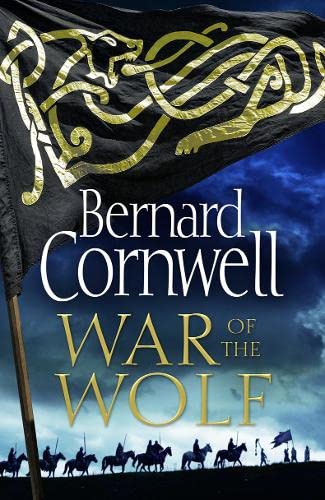
War of the Wolf

518fu3UWeZL.jpg


After the death of Aethelflaed, Wessex starts to exert control over Mercia and Uhtred foresees that the days are numbered for Danish ruled Northumbria. But before he can play a part in how that unfolds, he must first deal with Sköll Grimmarson and his berserker warriors, intent on taking the kingdom of Northumbria for themselves.

This was another fine addition to the series and Uhtred’s story at a time when Alfred’s vision for a united England was coming to fruition. As usual, the action plays out alongside the political intrigue and Uhtred plays a part in both, though the next book will no doubt throw more light on how the bigger picture pans out. This was the eleventh book in the series and there are just two more to go now. I’ll be sorry to see it end.
 
Sword of Kings

81DrLv2LTUL.jpg


Drawn back to the south by a plea for help from Eadgifu, the dying King Edward’s wife, and to thwart the ambitions of his sworn enemy, Aethelhelm, Uhtred finds himself caught up in the impending war of succession. Sometimes against his better judgement and at serious risk to his life, Uhtred does what he can to make sure that Aethelstan, thought by many to be Edward’s bastard son, inherits the crown.

Despite this being the twelfth book in the series with Uhtred now in his later years, the action and intrigue never let up. Although Uhtred’s role in it all is fictional, as is Cornwell’s account of the events in Lundene, the main characters are real and the succession plays out as it did in 924 AD. Which all makes for another great read in this time of change and adversity, and I liked it a lot.
 
War Lord

81yDjtY+EnL.jpg


After King Aethelstan summons all the rulers of Britain to submit to him, it seems as if his grandfather’s vision of a united England is becoming a reality. Uhtred sees it otherwise, though, and a recurring dream presages a dragon bringing chaos from the north. Before long, an alliance between Scotland, the island kingdoms to the north, Danish settlers and an army of Irish Norsemen threatens to defeat Aethelstan and overwhelm the country.

The final book of the Last Kingdom series leads up to the Battle of Brunanburh in 937 AD, a key event in the history of the country and one I admit to knowing little of. Uhtred once again is in the thick of it and plays a part in the events leading up to the battle, as well as during the battle itself. And thus Uhtred’s story and this fine series comes to an end, and what an enjoyable journey it has been, too. Having avoided the TV series, I find myself now wanting to watch it so I’ll have to renew my Netflix subscription or get hold of the DVDs. But no hurry, I’ll pick them up cheap somewhere. Recommended.
 

Sponsors


We try to keep the forum as free of ads as possible, please consider supporting SFFWorld on Patreon


Your ad here.
Back
Top