Spreadin’ the Disease: If You Build It, They Will Come
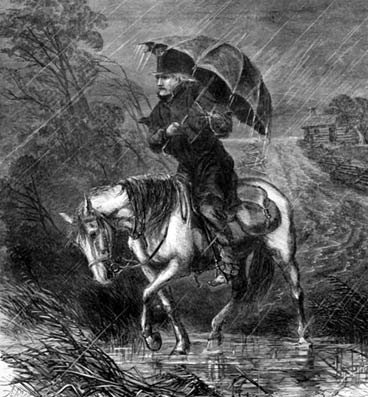
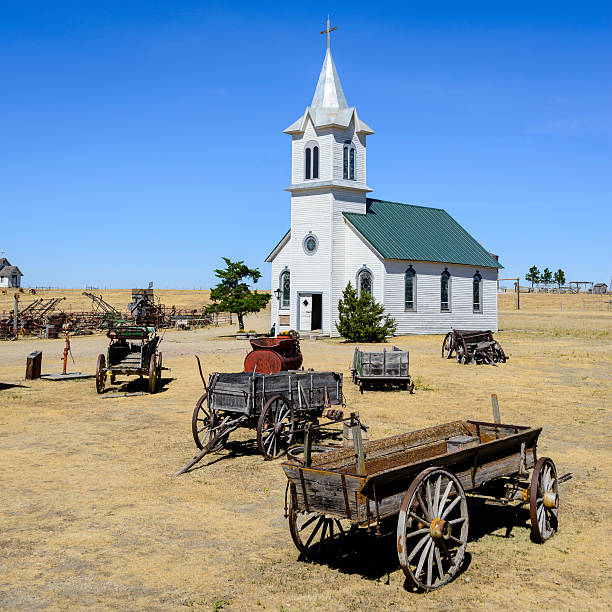
While itinerant preachers arriving in town on horseback and preaching in fields or schools was all well and good, and possibly all the community could hope for at the time, the main aim of the church has always been to, rather like a foreign military power in a hostile land, establish a permanent presence, and it traditionally has managed that through the building of churches. Once a church existed, there was a physical reminder of God’s presence, and of the power and authority of the Church (with a capital C); like a stern parent overlooking the town, frowning down on the saloons and whorehouses, the church would be a moderating influence on the townsfolk, a warning that the punishment of perdition was always just waiting for those who slipped into Satan’s unholy grasp, and that if the good citizens believed they had been tempted, or had succumbed to temptation by the evil one, there was only one place they were going to be safe, so they had better get down to the church double quick.
It stands to reason that the building of a church in a town or village also heightened its social status; a town with a church was a God-fearing town and didn’t mind showing it, was proud to, in fact, and its inhabitants might look down on other towns not so similarly blessed. It also did away, of course, mostly the need for travelling preachers, as a house could be built beside the church in which the preacher could stay, where he could live, and he would hold all his sermons, masses and celebrations in the newly-built church. It’s possibly likely too that the building of a church by one denomination - let’s say the Methodists, as they have been cited as being the busiest of them in this period - might dissuade or at least demoralise those of another, let’s say maybe Mormons, who had planned to erect their own. The Methodist church might silently say “this is a
Methodist town, move on, boy. Nothing for you here” to visiting preachers of other religions. Of course, conversely, it might have the opposite effect, and lead to determination by that other faction to build
their church.
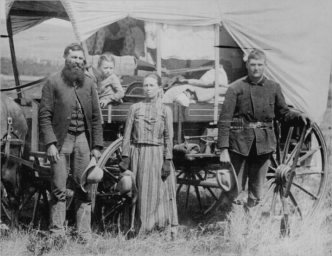
Whichever, it meant that churches began to pop up all over the frontier, as the power of God was demonstrated physically. Between 1887 and 1913 Methodist ministers built over 1,500 churches in rural America, nevertheless circuit preachers, now rebranded as mobile ministries and driving cars instead of riding horses, survived well into the 1950s, as preachers brought the comfort and absolution of God to those who could not get to church: the sick, the old, the weak and the disabled.
Hassling the Heathen: Missionaries in the Old West
But of course the problem with America was that there were those who just didn't
want a church - of any denomination - unless it was built to worship the Great Spirit, and even he wasn't too fussed. Mountains, rivers, valleys, fields and plains were good enough for him; no need for some ugly squat building with a spire reaching up like a accusing finger to the heavens. Yep, the vast majority of the American West was inhabited by what white settlers - especially Christian ones - would refer to as "the heathen" or "savages", quite more often simply, and inaccurately, as "Indians".
And these guys
needed to be converted. They just didn't realise it.
The boys to take on this job were an entirely different class to your itinerant wandering circuit preachers, or even your by-now-settled ones. The former had no real need to convert anyone; they filled a requirement for the people. The good folk needed a preacher, here was one, and each was happy with the bargain. But the heathen? They didn't want, or feel they needed God, and certainly had no time for His interfering messengers and errand boys, which made the mission of these men (and some women, as we will see) that much harder.
See, a missionary is called that for a reason. He - or she - sees saving souls as a mission, and a sacred duty that has been entrusted to them. They don't really take no for an answer, and with the already long established religions of the American West firmly entrenched in the peoples of the plains, their job was not going to be that easy.
But then, nobody became a missionary because it was a doddle, did they? It took special men and special women to face down an Indian tribe and tell them outright their gods were a load of steaming Tottenham, a steaming pile of hotspur, and they should get with the programme and come over to the winning side. Men and women like these.
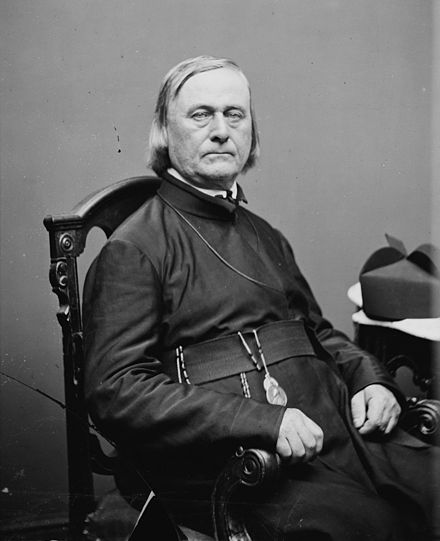
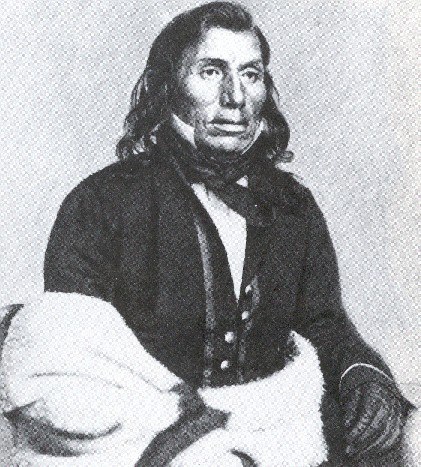
Pierre-Jean de Smet (1801 - 1873)
A man who would be instrumental in brokering peace treaties among warring factions, and who would step in to negotiate on behalf of the Native American tribes, particularly the Sioux, De Smet was born in Belgium and came as a missionary to the USA when he was twenty years old, with the idea of converting the natives. After six years he was ordained as a priest and founded religious academic institutions, such as seminaries, in Missouri, but in 1833 he had to return to Belgium due to poor health, and would not return to the United States until 1837. When he returned he settled in Council Bluffs, Iowa, which you may remember would become one of the main points along the transcontinental railroad, thirty years later. Seeing the danger the trade in whiskey with the Native Americans was wreaking, he set out to stop it and also helped map the upper Missouri River.
After certain tribes learned of Christianity, believing that the Christian God had the power to save their sick and dying children, they sent delegations to St. Louis requesting visitations from priests, or as they called them, rather appropriately, “black robes”. For whatever reason, the first two requests were ignored, and the third delegation ran into the Sioux, their mortal enemy, who slaughtered them. Fourth time lucky, thought the indomitable Indians, and this time their party not only reached St. Louis alive, but managed to convince the bishop to send priests, who then met up with De Smet in Council Bluffs. Having obtained permission from the bishop to make this a missionary, he baptised over three hundred people. No records exist to tell whether or not he cured any sick children. Two years later he was back, and this time they founded the St. Mary Mission in Bitterroot Valley.
Having convinced more tribes to convert and invited them to his mission, he sent back word to St. Louis that supplies and housing were needed to stop these peoples from having to be wandering nomads, a state in which it made it tough to civilise them. Cattle, the tools needed to farm the land, seed and the necessity to gather them together in villages were all, he said, vital. Perhaps he hadn’t heard that the US Government was already forcibly relocating thousands of Indians in hundreds of tribes to make way for their own white asses?
Not just a preacher but a true adventurer, De Smet then headed to the Rockies where he travelled extensively, meeting tribes such as the Cree, Chippawa and Blackfoot, crossing into Canada and returning in 1845 to Fort Edmonton, where he spent the winter. The next year he established missions in Montana and Idaho, ending up at Fort Vancouver, having covered over a thousand miles. Despite all these amazing achievements though, he is best remembered for being the first white man to successfully treat with the great Sioux war chief Sitting Bull, who had previously vowed to kill any white man coming into their territory. He so impressed the great chief that Sitting Bull was convinced to send a delegation to talk to the US peace commissioners, which led to the signing of the Treaty of Fort Laramie in 1868.
This was to be one of his last triumphs though, as he died in St. Louis in 1873. Almost a hundred years later, he had the honour of being one of the few preachers to be inducted into the Hall of Great Westerners of the National Cowboy and Western Heritage Museum. He had streets, a school, mountain range and a lake named after him, and in South Dakota, his name was on the city and county seat of the birthplace of Laura Ingalls Wilder, who would go on to become famous through her
Little House books, which would be later televised and loved as the series
Little House on the Prairie.
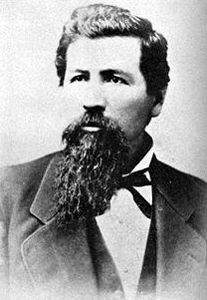
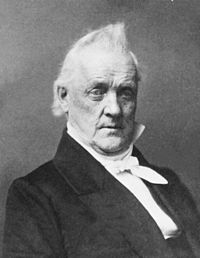
Henry Spalding (1803 - 1874)
Now
there’s a man who looks like a preacher! You can almost see the brimstone sparking behind his eyes, can’t you, and that impressive beard, which might have made ZZ Top envious, would have added to his dramatic, almost dreaded aspect. I can just see him standing there holding court from his pulpit, thumping the bible and warning all of his congregation that they were going to Hell! Never quite got that: why go see someone rant on about how damned you were, how you had no chance and were going to burn in an eternal fire? Kind of ruins the atmos, doesn’t it? But that’s religion for you I guess.
Spalding was a Presbyterian minister, who worked, along with his wife Eliza, among the Nez Perce peoples of the Pacific Northwest. Spalding was a native New Yorker, and met his wife through a pen pals arrangement (ask yer da) before meeting her in person, with marriage quickly following as they realised they were both zealous about bringing religion to the heathen. Oddly, for such on the face of it sanctimonious people, Eliza was the daughter of cousins - her mother and father were first cousins - which seems a little, I don’t know, unconventional for a man of the cloth to accept? But as I’ve said before, and will say again, what do I know? Times were different I guess, and maybe that sort of thing went on all the time.
In those days, it seems if you wanted to civilise someone you had to go through some red tape, and the holders of that red tape was the American Board of Commissioners for Foreign Missions, which seems something of an unnecessary mouthful, but again, WDIK? Applying, the Spaldings were assigned to the Osage tribe in Missouri, but on meeting Narcissa (seriously, now!) Prentiss (ah come on!) Whitman and her husband Henry, they decided to go instead to what was then known as the Oregon Country, basically the same area wherein operated Pierre-Jean De Smet. These people were so devout that they even changed steamships in order not to have to travel on the Sabbath! Ah yeah, I’ve done the same thing myself hundreds of times. Not.
They travelled through much of the same region which De Smet would later explore, he remarking some years later that the Presbyterian way of preaching had not been altogether successful and made the Nez Perce wary of preachers, though that could of course have been merely his view of an opposing religion. Having travelled part of the way with traders from the Rocky Mountain Fur Company for protection, the Spaldings and the Whitmans split up, the former going on to Idaho while the Whitmans headed off to try their luck in Washington. This would turn out to be a very bad move for them, as we will see in the next section. But back to the Spaldings. Settled in Idaho, and making history as the first whites to live there, they introduced the first ever printing press into the state, and despite the grumblings of De Smet later, Henry seems to have got on very well with the Nez Perce, converting and baptising many of their leaders, and even translating parts of the Bible into their own language.
Ah. No. I see. He wasn’t actually that well liked, as he was, being a strict Presbyterian and all, down on liquor, gambling and other fun activities the Nez Perce, being human, enjoyed, and in fact they quite disliked and even ridiculed him. They surely disliked him mightily when he whipped them or (it says here) instructed them to whip each other for having broken God’s laws. But his often brutal treatment of them was ameliorated by his wife, whom the Nez Perce loved, especially the women, who thought her very brave and strove to emulate her example. Henry’s inflexible attitude towards his, um, flock, led to the American Board dismissing him in 1842. Not that he took a blind bit of notice, just continued doing what he was doing until, maybe with a sense of fatalism, realising there wasn’t really any way they could stop him, him being out in the wilderness with savages and all, they shrugged and rescinded their decision.
When they learned of the massacre of their friends the Whitmans (see further) the Spaldings, thankful that their daughter, who had been staying at the mission, had survived, holed up at Fort Walla Walla (shut up, I’m serious) and, I guess to his credit despite what I said about him above, Henry petitioned the bishop to convince the army not to step in, as it was believed further Indian uprisings and attacks were expected. Oh but again, I should read all the way ahead before writing, as it seems once they reached safety Henry’s attitude changed and he advocated for reprisals. So, just looking after his own skin then. Anyway, the Board decided the last thing they wanted was to get involved in a Pacific Northwest war with Indians - Indians whom, after all, they had gone there to convert, and I don’t mean into piles of bones - and got the f**k out of there, ceasing all missions in the area.
Safe now in Oregon, and fuming that all his work was to go for nothing, Spalding decided to do what every good Protestant has done since Martin Luther nailed his Grievances to the cathedral door: he blamed the Catholics. Well, it made sense, didn’t it? Didn’t it? Of course it did. In a nineteenth-century version of the “stab in the back theory” that galvanised support for World War II and brought Hitler to power, Spalding decided that the bishop who had advised halting all missions in the area - and who was of course a Catholic - had somehow orchestrated the massacre of the Whitmans and their mission for reasons. I mean, come on! But though the bishop is reported to have thought him “most ungrateful”, Spalding does not seem to have been censured or punished in any way for spreading his lies. How Trumpian, eh? Instead he settled in Oregon and became pastor of the Congregational Church, while his wife took a post as a teacher. She died in 1871 and Henry was married again in 1873, taking the sister-in-law of another preacher whom we’ll be looking at too, John Smith Griffin.
Six years later he was back with the Nez Perce, though his mission seems to have only lasted less than a year, and once again he had Catholics in his sights, so much so that he travelled on the new transcontinental railroad back to the Big Apple and on to Washington where he testified before Congress as to the role they and the federal government had played - supposedly - in his failure. He died three years later, having founded a federally funded school for Indians and continued his missionary work in Idaho and Washington up almost to his death.
Narcissa Prentiss Whitman (1808 - 1847) and Henry Whitman (1802 - 1847)
As we’ve seen in the account above, husband and wife joined up with Henry and Eliza Spalding to attempt to convert the Nez Perce Indians of the Pacific Northwest, but at one point in the mission their paths diverged from those of the Spaldings, as they headed for Washington with their friends going towards Idaho. This was the beginning of the end for the young couple, but where did it all begin? Like Spalding, Narcissa Prentiss was born in New York and at the age of twenty-eight decided she wanted to be a missionary. She was married the next year (1836) to Marcus Whitman, taking his name and also keeping her own, which I think may have been somewhat atypical for the time and may have shown her to be rather independent, though I doubt she was any sort of feminist. Marcus had wanted to be a minister but was unable to afford the school fees. He trained as a doctor but felt the pull of the west, as did his new wife. Marcus had already answered this call in 1835, travelling with fellow missionary Samuel Parker to northern Idaho and northwestern Montana where he ministered to the Nez Perce Indians.
The done thing seems to have been to have got married and then almost spent your honeymoon telling natives how great your god was, and why they should worship him. Worked for them anyway, and also the Spaldings, who set off on the same journey after having been only recently married too. The Whitmans, having crossed the Rockies with the Spaldings and thereby Narcissa and Eliza becoming the first two women to do so, they set up their mission in the hilariously-named Walla Walla, in Washington. Narcissa at least saw her role as not just converting the heathen, but teaching them white American values, such as chores, making candles and soap, and baking.
The typical white sense of superiority towards what were considered savage and uncivilised peoples shows in Narcissa’s letters, where she declares the natives, the Cayuse, are "so filthy they make a great deal of cleaning wherever they go ... " and goes on to lament "we have come to elevate them and not to suffer ourselves to sink down to their standard." Thanks lady: I don’t think they asked you to step in with your bloody wooden cross and your posturing and pontificating. ****ing Christians. The Whitmans further instructed the Cayuse to build a place of worship for themselves, and when the Indians wondered what was wrong with the one they had already, Narcissa muttered icily in her letters that "we could not have them worship there for they would make it so dirty and fill it so full of fleas that we could not live in it." Charming. Segregation already in their minds: one church for us, one for those “dirty” natives. That’s how to convert them to the love of God, all right.
Samuel Parker had made promises to the Cayuse that they would be compensated for the land on which the white men built. When this payment was not forthcoming, their chief, Umtippe, made dire warnings, especially when his wife fell ill. He told Whitman "Doctor, you have come here to give us bad medicines; you come to kill us, and you steal our lands. You had promised to pay me every year, and you have given me nothing. You had better go away; if my wife dies, you shall die also." Further tensions arose when the Catholic Church sent its representatives, including Bishop François Norbert Blanchet to compete with the Protestants for the souls of the Cayuse, and the natives, not surprisingly, played each against the other. Henry Spalding would later, as already related, blame the Catholics for the coming massacre, as well as the closure of all missions in the Pacific Northwest. No evidence exists to support or refute this, but historically the two denominations have always hated and tried to thwart each other, so I’d say it’s perhaps not outside the realm of possibility.
Tragedy struck in 1839 when Narcissa’s only child, her daughter Alice Clarissa, was drowned when she fell into a pool, but this did not stop her striking out on her own to visit other towns and settlements when her husband headed back home to gain reinforcements, but unbeknownst to him, the mission itself was on borrowed time, as were they. Like the Spaldings, Whitman believed that the alteration of the natives’ nomadic habits, and settling them in villages while teaching them European-based agriculture would make them easier to convert, or perhaps to put it more bluntly, a stationery target is easier to hit.
The Cayuse shrugged and said they didn’t see what the problem was, so to speak. They had been a nomadic people for thousands of years, and weren’t about to change now. Incensed at their stubbornness and reluctance to change, that is, to remodel their lives to shape his vision and for his convenience, Whitman raged again against the Papists: “The novelty of working for themselves and supplying their own wants seem to have passed away; while the papal teachers and other opposers of the mission appear to have succeeded in making them believe that the missionaries ought to furnish them with food and clothing and supply all their wants.” Complaints and accusations that were echoed in part across the water in England, and which led to the setting up of workhouses.
Rather oddly, it seems to me, in order to safeguard melon patches from which the Cayuse had been, cartoon-animal-like, stealing the fruits, William Gray, another pioneer who would go on to eventually more or less set up the provisional government of Oregon, had poisoned them. Just a little, not to kill but just to deter the Cayuse from taking the melons. Now, if you’re already having problems with natives and are trying to gain their trust, I don’t think poisoning their food, even a little bit, is the smartest move, especially when they’ve already accused you of bringing bad juju in the form of diseases into their community.
In 1847 an epidemic of measles swept through Washington, and the natives, having no natural immunity to the disease, died while the whites mostly survived. While Whitman and the other missionaries did what they could for them, things went from bad to worse when a half-breed Iroquois called Joe Lewis, who had recently joined the mission, spread it about that the white men were poisoning, not treating the patients. Given that they had suffered poisoning before - and deliberate poisoning too - this then was not hard for the natives to believe.
They did, and all hell was set free.
Marcus was the first to go, taking an axe in the head when he was asked for medicine and taken by surprise, then shot in the neck. As the camp erupted in violence, Cayuse swarmed all over the mission and death was everywhere. Narcissa died soon after her husband, and so ended the mission of the Whitmans to civilise the Cayuse. Soon afterwards their mission was abandoned, and shortly after that the ABCFM declared there would be no more missions authorised into the Pacific Northwest. Neither Narcissa nor Marcus would live to see the results of their interference in a culture, as the Cayuse War exploded across the area, resulting in the decimation of the tribe and leading, along with other Indian wars, to the forced resettlement of the tribes on reservations while white people took their land. I’m sure God would have been proud.
America certainly was (which might be the same thing to some people). Not only was Whitman (Marcus, that is) commemorated in the name of schools and colleges, a forest and a glacier, he has (or had, until it was removed recently in the wake of BLM protests) a statue in the Capitol and even has a day dedicated to him, September 4 being Marcus Whitman day. There is also a hotel and conference centre with his name.
Jean-Baptiste Lamy (1814 - 1888)
At the extreme other end of the country, we have this guy. French born, he arrived in America in 1839, about the same time as the Whitmans and the Spaldings, but went to the mission in Cincinnati, and worked in Ohio and Kentucky until 1850, when he was appointed by the Pope as Bishop in New Mexico. This seems to have come as a surprise to him, and I can’t say why he was chosen, whether it was due to reports of his good works or whether in fact it was a poison chalice doing the rounds at the Vatican that Pius XII had to unload on someone. Either way, he arrived way down south in Sante Fe in the summer of 1851, but though the governor welcomed him, the Spanish priests already there did not. They refused to recognise his authority, and he had to go personally to their bishop to confirm the diocese was now under his control. The Spanish priests probably said something similar to “We don’ need no steenking Frenchman telling us what to do,” but had to accept his authority, as their bishop had said “sorry hombres, is how it is,” or something.
With his authority no longer in doubt - the Pope trumps any bishop you may care to name - Lamy set about reforming the New Mexico Church, building schools and making new parishes, and of course building churches. He made himself unpopular by ending the custom of concubinage, by which the local priests, forbidden to marry, could still get their end away with the local talent, and also broke up many brotherhoods, secret and exclusive religious societies. Let’s just say he wasn’t exactly Mr. Popular from the off. Nevertheless he was successful in moulding the Catholic faith in New Mexico, and he had the St. Francis Cathedral built, but he died in 1888 from pneumonia at the age of seventy-four.
Thomas Starr King (1824 - 1864)
Here’s one we haven’t come across before. Unitarians apparently believe that God is one being, not a trinity (sounds somewhat more logical than Christianity) and so while they are prepared to believe Jesus was a prophet, an emissary of God, they do not accept that he was God too. Which again I have to say makes far more logical sense, but probably made it hard for King to convince those who were not of his faith to switch. Oh, look! Unitarians also reject the idea of Original Sin and the infallibility of the Bible. I like these guys more and more. Another native of New York, King doesn’t appear to have attended any seminaries or schools, leaving his education in fact at the age of fifteen to support his family, and taught himself to be a minister.
He made his name in Boston, in the church on Hollis Street, of which he was made pastor in 1849, and also on the
lyceum circuit, his speeches making him one of the most famous preachers in New England. An abolitionist and an environmentalist, he moved to San Francisco in 1850 and gave sermons on the beauty of Yosemite, for which he would lobby and eventually achieve the status of a national park. During the Civil War he was credited by Lincoln as “the man who saved the Union”, by speaking fervently and at length as to why California should not secede.
"I pitched into Secession, Concession and (John C.) Calhoun (former U.S. vice president), right and left, and made the Southerners applaud. I pledged California to a Northern Republic and to a flag that should have no treacherous threads of cotton in its warp, and the audience came down in thunder. At the close it was announced that I would repeat it the next night, and they gave me three rounds of cheers." ... King covered his pulpit with an American flag and ended all his sermons with "God bless the president of the United States and all who serve with him the cause of a common country."
He set up the Pacific branch of the United States Sanitary Commission, the forerunner of the Red Cross, which raised money for wounded soldiers, but the constant grind of the lecture circuit took a toll on his health and he died of diphtheria and pneumonia in 1864. Like other missionaries, he is commemorated in schools, parks, mountains, streets, even a giant Redwood, and he has his own statue in the Capitol, though it was replaced by Republicans in 2006 with one of Reagan. Right. Reagan. Okay.