Trollheart
Nothing Wicked This Way Comes...
- Joined
- Jun 9, 2020
- Messages
- 4,229

UnAmerican Animation: Rockin' Outside the USA
Of course, this is not just going to be the history of American animation, and while the USA was the forerunner and leader for a very long time in animation – both on film and later TV – there were others working in the field, and we will of course be examining their work. From Germany to Russia, Italy to France, and England to, well, Ireland, animators were slowly bringing their fevered dreams alive on the big screen - and not always to the good, as we will see when we get into the animation during World War II, where it will surprise nobody that cartoons began to be used as propaganda by both sides.
But for now, here's what was happening outside the borders of the US of A.
Timeline: 1917-1937

Argentina is not the sort of place you immediately think of when you think of animation, but believe it or not, that's where the recognised very first animated feature film is supposed to have originated. Lost to the mists of time now, sadly, it was called The Apostle (El Apostolo) and though you might think it from the title (as did I) it is not in fact a religious film chronicling the lives of Jesus's disciples in the Bible. Rather, it is a satirical film lampooning the President of Argentina, who ascends into Heaven (I'm not sure if he dies) and uses the thunderbolts there to cleanse Buenos Aires of its corruption. As a result, the entire city burns. It might be ironic to reflect that the only copy of this important and historic film was lost to a fire in the studios of Quirino Cristiani, who directed it, and who is seen as one of the original fathers of animation. Nothing survives of the film, but there was a documentary called Quirino Cristiani: The Mystery of the First Animated Movies, which attempted to recreate the film. All I can get of that though is this one-minute clip. It's interesting to note that Cristiani is hailed as one of “the men who foreran Disney”, which not only acknowledges Walt's position as the first true animator, but claims that Cristiani and his people were doing this almost a decade before Mickey Mouse came to the big screen. Amazingly, this feature film was over seventy minutes long, which, if it wasn't already accepted as being the first feature animation, would certainly give it the honour of being the longest.
The only other information about this film is that it was confiscated by the War Ministry, on the orders of the President, who presumably did not wish to have it cause an international incident, particularly as the war was by then winding down and would end that year.
Cristiani's only other major work was Peludópolis, another political satire, but events conspired against him, with the ousting of the President halfway through, the arrival of the Great Depression and the death of the former President, all resulting in his withdrawing the film from circulation. This, too, vanished in the fire that consumed the film laboratories, though I read now this did not happen until the fifties, which kind of negates the possibility of any irony in the title of his second movie. With the rise of Disney and the eventual domination of Mickey Mouse, Cristiani gave up animation and he died in 1984.

Although, as we'll see later, with Hitler in power the Nazi propaganda machine was not above using grossly caricatured cartoons to defame its enemies and promote its ideals, I can only find one animation that was created by a German prior to the rise of the Nazi party.
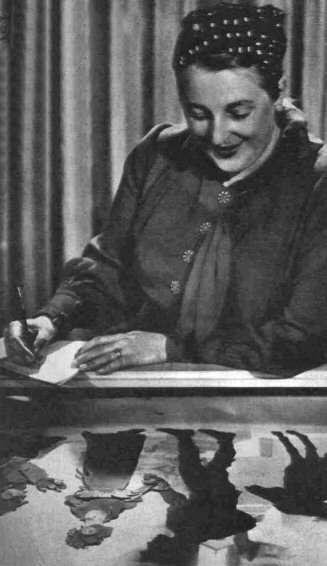
Die Abenteur des Prinzen Achmed (The Adventures of Prince Achmed) was, in traditional German manner, a fairytale, though the subject of the animation looks to the Arabian Nights for its substance (unsurprising, given the name of the eponymous prince!) and was created by Lotte Reiniger. She was a pioneering animator whose work went on to be recognised even by Disney himself, who used her camera techniques to animate part of his famous Fantasia sequence, and indeed her influence extends even to today, with the Harry Potter franchise utilising her mode of animation.
If you've ever seen Japanese shadow puppet theatre, or even the old advertisement for Metz schnapps, featuring the angular Judderman, you'll have a decent idea what to expect here. It's dark-on-light, with the characters moving stiffly, jerking around the screen, the former black while the latter changes colour, though only per scene: in one scene it is green, the next blue, a third orange and so on, so that the background, though changing, is static when a figure is upon it (static as in, the colour does not change) and only changes for the next scene, presumably to give some interest to an otherwise black animation. Her style was called silhouette animation, and involved cardboard cut-outs and figures of lead manipulated before a camera. It allows little in the way of variation, but considering the time we're talking about here must have been seen as pretty inventive. Still, it's clear to see the yawning gulf between what was happening in Europe (what very little there was) and the revolution going on in America. In every possible and conceivable way, the USA was light-years ahead of any other country.
It's kind of hard to get a feel for what's going on, given that you're basically looking at shadows, and the fact that the text is, of course, as you would expect, all in German doesn't help either. There's no speech, just music as a background, though I do note one figure (a genie perhaps, as Aladdin is mentioned?) does manage to look quite scary, so that's quite a feat in and of itself. Nevertheless, I find myself unwilling to sit through the whole thing, but you can if you want, as I have dropped the video in here. You can also read the full story, including the plot, here. https://en.wikipedia.org/wiki/The_Adventures_of_Prince_Achmed
Note: Lasso Media, who own the copyright, removed the original video so this is I think a programme showing how the movie was made. Best I can do I'm afraid. Seriously, who worries about a copyright almost a hundred years old???

Although Wiki has this under the Nazi banner – presumably because they were in power when it was created – I can find hardly any information about it, never mind anything to suggest it was part of Nazi propaganda, so I'm keeping it under the general German flag, and not under the Swastika, as I will be categorising later actual Nazi propaganda films. This was released in 1937 and is called The Seven Ravens (Die siebe Raben) but other that that, and the fact that it was a stop-motion animation, based on the fairytale by the Brothers Grimm, I got nothing.

Based on Goethe's tales of the cunning fox, Le Roman de Renard (The Tale of the Fox) was French animator Ladislas Starevich's first full-length animated feature, and though completely unknown outside of France at the time, beat Snow White and the Seven Dwarfs to the spot of first full-length animated film by eight months. Unlike Snow White though, Renard made use of puppet animation, and unlike our German friend, Starevich's tale is played for laughs, with the ever-cunning Renard convincing the hangman to loosen his rope, right at the opening of the cartoon, as it is, quote, too tight. The animation is really quite spectacular, even if it is puppets and not drawings. Take a look.
Last edited:


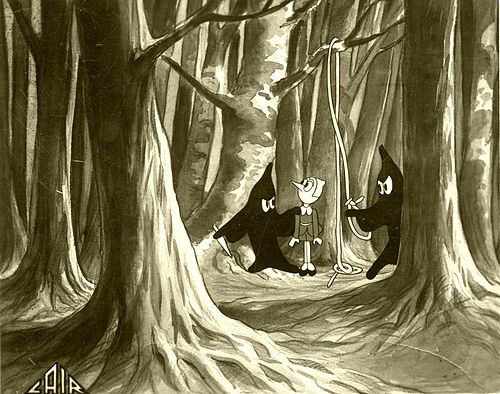
 Sorry...






 Interestingly, it appears that the Spanish may have been the first to have a proper antihero in one of their animations, this being the crotchety old Don Cleque, a bald, sickly, ugly man, and no, I can't find a single instance of him on YouTube either.