Non Fiction being currently read

81vEOaIV0nL.jpg

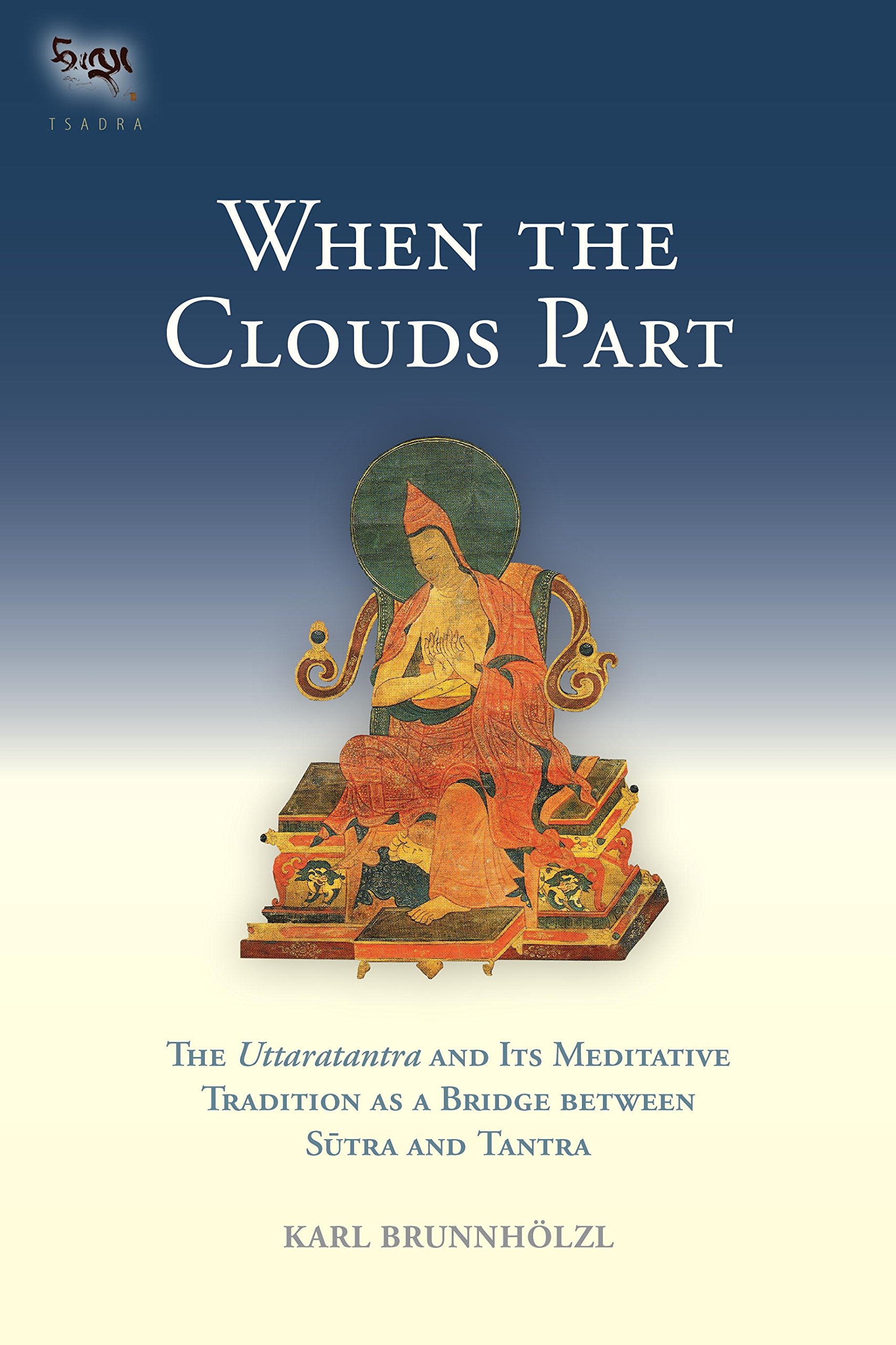
I finished a sizeable chunk of the portion of Mind Seeing Mind I planned on reading immediately, so I've put it aside for now. Now a new non-fiction book about "Buddha nature" (tathāgatagarbha) When the Clouds Part: The Uttaratantra and Its Meditative Tradition as a Bridge Between Sūtra and Tantra by Karl Brunnhölzl.

"Buddha nature" (tathāgatagarbha) is the innate potential in all living beings to become a fully awakened buddha. This book discusses a wide range of topics connected with the notion of buddha nature as presented in Indo-Tibetan Buddhism and includes an overview of the sūtra sources of the tathāgatagarbha teachings and the different ways of explaining the meaning of this term. The translator’s introduction investigates in detail the meditative tradition of using the Mahāyānottaratantra as a basis for Mahāmudrā instructions and the Shentong approach.
 
I just received my copy of Cynical Theories by Helen Pluckrose and James Lindsay. Exactly a month before publication (according to Amazon)! Will be reading (but not writing here about) it.

Proof:
6h4I4HC.jpg
As much as I hate wasting my time reading about bad theorizing and philosophy, this is a captivating book. Incredible how many people are now onboard with these ludicrous ideas. :rolleyes:
 
Currently reading Bluebird, Bluebird by Attica Locke, an Edgar Award winner for best novel in 2018. Locke has great prose so far,

"US Highway 59 is a line that runs through the heart of East Texas, a thread on the map that ties together small towns like knots on a string, from Laredo to Texarkana, on the northern border."

Not showy, but not bland, either, and so far in service to strong characterization. Only 45 pages in and looking forward to seeing how the story progresses .

Intermittently reading How to be Less Stupid About Race by Crystal M. Fleming, which early on seems a sort of primer on Critical Race Theory. Intermittently because life, also because the observations and backing facts and arguments are depressingly plausible and further supported by events that came after the book was published.

Randy M.
 
Intermittently reading How to be Less Stupid About Race by Crystal M. Fleming, which early on seems a sort of primer on Critical Race Theory. Intermittently because life, also because the observations and backing facts and arguments are depressingly plausible and further supported by events that came after the book was published.

Randy M.
The problem with critical race Theory, intersectionality and queer Theory (the author is queer) are the postmodern theoretical foundations, which are laughable. They won't expose these themselves in a propaganda piece like Ibram X. Kendi's Stamped from the Beginning: The Definitive History of Racist Ideas in America (which I reviewed on page 1). The aim of such books is to win well-meaning people over to their cause, the agenda of which is not specified in these books. People'll think twice after they've been submitted to a struggle session at work where white people are forced to admit their complicity in White Supremacy. (That means admit you're a racist. In anti-racism as a white persons you can only be a racist in denial or one who admits his racism and is working in a lifelong commitment to achieve the literally unachievable goal of not being racist.) This is really happening now in the USA, not just at corporations but also in the US government bureaucracy large parts of which have been won over to the critical race Theory view (even under the current leadership). Not a scare story.
 
Last edited:
Sorry Av. We may have to agree to disagree, but for decades I've felt inclined to believe our (U.S.) systems consistently demonstrated racist leanings, when they weren't blatantly racist. That began 40+ years ago when studying the justice system and how it worked and how the poor, primarily African-Americans took most of the brunt of it. I had thought things were getting better in spite of setbacks, but events over the last 15-20 years, recorded and shown to the world have proven otherwise and turned my inclination to conviction. And that's one of the reasons I picked up this book, written as it is in fairly straight-forward prose rather than academic theorizing.

I'll leave it at that. I'm sure the moderators would prefer we don't take this further.

Randy M.
 
I'll leave it at that. I'm sure the moderators would prefer we don't take this further.

Randy M.
Agreed.

One final point. Just because racism and structural problems (partly resulting from previous institutionalised racism) are a reality in the USA, does not mean these particular theoretical frameworks, critical race Theory and intersectionality, are not nonsense. The fact that they are nonsense and are being aplied as a solution to all your society's problems will only make things worse.
 
81MZHGE1+IL.jpg

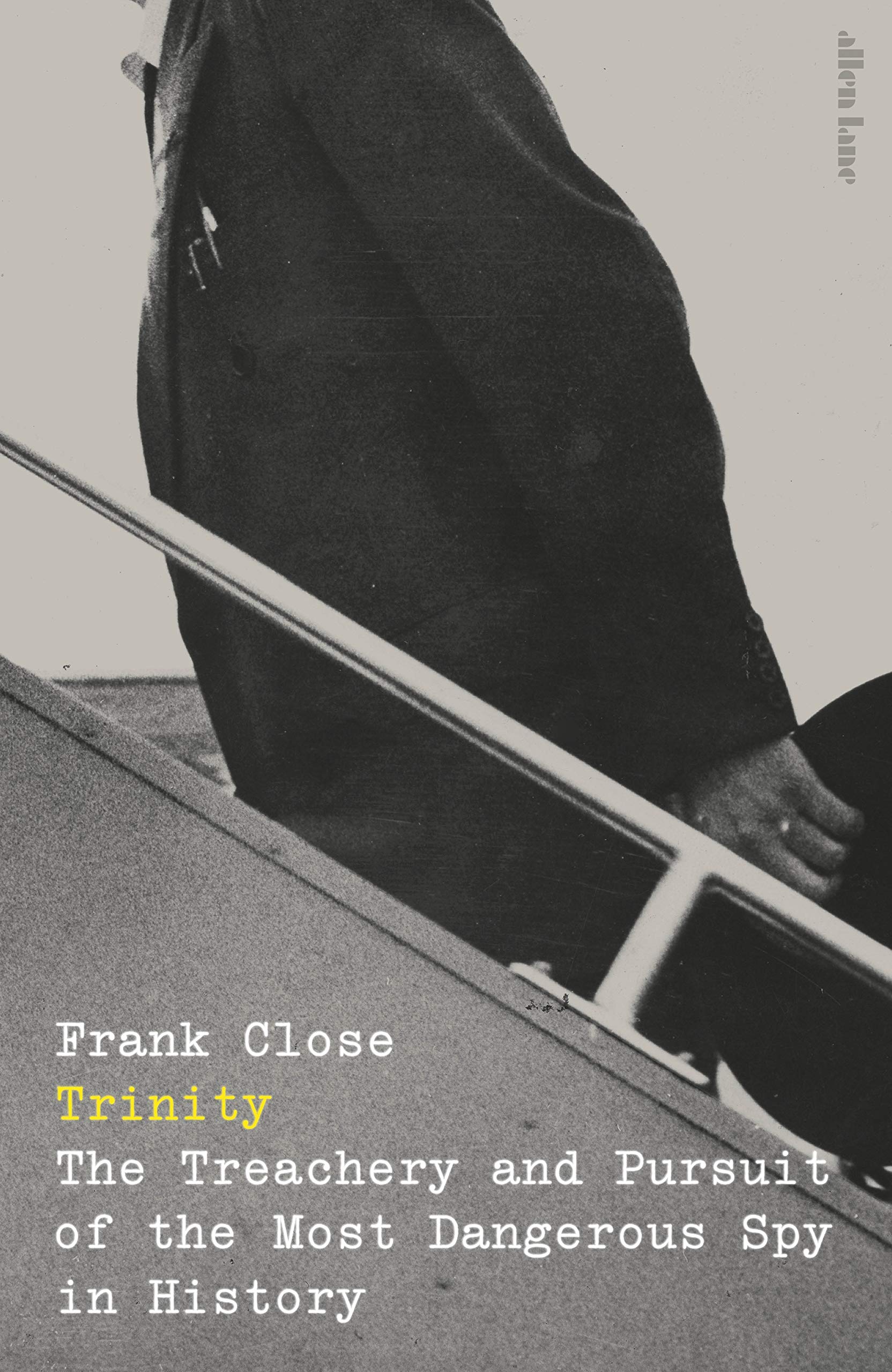
Frank Close Trinity: The Treachery and Pursuit of the Most Dangerous Spy in History

"Trinity" was the codename for the test explosion of the atomic bomb in New Mexico on 16 July 1945. Trinity is now also the extraordinary story of the bomb's metaphorical father, Rudolf Peierls; his intellectual son, the atomic spy, Klaus Fuchs, and the ghosts of the security services in Britain, the USA and USSR.

Against the background of pre-war Nazi Germany, the Second World War and the following Cold War, the book traces how Peierls brought Fuchs into his family and his laboratory, only to be betrayed. It describes in unprecedented detail how Fuchs became a spy, his motivations and the information he passed to his Soviet contacts, both in the UK and after he went with Peierls to join the Manhattan Project at Los Alamos in 1944. Frank Close is himself a distinguished nuclear physicist: uniquely, the book explains the science as well as the spying.

Fuchs returned to Britain in August 1946 still undetected and became central to the UK's independent effort to develop nuclear weapons. Close describes the febrile atmosphere at Harwell, the nuclear physics laboratory near Oxford, where many of the key players were quartered, and the charged relationships which developed there. He uncovers fresh evidence about the role of the crucial VENONA signals decryptions, and shows how, despite mistakes made by both MI5 and the FBI, the net gradually closed around Fuchs, building an intolerable pressure which finally cracked him.

The Soviet Union exploded its first nuclear device in August 1949, far earlier than the US or UK expected. In 1951, the US Congressional Committee on Atomic Espionage concluded, 'Fuchs alone has influenced the safety of more people and accomplished greater damage than any other spy not only in the history of the United States, but in the history of nations'. This book is the most comprehensive account yet published of these events, and of the tragic figure at their centre.
 
Frank Close Trinity: The Treachery and Pursuit of the Most Dangerous Spy in History
This is a wonderful book. I can't recall why I had decided against buying it on publication a year ago, but I happened to stumble on a copy of the now out-of-print hardcover at my local bookstore yesterday. Extremely well written history by a British nuclear physicist who worked with a lot of the people involved. That's what you'd ideally want in a book about the genesis of the atomic bomb and the spy who divulged its secrets to the Soviets.
 
The Great Taos Bank Robbery---
by Tony Hillerman
Unlike his excellent Navaho cop stories, this one is non-fiction.
It is a collection of whimsical essays on life in the southwest, mostly stories from when Hillerman was the editor of a small New Mexico newspaper. They are written by someone who knew the history and people of the area as well as anyone. Illustrative of that, Hillerman had a small plaque in his house given to him by the Navaho Tribal Council stating that he was "A Friend of the Navaho People."
Doesn't sound like that much, until you learn that he was the only person the Council ever awarded.
 
Last edited:
81zPH1A7Y5L.jpg

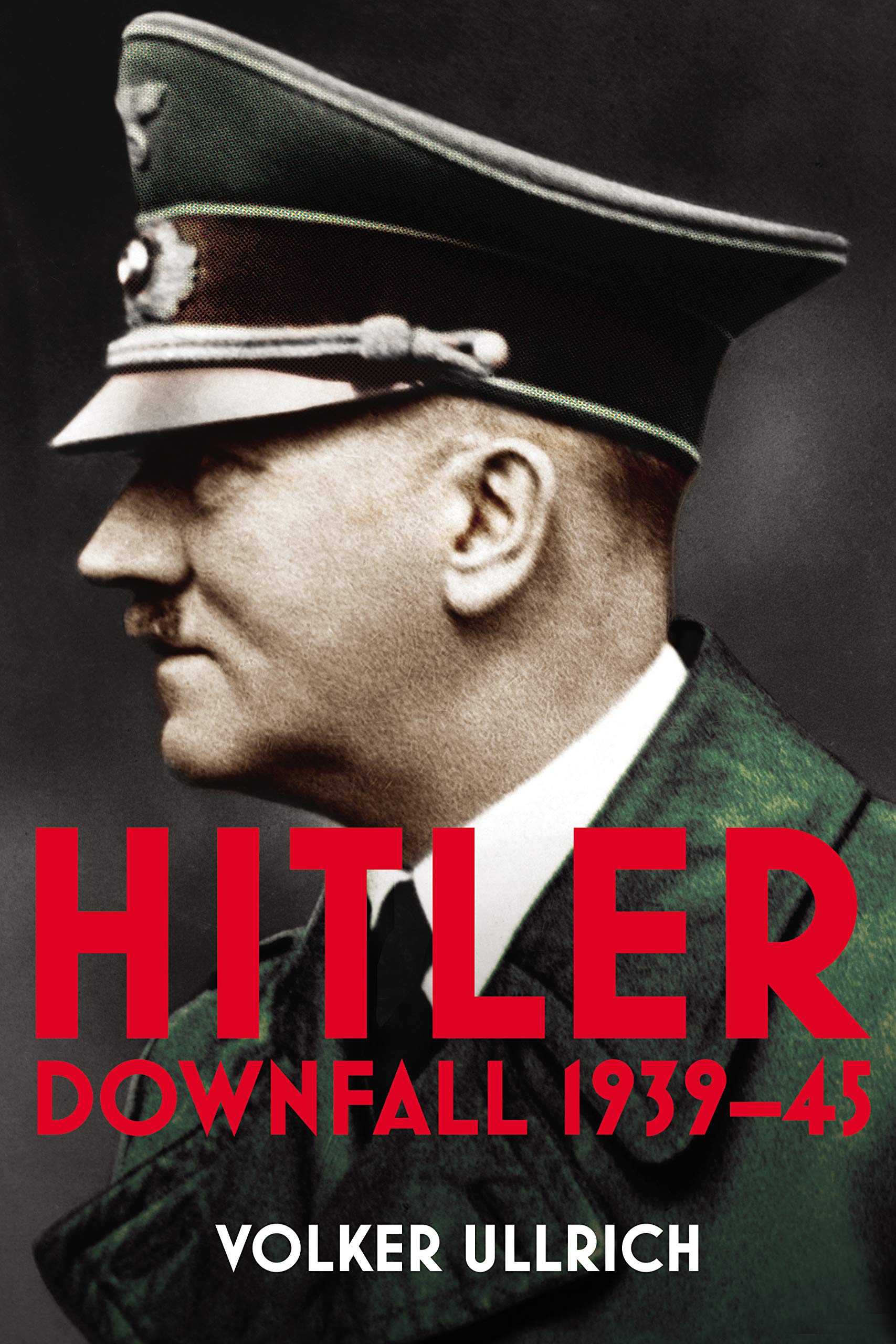
Now reading part 2 of Volker Ullrich's Hitler biography, Hitler: Downfall 1939-45.
2 + 2 more years in office.
 
Thanks for your mention Windshadow. I am not a centrist. If I were to state my political views I would probably be censored/banned by Brother Hobbit. He has to maintain order. I can't read some books as they are too personal, reinforcing a high level of despair.
I am however a librarian, so I read the reviews - which reinforce your opinion.:(
I do agree that the dissolution of political amity and cooperation between persons of different views is a big part of the fragmentation of our democracy.
Current politics remind me of the man with no eyes in I Shall Wear Midnight by Sir Terry.
You'll get the reference. I would strongly recommend the book as both a fun read and as a comment on human behavior for those not familiar with the Discworld opus.

edit: Windshadow's commentary on "A Very Stable Genius" seems to have been removed.
 
Last edited:
In my youth Pogo, my views were I guess in retrospect strongly influenced by reading the Heinlein YA books "Citizen of the Galaxy" and "Starman Jones" for example. This Libertarian bent influenced my politics right through my middle age. but with age comes mellowing and so I have settled into a centrist position as the polarization of politics prevents anything being accomplished outside of revolution. I saw war in my late teens and early 20s. in the late 1960s and that was transformative for me.
Many dismiss I Shall Wear Midnight as "just simple young adult fiction" but the subtexts of Pratchett run deep.
 
71i726KK3fL.jpg

Mahāmudrā and Related Instructions: Core Teachings of the Kagyü Schools translated by Peter Alan Roberts.
 
Jesus, Dickens in a sarcastic so-and-so isn't he? As you're reading you can see he's saying something that on the surface praises a character, whereas it's easy to understand he's actually slagging them off. I love the line in Nicholas Nickelby where he mentions about flatterers - only read it today but I can't remember it verbatim. Goes something like "people love flatterers, but when their attention turns to some other person they suddenly don't seem as attractive". Something like that anyway. A real, as Roger Waters wrote, miner for truth and delusion.
 
I think that's just a fiction perpetrated by that hack Shakespeare....
 

Sponsors


We try to keep the forum as free of ads as possible, please consider supporting SFFWorld on Patreon


Your ad here.
Back
Top