Trollheart's Reviews of the Top 100 Prog Albums 2019/2020

94.
cover_11865112019_r.jpg


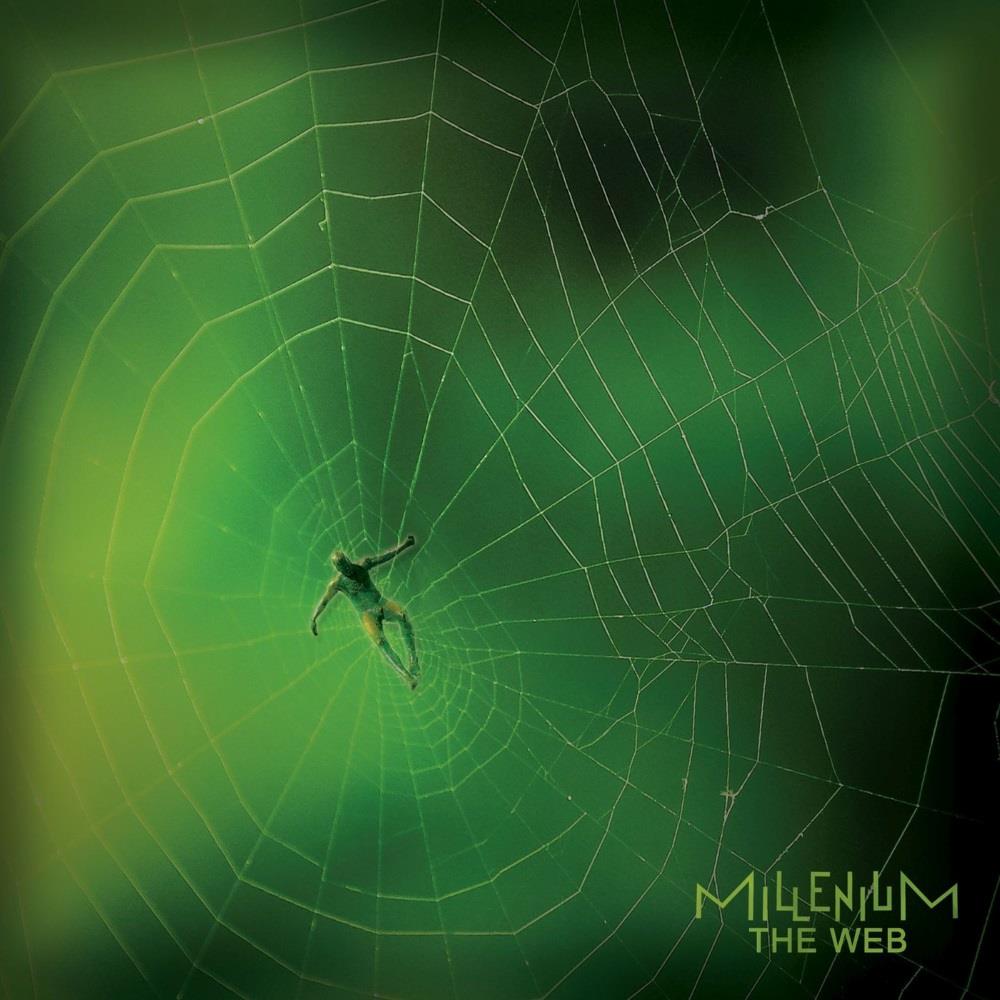
Album title: The Web
Artist: Millenium
Nationality: Polish
Sub-genre: Neo-Prog

Finally we come back to the albums I enjoyed, and in fact the first on the list from whom I had heard before, though by now they're long gone from the list. I came across Millenium – the correct spelling, or at least, how they spell it - first through their 2013 album Ego, which, to me, is about as perfect a prog album as you can get without looking back to the classics of the eighties revival. Heartened by this, I then got all their other albums, but I'm sad to say it's been mostly a hit-and-miss affair with what I've heard since. When they're good, Millenium are very, very good, but when they're poor they're often worse than mediocre. This is their fourteenth album.


The title track is broken up into three non-consecutive parts across the album, and part 1, entitled “The Beauty of Her Face” opens proceedings. It's a short, very short piece, just over a minute, soft and gentle to usher us into the album, then “Loser” ups the ante with a rocky guitar intro which gives way to a smooth synth line and into the vocal, keeping the main theme from the opener going. There's what sounds like a talk box running, then the song begins to march along on the back of a pretty sweet guitar solo. Incidentally, though you might expect the former, the web in question is not the world wide one but the one spun by a spider, as you will see from the album cover. Interesting that they would choose a name that is more than synonymous in prog rock circles with the kings of the eighties neo-prog revival, Marillion, but there it is. There's a fair bit of Rotheryesque guitar in here, and I would assume Millenium are paying their respects to, rather than ripping off, the boys who almost single-handedly brought prog rock back into the mainstream.
Vocalist Lucasz Gall certainly betrays his Polish roots, and at times it's almost like listening to those other stalwarts of the Polish prog scene, Riverside, though Millenium definitely have their own signature sound. Perhaps to a pole Fish would sound like Nick Barrett, who knows? Piotr Plonka (wonder if he gets any stick when he plays the UK with a name like that?) drives things forward with his excellent guitar work, and oddly enough, though there is synth and piano, Millenium tend to rely more on the fretboard than the keyboard. “The Lonely Ship” is a beautiful heartfelt ballad that reminds me of “Lonely Man” from Ego, and gets a jolt of hard, snarling guitar just to shake things up before the piano of Ryszard Kramarski takes over, again re-establishing the tranquil tone of the song. A favourite already. Some really haunting synth in here adds to the atmosphere of loneliness and loss in the song, then there's an emotive guitar solo from Plonka that takes it to new levels.

Squelchy keyboard and sharp guitar bring us “In the Ocean of the Night”, continuing the nautical theme expressed in the previous song, though this is a much harder rocker with an urgent, almost shouted vocal from Gall, reminds me – vocally, at any rate – of “In Disguise” from Eloy's Performance. A guitar solo that puts me in mind, for some reason, of Raised on Radio-era Journey, takes us out and into the, again short, second part of “The Web”, this time titled “I Remember You” and running for just over two minutes. It's a nice acoustic guitar rendering of the theme, which is very definitely based on a famous classical piece which I know very well but can't place at the moment. A nice electric guitar solo there at the end just to top it off and then “Name on the Sand” is a powerful rocker, punching everything up to ten and bringing in vocoder or at least phased vocals, though I suspect the former. Yeah but then it slows down into almost ballad territory, which is a little confusing. Really nice song though with a lot of passion and a feeling of desperate loss.

Again I don't know if this is meant to carry on the theme from the previous song, but I think it might, as the title is “Someone's Feet Will Cover the Traces”, and I would assume that's the traces of the name on the sand mentioned on the last track, giving a further twist of the knife of despair, that no matter what mark we make on the world the tide, the wind or the passing footsteps of some uncaring person will unknowingly cover them up and destroy them. Quite deep, and I don't mean the sand. There's an echoey, hollow kind of guitar sound helming this track, and again it's slow, dripping with emotion, as the lover in the song moves on from her (?) previous affair, finding someone new, writing new lines in the sand.

Very odd for a prog rock band to rely so heavily on guitars, but though there are keyboards and you can hear them, there's none of the reliance on them you'll find in bands like Pendragon, IQ, even Genesis. I suppose you could liken Millenium to Rush, though not really. The final part of "The Web" runs for eight minutes, and is titled “Who Can Bring Them Back to Life?” lending to the general despair and hopelessness which is a recurrent theme right through the album. And yet, it doesn't come across as morose or depressing, perhaps because the songs are so good and the playing so exquisite. A fine Millenium album, maybe a contender for Ego's crown, or at least fit to sit beside it on the throne.

Songs / Tracks Listing


1. The Web Part I - The Beauty of Her Face (1:37)
2. Loser (7:52)
3. The Lonely Ship (6:02)
4. In the Ocean of the Night (8:01)
5. The Web Part II - I Remember You (2:14)
6. Name On the Sand (5:09)
7. Someone's Feet Will Cover the Traces (7:30)
8. The Web Part III - Who Can Bring Them Back to Life? (8:01)

Total Time 46:26


Line-up / Musicians


- Łukasz Gall / vocals
- Piotr Płonka / electric & acoustic guitars
- Ryszard Kramarski / keyboards, acoustic guitars, composer
- Krzysztof Wyrwa / bass
- Grzegorz Bauer / drums, percussion


It's nice to be able to have a pretty good idea, before a note is played, that you're going to enjoy an album. I had some surprises listening to the contents of this list, some good, some bad, some great, some awful. This one I had few worries about, my comments at the beginning notwithstanding. Much of that refers to earlier Millenium albums, and anyway, I'm always measuring them by the yardstick of Ego, and that's a pretty high bar.

I think this one reaches it.

Rating: 9.8/10
 
That's weird - I don't have any of those on the list when I look at it, even using your link! Not sure why that would be...
Yeah that's because the only link I can get now is the current list, which has changed. I looked at this around July or August and like I say, and you see, a lot of the albums that were on the lower half of the list have been replaced. I made a spreadsheet as I went on though, charting what I thought of the albums and that's how I know what was originally on it.
 
93.
cover_31537462019_r.jpg


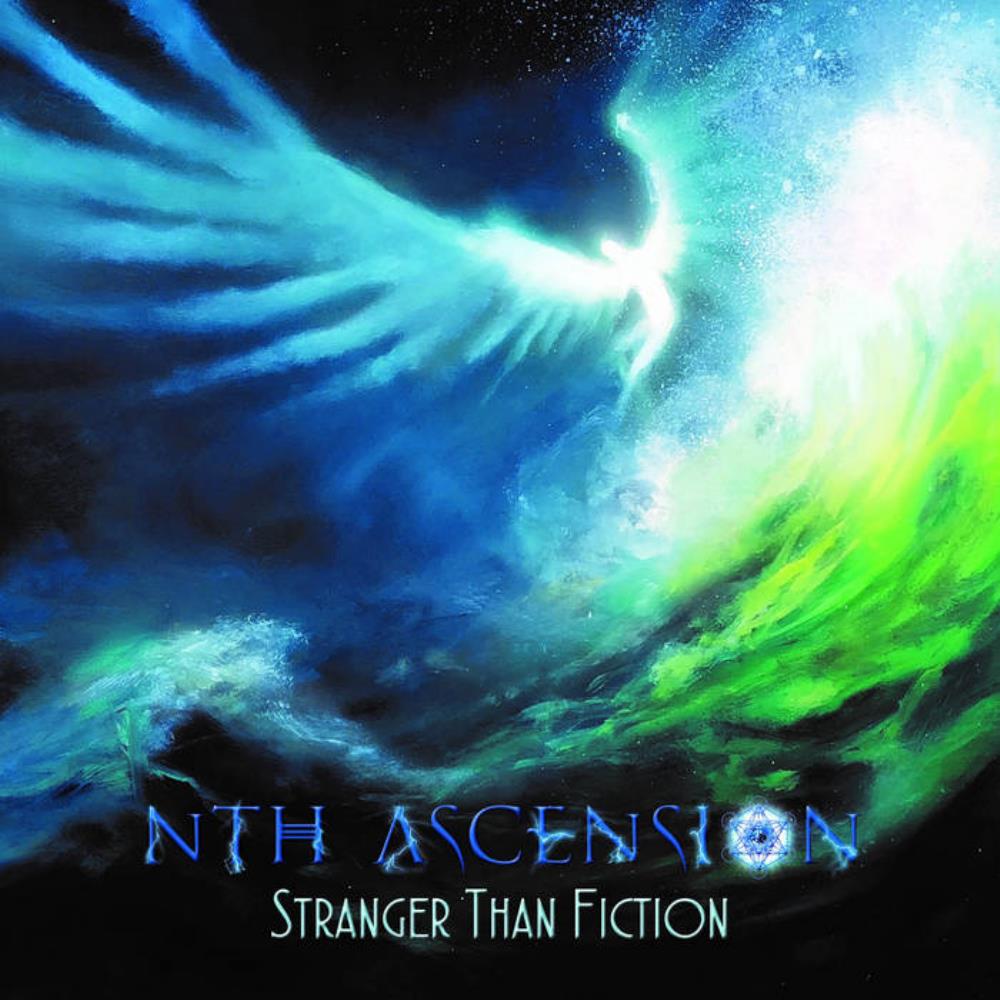
Album title: Stranger Than Fiction
Artist: Nth Ascension
Nationality: British (English)
Sub-genre: Neo-prog

With a name like that you might be thinking psychedelic rock or space rock or even stoner, but this is a British neo-prog band along the same lines as Pallas, Pendragon, Arena and all those good bands. The only claim to fame, as such, I can see is that they number among their membership the interestingly-named Darrell Treece-Birch (Birch Trees?) who is also keyboard player for another of my favorite bands, hard rock/AOR stalwarts of Manchester, and virtually unGoogleable, Ten. Formed in Blackpool in 2010, it only took Nth Ascension a year to release their first album, and they've put out four in all to date, of which this is the most recent.

Perhaps it's a little on the nose to title your opening track “The Opening”, but hey, there have been worse intro titles I guess. It's certainly ambient and atmospheric, a slow buildup, and not a short one, running for just one second shy of six minutes, with no actual vocals per se but a sort of low moaning chant slowly rising in the background. Nice Celtic sounds – could be uillean pipes maybe – then the guitar starts up in the third minute, joined by the piano. These guys aren't Blank Manuskript, so I'm going to assume there won't be singing and that this is an instrumental to set the album up. Certainly a lovely melody with very restrained guitar from Martin Walker, which then kind of falls back out to allow the softly calling, almost echoing voice to come back into the mix, and into “True Identity” we go.

A much more dramatic, punchy effort this time, sort of retreading the basic melody from Sabbath's first song before it jumps up in tempo and we get to hear the vocals of Michael Alan Taylor, whose voice is almost more suited to metal at this point, quite low and growly, though clearly discernible. Not quite sure why, but this sort of reminds me of “Fault in the System” from Savatage's album The Wake of Magellan. Some very nice bass from Gavin Walker there (brother of Martin? Possibly: the drummer is also a Walker, Craig, so perhaps we're talking about three brothers in the one band. Okay I read now that Martin is the father of both Craig and Gavin, so it's a family thing, but not as I had imagined).

“Fire in the Sky” is a title that has been used before, not quite to cliche limit, but it's hardly an original name for a song. Still, what's in a name? There's an almost funky sensibility about this mid-paced rocker, with Taylor's voice less ragged and more refined I guess, the elder Walker's guitar guiding proceedings along nicely, with some sweet little keyboard flourishes from Darrel Treece-Birch. Very catchy; could have been a single, if such things happened for prog bands these days. They don't: I've heard tracks from It Bites, Arena, Pendragon, Jadis and many others that would have done quite well in the charts but have likely never received a minute of airplay. Ah well, such is life. Who needs the charts when you have songs of this calibre?
On “Reconciled” Taylor sounds almost Tony Hadley-ish! The song itself, not even close to being the longest on the album, a rollicking ten-minuter, with a stomping beat and guitars chopping away in ecstasy features some really nice soloing from Martin Walker, and as you might expect it changes throughout its run. I'm not familiar with the concept, but the next three tracks all seem to be part of a suite developed over the last three albums, which go under the umbrella title of “Clannan”. Part I, II and III were on the second album, Ascension of Kings, Part IV, V and VI on the third, In Fine Itium and here we have Parts VII, VIII and IX. Part VII is called “The Gathering” and kicks off with a slow drumbeat and changling (what? It's a perfectly cromulent word I just made up) guitar and a spoken narration which makes Taylor sound a little like Sean Connery! I guess it's about a warrior or something – I'd have to read up on the reviews of the previous albums and I just don't have that kind of time at the moment – and this relates the amassing of the army. Maybe. Not what you'd call a ballad but certainly slow and grandiose, the slow guitar riff at the end almost a call to battle.

Part VIII then is a real epic, almost sixteen minutes (and still not the longest!) and seems to be bringing this three-album epic to a close. Titled “Journey's End”, it channels the best of stoner rock mixed with Deep Purple and Bad Company, striding along confidently, perhaps even arrogantly, on Martin Walker's experienced sharp guitar riffs, his sons keeping a thundering rhythm as he marches on, Michael Taylor's voice loud and brash but I would sound a note of caution and say the song is a little samey for the first five minutes. Of course, we're talking about, as I said, a song three times that length and more, so there's plenty of time for change, and indeed it comes with a ringing guitar passage as the song softens slightly, nice pulsing bass and vocal harmonies coming in too. The percussion starts up again and takes the piece into another section I guess, as Taylor's voice begins to acquire the strength it had in the first part, and the guitars get louder and more aggressive.

Bringing in a kind of “Kashmir” feel to proceedings now for a few moments before we return to the basic melody from the first part, and at this point we're about halfway through the track. An ethereal keyboard from Treece-Birch and some nice piano gives the next section a totally different aspect, and I think I hear birdsong, though that could in fairness be coming from my garden, as it's a nice day and the window of my bedroom is open. Either way, it's relaxing and forms a real break from the more heavy rock the piece has adopted up to now. A rest, some respite, a taking stock perhaps, with soft and gentle guitars and sighing synth. This brings us into the twelfth minute, as Taylor comes back in with the vocal, sounding very Geoff Mann-like (may he rest in peace), and indeed speaking of death, this sounds like the dying speech of the warrior (Clannan?) which might very well be backed up by the title of the third and final part of this nine-part suite, Part IX, “Lament”, a short instrumental wherein Martin Walker gets to show off his introspective side on the acoustic guitar.

This is in fact a mere minute and forty seconds, and leads into the closer and longest track on the album, but before we get there I'd just like to pause a moment and declare my admiration. If a band can spread out an epic of this size over three albums, five years apart, that's either a hell of a lot of planning over a long time or an ability to adapt as the albums are released and add on to the original. Either way, it's to be complimented, and it's perhaps a pity that less people could care about such a project.
The best is, though, yet to come, and “Sound to Light” runs for an incredible eighteen minutes and change. Originally, apparently, a song written by Darrel Treece-Birch, and only eight minutes at the time, it opens on a soft coustic guitar again and a wounded vocal from Taylor, perhaps the performance of the album, with some really good backing vocals too, the percussion gently ticking away, waiting to come in, Treece-Birch's keys for once more audible and leading the melody behind the guitar, rising behind it like a phantom guide. Given that it's his song, or the original was, you'd be surprised if he didn't stamp his authority on it early on, and so he does, but he doesn't take it over, allowing Martin Walker to grind away with fine solos, happy himself to fade back a little into the background while still supplying support from the wings as the song goes instrumental for the next few minutes, taking us into the fifth minute, where it stops, fades down, and then comes slowly back in on Treece-Birch's synth in a very “Shine On You Crazy Diamond” intro way. You can certainly hear (though I don't know the original) where the song has been extended, mostly, I would assume, with instrumental passages, from what it was when Treece-Birch wrote it, but it doesn't seem to have been done so needlessly or gratuitously.

Indeed, although again as I say I have no knowledge of the original, I feel this must be improving on it, as Nth Ascension don't come across to me as the kind of band who would do this knd of thing if it didn't benefit the song. In the eighth minute we have some really nice soloing from the composer, and for now the rest of the band seem more or less happy to let him have his moment in the spotlight, as he has been content to sit in the shadows for most of the album. This is where he shines, and anyone who questions his contribution to the album (which they might have done, up to now, as he's been almost conspicuous by his absence) will see now that he is a very integral part of the band, just doesn't have to be front and centre all the time. He's the same in Ten: knows what he can do, and doesn't need to be always Emerson-ing it up to prove it. Got nothing to prove.

Guitar starts to chop its way slowly back in as we reach the tenth minute, and the song acquires more of a beat, pumping up a little as the rhythm section come back in, Treece-Birch now unleashing a superb piano solo before Walker takes over, smoothly sliding in over his keys and not overpowering them but nevertheless assuming control. It's been about ten minutes now since we last heard Michael Taylor's voice, and as the song builds up to its denouement here he is back again in the thirteenth minute, to be fair really just repeating the vocal from the opening part of the song, Treece-Birch bringing the piano back to the fore as the song nears its conclusion, which oddly enough comes on a single strummed guitar chord at the seventeen-minute mark, leaving a sort of synthy feedback to take it to its actual end, perhaps a slightly underwhelming finish for such a powerful and well-written song.

Songs / Tracks Listing
1. The Opening (5:59)
2. True Identity (5:26)
3. Fire in the Sky (7:51)
4. Reconciled (10:27)
5. The Gathering (Clanaan Pt.7) (7:17)
6. Journey's End (Clanaan Pt.8) (15:49)
7. Lament (Clanaan Pt.9) (1:40)
8. Sound To Light (18:14)

Total Time 72:43

Line-up / Musicians
- Michael Alan Taylor / vocals
- Martin Walker / electric & acoustic guitars
- Darrel Treece-Birch / keyboards
- Gavin Walker / bass
- Craig Walker / drums, percussion


This was an album I had to download once I had heard it on Spotify, to say nothing of their other three albums. It's always gratifying to come across a prog band you haven't heard of before that have such an effect on you, and while This Winter Machine, at this point in the list, still remain my favourite, Nth Ascension swiftly joined them and now I have to put time aside to listen to their other albums. But for now this is a good one to listen to over and over. On my spreadsheet I use colour-coded cells to indicate how good, or bad, an album was. Really good is signified by a green cell, which often changes to blue, the code for Terrific. Needless to say, This Winter Machine began blue and remained so through all the listens I engaged in. Not that many, though, have had so many listens and begun, and remained, blue. Millenium did of course, but I knew them. Nth Ascension quickly joined them in that distinction.

I think that tells its own tale.

Rating: 9.7/10
 
I think this has confirmed that generally I don't go for the Neo-Prog sub-genre, I think mainly because the music doesn't have the urgency I like, and more so I don't go for the emotional vocals - that's just a personal thing.

That said, of the albums you've listed and rated well (have been listening to them this morning), I like the Nth Ascension album quite a bit - probably because much of it doesn't sound very Neo-Prog! It seems heavier, more rockier, and the vocalist has a fairly unique sound. Not bad at all!
 
You're right there. The review I read noted that Nth Ascension veered closer to melodic or even hard rock than neo-prog, and as I mentioned in the review Taylor's voice is very gritty and rough, almost a Joe Cocker-ish style in a neo-prog setting. I, too, would struggle to describe this as neo-prog, but then, genre label tags and all that. How is Bruce Soord's album crossover prog? There's hardly a hint of prog in it at all. At best it might be indie or emo or even sailing close to shoegaze. Genre titles as such don't necessarily bother me if they don't fit, unless by looking at one I don't try the album (RIO, Avant-Garde, Jazz Fusion etc) and find later, if I do take a chance, that it wasn't that at all and I might have missed out on a good album.

If it wasn't for the length of the songs and the suites over three albums I think I would even consider STF a melodic rock, AOR or even hard rock album, with progressive over tones. Doesn't stop it being a great album though!
 
92.
cover_259102962019_r.jpg


Album Title
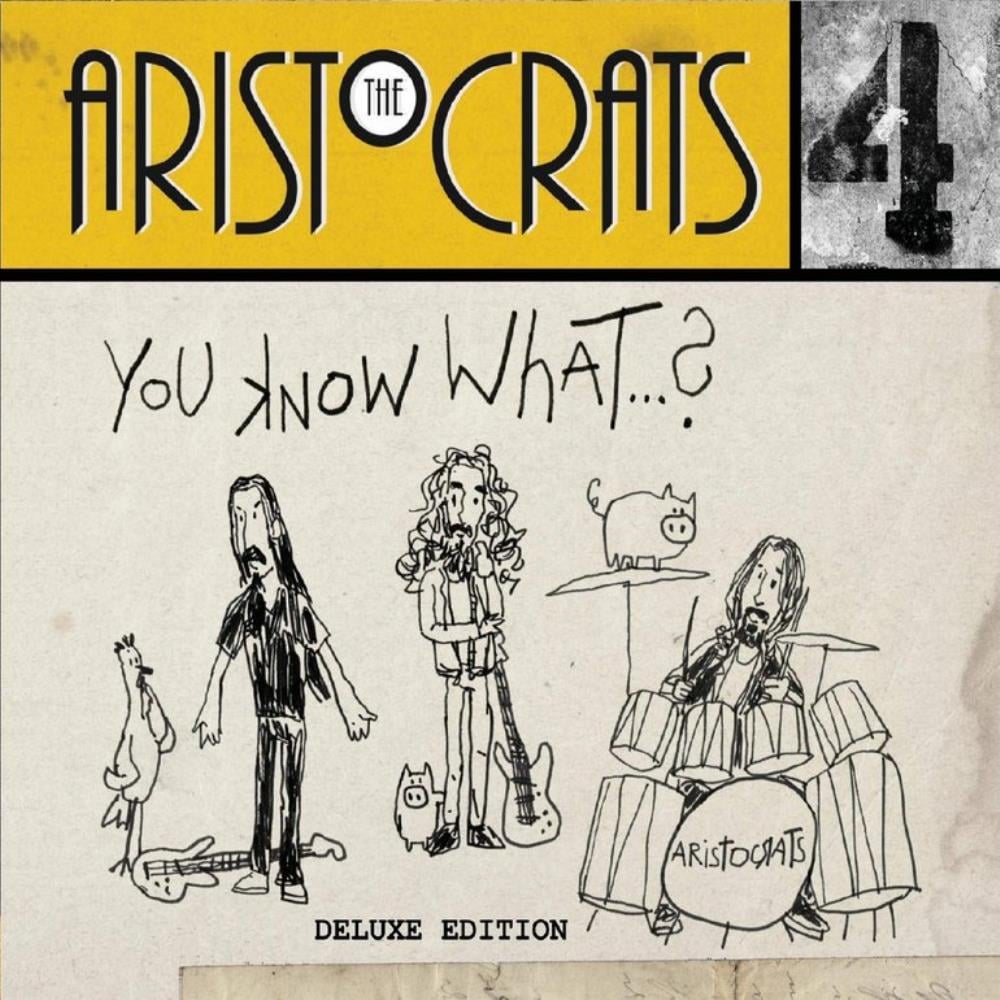
: You Know What...?
Artist: The Aristocrats
Nationality: English/American
Sub-genre: Heavy prog


We're back to one of the albums I certainly did not care for on first listen, and this will only be (should I last the course) my second, so I'm not exactly expecting miracles. I remember The Aristocrats being loud and abrasive and somewhat formless. I can take the former but I hate abrasive music and formless melodies and rhythms just turn me right off. So we're off to a good start, then! Who are these guys? Meh, who cares? Let's see if I can be bothered to change my opinion. I doubt I will, and this will be a rather quick attempt at a review ending in a quick bailout, though I'll try to give it a chance.

I'll be brutally honest here: a track titled “D Grade f**k Movie Jam” doesn't fill me with hope, and the dreaded words fusion and experimental are bouncing around somewhere in my brain from when I read about then, and that's not good at all. It starts big and dirty as you might expect, snarling guitars, aggressive drums and a sort of jam feel to it, unsurprisingly, some nice bass lines but not too much in terms of what I'd call a standard melody, nothing to hang your proverbial hat on. A bit psych-out, a bit hard blues, a bit space rock, a bit too much to take for me to be honest. Doesn't help that it looks as if the band is an entirely instrumental one, so no vocals or lyrics to talk about. I suppose this could be worse. Hardly a ringing endorsement, but I don't categorically hate it.

Progressive is such an overused word these days, and in terms of prog rock, although it was originally coined to express artists taking music to new and different places, using instruments generally not used in rock before, longer songs, different song structures, more varied themes and so on, for my own personal purposes I consider a band prog rock if a) they have keyboards and they're more or less the focus of the music, b) they have songs that go into the double-digits in terms of length, c) they utilise fantastical, mythological or suchlike imagery in their lyrics and d) they have song suites. Of course this is not true of all prog rock bands, even the best – Script for a Jester's Tear has long songs but no suites, nor does Trespass, while Close to the Edge is one giant suite, and Threshold, who are considered prog metal, use political and human interest themes in their lyrics. So I'm not saying this isn't prog rock, but, you know, it's not the sort of thing I call prog rock.
To be entirely fair, “Spanish Eddie” is a big departure from the opener. A rather nice, loungey sort of bluesy tune structured on Spanish guitar and much less frenetic than the previous track, works quite well. Sort of jazzy overtones to it as well. Maybe a little long for what it is at nearly seven minutes, kind of metamorphoses into a harder, almost uglier tune in the fifth minute – nearly a completely different track: if I wasn't watching the play indicator and could see it was the same I would have assumed we'd moved on to track three, but no, this is all part of it. Meh. Slows down again then at the end and into “When We All Come Together” (oh, you guys! The innuendo!) which kicks things up in a sort of rockabilly romp, guitars duelling all over the place, sort of like The Shadows if someone had tipped speed into their beer. Funny I guess in its way. Whether it will maintain the humour and – let's be honest here – originality through yet another six-minute track remains to be seen.

Some very fine picking going on, that's for sure, and Guthrie Govan is certainly a good and accomplished guitarist, apparently touted here as an “underground hero”, whatever that may mean. Bryan Beller is no slouch on the bass either, and I think I heard the name Minnemann before as part of a prog trio, Marco here keeping it tight and having fun. Yeah, not as bad as I had remembered, though I think I had stopped after track one. Not saying it's anything great yet, but I'm prepared to give it a little more latitude this time around. Ah yes, there it is: Minnemann teamed up with Dream Theater's Jordan Rudess and legendary bassist Tony Levin in 2013 for LMR, an album which I remember thinking very little of. Knew I'd heard of him before.

And so onto “All Said and Done”, the shortest track at just shy of five minutes, with a nice sprightly guitar line and a sort of tapalong beat to it, then “Terrible Lizard” brings it all back to the snarly, aggressive tone of the opener, really I'd have to say more verging into metal territory, or at least stoner rock. Very punchy, very powerful and a kind of grind in the tune, and I find it a bit of a vehicle for Govan to show off what he can do, a process I call technical wankery, and which I attribute with the most vehemence to Dream Theater. “Spiritus Cactus” has a more recognisable melody, almost forties film noir/detective in its feel, the actual guitar riff oddly Egyptian-sounding. There's also some quite reflective, introspective guitar from Govan, which shows that when he wants to he can keep it in his pants as it were, and his playing is all the better for it.
“The Ballad of Bonnie and Clyde” starts off with a nice laconic bluesy line in guitar, slow, measured drumming and a soft bass line, perhaps the closest The Aristos have come to a ballad, Of course, running for the prerequisite over six minutes (this one is seven and a half) there's no guarantee it will stay that way but the signs are, for now, good. And of course it does not, as the guitar hammers up and out, kicking up the tempo after a mere two minutes, though it does slide back down into the bluesy riff again. “Burial at Sea” has a kind of ethereal, spooky atmosphere, for about thirty seconds before it kicks into another sharp hard uptempo rocker. At this point there's only this and one more track, so I won't bail out but I don't see any reason to revise my original assessment of the album, other than to say it wasn't quite as bad as I had originally thought.

“Last Orders” seems to go back to the slow bluesy feel of “The Ballad of Bonnie and Clyde”, but it's the longest track here at over eight minutes and I just don't have the confidence they're going to stay this restrained and relaxing over that period of time. And indeed they don't, as Govran cuts loose again, but it comes back to the original melody fairly quickly, so you know, maybe. Yeah, looks like it made it.


Songs / Tracks Listing


1. D-Grade f**k Movie Jam (6:31)
2. Spanish Eddie (6:56)
3. When We All Come Together (6:16)
4. All Said And Done (4:43)
5. Terrible Lizard (6:30)
6. Spiritus Cactus (5:59)
7. The Ballad Of Bonnie And Clyde (7:37)
8. Burial At Sea (6:35)
9. Last Orders (8:32)

Total time 59:39


Line-up / Musicians


- Guthrie Govan / guitar
- Bryan Beller / bass
- Marco Minnemann / drums


As ever, instrumental albums are hard to review. I prefer to be able to talk a little about the lyrics, what songs mean, what the artist is trying to say, and when there are no lyrics, well, there's only so much you can say about music without being a musician so it tends to restrict your opinion on the album. I would say here that, first and foremost, if you're a guitarist or interested in same, you'll probably find a lot here to entertain you, a lot to enjoy. The guy certainly knows his stuff. If you're into jams, then you're probably in luck too. This music might be good to listen to while stoned; I have no idea as I've never done drugs (unless you count Disprin!) but I think it has that kind of often shapeless, directionless feel that might appeal if you're in a state of heightened consciousness, or whatever you feel like when high.

But for just listening to, and certainly for reviewing, I think it falls short of the mark. I couldn't see myself listening to it again for pleasure. I certainly didn't download it, and I have no interest in seeking out the other albums by this band. But it's not terrible, to be completely fair. Just not something I have any interest in hearing again.

Rating: 7/10
 
Saw Guthrie Govan play with Asia a few years ago, after Steve Howe left for a while. He was very good, if I remember right!
 
Oh right. I thought the name was familiar. Hardly sounds "underground" though, does it, playing for a supergroup like Asia?
 
He was also the guitarist for Steven Wilson for a couple of albums (and Marco Minnemann the drummer), very impressive player.
 
91.
cover_384214672019_r.jpg


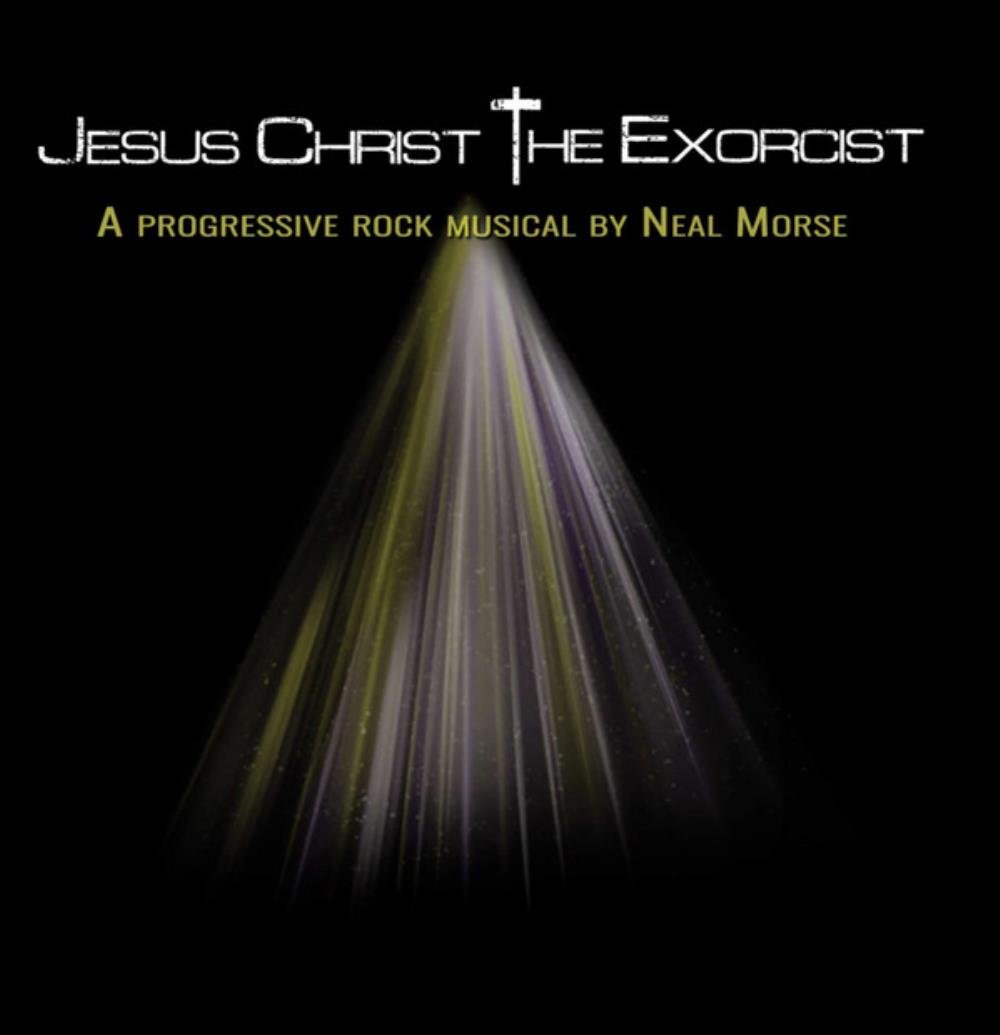
Album title: Jesus Christ, the Exorcist
Artist: Neal Morse
Nationality: American
Sub-genre: Symphonic Prog


All right, this is a double album, so strap yourselves in, it's going to be a long one! Those reading will more than likely know (that's you, Hobbit and Westy) but for the benefit of anyone else who may be lurking and reading and does not know, Neal was founder and driving force behind American 90s neo prog band Spock's Beard, recorded six albums with them before finding God in 2002 and leaving the band to pursue his new-found (or rediscovered) faith through his music, something he felt he couldn't do with Spock's Beard. His departure from the band seems to have seen him work harder than ever though, forming three new bands, and indeed in the list he actually has two entries (both of which are double albums), one under the name of The Neal Morse Band, which is much higher up the list and which we'll come to later, and this one, released under his own name.

Subtitled “A Progressive Rock Opera”, it's exactly that: a retelling of the passion of Jesus Christ, virtually an update of the old classic rock opera Jesus Christ Superstar by Andrew Lloyd-Webber and Tim Rice, and, to be fair, it may not be for everyone. Morse has been a born-again Christian ever since a so-called miracle saved his daughter's life, and is entirely unapologetic about the new direction his music has taken, but though I have heard little of his other output, this album still came across to me as very much a prog rock one, as does the other, The Great Adventure. If the subject matter is a man who may or may not have existed, so what? People have written concept albums about people who certainly did not exist, such as Frankenstein and Sherlock Holmes, and if you believe in Jesus I expect you'll really like this. I don't (believe, that is) but I still very much enjoyed the album.

It is a lot, admittedly: a total of one hundred and nine minutes, not too far short of two hours of music, but if you can get through it I think you might find that it's worth the effort. Given that it is a double album, I have to say I didn't give it the requisite three spins, and it's probably the only album on the list I enjoyed that only got one spin, but hey, who has nearly six hours to listen to one album? So this will be only my second listen to it. Being a rock opera there is of course a cast list, and I'll do my best to introduce them as each comes into the story. Neal himself plays most of the instruments, with some help from a small backing band, and of course he wrote everything, lyrics and music.

It's a rock opera so of course you're expecting a big instrumental introduction, yes? And that's just what you get, though it's actually broken up into two sections, two separate tracks. The first, barely two minutes long, is called “Introduction” and is in fact a song, a soliloquy by Jesus as he hangs on the cross and prepares to die. I guess it's all looking back after that, as once you've died there's not really anywhere to go. Unless you're Jesus Christ of course, but even then, his passion concerns the events leading up to his crucifixion, so to start the album on Calvary is a bit odd, meaning the rest has to concern his memories of, or the narration of the story of how he got there. “Introduction” runs smoothly into “Overture”, which runs for three minutes, and is more or less what you'd expect: a keyboard-soaked instrumental with plenty of warbling organ, piano and some fine guitar too. There's also fairly triumphant brass, and I see there are sax, trumpet and trombone players on the album, so it's not just synthesised on Neal's keyboard.

It's a good start, if a little confusingly titled, and then “Getaway” hits with a hard rock punch and I imagine we're hearing Nick as Judas, as the Jews bemoan their fate under the Romans and await their Messiah. Choir vocals here giving a good illustration of a crowd crying out and waiting to be saved. Really nice guitar solo takes us into “Gather the People” with a more acoustic guitar leading the line, got a touch of the old kumbi-ya in the choral vocals, very upbeat and hopeful as John the Baptist joyfully tells the people the Saviour is on the way and to prepare for him. Once he gets there, “Jesus' Baptism” is another joyous occasion with much singing of choirs and brass fanfares, and introduces Enchant's Ted Leonard as the Man Himself. Leonard has also sung with Spock's Beard and their spin-off band, to be featured here in due course, Pattern-Seeking Animals.

The following track, all ten minutes of it, sounds like something off an early Spock's Beard album – The Kindness of Strangers, or Day for Night or something, and introduces the vocal talents of Christian Contemporary singer Rick Florian. He's pleased to meet you, and hopes you guessed his name. Jesus is out in the desert for forty days (as you do) and the Devil pops up to tempt him. The song goes through some changes, rocking at the start until Jesus begins singing, worrying that there's someone in the desert with him, and this is played out against a gentle piano melody, then it takes up on an orchestral explosion bringing in hard, snarling lead guitar as the Prince of Naughtiness appears, chanelling the very spirit of Ronnie James Dio. Let the battle begin!

A great exchange of vocal barbs shows two singers at the top of their craft, and it's a joy to listen to, the moreso because Mr. Neal “Control Freak” Morse does not take part in the vocals (though I assume he pretty much plays every instrument). Cleverly I feel, Jesus' singing is performed against a soft acoustic guitar, gentle and low, while the Devil rocks out with screeching, punching electric guitar. Ah, which would you rather be? Big organ freakout as Jesus refuses to be tempted and the Devil retreats in sullen anger, promising to be his enemy forever. Nice duet to close the song and then Jesus begins to preach as “There's a Highway” bursts in on powerful, angry guitar sounding a little like an eighties AOR road song, but very catchy certainly. Reminds me a little of The Eagles' “Take it Easy”, but there's another song on my mind that it's very like and I just can't put my finger on it right now. It's a solo vehicle (no pun intended) for Leonard, whereas many of the other tracks are ensemble affairs.
“The Woman of Seven Devils” introduces Talon David as Mary Magdalene. I'm pausing playback to concentrate on this bit. I don't know who David is, but her own website sees her touting for business, and yet she says she's won Grammys. They may be for songwriting, as she is also a writer, but I can't see any bands she's played with and if she's putting herself out there, described as a session vocalist, I can only assume she hasn't got that much work. Nevertheless, the song is a powerful, down and dirty blues rocker illustrating a woman who is no more a shrinking violet than Madonna is, and is aiming to prove it. Leonard comes in as Jesus to save her from the angry crowd who want to stone her, and she succumbs to his charms, promising to change her ways.

Interestingly, Morse imagines Mary as being possessed by demons and devils who make her act as she does. This is perhaps a little cynical and chauvinistic, to think that a woman at that time could not be what Terry Pratchett called a “lady of negotiable virtue” without being forced into such a life by demonic possession. However, I'm not going to get into the nuts and bolts of the religion, who saved who, who damned who, or who got into a tricky situation over a five talent coin, as it were. I do find it a little arrogant of Neal, but there you go. A good song, and with a big bursting guitar solo to end it goes into “Free at Last”, where Neal continues to force Mary into the image of the person he believes she must have been (at least, for musical purposes; whether he believes this in his heart is up to him I guess) and she exults in her release, the song a piano ballad as she dedicates her life to him. It's a good stage for the softer side of her singing, and I am reminded, rather obviously, of Yvonne Elliman's incredible turn as the same character in Jesus Christ Superstar.

More of those pesky demons as Jesus encounters “The Madman of the Gadarenes” - seems you couldn't step outside your door in ancient Judea without tripping over demons! - who is played by, it looks like, another Christian artist, Mark Pogue (nothing to do with Shane McGowan!) while Neal himself – you devil! - takes the vocals for the first demon, Gabe and Gideon Klein – who are presumably brothers – voicing the other two demons and setting up quite a close vocal harmony in the process. Really something to hear. Echoes of “Trial Before Pilate” from Jesus Christ Superstar here, certainly in the staccato guitar chords. I do find it odd that the demons beg Jesus not to exorcise them, rather than (as is traditional) rage and curse at him, defy him and eventually leave with really bad grace. Again, a smidge of arrogance here from Neal? Again, I'll keep my opinions to myself. You're not interested in them, so back to the music. Released from the demons, the ex-Madman sings of his delight at being free, against soft and happy guitar.

More guitar but this time upbeat acoustic in “Love Has Called My Name”, with Neal this time voicing a disciple (un-named, only called “Disciple 1”) and Neal's ex-Spock's Beard bandmate Nick D'Virgilio making his entrance as Judas. This song seems to concern Jesus rejoicing as his power and fame grows and people flock to hear his sermons. Local boy done good. The song reminds me a little of “June” from The Kindness of Strangers, very jaunty and upbeat. A very short cameo then for Jake Livgren, as Peter. Jake is apparently the nephew of Kansas legend Kerry, so no stranger to the music scene, though there's little information as to his career. Interestingly, Kerry contributed a guitar solo to one of the songs on Morse's previous Testimony, so that may be where the idea of involving Jake came about. Also interestingly, Kerry has been working on a similar project and is also a dyed-in-the-wool Christian. Birds of a feather, and all that.

Jesus then hands over “The Keys to the Kingdom” (as you do) to Peter with a ballad that has nevertheless a lot of anger and bitterness in it, mostly from Judas, as you might expect. Ever the radical and militant, Mrs. Iscariot's favourite son is ready to use this new power to take on the Romans and revenge the wrongs perpetrated on his people, but Jesus seems to ignore him and goes on talking to Peter. It's a very interesting and ambitious ensemble project, with in total five characters – Jesus, Judas, Mary, Peter and, um, God (represented by a choir of voices) and it's powerful and moving. “Get Behind Me Satan” pulls everything back to a stripped-down rock format as Jesus heads towards Jerusalem to face his destiny, though rather oddly there's no role for Rick Florian in the song, and it's a solo effort from Ted Leonard as Jesus. In the context of the album it's probably a little too straight-forward and simple, and might be seen as an odd way to end disc one but there it is.

So ends the first disc, as we leave Jesus on the road to the Holy City, about to implement the final and most important part of his father's plan, beset by doubts which he doesn't dare voice or even think of, and while the first disc has been, more or less, uptempo and celebratory, as you might expect – Jesus gathering his followers, casting out demons, performing miracles – as the second disc opens things begin to get real for the Son of God, and I can see the music reflecting that. Over an hour of music and we've still the guts of another hour to go, so keep it right here. Oh, right. You were going to. Well, good. Cos on we go with disc two.


It's a vocal chorus that opens against hard rock guitars with the priests and scribes worried about the impact Jesus is having on the people, and, like politicians down the ages, scared they will lose their own power. They feel Jesus is going to bring the wrath of the Roman Empire down upon their heads, so like in Jesus Christ Superstar's “This Jesus Must Die”, Caiphas, played by Jake Livgren in a double role, convinces his priests “He Must Go To the Cross.” A fine performance from Livgren, and we're on to “Jerusalem”, which is taken almost entirely by the vocal chorus, with one very small part for Jesus, one snarling line for Caiphas and one for Mary. It's a sort of upbeat song but there's an underlying sense of threat and worry about it, as if everyone is waiting for something bad to happen. Which of course it will. We hear too, here, the changing attitudes towards the Messiah, as some people wonder if he's getting too powerful, is dangerous or just mad.

Introspection comes as Nick D'Virgilio takes the stage with his soliloquy in “Hearts Full of Holes”, and while D'Virgilio is known as being a great drummer, here he proves he is also a very competent singer, against a soft piano melody from his ex-bandmate as he examines his soul, considers where things are going, wonders if he has made the right choice in following this man of peace. It's hard to pick out favourites in so complicated an album, but I would single this out as one of mine, certainly so far. It's really the first true ballad, and given that there have been sixteen songs prior to that, that's quite an achievement, and it has been well worth waiting for. Had there been any singles released from this (which I'm pretty sure there weren't; it seems to have been quite an intensely personal project for Morse) this would have done very well.

Of course, even non-believers like me know the story, and no relating of the story of Jesus could be complete without the next two songs. “The Last Supper” comes in on pizzicato strings and then soft violin and cello, as Jesus shares his last meal on Earth with his apostles. Again it's piano-led, soft and balladic, though I expect it might kick up in the middle, especially when Jesus drops the bomb about Judas. The main protagonists in the song though are Jesus and Peter, as the latter argues with the former when his master tells him he will betray him. Very nice orchestral accompaniment to this gives it a sumptuous backdrop of bittersweet grandeur. Of course it then leads to the other important stop along the road to the death of Jesus, and so we run smoothly into “Gethsemane” as the priests gather and prepare to set Judas up to betray the Messiah.

The song features the welcome return of Rick Florian as the Devil tries to urge Judas to take the money and sell Jesus out. Livgren as Caiphas puts in a fine shift too, and I would assume this is the last we hear of our Nick (D'Virgilio, not the Devil/Old Nick!) as he plays his part, reprising very cleverly the theme of “Hearts Full of Holes” and bows out of the story. Back to the Garden of Gethsemane and we find Jesus mildly annoyed that his guys won't stay awake. I mean, he is about to die, yeah? Least they could do is forego the old shut-eye for one night. Not too much to ask? He is dying for their sins. I mean, some people!

A heavy, marching ogan solo characterises his annoyance, and Leonard faces his own long dark night of the soul as Jesus considers telling his father he's not able to go through with it after all. Of course, he accepts the burden in the end, and as Judas leads the soldiers in, a heavy rock guitar and organ breaks out, soft piano adding in lines for the efforts of Jesus to accept his fate as he's led away to trial. “Jesus Before the Council and Peter's Denial” finds Caiphas hearing evidence against Jesus, while Peter ends up, as prophesied, denying Jesus not once, not twice, but thrice. The music then gets very orchestral and moving as Peter realises what he has done. Meanwhile, I was wrong about Nick; he's not finished yet as he now makes his exit in “Judas' Death”. This opens with some dark violin and thundering percussion joined by pulsing bass and hopping organ and involves just Caiphas and Judas, though oddly not the Devil.

It's a passionate final performance from Nick, as Judas realises he's been tricked by the Devil (no? You don't say? Really?) and tries to give Caiphas a refund, but all sales are final, says the high priest, and he's bought eternal damnation for thirty pieces of silver. Almost paraphrasing the reported last words of one Edgar Allan Poe when Judas moans “May God have mercy on my wretched soul!” Nothing can be done though and the die is cast, so in “Jesus Before Pilate and The Crucifixion”, Neal takes the rather uncomfortable and perhaps courageous, given his beliefs, role of Pilate as he tries and sentences Jesus to die. A big marching intro and then piano accompanies Neal as Pilate as he wonders why the people hate Jesus so much. Livgren lays out the case against Jesus to the Roman governor, and as Pilate listens to Caiphas he turns to Jesus in an attempt to allow him save himself by denying the charges, but we all know where this ends, and Jesus refuses. Very powerful choral vocals and sparkling guitar as the people who had followed Jesus now bay for his blood.

Morse avoids the whole idea of the actual crucifixion (given that the album began with Christ dying on the cross anyway, it might have been a little superfluous, so maybe a good move), instead I think using powerful, dramatic music to represent the event, and then reprising the words of the Saviour we heard at the beginning. The next we hear is from Mary, at the tomb of Jesus three days later after he has risen from the dead. Wandering there, she sees the tomb is open and empty, and asks a man she sees there where they have taken the body of Jesus. In one of the least spoilerable reveals in history, Jesus shows himself and Mary falls on her knees. Dark, tolling bells bring in “Mary at the Tomb” and a solo vocal for Talon David, who has been, let's be honest, a little criminally underused up to now, but has her chance to shine in this and the next song, as Jesus joins her for “The Greatest Love of All”, not the George Benson/Whitney Houston hit, of course, but a joyous affirmation of Mary's faith, and I suppose, that of all humanity eventually.

It's a soft, gentle ballad which showcases the voices of Leonard and David as they duet on the penultimate song, a clear indication that Morse believes Mary was the most faithful of the disciples of Jesus; while the others hid and cowered after their master's death, she went to the tomb, and it was she who brought back the wonderful news of his resurrection to the men, and so it's fitting that she has the final say in this rock opera. It ends with a reprise of “Love Has Called My Name”, which we heard on the first disc, bringing everything full circle and featuring the entire cast in an ensemble performance that brings the curtain down on a fine and beautiful rock opera, an excellent album and a triumph for Neal.


Songs / Tracks Listing
CD1
1. Introducing (2:31)
2. Overture (3:19)
3. Getaway (2:41)
4. Gather The People (5:17)
5. Jesus' Baptism (3:09)
6. Jesus' Temptation (10:18)
7. There's A Highway (4:06)
8. The Woman Of Seven Devils (5:41)
9. Free At Last (5:05)
10. The Madman Of The Gadarenes (7:04)
11. Love Has Called My Name (4:14)
12. Better Weather (1:42)
13. The Keys To The Kingdom (4:48)
14. Get Behind Me Satan (3:23)

CD 2
15. He Must Go To The Cross (3:10)
16. Jerusalem (3:55)
17. Hearts Full Of Holes (3:40)
18. The Last Supper (3:50)
19. Gethsemane (7:39)
20. Jesus Before The Council And Peter's Denial (3:12)
21. Judas' Death (3:33)
22. Jesus Before Pilate And The Crucifixion (8:14)
23. Mary At The Tomb (2:45)
24. The Greatest Love Of All (5:00)
25. Lover Has Called My Name (Reprise) (1:30)

Total time 109:46

Line-up / Musicians
- Neal Morse / keyboards, guitar, bass, percussion, vocals (as Pilate, Demon 1, Disciple 1), composer & producer

With:
- Paul Bielatowicz / lead guitar
- Bill Hubauer / keyboards
- Randy George / bass
- Eric Gillette / drums, guitar
- Ted Leonard / vocals (as Jesus)
- Talon David / vocals (as Mary Magdalene)
- Nick D'Virgilio / vocals (as Judas Iscariot)
- Rick Florian / vocals (as The Devil)
- Matt Smith / vocals (as John the Baptist)
- Jake Livgren / vocals (as Peter and Caiaphas)
- Mark Pogue / vocals (as Israelite 1, the Madman of the Gadarenes, Pharisee 2
- Wil Morse / vocals (as Israelite 2, Demon 3, Pharisee 1)
- Gabe Klein / vocals (as Demon 2, Pharisee 4)
- Gideon Klein / vocals (as Demon 4)
- Julie Harrison / vocals (as Servant Girl)
- Holly Smith / French horn
- Gabriel Collins / sax, flute
- David Cooper / trombone
- Dominique Caster / trumpet
- Steve Patrick / trumpet
- Gideon Klein / violin, viola, cello, string bass, vocals, horn & string arrangements
- Jake Tudor / violin
- Josee Weigand / violin
- Grace Laminack / viola


Look, you don't have to be a believer to enjoy watching movies about Jesus or Roman times, and I'd say there are few here who have not at least seen King of Kings, The Greatest Story Ever Told, Jesus Christ Superstar or even The Passion of the Christ. Similarly, you can listen to music that's Christian-leaning or influenced without needing to believe anything or everything in the lyrics. I thoroughly enjoyed this album, even if it was all a made-up story to me, so someone who is an actual Christian is, I think, going to get so much more out of it. The parts are all really well sung (and acted) and the story is put across well. I can't help but compare it to Jesus Christ Superstar, but then, there aren't many other musical retellings of the Passion, and the general song structure is going to, of necessity, be similar. Still, I think Neal did well enough to distance himself from the ALW/TR vehicle without making it look as if he was trying to do so.

I'll admit it's a long slog: 109 minutes of anyone's time is a lot to ask, and there will be those who will not be prepared to give that sort of commitment to an album such as this. It's also, without question, not an album you'll find yourself playing again and again. But the music in itself is worth a least one listen, and if you want to hear how a proper rock opera is put together these days, even more so a progressive rock opera, then you couldn't do much better than giving this a spin.

You might not find salvation, but I reckon you'll find satisfaction at least.

Rating: 9.7/10
 
90.
cover_3927142942019_r.jpg


Album title: Transiberiana
Artist: Banco del Mutuo Soccorso
Nationality: Italian
Sub-genre: RPI (Rock Progressivo Italiano)


There's no doubting the huge contribution RPI bands have made to the progressive rock movement over the decades. In the late seventies and early eighties, before the neo-prog revival lead by Marillion, IQ, Pallas and bands of that nature took England and then (mostly) the world by storm, they managed to stay flying the flag for prog. Even as massive lumbering giants such as Yes, ELP, even Genesis came under fire for their ponderous, overbearing, self-satisfied attitudes towards music, becoming more and more elitist and less and less relevant as punk took hold, RPI bands never seem to have attracted the same sort of vitriol. One reason for this, of course, could be that few were ever successful outside of Italy, and as home-grown talent they would have been kind of protected, both by fans and Italian press. Another might be that, to my knowledge, the punk movement didn't really reach to Italy, or if it did, did not overwhelm its musical scene the way it did in Britain and later the USA.

A third reason could well be that most if not all of these bands sung and still sing in their native language, and it's a little difficult to criticise or hold to account or accuse a band of something when you don't know what the hell they're singing about. So RPI has remained pretty much a constant force, certainly in Italy, since the early 1970s. Like prog outside of Italy, RPI has its big bands and its small bands, the ones that went nowhere and the ones that did well in the seventies and eighties but then faded away, and the ones that have remained consistently popular and successful right into the twenty-first century. In that latter category you find Banco del Mutuo Socorroso (who for handiness' sake I will hereafter refer to simply as Banco) who are in fact recognised as one of the “Big Three” of RPI, with Le Orme and PFM, and have been in business since 1972.

Banco have released, over that time, fifteen albums, and while that might not seem very much for an almost fifty year career, most of their heyday seems to have been in the 1970s with only four albums in the eighties and two in the nineties, this one coming a full twenty-two years after their previous effort. With limited success abroad, they tried turning their hands to poppier compositions but these do not seem to have translated very well, and they went back to their prog roots. It's always hard to review an album in a foreign language (well, foreign to me) but so much more so when it's a prog one. As I've mentioned before, prog rock stands so importantly on the basis of its lyrics that it's hard to consider whether a prog album is good if you can't make out the words, assuming it's not an instrumental album, of course. This isn't, but Banco lost their longtime vocalist Francesco di Giacomo in a car accident in 2014, and he's replaced here by Tony D'Alessio, apparently the winner of the Italian X-Factor. I'm not very familiar with Banco's music – I think I've heard one album – so I won't be able to make any judgement as to how he compares to the late Francesco, but we'll see. Have to concentrate on the music at any rate.

Kicking off with “Stelle Sulia Terra” (something to do with stars and earth, but don't ask me for further translation: my Italian doesn't go much further than “bonjourno” “ciao” and “arrivedurci!”) a nice sort of slow intro to the album, synth and piano and moaning guitar with a punchy little bass line before the vocal comes in. Very clear and very passionate, certainly, but of course he could be reading his laundry list for all I know. Sounds good though. Halfway through the song almost becomes a different one, with what could be bouzoki and the vocal going into fifth gear, almost a fast rap, and it then starts into a boogie groove. Really hard to pin down, and this is only the first track!
I notice Banco don't fulfill many of the criteria I set down as my own personal ones in the review of the Aristocrats album – no suites, no long songs (nothing over seven minutes) and, well, lyrically I don't know but everything's in Italian so... the only thing they do to satisfy me that they're a prog band is use a lot of keyboard. And yet, I wouldn't be so churlish as to suggest an RPI band, much less one of the “Big Three” was not prog. Just shows how shaky and arbitrary my criteria are. “L'imprevisto” is slightly more uptempo, with a goodly amount of organ and sharp guitar, bouncing along nicely, and a short track at just three and a half minutes, while “La Discena Dal Treno” has a nice piano motif and a driving keyboard line, with some almost industrial percussion in the middle, occasioning a flowing piano solo from Vittorio Nocenzi. "L'assalto Dei Lupi" (attack of the wolves?) has a lot of jumping synth, stop-start guitar and reminds me at time of seventies Yes at their most annoying, but if you like that kind of thing then you'll probably dig this. The vocal is very harsh at times too, stabbing out like a knife with a lot of aggression and violence.

“Campi di Fragole” (ice field?) has a lovely gentle acoustic guitar start, and might very well be a ballad, but I do remember losing interest (though I finished the album) about here. It's hard to keep your attention when you don't know what's being sung and when the music isn't necessarily to your taste. I mean, there's really nothing here I'd be bothered revisiting, and unfortunately this has been my experience with any RPI band I've tried. It might be the language barrier; maybe it's hard to get the full effect of the album without knowing what the songs are about, but if this was just an instrumental album I doubt it would keep my focus. I'm just not that into it. This is a nice song, yes, but then “Lo Sciamano” with its phased vocals quickly bores me again. I guess RPI just isn't for me. If you're a fan, you'll no doubt get a lot more from this than I did.

The closest the album has to a title track, “Eternal Transiberiana” opens on a soulful organ and synth line with an impassioned vocal, lending to the belief it might also be a ballad, has a very Italian flavour to it, sort of reflective I suppose. The vocal becomes a little staggered as it goes on, chingling (yeah another word I made up, sue me) guitar joining the melody now, and okay it is a ballad and I have to admit I really quite enjoyed that one. Not that I'm trying not to enjoy this album, but it's hard to dig out what are, for me, the gems from the, well, not gems. “I Ruderi Del Gulag” is a little jazzy for my tastes, lots of sprightly piano while “Lasciando Alle Spalle” is more downtempo, again some really nice rolling piano and an introspective guitar, but it lasts less than two minutes and takes us into “Il Grande Bianco”, which is actually the longest track at six and a half minutes.
It's been kind of a struggle, and I've been tempted more than once to just hit the eject button, but I only use that for albums I hate or can't be bothered completing, and given Banco's pedigree and their standing in the Italian prog community, and given too that this is their comeback record after over two decades, I thought I'd do them the courtesy of listening to it to the end. It hasn't changed my opinion though. It's certainly not a bad album, and were it in English I might be able to make more of it, but as it stands there's not a lot I can say about it. Incidentally, songs in languages other than my native tongue are not a problem to me: I've listened to many artists singing in Spanish, French, Dutch, and, yes, Italian, but usually they're songs where you don't need to look too deeply for meaning (Josh Groban), or where the music is sufficient to distract from the fact that you can't understand what they're singing (Tyr, Finntroll, Moonsorrow, Tierra Santa). Here, I just don't have enough interest in the music to make me forget that I can't understand the lyrics, so there's not much to hang onto. Remember, I listen to Funeral Doom, in which vocals are all but unintelligible, but the music makes up for the lack of singing. Same with Black Metal. Oh well. Things end on a pretty fast and uptempo note with some cool organ work on “Oceano: Strade di Sale”, which I had taken for an instrumental given its short runtime (less than three and a half minutes) but no, Signor D'Allessio will have his last word.

Songs / Tracks Listing


1. Stelle Sulla Terra (6:06)
2. L'imprevisto (3:29)
3. La Discesa Dal Treno (6:16)
4. L'assalto Dei Lupi (5:35)
5. Campi Di Fragole (3:36)
6. Lo Sciamano (4:01)
7. Eterna Transiberiana (6:20)
8. I Ruderi Del Gulag (6:06)
9. Lasciando Alle Spalle (1:47)
10. Il Grande Bianco (6:33)
11. Oceano: Strade Di Sale (3:39)

Total time 53:28

Bonus tracks on 2019 SE:
12. Metamorfosi [Live *] (9:43)
13. Il Ragno [Live *] (5:43)

* Recorded at Festival Prog di Veruno, 2018


Line-up / Musicians


- Tony D'Alessio / lead vocals
- Filippo Marcheggiani / lead guitar
- Nicola Di Già / rhythm guitar
- Vittorio Nocenzi / piano, keyboards, vocals
- Marco Capozi / bass
- Fabio Moresco / drums


I don't have a lot more to add. For those who like and are familiar with RPI, this is probably a very welcome return from one of the stalwarts, and they'll see it as a great album. And they're probably right. But for me, I just don't see it ever troubling my playlist again. By the way, the version I used for review comes with two extra tracks, both live, but I just couldn't make myself sit through them.

Scusi, ciao. Or something.

Rating: 6/10
 
So that's the first ten on the list done. Before I move on, a quick recap of what's gone before. This can serve as a quick guide if anyone wants to check what I thought of one of the albums without going through the whole review.


100:- A Tower of Clocks by This Winter Machine. Revelation. A new band to me, but fast became one of my favourites. An album with no bad tracks, should have been much higher up the list, at least top ten, rather than being bumped off as it was. Rating: 9.5/10

99. Clocks That Tick (But Never Talk) by Grand Tour. A good album, lots to recommend it but not in the same league as This Winter Machine. Still definitely worth a listen or two. Rating: 7/10

98. All This Will Be Yours by Bruce Soord. A stunning album, very personal though not really what I'd call prog. Very highly recommended solo from the founder of The Pineapple Thief. Rating: 9/10

97.
Storm Warning by Andrew Roussak. Decent but a little boring and far too many instrumentals. Rating: 5/10

96.
Spidermilk by The Mercury Tree. Couldn't get past the atonal melodies and only got a few tracks in before abandoning the album. Not rated.

95. Krasna Hora by Blank Manuskript. Too much going on all at once, the album tries to be overly clever and deep at the expense of proper songs or melodies. Not at all bad, but hard to get your head around I feel. Tries to be cleverer than it is. Rating: 6/10

94.
The Web by Millenium. One of my current favourite bands release a stunning album that has no bad tracks and some truly excellent ones. Too short for what it is. Can't recommend highly enough. Rating: 9.8/10

93.
Stranger Than Fiction by Nth Ascension. A heady mix of hard and melodic rock with prog metal. Some very good tracks, very ambitious and mostly realises that ambition. One to watch. Rating: 9.7/10

92.
You Know What...? by The Aristocrats. Not really for me. Jam-heavy, bluesy instrumental stuff that, while it showcases some very good guitar work, doesn't capture my attention. Rating: 7/10

91.
Jesus Christ the Exorcist by Neal Morse. A triumphant work of genius by a man well used to such plaudits. A progressive rock opera that has just about everything, including some famous names. Double album so bit of a slog but well worth it. Rating: 9.7/10

90
. Transiberiana by Banco Del Mutuo Soccorso. RPI heavyweights return after 22 years, but whether it's the language barrier or whether this just isn't my cup of Tetley, not particularly impressed. Rating: 6/10
 
v64742884884.jpg


It's pretty clear already that I believe the placing of some of these albums is downright disgraceful, so over the life of this thread I'm going to be reshuffling them and positioning them as I believe they should be. Some albums won't make the cut, as I'm going to make it a top 50 only – there are lots of albums in the top 100 I didn't try because I knew I probably wouldn't like them, and plenty that didn't impress me – so only the best will make it in. It'll be, of course, a constantly evolving chart until we get to the last albums. This will not necessarily depend on how I rated them, more how much I played the album and would probably see myself continuing to do so. For now, here's how I see it after ten albums, ranked 100-90.

  1. The Web – Millenium
  2. A Tower of Clocks – This Winter Machine
  3. Jesus Christ the Exorcist – Neal Morse
  4. All This Will Be Yours – Bruce Soord
  5. Stranger Than Fiction – Nth Ascension
  6. Clocks That Tick (But Never Talk) – Grand Tour
So of the ten reviewed, I feel only six deserve to be in my chart. We'll see how this goes after I've reviewed the next ten. Feel free to let me know if you disagree. Or agree. Or whatever.
 
Last edited:
It's commendable you're putting in the effort! And I've found at least one new band to listen to (Nth Ascension), and to re-visit Bruce Soord. Keep 'em coming!
 
89.
cover_354471032019_r.jpg


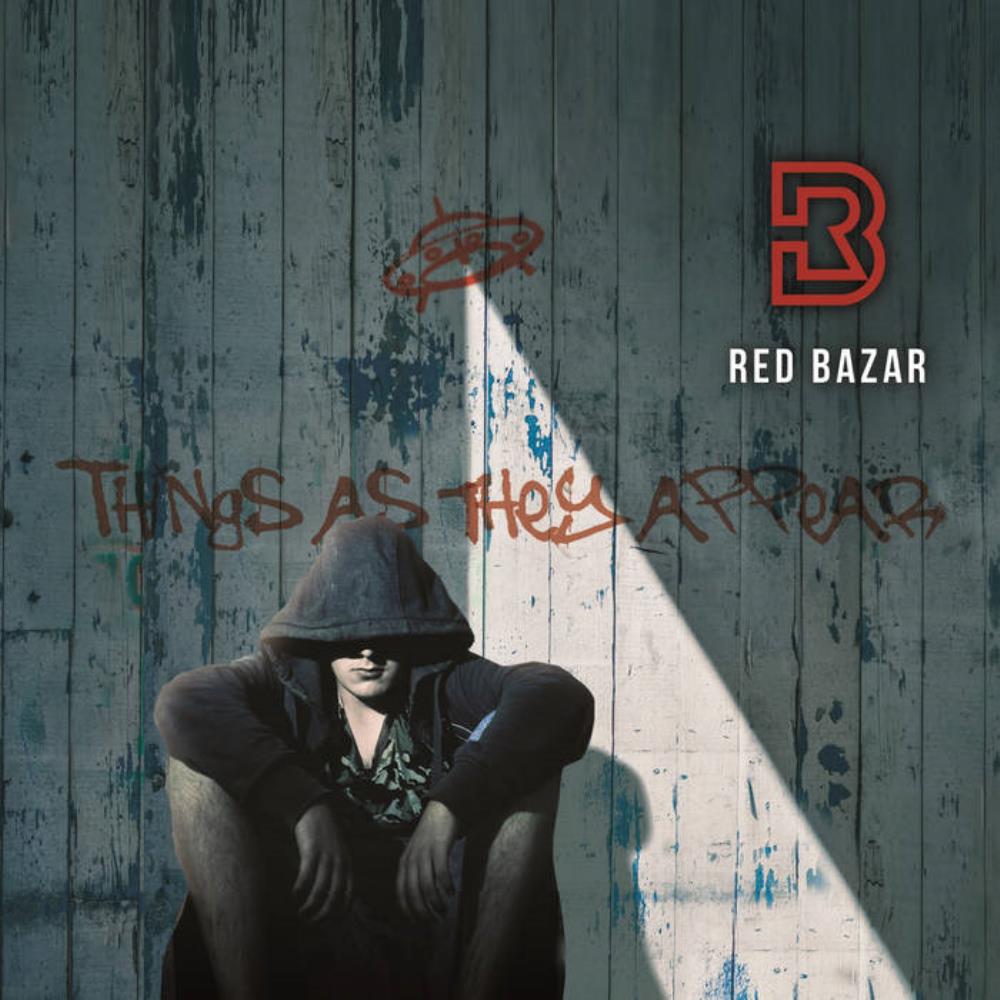
Album title: Thing As They Appear
Artist: Red Bazar
Nationality: British (English)
Sub-genre: Crossover Prog


And so on we go into the next ten. The only thing I can tell you about Red Bazar, other than that they were formed in Nottingham UK in 2007 and have released four albums since then, including this one, is that they were an instrumental band for two of those albums but engaged a singer for their third, and he remains for this, their fourth. His name is Peter Jones (no, not that one!) and if you know of a project called Tiger Moth Tales you'll already be familiar with him. If not, let me just advise you that Jones is blind, but that has not stopped him being not only a singer but a multi-instrumentalist, though here, in addition to his vocal duties, he only (!) plays the keys. I have no idea, before anyone asks, why Bazar is spelled as it is but I'm sure there's a reason, probably a lot less interesting than we think.

“Temple” gets things going, and it's very much guitar-driven, with powerful fretlines from Andy Wilson, no long fade-in or meandering synth buildup here; a few guitar chords and then it's in your face, bopping along with great energy, Jones concentrating mostly on his strong clear vocals, his keyboards adding little flourishes here and there as the song barrels through its six-minute length. It's catchy and melodious in a way prog rock often isn't, with an almost hard rock sensibility about it, though not in the same vein as earlier Nth Ascension. If anyone, it probably reminds me of Ten, though a spoken vocal halfway through seems a little out of place to me. Good solo from Wilson, whose (I assume) brother Mark keeps up a steady bass line as the song gets a little darker with good vocal harmonies and a grinding riff. Oh wait: I see the keys here are actually handled by Gary Marsh, as Jones only plays them on tracks 2 ,4, 6, 8 (leading me to want to shout “It's never too late! Me and my radio plugging on through the night!” Sorry) so we have yet to hear his work on the ivories.

Good start anyway, then there's time to catch your breath with “Nothing Left”, nice gentle ringing guitar intro and soft synth as it seems we have the first ballad on the album. Perhaps a little early, given that there are only eight tracks on the album, but there it is. Very soulful and passionate vocal from Jones, and I really like the thick bass here from Mark Wilson. Actually the song steps out of ballad territory on the back of some punchy guitar and frenetic keyboard work – our first taste of Jones at the keys – in the last minute or so. A song titled “Liar” is always going to be a bitter affair, and usually a hard, snarly rocker, so it's a little odd to hear a very pastoral picked guitar opening this third track, a gentle vocal from Peter Jones, before rolling percussion takes the song up a notch and the tempo rises, snappy guitar changing it all up, bringing it more in line with what I would have expected. Shades of later Asia about this, not much if anything in the way of keyboard at all. Okay, well, that would explain it: my copy has the tracks in a different order than shown on the website, so this is in fact “Rocky Bone Runway”. Right.
“Liar”, then, brings even more Asia comparisons, as Jones seems to channel the voice of John Payne (who I personally prefer to John Wetton, RIP) with a harder, rockier and somewhat angrier song with slight metal overtones in the chorus. Pretty scorching guitar solo here from Alan Wilson which would not be out of place on a Dio or Maiden album. The keys add just the right amount of backdrop to an insistent chorus of “Liar!” Well, it would be, wouldn't it? Now I have to check my track listing, as it is, as I found out, slightly different to what's printed. “Spiral”, though, is next, and has a nice rising synth backing a sort of acoustic guitar in what sounds like another ballad, but again is not. There's a kind of waltzy feeling to it initially but this breaks out into a big soaring guitar chorus and synth line, some very nice vocal harmonies as the song increases in intensity.

Now according to the track listing “Future Song” should be next up, but my copy gives me “The Parting”, so we'll go with that. Heavy from the off with a hammering, almost machine-gun guitar riff it pounds along with a sense of 1983 Genesis in it mixed in with a good dose of It Bites circa Once Around the World. Definitely the heaviest track on the album so far, despite being the shortest, at just under five minutes. Again, keys in the background here as the guitar takes precedence over proceedings. “Future Song”, then, is a lot more restrained, though still possessing its share of heaviness, something which seems to be a hallmark of this band. The keys add their power to this song, which comes across to me very much as a Threshold clone (no pun, for fans of that band, intended) with a sort of slow swinging 3/4 beat and almost distant guitar in the verses.
That leaves us with “We Will Find You”, more hard guitar in an almost wailing style, then the song is one step removed from doom metal territory; grinding, pounding, plodding and churning all overseen by a menacing, nearly whispered vocal from Jones. Very effective; thematically sort of reminds me of “The Butterfly Man” from Arena's Immortal? album. Growling backing vocals only add to the metal credentials of the song, and when taken in concert with the title there's a definite sense of aggression and intimidation about it. Rotheryesque guitars circa This Strange Engine just add to the atmosphere of an excellent, but quite unexpected closer.

Songs / Tracks Listing
1. Temple (6:56)
2. Nothing Left (7:58)
3. Liar (6:29)
4. Rocky Bone Runway (8:27)
5. Spiral (7:39)
6. Future Song (6:56)
7. The Parting (4:53)
8. We Will Find You (5:59)

Total Time: 55:17

Line-up / Musicians
- Peter Jones / vocals, keyboards (2,4,6,8)
- Andy Wilson / guitar
- Mick Wilson / bass
- Paul Comerie / drums

With:
- Gary Marsh / keyboards, arrangements


Like Nth Ascension, though not quite in the same way, I would categorise Red Bazar as almost more melodic rock, though perhaps, given the power of a few tracks here, especially the last one, they might be seen to step over the edge into progressive metal country. Plenty for prog rock lovers here too though, and an album I would highly recommend.

Rating: 8.6/10
 
88.
cover_503471652019_r.jpg


Album title
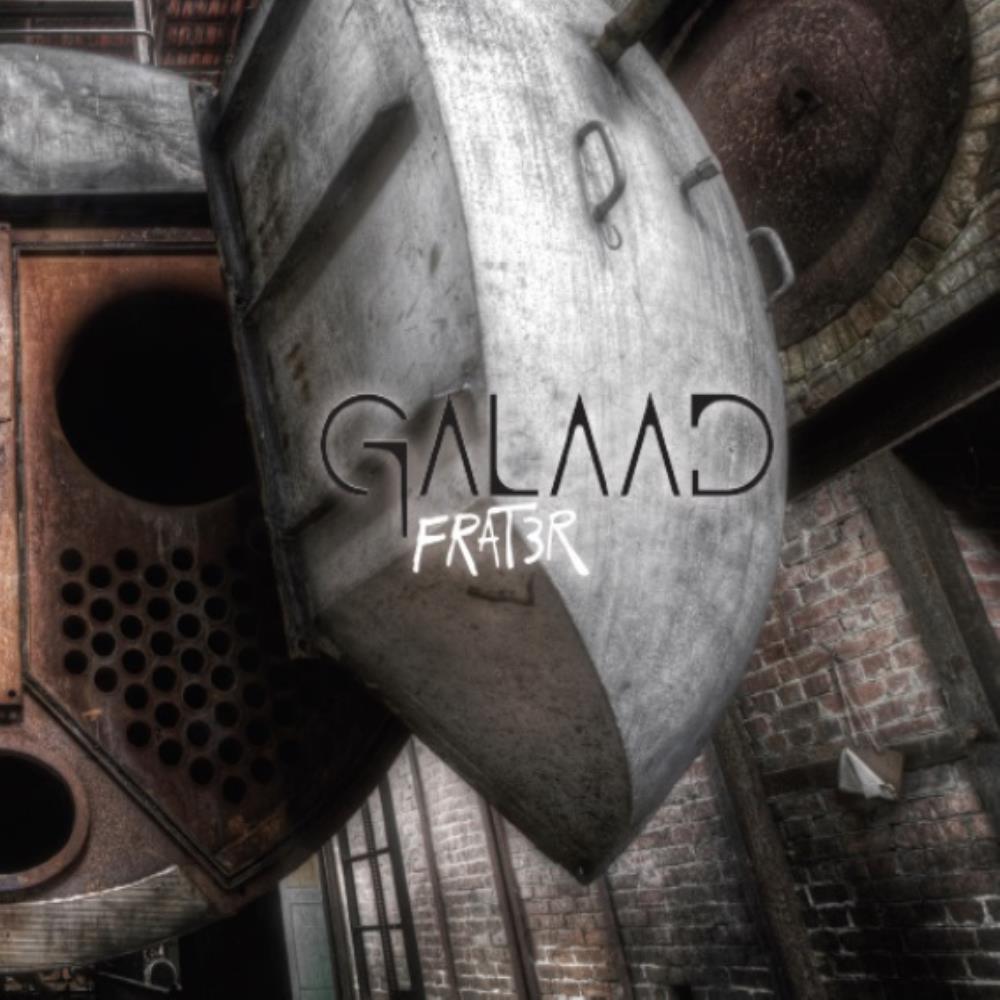
: Frat3r
Artist: Galaad
Nationality: Swiss
Sub-genre: Eclectic Prog


The word eclectic always somewhat worries me: I feel it can cover a multitude of sub-genres; its very meaning – selecting from various styles – means you could really be in for anything, and some of it might not be so good. It isn't as frightening to me as, say, avant-garde or the dreaded experimental, which only comes a runner-up to freeform, but it does leave me wondering what I'm going to be getting myself into if I choose to listen to an album so labelled. When you then add to that the fact that the artist sings in French, you could be storing up some real hurt for yourself. But I decided to take the plunge first time round. If I hated it from track one, I could always just drop it.

Though they sing in French, Galaad are, as indicated above, from the country of many inflated bank accounts and wristwatches, and where, if legend is to be believed, men and women tumble down the hills all day (what? Haven't you ever heard how to make a Swiss roll?) and got together in 1988, releasing two albums before disbanding in 1997. That's not really a great track record, is it? The first only came out in 1992, the second a year before they decided to call it a day. What made them reform I don't know, but they did so in 2016 and this album is, to date, the only result of that reformation.

So you can't know for sure without being cognisant of their history, but on the surface it doesn't say much for a band, does it? Four years to release their first album, another four between that and what would have been seen as their last, and then a break (as it were) of nearly 20 years before getting together again. Another four years to release one album. At this rate, they'll all be dead by the time they reach double figures, if ever! But has it been worth the wait? Ah well, now that's the question, isn't it?

“La Machine” (anyone?) gets us underway, and it's not the greatest of starts, with some sort of voice saying something in presumably French, then the vocal comes in from Pierre-Yves Theurillat, who I'll refer to from now on as PYT, and then the percussion and guitars kick – and I mean kick! - in and the whole thing becomes a passionate, powerful, dramatic song as PYT sings his heart out with guitars from Sebastian Froidevaux (and sorry, but he's obviously Frodo from now on) screaming away. Already I'm happy I took the chance, and even though I can't tell you what our man is singing about, unlike with Banco del Mutuo Soccorsos I can dig the music enough to not care. Mind you when he sings “C'est toi!” even I know enough French to know what that means. It's a great start, and let me tell you now, it only gets better from here on in.

Great sense of Marillion in the guitars, but about a ton heavier, the keyboards of Gianni Giardiello (GG) howling out and moaning in counterpoint, and these really come into their own on the next track, “Moloch”, where they set up a rolling, rippling piano line that has urgency inscribed into its very notes. It's a short song, just over two and a half minutes, but the passion and energy and drama the band fit into such a short space is nothing short of remarkable. Frodo's guitars wail in, adding to the overall melody and taking it to new levels. Unsurprisingly, given the length, the song is an instrumental, other than some sort of chorus chanted near the end. Another winner. Superb. A few church organ notes to finish it and we're into the almost funky “Kim”, with the sweetest bass line you've heard in your life, courtesy of one Gerard Zuber, and keys reminiscent of seventies Genesis at their best, PYT's voice a welcome return after its absence. He really does hold court over this band; the passion and sincerity in his vocal makes you kind of wish you knew what he was singing about, though of course if you can understand French, then you'll know. But as I say, for me, it's not essential. It would just make a good thing better, that's all.
I do, however, find it funny when you know just enough of a language to have no chance of even understanding what a moderately fluent native is saying, but can pick up certain words and meanings. Here I hear (sorry) “enfant supreme” and I of course know what that means. Suppose some of the basic French I learned in school has stuck, and watching the odd movie or series in that language helps too, though I'd still prefer not to be stranded in Paris with no English speakers. “Stone” is the longest track at just over nine minutes and opens with almost synthpop keys and effects, slowly building as Frodo's guitars enter the mix, recalling the best of the likes of Lloyd Cole and the Commotions or Big Country. Good heavy percussion from Laurent Petermann cuts in and the song goes up a notch, PYT's voice rising to meet the change with emotion and power as Frodo kicks out the stays and unleashes metal-like guitar before those Visage/Depeche Mode synths come back in to take control.

Bit of an instrumental freak-out then in the fifth minute as GG unleashes the full power of his organ (ooer!) and Frodo follows, not to be left behind, but GG is well ahead at this point. Seeing no alternative, the guitarist gives in and lets fly with a soulful, evocative solo as things slow down into a more dramatic, majestic tempo and PYT comes back in with the vocal. A true masterpiece of neo prog, and to be savoured. Not at all extended like some bands I could mention, this song uses every second of its nine-minute run to enhance its existence, and I wouldn't cut any of it. In the seventh minute Frodo finally gets to take the lead and it has been worth it. An almost stop then as everything gets pared down to basics, piano and soft guitar chords backing PYT in a restrained vocal to take the song to its end and into “Justice”, which opens on squelchy synth chords and effects, punching into life as it rides Frodo's finger-burning licks, a real chant in the chorus you could see fans clapping along to. Great warbly keys too, a tower of energy this one; don't see it slowing down at any point. It's relatively short, too – just a shade over four minutes.

Now we're more than halfway through the album and not only has there not been a single bad track, there hasn't been a single one that wasn't excellent. Which kind of makes it hard to pick a favourite, though that's a dilemma I'm happy to grapple with. This album is really turning into quite the revelation, and if fans of Galaad had to wait two decades for them to rise from the dead and present a new album, well it's surely been more than worth it. “Merci (pur)” slows things down with an almost sitar-like intro, very soft drums and then slides effortlessly into a very Alan Parsons Project groove, reminding me of “Pipeline” from Ammonia Avenue. A great passionate howl of a chorus, again I could see this going down so well in a live setting. I don't know what “merci (pur)” means, and I keep thinking he's singing “merci beaucoup”, but it amounts to the same thing, and thanks guys for another perfect track.
This is very much driven on GG's stabbing keyboard chords, and a pounding beat from Petermann's drumkit, and I almost hear the same melody and chord structure in “Encore!” (something their fans will no doubt be shouting if these guys ever manage to hit the stage) before GG hits it and just paints an elaborate and expert masterpiece across the music with his busy keyboards. He stops then, to allow PYT to sing with just the rhythm section before Frodo blasts in too, and while this is another long song – just over eight minutes – Galaad utilise every moment of it to the greatest effect. In the middle it slows, almost stops, and with single guitar notes from Frodo PYT sings a low vocal before the thing picks up again on GG's sumptuous synth joined by a rising solo from Frodo as the two of them mesh, taking the song between them, and with two minutes still to go this just gets better.

Has the best been kept till last? That's a really hard question to answer, as like I said, there's nothing – nothing – on this album that isn't top top quality, but the closing track is also the title, and from the exceptionally little I know of French, and even given that the “e” is replaced for some reason with a “3”, perhaps to denote their third album, I think “Frater” means brother, doesn't it? No, that's frere. Well, brotherhood? Fraternity? It's not that terribly important as the final song does not in any way let down the overall brilliance of this album, with an a capella vocal before Frodo slides in with some expressive guitar and the percussion and bass kick up too. It opens as a ballad, quite restrained in its way, but quickly surges into an emotional powerpunch that sets the seal on what has to be regarded, by me anyway, as close to a perfect prog album. When PYT cries out “Frater!” you just want to respond to him with raised fist and embrace him as your brother.


Songs / Tracks Listing
1. La Machine (5:19)
2. Moloch (2:33)
3. Kim (5:40)
4. Stone (9:10)
5. Justice (4:09)
6. Merci [puR] (5:23)
7. Encore! (8:10)
8. Frater (5:49)

Total Time 46:13

Line-up / Musicians
- Pierre-Yves Theurillat / lead vocals
- Sébastien Froidevaux / electric & acoustic guitars, backing vocals
- Gianni Giardiello / keyboards, backing vocals
- Gérard Zuber / bass, backing vocals
- Laurent Petermann / drums, percussion, backing vocals


It's a salutary lesson for me. I could have easily passed this album by, looking at only the genre, and never known what I was missing. This will easily scale the heights of my own personal chart and I see few albums likely to push it down. The very fact that, again, it's near the end (and if you look for the list now, gone altogether) is a crime against music and one of the biggest injustices in the world. Not really. But Frat3r deserves to have earned a much higher place, and deserves too to be heard by more people than it most likely will, the language barrier being insurmountable for too many people, myself once included, but now I've managed to kick down that particular wall, and what treasures I have found behind it!

Good things come to those who wait. Let's hope we don't have to wait another twenty years for the next offering from Galaad.

Rating: 9.9/10
 
Last edited:
Oh, that's interesting. Despite me understanding near-to-no French, that one sounds good. Vocals are a make or break for me, but Pierre's sound good - even if I don't know what he's singing about!

Has a definite Pendragon type feel to me, or perhaps early Marillion. The guitar on Kim sounds very Steve Rothery.
 
87.
cover_7537652019_r.jpg


Album title:
Shadows
Artist: Introitus
Nationality: Swedish
Sub-genre: Neo-prog

Now you may say I'm being unfair here, but there are a few black marks I can see against Introitus. First is the name of the band. It's weird, particularly for a prog one. I mean, I know there's a Black Metal band from Serbia – or was; they're split up now – with whom I could see this name working, to a degree, given its, ah, sexual connotations. But a prog band? Do you know of any prog bands called, I don't know, Muscular Death Spasm? Well, the word apparently refers to an entrance to a canal or organ, so I leave you to work out the unwholesome applications that our now-defunct non-God-botherers gave it for the title of their band, but it just sound wrong in the prog world. Anyway, that's problem one, and it may only be mine, which is fair enough.

Problem two is a little more serious. The band formed in 1999 but only released their first album in 2007! That's eight years, for those of you who had to work in the blacking factories or as chimney sweeps and didn't finish school, which is in my opinion far too long to be fussing and demurring about unleashing your greatness on the world. Since then it's been four years, three years and now another five years between albums, which can hardly be considered prolific. Perhaps the reason for this unseemly hiatus between albums becomes clearer when you realise that every member of the band has a fulltime job, so that, by extension, the band is only a part-time thing for them. This, despite the assertion on PA's bio of them that “Introitus is always their first baby”. Well, if it is, all I can say is it's a pretty neglected child.

I watch the series Dragons' Den on TV – for those who may not know, it's a programme where wealthy and canny investors take submissions for projects, companies and products which they may choose to fund – and the one thing that always annoys the investors (other than sky-high and ridiculous company valuations) is when someone has not the confidence in their product/company to quit their job. If I'm going to put everything into this, argue the investors, why not you? How can I have confidence in something in which you don't, since you're only doing it part time? I'm not interested in investing in someone's hobby. I want this to be something they're concentrating on, to the exclusion of everything else, and determined to make work.

And so it is, and must be, with bands. Anyone can put together a band and jam in their garage or bedroom, or even hire a small studio to make some vanity recordings. But if you're serious about music, about making it your career, you need to remove the safety net and step out into the big wide world, ready to take the chance, as Barry Manilow once sang, and prepared to fail. If not, then your music is just a hobby, and you don't deserve to succeed. Nothing comes easy, and to gain the big rewards you have to take big risks, but Introitus here don't seem ready to do that. Despite receiving favourable response to their music, arranging for a European tour (pre-Pandemic, one would assume; nobody's going on tour now) and having turned out four albums, there's no sign of them giving up the day job.

So you'll forgive me if my review here is coloured prematurely by a kind of sneering disdain for a band who aren't prepared to walk across the tightrope and instead cling to the pole, looking out across the line at the dangerous, narrow path that may lead to fame and fortune as easily as it may lead to a precipitate fall and injury.

All that said, the album opens on “Belong”, with impressive organ and a powerful vocal from Anna Jobs Bender (ah, seriously? I kid you not!), with Mats, either her brother or husband, on the keys, Pär Helje throwing in splashes of colour on the guitar. To give Anna her due, she's not one of these operatic singers in the vein of Floor Jansen or Tarja Turunen , who seem to people progressive and symphonic metal bands so much, and has a good, strong voice that can easily rise above the music without being too aggressive. Good solo from Mats here, and reading further (as I do) I see that Anna and Mats are married, and their two children are also in the band, adding backing vocals. Well, if they're all in the band how can it still be seen as a part-time project? Are they running the Swedish Chamber of Commerce between them, or something? A job or jobs they can't afford to give up? On the strength of this track alone that should not be a problem, but they don't want to take the chance?

There are only seven tracks on this album, but most are pretty long, with the title, up next, at nine anda half minutes, not even the longest. Another bouncy keyboard intro from Mats, this song gives me a sense of a more in-your-face and aggressive Mostly Autumn, good vocal harmonies as the kids lend mum a hand, and the song rocks along nicely with a pretty cool hook. Nice emotional guitar solo from Helje, though I would say the song is way too long for what it is. Essentially, it seems to repeat the same verses and choruses all through its length, and I don't think it needed to be that long. Nice addition of bells and then choral vocals near the end gives it a very dramatic, almost eerie feel, and into “Beyond Fantasy” we go. This may be a slightly oblique reference to Introitus's debut album, which was called Fantasy, back in 2007.

It comes in this time on spacey, atmospheric synth, quite ambient in its way, reminds me of something out a documentary about whales or something, then this drops to slow piano and some sort of horn arrangement – I see Linnéa Syrjälä plays ocarina and chalumeu; let's see what they are.
500px-2016-01_Ocarina_front.jpg

Okay, well the former is a kind of ancient flute (looks like a hairdryer with holes in it) and the other one is, well, also a flute, a kind of clarinet. She certainly uses one or both in this, which appears to be a really nice gentle instrumental and slows things down at just the right moment. She then adds in accordion, which changes the whole timbre of the song, and given that it runs for seven minutes, is it an instrumental? We're now five minutes in, so I would say yes, but then there are vocalise from Anna. Unless she sings actual words though, I take her voice as just another instrument and the song retains its vocal-less status for me. Actually, they really improve the piece.

That brings us into the longest track, the thirteen-minute-plus epic “Desperation”, which for once opens not on keys but wailing guitar, before rippling synth is overlaid and then Anna's voice sighs in, the song for the moment maintaining the pace of the previous track. The lyric utilises many words that rhyme with desperation, almost mimicking, lyrically at least, Micheal Hutchence in INXS's “Mediate” from the classic Kick album. It also puts me in mind of Touchstone, another female-led progressive rock band, but again I wonder about the need for this song to be as long as it is. I mean, we'er four, five minutes in now and all she's sung really is the chorus over and over, with the odd verse here or there. It does get a little repetitive.

Tempo picks up now, as Helje's guitar cranks out the riffs and Bender's keyboards follow him, and there's a nice interchange between them in the ninth minute which works very well and takes us into the eleventh, but rather disappointingly when the vocal comes back in it's just more of the same. I mean, if they wanted to write an instrumental of thirteen minutes length, cool; but to pepper one with basic, sporadic lyrics is a bit ridiculous I feel. So one major weakness here might be a certain naivete in songwriting, or perhaps more properly lyric-writing; I can't get any information on who writes these songs, but while the music is fine the lyrics are definitely wanting in many respects.
“Figures” Is fast and uptempo, but I must admit I didn't even realise the previous song had ended, as the melody, at least in the initial stages, is very similar. The vocal here, when it comes in, is strangely distorted for a minute or so, then it comes in a little stronger. I don't know whether that's due to bad production, or whether it's intentional, though if so I don't really see what point they were making. Again, this song is lacking in lyric/vocals and more or less rides on the instrumental expertise of the band. “My Hero” is the ballad, a little sugary to be honest, a little pedestrian, but nice, kind of Gloria Estefanesque. I like the use of the accordion courtesy of Ms. Syrjälä. The first ever male vocal here (I don't know who is singing) changes the feel of the song and lifts it a little above the ordinary, though only a little; the duet is nice. I'm going to assume, given that they're married, it's Mats who's singing with his wife. If so, it's a nice real-world love song between the two. Aah! Yeah, on we go.

And we have one more epic before we go, it's eleven minutes and change and it's titled “Awakening”, opening on a nice reflective piano line that sets the song up for more of that melancholy accordion which is wielded both sparingly and to great effect by Linnéa Syrjälä. Quite the solo actually from her, with slowly some orchestral synth coming in to support her as the song moves into its third minute, then the guitar and percussion kick in and the intro goes full instrumental, accordion dropping out as Helje takes over, Bender's keys assuming control in the fourth minute and, after something we seldom hear, anywhere, a bass solo, continuing on into the seventh minute, making me tentatively wonder if this could be an instrumental too? Another rising solo from Helje and some vocalise from Anna, though no real singing as yet, then in minute eight it ramps up abruptly into a fast, boppy keyboard run and, well, a short drum solo, leaving me to accept that this is probably a kind of showcase for each musician to show off his or her talents, which are many, certainly, but still, a little self-indulgent?

Slowing down then in the ninth for presumably the big stately finish, getting a little introspective now, led mostly by guitar and some nice little keyboard arpeggios from Mats Bender, some more vocalise from Anna, or maybe from the daughter, Johanna, taking us smoothly out with some last accordion licks and the sound of hollow, fading drums to close.

Songs / Tracks Listing
1. Belong (6:59)
2. Shadows (9:28)
3. Beyond Fantasy (7:04)
4. Desperation (13:17)
5. Figures (6:19)
6. My Hero (4:36)
7. Awakening (11:43)

Total time: 59:26

Line-up / Musicians
- Anna Jobs Bender / lead vocals
- Pär Helje / guitar
- Mats Bender / keyboards
- Linnéa Syrjälä / accordion, ocarina, chalumeau, vocals
- Dennis Lindkvist / bass
- Mattias Bender / drums, vocals

With:
- Johanna Bender / vocals
- Martin Jobs / vocals (6)
- Helena Tenstam / flutes


This is by no means a poor album, in fact it's pretty good. It's just that there are ideas perhaps left unexplored or unrealised on it; there are songs that are too long for their own good, and there's a ballad that really has no place being here, and looks like it might have been recorded for one of two reasons: because it's a personal thing between the couple, or in the hopes of being released as a single. If the latter, it would be a pity, as “My Hero” would give very much a false impression to those who are unfamiliar with them what this band is about. With a little more attention to lyrics and song structure, and less of the shoehorned-in ballads, their next album might actually be something special.

It's rare to find a whole family playing music, and rarer yet to find them all contributing to the one album, so that's to be applauded. At the same time, this band need to be ready to step outside their comfort zone and, as I already alluded to, leave their safety net behind if they want to make it in the real world and become a proper band. I think they have the talent to do that, all they need now is the confidence and the will to make a dream a reality.

Perhaps the title of the last song here should be a call to them. Awakening? Time to give up the day job, guys.

Rating: 8.5/10
 

Sponsors


We try to keep the forum as free of ads as possible, please consider supporting SFFWorld on Patreon


Your ad here.
Back
Top