Walking After Midnight: The Vampire in Myth and Media

Title: Manor
Format: Short story
Author: Karl Heinrich Ulrich
Nationality: German
Written: 1884
Published: 1884
Impact: ?
Synopsis: We’ve had the first female vampire, the first black vampire and even the first transgender vampire. Now, a hundred years before Anne Rice (almost) comes the very first gay vampire. Despite my expectations, the title does not refer to an old, crumbling house around which vampires shuffle and stalk, but is the name of the protagonist, a sailor who saves another one, Har, from drowning, and the two become friends, and in time, more than that. Manor leaves on a whaling voyage, and to Har’s dismay is drowned when the ship founders. But later Manor comes to Har and sucks his blood, as they develop a curious kind of homosexual relationship.

The village isn’t having that. Not the gay liaison; they don’t mind that. But they draw the line at vampires, and set out to destroy Manor. He’s not so easy to kill though, being strong and vital even if he is pale and ghostly-like. He’s restricted to nocturnal roaming, and stays in his coffin during the day, when the “community”, as they’re described in the summary I’m reading, try to stake him but the attempt fails because the stake needs to have a head, like that of a nail, to work, in a departure from traditional vampire lore. Also slightly different, Manor sucks the blood from Har via his nipple, rather than from his neck, and it seems too that Har is aware of, and willing to deal with the vampire, as long as he loves him.

The matter-of-fact way the villagers deal with the news that there is a vampire in their midst is quite amusing:

“To the people of Wagoe she [Har’s mother] said, "The insecurity of your graves has exposed one of us to danger. A man here is leaving his grave every evening, coming over to us and sucking his fill of blood from this poor youth."
"We'll try to secure it properly," the people of Wagoe said.

Well that’s all right then. Also hilarious is their reaction upon opening Manor’s grave (with, I should also mention, a stake “as tall as a man” - what were they going to do with it, pole vault over him??)

"One of the people of Wagoe said, "Look, he hasn't moved since the day we buried him."
"That's because he gets into the same spot each time he returns," the wise woman replied.”
Ah, the wise woman! Two things, me lord, must ye know about the wise woman, First, she is…. A woman! And second…

Har’s frantic entreaty to his vampire lover is also side-splitting.
"Manor, Manor," he cried, his voice quivering. "They're going to drive a stake into your heart. Manor, wake up. Open your eyes. It's me, your Har."

What, did he think that if the vampire woke up this would be looked on as a good thing? “Oh look, he’s awake. Throw away that stake, we don’t need it now.”

In the end they nail that sucker, and poor Har dies, but whether from blood loss or a broken heart is unclear. He asks to be buried in the same grave as Manor, and for the stake to be taken out of his lover’s body. His mother says she’ll do that, but I wonder? Still, with Har now dead and presumably with Manor forever, what reason would the vampire have to trouble the living? Or maybe they both end up haunting the village. It doesn’t say.
I guess for its time the story couldn’t be too graphic - it’s not graphic at all - and there’s actually no mention of sex in it, so perhaps it’s more implied than shown. Still, even the implication would have got Ulrichs into trouble, so it’s a brave effort to create the world’s first homosexual vampire. It is unintentionally funny though.


Title: The True Story of the Vampire
Format: Short story
Author: Count Stanislaus Eric Stenboch
Nationality: Swedish
Written: 1894
Published: 1894
Impact: ?
Synopsis: And now the first Scandivanian account, written by a Swedish author, of a vampire, which appeared apparently in Stoker’s later collection, Dracula’s Guest, published in and seems to be the second homosexual vampire story. Count Vardalek visits the castle of Baron Woopsy sorry I mean Wrondki (those nobles must stick together) and develops a passion for the younger Gabriel, who wastes and sickens under Vardelek’s attentions till he dies.

The opening lines of the story seem to mock Stoker, though his seminal novel would not be published for another three years:

“VAMPIRE STORIES ARE GENERALLY located in Styria; mine is also. Styria is by no means the romantic kind of place described by those who have certainly never been there. It is a flat, uninteresting country, only celebrated by its turkeys, its capons, and the stupidity of its inhabitants. Vampires generally arrive by night, in carriages drawn by two black horses.”

Although the story is narrated by a female, it also seems that the Count (the real one, the author) is referring to the public’s perception of his widely-known eccentricities when he says (or she says) “It is to tell how I came to spend most of my useless wealth on an asylum for stray animals that I am writing this.” Take that, polite society!

Count Stanislaus’s vampire seems to be a reluctant one, one who cannot die though he wishes to, and who seems to regret taking life, as he says about Gabriel (playing the piano): “My darling, I fain would spare thee; but thy life is my life, and I must live, I who would rather die. Will God not have any mercy on me? Oh! oh! life; oh, the torture of life!” Or perhaps, more accurately, oh the torture of having to read this! Yeah, it’s a very basic story, and if you know vampires there are zero surprises, twists or deviations from the legend. The only difference being that, as I say above, this vampire seems tortured by what he has to do.

The author himself was strange. As already mentioned, he kept a menagerie of animals, and also always travelled with a dog and a monkey, as well as a life-sized doll, which he seemed to think was alive, and his son. No, seriously. When he hadn’t got it with him, he would enquire about its health, and the rumour was that he had paid a priest a fortune to “educate” it. He was also said to sleep in a coffin, though how true this is I don’t know.

But as far as writing vampire stories goes, I’ve read his, and, no pun intended, it sucks.


Title: Lilith
Format: Novel
Author: George MacDonald
Nationality: Scottish
Written: 1895
Published: 1895
Impact: ?
Synopsis: Tres weird. In the synopsis I can find no mention at all of a vampire; this seems to be a fantasy/horror novel with plenty of disparate elements, many of which are taken from Christian belief (hence the title I guess) but I can’t see a simple undead creature anywhere. Not sure why it’s included. Look, it’s a novel: I’m not going to go reading the whole thing in the hope there may be a vampire or vampires lurking somewhere, but it does concern me that MacDonald uses as the medium of his protagonists’ passage from one world to the next a mirror, when a rather more famous novel had already used this only twenty years before.


Title: The Blood of the Vampire
Format: Novel
Author: Florence Marryat
Nationality: English
Written: 1897
Published: 1897
Impact: ?
Synopsis: Published the same year, this novel was inevitably going to suffer from comparison to Dracula, which would ride head and shoulders over all vampire novels and stories written to that point, and many after it. Its protagonist is Harriet, a female Jamaican vampire, who comes to Belgium and meets two English women, one of whom, Margaret, is dubious about allowing her to hold her baby, and finds herself drained. Baroness Gobelli invites her to England; meanwhile she spends more time with Margaret’s child, who gets progressively more ill. Eventually the baby dies, and the doctor summoned to investigate the cause can’t figure it out. It does transpire though that he knew Harriet’s father.

When Harriet gets to England she has the same effect on the Baroness’s young son, who also sickens and dies. Baroness Gobrelli accuses her of having “black blood” and “vampire blood”, and Harriet, having met and falling in love with a man, is frightened and returns to Belgium to seek the advice of the doctor. He tells her that her mother was a slave and her father performed medical experiments on his own slaves (whether or not that includes her mother I don’t know) until they revolted and killed him. He warns Harriet never to marry, but of course she is in love and goes ahead anyway. When she wakes up on her wedding morning to find her new husband dead, she is overcome with grief and takes poison.

Is this the first vampire novel or story without a self-aware vampire, I wonder? I’d have to check back, but whether deliberate by their own hand or made by another, I think every other vampire so far as at least known and recognised what they are. Harriet does not, and is horrified by the possibility she could be responsible for these deaths. She has to face that when she is presented with the still-warm corpse of her husband of a few hours on the morning after their wedding, and is so grief-stricken that she kills herself. But is she even a vampire? Well, we assume so, and it’s postulated that it’s a hereditary thing, unlike many or most of the vampires we’ve read about up to now. It’s also allied, rather uncomfortably, to her black heritage, which surely says something about racism.

The delight of the little Harriet whipping the slaves on the plantation “as a treat” is grossly disturbing, but of course meant to be so. I’m reminded of the episode “Chain of Command” in Star Trek: The Next Generation, when a Cardassian child asks his father - who is torturing Captain Picard - about the human, and the officer smiles that humans do not love their children as Cardassians do. The parallel is obvious: reduce the object of your violence to beneath the status of human and it’s no longer wrong to punish them. You’d beat a dog (well, I wouldn’t but some people would) and have no problem with it, but beating a man or a woman? Might be a little more reluctance there. The fact that slaves have been reduced to the status of mere property means there’s no need to worry about whipping them; in fact, it’s the right thing to do.

Although Harriet is of mixed-race, it’s odd how she refers to the slaves as “niggers”, obviously not including herself in their race, believing herself above them, even though she has clearly black blood in her veins and her own mother was, as she finds out later, a slave, but being brought up on the plantation she was no doubt told she was nothing like them. Quite how she can be a vampire and not know it I don’t understand: does she go into a trance or something, lose her human identity like a werewolf, only regaining it when her hunger is sated? I haven’t read the novel, but I wonder if it says or if Marryat leaves it open to conjecture?

I feel the comparisons made with Dracula and Carmilla are unfair. These two novels bookend the latter half of the nineteenth century, written within twenty years of each other and towering like two colossi over early - and indeed, later - vampire literature, so they would of course be used as a yardstick for anything that came after (or in the case of Dracula, at the same time), but I don’t see, from the admittedly short synopsis, that many similarities between the three books. Carmilla is a female vampire, yes, but seems well aware of what she is, almost glorying in it, while Dracula is, well, male, and seems to bear no real resemblance to the vampire here, nor are the events taking place in a similar location. I wonder if those two books had not been written, and assuming Marryat doesn’t use them as inspiration (which I don’t know) would her novel have been better received?
 
200w.gif

Yes, let the trumpets ring out in glorious fanfare! We've finally reached that moment!

Roll out the red carpet!

kirmizi-hali.gif

Let the tickertape parade begin!
LikableRedArchaeopteryx-max-1mb.gif


Next up...
17245.jpg


Watch this space (and your back)!
 
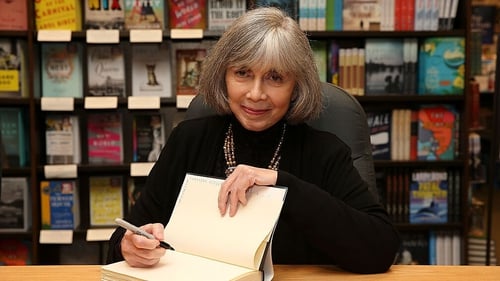
We interrupt our timeline to bring you the sad news of the passing of a legend in vampire fiction. Anne Rice, author of The Vampire Chronicles, has died aged 80 in a hospital in California from complications following a stroke. We now present our own little tribute to this remarkable woman.
001a01f7-500.jpg

Queen of the Undead: A Tribute to Anne Rice (1941 - 2021)

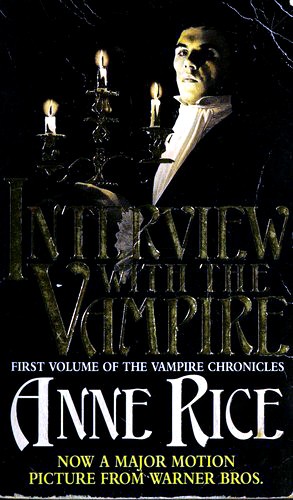
While it would not be fair or accurate to say Anne Rice created the genre unofficially known as vampire literature or vampire horror, she certainly was one of the first, if not the first to drag the well-worn tropes into the twentieth century, reviving the genre at a time when really all there was were novels about Bram Stoker’s most famous creation. Her first vampire novel - in fact, her first novel - was published in 1976, only a year after Stephen King’s horror masterwork Salem’s Lot, but whereas King focussed on the evil, monstrous, terrifying aspect of his vampires and made them not in the least sympathetic, Rice took a different approach with her vampires. Indeed, in the very first book, Interview with the Vampire, in which we are introduced to her star Lestat de Lioncourt, through the recollections of his protege, Louis de Pont du Lac, there’s an immediate effort by Rice to allow us to see the world through the vampire’s eyes, to realise he’s not only the monster Stoker, LeFanu and others have painted the undead as, and most importantly, he hates what he has become.

Up to now, what vampire writing there had been had mostly concentrated on presenting the vampire as a monster, something to be destroyed, and something that wanted to destroy us. Anne Rice, while never allowing us to lose sight of the fact that vampires are evil creatures, helps us understand there is more to them that lustful blood-drinking and hunting. She shows us a species, if you will, who adore art and music, love company, travel and literature, and who enjoy the finer things life has to offer, while yet at the heart of it loathing what they have become. Even Lestat, the “brat prince” of vampire literature, who revels in his debauchery and power, becomes, over the course of five novels, bored with immortality and finally reaches a revelation about his existence which even he cannot ignore.

Anne Rice was born Howard Allen Frances O’Brien on October 4 1941, to Irish Catholic parents in New Orleans, almost two months to the day before America was attacked by Japan and drawn into World War II. Her father in fact served in the navy, and did write one novel, while her mother - who had given her the unusual name of Howard because “she was a bit of a madwoman” according to Anne herself - was a badly-sinking alcoholic and would die before Anne was fifteen. Another source claims it was her father who gave Anne her name, but in 1947 she legally changed it to Anne O’Brien. After her mother passed in 1956, her father wasted no time replacing her, and also farming out his children to the local private school for girls, St. Joseph Academy, which she and her sister hated, and which may have influenced some of the claustrophobia of later novels such as Queen of the Damned and Lestat’s incarceration at the end of Memnoch the Devil.

A year after remarrying, her father moved the family to Texas, where Anne would meet her future husband, Stan Rice. After studying at the University of San Francisco and working at an insurance firm, Anne married Stan in 1961 and they moved back to San Francisco the next year. Though they lived in the heart of the Haight-Ashbury district and it was “the summer of love”, Anne did not get involved, her strict Catholic upbringing leaving her writing while outside “everyone was dropping acid and smoking grass. I was known as my own square”. Her refusal to get involved in the drug scene paid off (though she was emulating her mother, as both she and her husband were now alcoholics) and she graduated from San Francisco State with an M.A. in creative writing in 1970. Her first child, Michele, born in 1966 was diagnosed with leukemia and only lived six years, dying in 1972, surely the inspiration for Claudia, the frustrated vampire child in her first novel.

However, the uncompromising attitude of the Catholic Church, and its inherent hypocrisy so angered and affected Anne that she officially left the Church around this time, declaring herself an atheist. She would maintain this stance well into her fifties, and her, if you like, release from the bonds of Christianity was to characterise her novels and allow her to people them with creatures who mocked God, even hated God, also loved God but many of whom refused even to believe in one. It was only in Memnoch the Devil, the final book in the original Lestat story, that she would approach the subject head-on by doing something no other writer to my knowledge has ever done, and have her character speak face-to-face with God himself. And the Devil.

When her second child, Christopher, was born in 1978, she and Stan made the decision to give up the booze, Anne afraid that her son would suffer the same life she had done, and determined this would not be the case. When she first wrote Interview with the Vampire she says herself that she did not do much research, but based the idea on the horror movie Dracula’s Daughter, still managing so far as I can see to be the first author to present vampires as sympathetic beings the reader could relate to. After many rejections the novel was finally picked up and Anne was on her way. Two more vampire novels followed (in between some risque adult writing under pseudonyms) as The Vampire Chronicles began to grow and take shape. Eventually the series would run to ten novels, moving away from its central character to tell the stories of others, such as Marius, Pandora and Armand. She also diversified into other areas of horror, writing a trilogy about witches, a novel about a mummy and, later, religious novels based on the life of Christ.
10515485-L.jpg

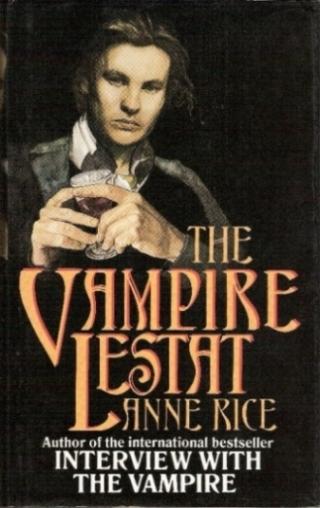
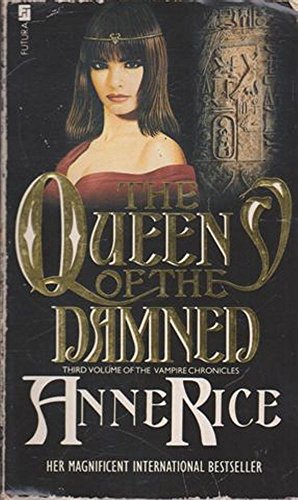
She wasn’t an overnight sensation though. Critical reaction to Interview with the Vampire was mixed, and mostly negative, which caused her to question her choices and change tack for a few years. It was the sequel, The Vampire Lestat (which, it has to be said, is a far superior book and my favourite of the original trilogy) that changed the critics’ minds, and by the time the conclusion of what was at that time a trilogy, The Queen of the Damned was published, it made the New York Times Best Sellers list, going right to the top and staying on the list for a third of 1988. That year she and her family moved back to New Orleans, where they would remain and where most of her novels would be set. In 1998 she returned to the Catholic Church, though still disagreeing with many of its core stances, such as homosexuality and abortion rights, and this year too she had her first brush with death.

In truth, Anne Rice almost died twice, the first time being as above when she fell into a diabetic coma (unaware she even had diabetes) and then again in 2004 when she had a gastric bypass and almost died from an intestinal blockage. Whether this had any impact on her writing or not, she now chose to devote her remaining creative energies to praising God in her writing, though she didn’t by any means dismiss or disavow her supernatural works, those that had made her the famous figure she had become.
779886807.jpg

“I had experienced an old-fashioned, strict Roman Catholic childhood in the 1940s and 1950s ... we attended daily Mass and Communion in an enormous and magnificently decorated church.... Stained-glass windows, the Latin Mass, the detailed answers to complex questions on good and evil—these things were imprinted on my soul forever.... I left this church at age 18.... I wanted to know what was happening, why so many seemingly good people didn't believe in any organized religion yet cared passionately about their behavior and value of their lives.... I broke with the church.... I wrote many novels that without my being aware that they reflected my quest for meaning in a world without God.
9780708843376-us-300.jpg

"In the moment of surrender, I let go of all the theological or social questions which had kept me from [God] for countless years. I simply let them go. There was the sense, profound and wordless, that if He knew everything I did not have to know everything, and that, in seeking to know everything, I'd been, all of my life, missing the entire point. No social paradox, no historic disaster, no hideous record of injustice or misery should keep me from Him. No question of Scriptural integrity, no torment over the fate of this or that atheist or gay friend, no worry for those condemned and ostracized by my church or any other church should stand between me and Him. The reason? It was magnificently simple: He knew how or why everything happened; He knew the disposition of every single soul. He wasn't going to let anything happen by accident! Nobody was going to go to Hell by mistake.”

Without meaning to speak ill of the dead, especially someone I truly respected, I have to say this comes across as the next best thing to apologism for the Church and all the horror and evil it has presided over, even orchestrated down the centuries. It’s a blase, incredibly naive and in some ways insulting viewpoint to say “oh it’s all right cos God knows everything.” Bullshit.

But as I say, I don’t want to speak ill. I just wanted to say I completely and categorically disagree with and do not support her view expressed above.

After the death of her husband in 2002 Rice left New Orleans in 2005, with remarkable foresight or just pure dumb luck managing to miss Hurricane Katrina by months or weeks, and followed Christopher to California. In 2010 she had again had it with Christianity, as she explained the difference she saw between being a Christian and following Christ:

"Today I quit being a Christian.... I remain committed to Christ as always but not to being 'Christian' or to being part of Christianity. It's simply impossible for me to 'belong' to this quarrelsome, hostile, disputatious, and deservedly infamous group. For ten years, I've tried. I've failed. I'm an outsider. My conscience will allow nothing else."[83][84] Shortly thereafter, she clarified her statement: "My faith in Christ is central to my life. My conversion from a pessimistic atheist lost in a world I didn't understand, to an optimistic believer in a universe created and sustained by a loving God is crucial to me. But following Christ does not mean following His followers. Christ is infinitely more important than Christianity and always will be, no matter what Christianity is, has been, or might become.”

In contrast to her 1998 statement, it’s hard not to applaud and agree with this. Far too many so-called Christians don’t know what it is or what it is meant to be to be one, and have no intention of following any of the teachings of Jesus other than those that suit their own agenda. Makes me thank God I’m an atheist.

For me personally, Rice was a window into the world of horror, vampire horror and somewhat historical fiction, as I had not been a horror fan and had not seen or read Salem’s Lot, and I think I may have read Dracula beforehand, but I’m not sure. If I did, it was the only vampire novel I had read. Once I began Interview with the Vampire I was hungry for more (sorry) but at the time I read it, though it was far from its original publication date (1986 I think) it was the only one available by her, so when I saw a sequel (technically a prequel I guess) bearing the name of the anti-hero of that first novel, I didn’t need any further prompting to grab it excitedly from the shelf at Eason Book Shops and shell out my hard-earned on it. Incidentally, for those interested, I found Interview with the Vampire almost by accident, after having listened to the Sting song “Moon Over Bourbon Street” and reading that he had based it on the novel, which I then went out to find, so thanks, Sting: you did at least one good turn for me in your life.
InterviewwithaVampireMoviePoste.JPG

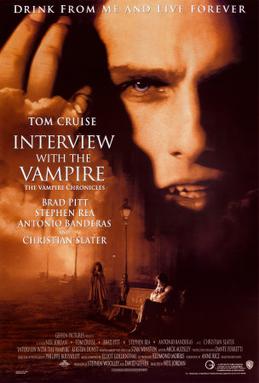
The film adaptations of her work had a mixed reception. Even the box-office draw of Tom Cruise in the title role couldn’t win the movie of Interview with the Vampire an Academy Award, though it did very well in the box office and was a hit; it’s poorly remembered though and was quickly drowned out by movies such as the seventh in the Star Trek franchise, Generations and the truly awful The Santa Clause as Christmas approached. It did win two BAFTAs (British Academy of Film and Television Awards) and Kirsten Dunst in her first role did well out of it, as did Brad Pitt and Antonio Banderas, but few people will cite it now who are not fans. Personally I thought Cruise did a very good job, considering that Rice had slated him as “about as much my Lestat as Edward G. Robinson!” It might, though, be telling that the film’s lack of enduring appeal may have prevented Cruise from reprising the role in The Queen of the Damned, which fared much worse.

After much opposition by Anne the plan was to merge the two novels in one, which was crazy given how much ground there is to cover in one of them, never mind two. The central theme of the twins was dropped, again a ridiculous decision, and basically the movie was a mess. It barely made back its budget, making a paltry ten million as compared to the first one which almost quadrupled its initial outlay. Queen of the Damned ironically lived up to its name, receiving almost universally negative reviews, triggering a poor 17% rating on Rotten Tomatoes and resulting in Rice advising her fans to “forget it” as it “mutilated” her work. Even the death of its other star, Aaliyah as Akasha, the eponymous queen, a few months prior to its release, could not save the movie’s reputation. After this bomb, Rice decided television was the way to go (I could have told her that) and she and Christopher were working on a series based on The Vampire Chronicles only months before her death.
106448._SY475_.jpg

I will be the first to admit I have not read all Rice’s material. Some of her novels did not resonate with me at all. I hated Violin, was not interested in Pandora and did not read any of her non-vampire novels at all. In fact, I really only read the first five of the Vampire Chronicles: Interview with the Vampire, The Vampire Lestat, The Queen of the Damned, The Tale of the Body Thief and Memnoch the Devil, which for me placed a perfect seal on the story of Lestat, including Rice’s own touching little farewell to her creation, and his personal bowing out of the story. I have not read Prince Lestat yet, though I do have Blackwood Farm: I have yet to open it though.

If Rice had not written anything beyond those five novels, I think I would have been satisfied, and perhaps so too would she. Between them, they cover all but the entire story of Lestat, her central and most important figure, from his birth through his “birth to darkness” and on to his eventual redemption, even his return to mortality. It’s hard to think of a more perfect coming of full circle in literature, and to my mind she might have been better to have left it there, but that’s just my personal opinion.
slegte_cms_visual_1583331.jpg

What is not in doubt is that, whether she directly influenced them or not (or whether they will admit it) Rice surely set the groundwork and prepared the road for future writers of vampire fiction, such as Charlaine Harris, L.J. Smith and Stephanie Meyer, as well as already-established authors like Brian Lumley and Tanith Lee. Of course, her treatment of the vampire as an intensely sexual (and usually bisexual or homosexual) being has led to something of a glut of what can only really be described as “vampire porn”, but I suppose that will happen with any genre, especially one so rooted in sensuality and sexuality. Whatever the result or the side-effects though, it can be hardly disputed that the woman named Howard as a girl set the blueprint for the modern vampire novel, and for the fanged monsters and debonair villains to make their way from large screen to small, kicking off a vampire craze not really equalled in popularity until the sudden obsession of the public with zombies. Anne Rice taught us that vampires aren’t just monsters and, hey, they need love too.

Rest in Peace, Anne. Your work is done.

Or to paraphrase the end of Memnoch, the Devil:
Believe me, in my words, in what I have said and in what has been written down. I am here, still, the hero of my own dreams, and let me please keep my place in yours.
I am Anne Rice.
Let me pass now from fiction into legend, and from legend into history.
Adieu, mon amour.
 
We interrupt our timeline to bring you the sad news of the passing of a legend in vampire fiction. Anne Rice, author of The Vampire Chronicles, has died aged 80 in a hospital in California from complications following a stroke. We now present our own little tribute to this remarkable woman.
001a01f7-500.jpg

Queen of the Undead: A Tribute to Anne Rice (1941 - 2021)

While it would not be fair or accurate to say Anne Rice created the genre unofficially known as vampire literature or vampire horror, she certainly was one of the first, if not the first to drag the well-worn tropes into the twentieth century, reviving the genre at a time when really all there was were novels about Bram Stoker’s most famous creation. Her first vampire novel - in fact, her first novel - was published in 1976, only a year after Stephen King’s horror masterwork Salem’s Lot, but whereas King focussed on the evil, monstrous, terrifying aspect of his vampires and made them not in the least sympathetic, Rice took a different approach with her vampires. Indeed, in the very first book, Interview with the Vampire, in which we are introduced to her star Lestat de Lioncourt, through the recollections of his protege, Louis de Pont du Lac, there’s an immediate effort by Rice to allow us to see the world through the vampire’s eyes, to realise he’s not only the monster Stoker, LeFanu and others have painted the undead as, and most importantly, he hates what he has become.

Up to now, what vampire writing there had been had mostly concentrated on presenting the vampire as a monster, something to be destroyed, and something that wanted to destroy us. Anne Rice, while never allowing us to lose sight of the fact that vampires are evil creatures, helps us understand there is more to them that lustful blood-drinking and hunting. She shows us a species, if you will, who adore art and music, love company, travel and literature, and who enjoy the finer things life has to offer, while yet at the heart of it loathing what they have become. Even Lestat, the “brat prince” of vampire literature, who revels in his debauchery and power, becomes, over the course of five novels, bored with immortality and finally reaches a revelation about his existence which even he cannot ignore.

Anne Rice was born Howard Allen Frances O’Brien on October 4 1941, to Irish Catholic parents in New Orleans, almost two months to the day before America was attacked by Japan and drawn into World War II. Her father in fact served in the navy, and did write one novel, while her mother - who had given her the unusual name of Howard because “she was a bit of a madwoman” according to Anne herself - was a badly-sinking alcoholic and would die before Anne was fifteen. Another source claims it was her father who gave Anne her name, but in 1947 she legally changed it to Anne O’Brien. After her mother passed in 1956, her father wasted no time replacing her, and also farming out his children to the local private school for girls, St. Joseph Academy, which she and her sister hated, and which may have influenced some of the claustrophobia of later novels such as Queen of the Damned and Lestat’s incarceration at the end of Memnoch the Devil.

A year after remarrying, her father moved the family to Texas, where Anne would meet her future husband, Stan Rice. After studying at the University of San Francisco and working at an insurance firm, Anne married Stan in 1961 and they moved back to San Francisco the next year. Though they lived in the heart of the Haight-Ashbury district and it was “the summer of love”, Anne did not get involved, her strict Catholic upbringing leaving her writing while outside “everyone was dropping acid and smoking grass. I was known as my own square”. Her refusal to get involved in the drug scene paid off (though she was emulating her mother, as both she and her husband were now alcoholics) and she graduated from San Francisco State with an M.A. in creative writing in 1970. Her first child, Michele, born in 1966 was diagnosed with leukemia and only lived six years, dying in 1972, surely the inspiration for Claudia, the frustrated vampire child in her first novel.

However, the uncompromising attitude of the Catholic Church, and its inherent hypocrisy so angered and affected Anne that she officially left the Church around this time, declaring herself an atheist. She would maintain this stance well into her fifties, and her, if you like, release from the bonds of Christianity was to characterise her novels and allow her to people them with creatures who mocked God, even hated God, also loved God but many of whom refused even to believe in one. It was only in Memnoch the Devil, the final book in the original Lestat story, that she would approach the subject head-on by doing something no other writer to my knowledge has ever done, and have her character speak face-to-face with God himself. And the Devil.

When her second child, Christopher, was born in 1978, she and Stan made the decision to give up the booze, Anne afraid that her son would suffer the same life she had done, and determined this would not be the case. When she first wrote Interview with the Vampire she says herself that she did not do much research, but based the idea on the horror movie Dracula’s Daughter, still managing so far as I can see to be the first author to present vampires as sympathetic beings the reader could relate to. After many rejections the novel was finally picked up and Anne was on her way. Two more vampire novels followed (in between some risque adult writing under pseudonyms) as The Vampire Chronicles began to grow and take shape. Eventually the series would run to ten novels, moving away from its central character to tell the stories of others, such as Marius, Pandora and Armand. She also diversified into other areas of horror, writing a trilogy about witches, a novel about a mummy and, later, religious novels based on the life of Christ.
10515485-L.jpg

She wasn’t an overnight sensation though. Critical reaction to Interview with the Vampire was mixed, and mostly negative, which caused her to question her choices and change tack for a few years. It was the sequel, The Vampire Lestat (which, it has to be said, is a far superior book and my favourite of the original trilogy) that changed the critics’ minds, and by the time the conclusion of what was at that time a trilogy, The Queen of the Damned was published, it made the New York Times Best Sellers list, going right to the top and staying on the list for a third of 1988. That year she and her family moved back to New Orleans, where they would remain and where most of her novels would be set. In 1998 she returned to the Catholic Church, though still disagreeing with many of its core stances, such as homosexuality and abortion rights, and this year too she had her first brush with death.

In truth, Anne Rice almost died twice, the first time being as above when she fell into a diabetic coma (unaware she even had diabetes) and then again in 2004 when she had a gastric bypass and almost died from an intestinal blockage. Whether this had any impact on her writing or not, she now chose to devote her remaining creative energies to praising God in her writing, though she didn’t by any means dismiss or disavow her supernatural works, those that had made her the famous figure she had become.
779886807.jpg

“I had experienced an old-fashioned, strict Roman Catholic childhood in the 1940s and 1950s ... we attended daily Mass and Communion in an enormous and magnificently decorated church.... Stained-glass windows, the Latin Mass, the detailed answers to complex questions on good and evil—these things were imprinted on my soul forever.... I left this church at age 18.... I wanted to know what was happening, why so many seemingly good people didn't believe in any organized religion yet cared passionately about their behavior and value of their lives.... I broke with the church.... I wrote many novels that without my being aware that they reflected my quest for meaning in a world without God.
9780708843376-us-300.jpg

"In the moment of surrender, I let go of all the theological or social questions which had kept me from [God] for countless years. I simply let them go. There was the sense, profound and wordless, that if He knew everything I did not have to know everything, and that, in seeking to know everything, I'd been, all of my life, missing the entire point. No social paradox, no historic disaster, no hideous record of injustice or misery should keep me from Him. No question of Scriptural integrity, no torment over the fate of this or that atheist or gay friend, no worry for those condemned and ostracized by my church or any other church should stand between me and Him. The reason? It was magnificently simple: He knew how or why everything happened; He knew the disposition of every single soul. He wasn't going to let anything happen by accident! Nobody was going to go to Hell by mistake.”

Without meaning to speak ill of the dead, especially someone I truly respected, I have to say this comes across as the next best thing to apologism for the Church and all the horror and evil it has presided over, even orchestrated down the centuries. It’s a blase, incredibly naive and in some ways insulting viewpoint to say “oh it’s all right cos God knows everything.” Bullshit.

But as I say, I don’t want to speak ill. I just wanted to say I completely and categorically disagree with and do not support her view expressed above.

After the death of her husband in 2002 Rice left New Orleans in 2005, with remarkable foresight or just pure dumb luck managing to miss Hurricane Katrina by months or weeks, and followed Christopher to California. In 2010 she had again had it with Christianity, as she explained the difference she saw between being a Christian and following Christ:

"Today I quit being a Christian.... I remain committed to Christ as always but not to being 'Christian' or to being part of Christianity. It's simply impossible for me to 'belong' to this quarrelsome, hostile, disputatious, and deservedly infamous group. For ten years, I've tried. I've failed. I'm an outsider. My conscience will allow nothing else."[83][84] Shortly thereafter, she clarified her statement: "My faith in Christ is central to my life. My conversion from a pessimistic atheist lost in a world I didn't understand, to an optimistic believer in a universe created and sustained by a loving God is crucial to me. But following Christ does not mean following His followers. Christ is infinitely more important than Christianity and always will be, no matter what Christianity is, has been, or might become.”

In contrast to her 1998 statement, it’s hard not to applaud and agree with this. Far too many so-called Christians don’t know what it is or what it is meant to be to be one, and have no intention of following any of the teachings of Jesus other than those that suit their own agenda. Makes me thank God I’m an atheist.

For me personally, Rice was a window into the world of horror, vampire horror and somewhat historical fiction, as I had not been a horror fan and had not seen or read Salem’s Lot, and I think I may have read Dracula beforehand, but I’m not sure. If I did, it was the only vampire novel I had read. Once I began Interview with the Vampire I was hungry for more (sorry) but at the time I read it, though it was far from its original publication date (1986 I think) it was the only one available by her, so when I saw a sequel (technically a prequel I guess) bearing the name of the anti-hero of that first novel, I didn’t need any further prompting to grab it excitedly from the shelf at Eason Book Shops and shell out my hard-earned on it. Incidentally, for those interested, I found Interview with the Vampire almost by accident, after having listened to the Sting song “Moon Over Bourbon Street” and reading that he had based it on the novel, which I then went out to find, so thanks, Sting: you did at least one good turn for me in your life.
InterviewwithaVampireMoviePoste.JPG

The film adaptations of her work had a mixed reception. Even the box-office draw of Tom Cruise in the title role couldn’t win the movie of Interview with the Vampire an Academy Award, though it did very well in the box office and was a hit; it’s poorly remembered though and was quickly drowned out by movies such as the seventh in the Star Trek franchise, Generations and the truly awful The Santa Clause as Christmas approached. It did win two BAFTAs (British Academy of Film and Television Awards) and Kirsten Dunst in her first role did well out of it, as did Brad Pitt and Antonio Banderas, but few people will cite it now who are not fans. Personally I thought Cruise did a very good job, considering that Rice had slated him as “about as much my Lestat as Edward G. Robinson!” It might, though, be telling that the film’s lack of enduring appeal may have prevented Cruise from reprising the role in The Queen of the Damned, which fared much worse.

After much opposition by Anne the plan was to merge the two novels in one, which was crazy given how much ground there is to cover in one of them, never mind two. The central theme of the twins was dropped, again a ridiculous decision, and basically the movie was a mess. It barely made back its budget, making a paltry ten million as compared to the first one which almost quadrupled its initial outlay. Queen of the Damned ironically lived up to its name, receiving almost universally negative reviews, triggering a poor 17% rating on Rotten Tomatoes and resulting in Rice advising her fans to “forget it” as it “mutilated” her work. Even the death of its other star, Aaliyah as Akasha, the eponymous queen, a few months prior to its release, could not save the movie’s reputation. After this bomb, Rice decided television was the way to go (I could have told her that) and she and Christopher were working on a series based on The Vampire Chronicles only months before her death.
106448._SY475_.jpg

I will be the first to admit I have not read all Rice’s material. Some of her novels did not resonate with me at all. I hated Violin, was not interested in Pandora and did not read any of her non-vampire novels at all. In fact, I really only read the first five of the Vampire Chronicles: Interview with the Vampire, The Vampire Lestat, The Queen of the Damned, The Tale of the Body Thief and Memnoch the Devil, which for me placed a perfect seal on the story of Lestat, including Rice’s own touching little farewell to her creation, and his personal bowing out of the story. I have not read Prince Lestat yet, though I do have Blackwood Farm: I have yet to open it though.

If Rice had not written anything beyond those five novels, I think I would have been satisfied, and perhaps so too would she. Between them, they cover all but the entire story of Lestat, her central and most important figure, from his birth through his “birth to darkness” and on to his eventual redemption, even his return to mortality. It’s hard to think of a more perfect coming of full circle in literature, and to my mind she might have been better to have left it there, but that’s just my personal opinion.
slegte_cms_visual_1583331.jpg

What is not in doubt is that, whether she directly influenced them or not (or whether they will admit it) Rice surely set the groundwork and prepared the road for future writers of vampire fiction, such as Charlaine Harris, L.J. Smith and Stephanie Meyer, as well as already-established authors like Brian Lumley and Tanith Lee. Of course, her treatment of the vampire as an intensely sexual (and usually bisexual or homosexual) being has led to something of a glut of what can only really be described as “vampire porn”, but I suppose that will happen with any genre, especially one so rooted in sensuality and sexuality. Whatever the result or the side-effects though, it can be hardly disputed that the woman named Howard as a girl set the blueprint for the modern vampire novel, and for the fanged monsters and debonair villains to make their way from large screen to small, kicking off a vampire craze not really equalled in popularity until the sudden obsession of the public with zombies. Anne Rice taught us that vampires aren’t just monsters and, hey, they need love too.

Rest in Peace, Anne. Your work is done.

Or to paraphrase the end of Memnoch, the Devil:
Believe me, in my words, in what I have said and in what has been written down. I am here, still, the hero of my own dreams, and let me please keep my place in yours.
I am Anne Rice.
Let me pass now from fiction into legend, and from legend into history.
Adieu, mon amour.
A lovely heartfelt obituary very nicely done.
 
Thank you. I felt it was necessary I should mark her passing, as I did with Leonard Nimoy in my Star Trek thread. A great loss.
 
That takes us, a little later than intended, to the big one, the mother of all vampire novels, the one anyone who is at all familiar with or interested in vampires will have read, or at the very least know about, and which formed the basis for countless Hollywood adaptations and many TV interpretations of his story of an ageless, immortal, evil monster who lives alone in a castle until one unsuspecting human gives him a chance to unleash his evil on the world, as Chris de Burgh once nearly wrote, far beyond those castle walls.

But before we dive - and we will dive, and deeply - into the novel that set the standard, how much do we actually know about the author, the man who could, in many ways, almost more than John Polidori or Sheridan LeFanu or James Malcolm Ryder, be said to be the father of vampire fiction, or if not, at least the one who brought it all together? How well do we know this man, what do we know of his life, what drove him to write one of the seminal novels of the nineteenth century, and one of the most important Gothic novels in human history? Well, not much I must admit.

Let’s fix that before we go any further.

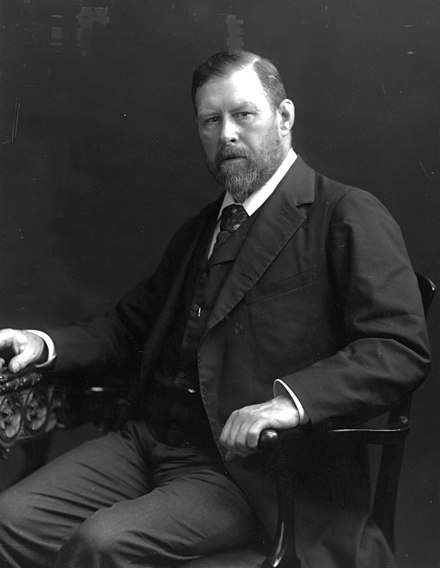
440px-Bram_Stoker_1906.jpg

Bram Stoker (1847 - 1912)

Beyond the Forest and Into the Dark: A Short Biography of Bram Stoker


Abraham “Bram” Stoker was, as probably everyone knows, an Irishman. This of course gives me a certain sense of pride, but not only that, he was also what we call a northsider, being born in Clontarf, on the north side of Dublin. Though Clontarf was and is an affluent suburb of the city, where property prices are far higher than, oh let’s take an example at random and say Darndale (!) and where the great and the good like to live - when they’re not on the southside that is - it is still on the north side of the city. Clontarf fronts onto the sea, is only literally a walk away from Fairview Park, and, incidentally, not that you care, a short distance from where I went to school. Stoker was born to a Protestant family, the third of seven children, a sickly child who spent his first seven years in bed. There is no information on what the illness was that laid him low, but his enforced time bedridden allowed his mind, if not his body, to fly free, and he thought about many things, the seeds of an embryonic writer perhaps already germinating in his mind.

Whether fate decided to make up for ruining his childhood, or whether his being restricted to bed had a positive effect on his growth, Stoker grew to be a giant, standing six two at a time when the average male height was about five foot five. He was huge, and not just tall: a real bear of a man, and excelled (no surprise) in sports and athletics. He was born at what could be described as an auspicious time, the same year as Edison and Alexander Graham Bell, two more men who would go on to make their indelible mark on history, though in different fields to his. 1847 also saw the publication of two important Gothic novels, Jane Eyre and Wuthering Heights, which provided some source material for Stoker’s later research.

And let’s not forget what was, at the time, the first real glimpse ordinary readers, through the agency of the Penny Dreadful, were able to experience vampires, as James Malcolm Rymer’s lurid but morbidly popular Varney the Vampire, or The Feast of Blood, was published, serialised in (sorry) bite-sized chunks for the easier digestion by the public, and to whet the appetite for more, more, more. All right, that’s all the food metaphors I’ll use for now. It’s quite clear that Stoker borrowed from this first popular vampire story, though he imbued what he appropriated with a sense of macabre majesty and grandeur, and true, dark but lower-key horror than had the excitable Rymer.

Ireland has always been a land of superstition, somehow treading a careful line between being the “land of saints and scholars” and being “land of the fairies and wee folk”; Irish people are, not uniquely but unusually, adept at believing strongly in Jesus Christ while at the same time firmly crediting the existence of spirits, fairies and other supernatural entities. The famous crying spirit, the banshee, is named from the Irish words for woman (bean, pronounced as "ban") and fairy (sidhe), so literally, woman of the fairies, and this notion has been exported well beyond its borders. Leprechauns, while nobody these days believes in them (unlike banshees) are also a product of the readiness of Irish people to believe in such beings - and, much later, to profit off and benefit from a nonexistent so-called feature of Ireland in a way few other countries have managed.

Death was a constant companion to the Irish, or any, poor in Stoker’s time. Life expectancies were low, mortality rates were high - more often than not, half or more of a family’s children would fail to survive to adulthood - and burials were, to be blunt, basic and hardly safe, with stories of bodies in a grave having to be disinterred in order to fit another one in, with the resultant noxious odours and sense of creeping terror such things engendered. So it’s not too hard to see why the young Stoker would have been fascinated - horrified maybe, but certainly drawn to the idea of death, and through ancient Irish beliefs, the notion too of rebirth of the soul. While vampires per se never had much of a hold in Irish folklore, there was no shortage of creatures who would go around stealing souls, or carrying victims off to fairy forts and castles where they would return, if at all, to find hundreds of years had passed.

This is only my own, more than likely wrong idea, but I consider the possibility that Stoker, a staunch Protestant, seeing the rise of Catholics in Ireland as the Penal Laws began to be relaxed and then repealed, may have even presented Dracula as an image of the unwanted power of the Papists rising like a horrible spectre from the dead to again threaten the living. But as I say, that’s based on nothing more than my own notions.

As if all that wasn’t enough, the young Bram entered the world in the midst of the worst famine Ireland had ever seen, or would ever see again, as the potato crop failed and people starved to death, the population of Ireland dwindling by a quarter as a million people died and a similar number fled the country. Though the Stokers survived the horror, a report in the Mayo Constitution, issued around the time of Bram’s birth, made clear how ghastly the scenes around the country were: “In Ballinrobe the workhouse is in the most deplorable state, pestilence having attacked paupers, officers, and all. In fact, this building is one horrible charnel house. . . . The master has become the victim of this dread disease; the clerk, a young man whose energies were devoted to the well-being of the union, has been added to the victims; the matron, too, is dead; and the respected and esteemed physician has fallen before the ravages of pestilence, in his constant attendance on the diseased inmates.”

It’s easy to see Stoker later anthropomorphising the dread spectre of death and hunger and disease into the stalking figure of Dracula, the grim reaper bringing death to all of London, misery where he passed, darkness falling, the killing of hope and joy, the silence of the grave. Whether he would personally remember the Famine or not is debatable, as he would only have been a child at the time, but no doubt the recollections of his older brother and sister, and those of his parents, to say nothing of neighbours, then newspaper reports and later research would have brought home to him how, to the people of Ireland at the time, it must have looked like the end of the world was nigh. Like Europe under the Black Death five hundred years earlier, there would have seemed no hope, and people would have just been waiting for death to take them, as helpless as Stoker’s vampire’s victims would become, transfixed, not by Dracula’s penetrating red eyes, but by despair, horror and hunger.

Victorian times of course continued the medieval practice of blood-letting, as it was firmly believed by the medical community (who were, unlike now, completely and utterly trusted and never argued with, nor would they accept any such criticism from a mere patient, whom they surely regarded as a much lower life form) that an excess of blood was the cause of many illnesses. The idea of someone taking his blood (since he was sick for seven years it seems likely he was bled frequently) and the natural revulsion to, and horror of such a procedure, may have been seen to have contributed to Stoker’s development of Dracula as a character. Given that one of the preferred methods was to use leeches, and that he later describes the count as a “filthy leech, exhausted in his repletion”, this seems a good bet.

To some degree, reading Stoker’s biography and all about his life is like seeing the genesis of his dark masterpiece coalescing in his mind. So many elements point to what would influence his later writing. His father worked in the ancient castle that housed the oppressive (though not to him of course) seat of the British government in Ireland, Dublin Castle, which would have been looked upon by many of his fellow Catholic Irish as a place of darkness and revulsion, an unwelcome outpost of the enemy in their own land, a cruel, arrogant, uncaring edifice that sneered down on the city of Dublin and whose masters made of its people their slaves. You can almost imagine a Catholic coach or omnibus driver stopping short of the dread structure, eyeing it with resentment and fear, and muttering “This far will I go, and no further.”

That scene, too, takes in Irish folklore, as allied to the banshee already mentioned was the tale of the Dulann, a headless horseman who was said to ride a huge black coach, carrying a coffin and drawn by four black headless horses past houses at the wail of the banshee, and that if it stopped at your door and you opened it a basin of blood would be thrown out at you. Though I’m familiar with the legend of the former I must admit this is new to me, but I will bow to the author’s superior knowledge on the subject, and assume he has done his research. Oh, and he quotes W.B. Yeats, so that settles it obviously. Charlotte, Stoker’s mother, is said to have heard personally the wail of the banshee on the passing of her mother, and the tales she told of growing up in the Cholera epidemic of 1832, which claimed over 25,000 lives, would also have struck a chord with him when he came to flesh out his novel.

Not only that, he would have (very young and second-hand) memories of the disease himself, as another epidemic struck as a result of the Famine, taking almost twice as many lives as the one his mother had lived through, raging across Ireland from 1847 into 1848. The spectre of disease, famine and death would have been a formative image in young Bram’s life, and the sight (or reports of) skeletal figures, more dead than alive, stumbling through the streets or collapsing on roads or in doorways or in fields, or anywhere they fell, would have affected him greatly when he grew up and remembered those times. Some might even say, given that he was born in the year that became known as “Black ‘47”, and later gave birth to the blackest, most evil figure ever to stride through the pages of literature and through the minds of men, that his birth could be in itself seen as a bad omen, a harbinger of death and misery.

Tales of the “coffin ships” that carried desperate Irishmen and women and children to the hoped-for safety of the New World, and on which many died, thus giving rise to the name, almost presage the situation aboard the Demeter, when the count stalks and hunts his prey on the ship as it heads for England. “[30 April] The fever spreads and to the other horrors of the steerage is added cries of those in delirium. While coming from the galley this afternoon, with a pan of stirabout for some sick children, a man suddenly sprang upward from the hatchway, rushed to the bulwark, his white hair streaming in the wind, and without a moment’s hesitation, leaped into the seething waters. He disappeared beneath them at once.”

[13 May] . . . I saw a shapeless heap move past our ship on the outgoing tide. Presently there was another and another. Craning my head over the bulwark I watched. Another came, it caught in one cable, and before the swish of the current washed it clear, I had caught a glimpse of a white face. I understood it all. The ship ahead of us had emigrants and they were throwing overboard their dead.”


While Bram was born into a time when women were supposed to be silent and subservient, submissive and obedient to their husbands, and take second place in all things, it’s quite clear that Charlotte wore, figuratively if not literally, the trousers in the relationship. She was certainly one of the old breed of strong matriarchal figures so prevalent in the Gothic fiction popular at the time; a woman whose word was law, who the family looked up to, perhaps even feared, and against whom not even her husband dared go. As such, hers was the mind that shaped that of her young sickly son, and she had very clear ideas about education and language. “A man’s mind without language”, she wrote, “is a perfect blank; he recognizes no will but his own natural impulses; he is alone in the midst of his fellow-men; an outcast from society and its pleasures; a man in outward appearance, in reality reduced to the level of brute creation.”

So she would have very much encouraged - even forced - learning in her son (about her daughters she could care less, snapping that she “didn’t care tuppence” about their education) in the hope he would, perhaps and probably, rise to far more ambitious heights than her husband, his father, who worked almost all of his life as a clerk in Dublin Castle, only attaining the dizzy heights of senior clerk twelve years before he retired, having spent a total of forty years as junior and then assistant clerk. Charlotte surely wanted better for her sons, and was determined they should not disappoint. In the event, her hopes were realised, as Bram’s elder brother Thomas became 1st Baronet and a famous and respected surgeon, while her second son would literally write his name in the annals of history, a name never to be forgotten or unknown.

Although Ireland was by no means known as a place of learning, outside of the monasteries and state-run schools, with over half the population unable to read, the hammer blow of the Great Famine pushed this as a necessity, as while you could be a farmer without having ever to read a word in a book, the over-reliance on that way of life had been partly responsible for there being so much death and hunger, and people began to wean themselves off the agricultural path and into those which not only promised better money and prospects, but allowed them to leave behind the dependence on the humble potato crop. These pursuits though - the law, medicine, the sciences, government, and even less salubrious posts such as shopkeepers or teachers - all required at least a basic working knowledge of the printed word. Luckily for Charlotte - and Bram - they were Protestants, and so no real avenue of education or advancement was closed off to them, unlike the poor Catholics, who were still banned from holding many positions by the Penal Laws.

But Ireland has a rich tradition of folk tales, mostly told in oral form, and by the mid to late nineteenth century there had begun a rising interest in such things, as, along with the resurgence in popularity of the Gothic novel and Penny Dreadfuls, books of fairy-tales, translate from French, German and even Arabic, began to crop up in bookstores and in the carts of wandering pedlars for sale. Stories like Little Red Riding Hood, Goldilocks and the Three Bears, Sleeping Beauty and Cinderella all made their way to Irish shores, where there was a ready market for them from people already familiar with tales of sprites and fairies. As he lay abed, Bram’s mother is likely to have read these stories to her sickly son, further firing his imagination with accounts of fantastical adventures, magic, evil and strange lands.

Unlike Irish and English fairy tales, which, while they preached cautionary tales, were more concerned with the idea of straying over to the dark side of paganism and a move away from God, German ones in particular seemed to take visceral delight in describing in gleefully graphic detail what happened when children - always children - didn’t do as they were told. One of the stories which may have had the most effect on the young Stoker is that of Oswald, the Night Wanderer, who is transformed into a bat and flies away. Uh-huh. This idea, while surely at least partially responsible for the linkage of vampires with bats, could also have given rise to the “children of the night” description Dracula gives the howling animals outside his castle; those who were seen to disobey, rebel or fight against the innate goodness and obedience their parents or other authority figures tried to instil in them were destined to be lost, cast out, wandering the trackless depths of the night, forever bemoaning their fate and, just maybe, plotting revenge on those who had abandoned them.

Another major influence on Stoker was the pantomime, performed at Christmas and featuring disparate characters drawn from lore, fairy tales, other stories and mythologies. One prominent character in these was often the demon king, and of course there were, as has already been laid out, numerous plays in circulation based mostly on Polidori’s The Vampyre, all of which would have given shape to Stoker’s later vision of his own demon king. Considering the change in him after his illness, it’s of course ridiculous but nevertheless intriguing to think that he had somehow drained the life-essence out of some doctor or other ministering person, as his count would drain Jonathan Harker, changing from a wizened, fragile and ancient figure into a powerful, strong, handsome and virile young man.

His mother, though, was to be disappointed if she expected him to gain academic honours. He barely scraped in through the entrance examination for Trinity College in Dublin in 1864, and once there proved a poor student, leaving in 1866 to join his father in a clerical post at Dublin Castle, but returning one year later and, while still no brainiac, excelled in sports and athletics, becoming one of the college’s most successful athletes, winning trophy after trophy, and also seeing the fruits of his imagination and interest in literature blossom in his presidency of both the Historical Society and the Philosophical Society, the only man ever to hold both posts.

In 1867 he met the man who was to have such an effect on his life - almost literally hold him in his thrall - and it’s interesting that a quote from him about actor Henry Irving could almost be read as one about his most famous creation, with the removal of one word: “a being of another social world.” Irving certainly wove a subtle spell around his new acolyte, and it’s hard not to see the genesis of Count Dracula in the tall, inspiring actor who would take him on as his protege. Other phrases in the same quote echo his future creation too: “(whose ridicule) seemed to bite; shrouded and veiled; handsome, distinguished and self-dependent (though of course Dracula, when Harker encounters him first, is none of these things, save perhaps the middle one); slumbrous energy; patrician figure; supreme and unsurpassable insolence; fine of manner.”
 
All of these words could refer to the count, and surely when Stoker began putting together his most famous character, Irving must have been on his mind as some sort of role model, his vision perhaps of the ideal man, a man even too good (or evil) to be merely human, a man, a figure, a creature above all others. His association with Irving, and his perceived lack of coverage of the actor’s talents, led Stoker to become a drama critic for the Dublin Evening Mail, through which offices he became known - though writing anonymously - as one of the great voices and authorities on the Dublin arts scene. His next major influence was the notorious writer, poet and all-round bad boy Oscar Wilde, with whom he developed a friendship, and the practice of Oscar’s mother, Lady Wilde, of drawing the curtains even during the day and seldom emerging till evening, as she tried to hide her fading beauty, surely influenced Stoker’s portrayal of the enigmatic count as a being who shunned the light and moved about only by darkness.

Oddly enough, it seems Stoker was almost as reclusive (or is seen to have been) a figure as his character, shunning the spotlight and releasing only the very barest details of his life - not that during his life anyone even wanted them, as he lived in the titanic shadow of Irving - making future attempts at writing his biography problematical at best. We can point to about three major influences/acquaintances that impacted upon his life, other than his mother. First is Walt Whitman, with whose poetry he was enthralled, and with whom, it is postulated, he first fell in love, even if he did not either recognise, admit or properly articulate his feelings for the man when he wrote to him. Second then is Irving, who would have so much control over his life that it’s really quite hard to see him as anything other than the model for Dracula himself, with Stoker playing the role of the hapless, impotent and powerless lawyer who gets trapped and slowly begins to die in his castle. Third then is Oscar Wilde. Other than these three, for a man who moved in literary and artistic circles, there aren’t any other major figures in his life to talk about.

He did marry, in fact the original sweetheart of his friend Oscar, but his marriage to Florence Bascombe, though it yielded one daughter, was always characterised as cold and passionless, the possibility being offered that his working for - some might say, and have done, slaving for Irving came between them, though if he was harbouring any sort of homosexual feelings (which, despite countless attempts in countless books on the subject has never been definitively proven) then his marriage may merely have been a typical Victorian show one, a duty, the thing to be done, or even a way to cover up his homosexuality.

Unable any longer to bear the cost of living in Ireland, with Abraham in deep debt and surely also wishing to put behind them tragic events such as the Famine and the cholera epidemic, Bram’s family divided - his father, mother and sisters going to live in Europe in 1872 and Bram, Thornley and his other brothers remaining behind. Bram’s literary talent, honed on the articles he had written for the paper, began to manifest itself more personally and directly as he wrote short stories, the first of which, “The Crystal Cup”, was published in London Society magazine the same year he was separated from his parents and sisters. It was a dark, gloomy, fatalistic story owing much to the work of Edgar Allan Poe, and utilising the kind of grim, forbidding imagery he would later harness in his masterpiece.

The following year he secured another job (in addition to working full time in the civil service and as drama critic for the Mail) with the Irish Echo, which allowed him to pour more of his literary imagination and even humour into the reports he wrote for the paper, and even a short story he had written, “Saved by a Ghost”, which saw publication on December 26 1873, continuing a tradition if not started by, then certainly popularised by Charles Dickens, of Christmas ghost stories. And it was during this time, while working for both papers and also writing his own fiction (and holding down a day job at Dublin Castle) that he met one of the few females who would figure in his life.

Actress Genevieve Ward was an American, perhaps the first he had ever met, and after reviewing her performance one night he made her acquaintance, later becoming fast friends with her. There are suggestions among some biographers of a romantic liaison with her, but there is no evidence to prove this, or indeed disprove it. She was, in any case, already married, to the dashing and surely jealous Count Constantine de Geurbel of Nicolaieff, aide-de-camp to the Russian Tsar, and who could also be seen as contributing, in Stoker’s mind (had he met him) to the character makeup of Count Dracula. Constantine’s own biographer wrote that his “personal power with both men and women was something inexplicably great. He was able to embarrass and lethargize the reasoning faculties, while intensifying the emotional.” Sound familiar?

Further evidence that de Guerbel may have provided some fodder for Stoker’s imagination comes when we read that he essentially jilted his bride, failing to be married for some time in a Russian church, the only way to legalise the marriage, and that when he was eventually ordered to by the Tsar, the bride’s father brought a gun to the ceremony and she herself wore black, her mother calling it not a marriage but a funeral, her daughter’s reputation and social standing seen to be already in tatters. But Genevieve reinvented herself, losing her singing voice to a bout of diphtheria and so concentrating on her acting, dropping her now-dead husband’s name and reverting to her own, and it was under these circumstances that she met Stoker. There was, however, no hint of anything other than friendship in their relationship, her letters to him headed “Dear Mr. Stoker.” His affections, if he had any for a woman, were reserved for one who was tacitly promised to another.

Again, the dearth of information about Stoker stymies any attempt to find out when, or how, or under what circumstances he courted Florence Balcombe, and whether this was with the approval of or under protest from Oscar Wilde, but by about summer 1878 they were engaged. However his marriage, due to take place a year from then, was hastily rushed forward when he received an offer (order really, command) from Henry Irving to join him in London, where he had bought the Lyceum Theatre which he wanted Stoker to run for him. It seems no discussion was had, no opinion elicited from his fiancee, and no argument (if there were any) would be accepted: he, and she, were going to London, and that was an end of it. Henry Irving had spoken, and Bram Stoker, with an almost Renfieldesque servility, rushed to his master’s side.

It’s an interesting aside that when Oscar requested the return of a gold crucifix he had gifted Florence when they had been together, it may have occurred to Bram that he could despatch the now-unwelcome presence of his now-wife’s former suitor by banishing him with the holy artifact, or, to quote the article directly: There were ample reasons for Stoker to think Oscar was unsavory, or somehow unclean. If you threw a crucifix at him, perhaps he would just go away. In the event he did not, exactly: Wilde moved to London, seeming to be following Stoker, but it wasn’t so. He had merely outgrown, in his own estimation, the confines of parochial (by comparison) Dublin and wished to move to a larger, more appreciative stage. Of course, while he for a time accomplished this, becoming the toast of London society, it was England which would be his ruin, as history shows us all too plainly.

But we’re concerned here not with Oscar Wilde but Bram Stoker, and less than a year after moving to London - and with no honeymoon, for Irving demanded all of his time, like the very vampire it is postulated he would be created into, sucking all of the energy and attention out of his young protege as he could - he and Florence had a son, their only child. To nobody’s surprise (and possibly above Florence’s objections, though this isn’t recorded) he was named Irving Noel Stoker, though he dropped the first part of his name as soon as he could, and was ever after known as Noel Stoker.

Somehow, among all this slavedriven workload, Stoker managed to put together a collection of dark fairy tales called Under the Sunset, in 1881, in which a passage seems to be almost reproduced later at the beginning of his classic novel, for which he would begin taking notes a decade later.

Pass not the Portal of the Sunset Land!
Pause where the Angels at their vigil stand.
Be warned! And press not though the gates lie wide,
But rest securely on the hither side.
Though odorous gardens and cool ways invite,
Beyond are the darkest valleys of the night.
Rest! Rest contented.—Pause whilst undefiled,
Nor seek the horrors of the desert wild.


The next year, as Irving began to talk of plans for an American tour, Oscar Wilde would achieve something Stoker could only at that point dream of: he met Walt Whitman in person, and the two got on very well. A year later Stoker would finally meet his idol. It was a great joy for both men, and Whitman made him promise to come visit him at his home, as he originally met them at the residence of another acquaintance. In 1883 he did so, and enjoyed the great poet’s company, making a fine impression on the man himself, as they talked of such subjects as the tragic killing of Abraham Lincoln.

Bram Stoker began taking notes for his new novel in 1890, when he visited the southern Yorkshire town of Whitby, which would become the point in the book where the old world and the new met, where Dracula would finally set foot (or, as it happened, paw) on English soil. He researched diligently for the next seven years, and this was a man who knew what research meant! From reading geographic travelogues about Romania, noting descriptions of buildings and people, to confirming the exact times of the arrival and departure of trains, so as to be accurate. Previous treatments of the vampire myth, as we have seen, mostly if not not all based on Polidori’s The Vampyre, had set the story in Styria, now in modern Slovenia (had this anything to do with the word hysteria? I don’t know, but you’d wonder), as a strange, unfamiliar, dark and largely backward country where superstition held sway and where such things as vampires could be seen to exist, at least for literary purposes. Stoker more or less followed this rule.

He chose Romania though as his setting, settling on Transylvania - literally, the land beyond the forest - as the location for the count’s castle, and where the action for the first part of the book would take place. He never personally visited the country, but gained all the information he could through books, as I said, and anyway, so little would have been known of such places by mostly insular Britons that it really is unlikely to have mattered how accurate or realistic his description was. In addition to that, it was after all fiction, and Gothic horror fiction at that. He wasn’t trying to write a detailed travelogue on the country.

The novel, originally to be called The Un-Dead, but its title changed at the last moment, hit the shelves in 1897, and was a hit, however it did not establish him as the respected author he had hoped it would. His “friend” (read, master) Henry Irving is said to have dismissed it in one disdainful word: “dreadful”. Then again, Irving was a vain, egotistical, mean bastard who probably hated anyone else to get attention or notice, or indeed credit, much less Stoker, whom he would have seen as little more than a servant, so he probably never even read the thing. Reaction to the novel though was mixed, and Stoker came in for a lot of criticism, many people not taking it seriously, dismissing it as Irving had done, or tearing it to pieces in an almost symbolic imitation of the actions of the count himself on his victims.

Stoker continued to write, but none of his novels after his opus gained much attention either, and he died, not penniless but certainly not celebrated, in 1912 at the age of sixty-five. A man who had been born into death and tragedy, he ended his life the same way, passing four days after what was the biggest maritime disaster and loss of life when the RMS Titanic sank on its maiden voyage. None of the obituaries mentioned his seminal work; in fact, most referred to him only in the same breath as Irving, allowing the dread master of his fate to retain his control over him even in death (he had died a few years previously) and drag him down into the abyss after him.

Of course, like many writers, his genius was only acknowledged long after his death, and now he is celebrated the world over as very much the father of not only the world’s most famous and enduring vampire, but of almost all vampire fiction that followed. It is universally agreed that he wrote one of the nineteenth century’s greatest works of literature, on very much a part with Mary Shelley’s Frankenstein and authors such as Edgar Allen Poe.

In death, it seems, Stoker achieved what he never did in life, which was to establish himself as his own man, speak with his own voice, not as the mouthpiece or puppet of another, more controlling one, and though his name is still linked with Henry Irving, it is today the man who created Dracula whom we remember most. The weakling boy from Dublin, had come back to life via the Carpathian Mountains, and looms large over a multi-billion dollar industry that might never have been born had it not been for him.
 
440px-Dracula_1st_ed_cover_reproduction.jpg


Title: Dracula
Format: Novel
Author: Bram Stoker
Nationality: Irish
Written: 1890 - 1897
Published: 1897
Impact: 10

Synopsis: Who does not know this story? If you haven’t read the novel then you’ve surely seen the movies, but here’s a quick rundown. Solicitor Jonathan Harker is sent by his law firm to oversee the final preparations and have papers signed by the mysterious Count Dracula, who lives in Transylvania and wishes to move to England. Once he arrives, Harker finds himself trapped in the mouldering castle, where strange women seem to seduce and then attack him, and he gets weaker and sicker while his host, the eponymous Count, originally an old, frail and wizened man when he met him, gets younger and more virile and stronger by the day. Harker’s stay is extended by the Count, who seems unwilling to allow the lawyer to leave. Meanwhile, back in England, his fiancee, Mina, awaits news of her husband-to-be anxiously, and is troubled by strange dreams, as is her best friend, Lucy Westernra.

Leaving Transylvania and his ancient castle behind, Dracula takes a ship, the Demeter, to England, on board which mysterious deaths occur as he stalks the crew, and on its arrival a storm whips up, driving the ship towards Whitby and wrecking it. Dracula comes ashore in the form of a huge dog, and Lucy, who has joined Mina there on holiday, begins to sleepwalk. Her health also deteriorates, and her admirer, Quincy Jones sorry Quincey Morris - one of three - calls in his friend Dr. John Seward (also an erstwhile suitor for Lucy’s hand) and Arthur Holmwood, whom she has chosen. Despite the rivalry between the three, it’s all good English gentlemen together (even though Morris is an American) and they remain friends, all desperate to do everything they can to help the woman they all love.

Mina, having received information that her fiance, escaped from Castle Dracula, is recuperating in a hospital in Budapest, goes to join him, while Seward calls in his old teacher, Abraham van Helsing. He believes he knows what is wrong with Lucy, but refuses to divulge this to the others for fear of their ridicule. In the event, despite his attempts to ward off the vampire, Lucy is taken by Dracula and though buried, she returns to stalk the town, gaining the horrific reputation of the “White Lady” who haunts the graveyard and eats children. Van Helsing, confiding to the others what he knows, goes with them to where Lucy is buried and they stake her, behead her and that’s the end of her.

Harker and Mina return from Budapest and join the hunt. Mina is attacked by Dracula and cursed to become a vampire unless the boys can kill him. They close off all avenues of escape to him - by rendering the coffins of earth he brought with him useless, and van Helsing reveals that the vampire must lie in the soil of his own country to survive - and basically chase him back to Transylvania for the big confrontation scene where they kill him. Harker slashes him across the neck and Quincey stabs him in the heart, but he dies of wounds already inflicted upon him by the vampire. Dracula turns to dust, probably cursing the fact that he ever left home, and the spell over Mina is broken.

An entire industry, almost, has arisen to tackle the examination, criticism and exploration of this seminal book, with so many theories and themes that it’s almost impossible to take it at face value, which is, as a horror/Gothic novel. So many subtexts have been either woven into the narrative (or been perceived as having been) that to some extent it’s lost its original meaning, and stands for everything now from Victorian sexual repression to comments on, I don’t know, consumerism and nationalism. But while I will explore many of these, I will try to also form my own ideas of what I feel the novel may represent.

One thing it is most certainly not, despite what Francis Ford Coppola’s 1992 movie would have you believe from its strapline, is a love story. Stoker didn’t do love, at least, not love between a man and a woman, as evidenced by his joyless, almost sexless marriage. He would not have had either the courage to directly speak of, or even realised perhaps the nature of, attraction between two men and if this is part of the subtext then it has to be very much hidden. Such ideas would be frowned upon in Victorian society, and while Oscar Wilde might have been a braver man than Stoker, look what it cost him. So on the surface it’s a horror, adventure story which brings in elements from folk belief and the inherent heroism of the English (and one American, who gets killed off) and taps into some of humanity’s greatest fears, with the bad guy defeated and the good guys triumphant.

But it can also be looked upon in some ways, I believe, as a deeply misogynistic story, or, to be fair to Stoker, reflecting accurately the prevalent attitude towards women at the time he wrote it. It’s hard, given his believed aversion to relationships with women (he had female friends, as we’ve seen, but never attempted any sort of deeper intimacy with them, so far as we know) to see this as anything other than a sort of punishment from God on loose women, kind of Jack the Ripper style, if his motivations are to be accepted. The women in Dracula are all weak. Lucy is the worst. Yes, she becomes a vampire and therefore strong for a time, but only under the aegis of the vampire who has made her so; she must surrender totally to him - surrender as totally as anyone can, giving up their very life - before she can be the nightstalking killer she becomes. And she doesn’t last. The - exclusively male - party deals with her, doling out the ultimate punishment, and can a stake through the heart be seen as anything other than a form of rape when applied to a woman? A long, hard, rigid stick penetrating her very core?

Mina is allowed to live to the end of the story, but only really as a motivating force for Harker and as a kind of echo-locater for the men to track down Dracula and kill him, and she takes no part in the killing herself, leaving it to the men to rescue her immortal soul. She is no stronger than Lucy, submitting to the vampire and allowing her life-force to be drained by him. She shows a certain strength in rushing to Harker’s side when news comes that he is in a Hungarian hospital, but in a way that’s just what’s expected of any Victorian fiancee, so it’s nothing terribly special. She never joins the fight, never tries to get Dracula back for what he has done, and spends most of the book pining over Harker and offering glib advice to her friend as to her romantic inclinations.

Lucy is seen as a very loose woman, her initial inability to choose between the three - count ‘em, three! - suitors and her sigh that she wished she could choose them all (surely a shocking comment to make in strait-laced Victorian times) marking her as a woman of dubious morals, and again weak, in that she can’t make a decision; slightly spoiled, too, as she wants to have her own way, have her figurative cake and eat it too. And by characterising her thus, I feel Stoker makes us as the readers unsympathetic towards her, it being reasonably clear what’s going to happen to her. The message here surely can be nothing other than that bad women get what they deserve; bad girls get punished. Had Lucy been of stronger moral fibre, perhaps she could have (in theory at least) resisted the advances of the vampire, but as she has already had her will weakened in being unable to decide who she will marry, she’s a perfect target for the fiend, and goes down as easy as water down a plughole.

There are, I think, no strong female characters in the book. It’s very much a male-driven story, with essentially one major male bad guy and four male good guys, chums bonding together to take on the evil one, with along the way some totty for eye candy and narrative purposes. It’s telling that, Harker himself aside, Dracula only targets women for his unearthly lusts. There’s very much a sense of the establishment of the dominance of the male over the female, with the latter utterly helpless to resist, and even aside from the vampire, the men dominate the women in every way, taking the lead, taking charge and eventually saving one of them while releasing the soul of the one they couldn’t save by, um, slicing her head off and stabbing her. And filling her mouth with garlic. Was Stoker figuratively shutting up all womankind by stuffing up Lucy’s mouth? I’m sorry; it looks like our time is up. Same time next week?

Anyway, I’m no psychoanalyst, so anything I say here probably doesn’t carry much weight, but it seems to me that there are definite undertones of violence towards women and a sense of almost revenge from Stoker: this is what you get for not letting me express myself as I should! Even Lucy’s mother is killed off, and as for the three vampire brides in Dracula’s castle, well, they don’t last either, slain by van Helsing near the end of the book. You could possibly consider them strong female characters, as Harker is helpless before them, but again their power comes from a male figure, the male figure, and when Dracula commands them to leave Harker alone - “This man is mine! I want him!” - they shrink back in terror, so what real power have they?

It strikes me too that there’s a certain sense of xenophobia here. Dracula, the ultimate outsider, the quintessential foreigner, comes to English shores and quite literally takes our women. He is a threat, an unwelcome visitor, and he brings with him his dark, evil ways, corrupting and warping England (more than it is already corrupted) and eventually is dealt with as in most pogroms down throughout history. The distrust of the foreigner is written large in this novel; from the first time Harker arrives in Romania he is aware of being different, of being watched and suspected, and he feels the same sense of unease and disquiet towards the Romanians, wishing he was home in England. It’s hard not to see Dracula’s arrival in, and almost immediate rampage through good old Blighty as an invasion, an attack on English morals and values, evil being literally imported - or importing itself - onto our shores. The cry could easily be raised for the vampire to “go back where you came from”, not that he’d take notice.

As has been endlessly discussed, and reading his biography you’d have to give it some credit indeed, the relationship between Henry Irving and Stoker can be seen to be mirrored in that between Dracula and Harker. The lawyer is imprisoned by the vampire in his castle, called there by him (through the law firm) in a very similar way to how Irving called - ordered - Stoker to come to London and run the Lyceum theatre for him, ensuring he was at his beck and call whenever he needed him. In a very metaphorical way, Irving fed off Stoker the way Dracula feeds off Harker, draining him of all resistance with absolutely no regard for or interest in his own welfare. While Dracula stands in the way of Harker and Mina’s marriage, Irving prevented them from having a honeymoon and it must be said drove a wedge between them that killed any chance they had of having a proper marriage as effectively and brutally as the stake driven through Lucy’s heart. Florence once accused her husband of being more likely to mourn the death of Irving than that of their son, to which the author snapped that they could always have more children, but there was only one Henry Irving!

Irving, despite his callous and offhand manner with almost everyone, his superinflated ego, his contempt for all and his arrogant belief in his own superiority, nevertheless attracted just about everyone he interacted with, as if they were under his spell. He was a dark, malignant presence that nobody seemed proof against (other than perhaps Florence, and she didn’t count as she had no sway over her husband, least of all where Irving was concerned). He seemed, from what I’ve read about him, to have little or no moral code beyond satisfying his own needs, and almost comes across as something other than human. Surely Stoker, even subconsciously, must have been thinking of him and the relationship they shared when he created the character of Dracula?

A seeming fallacy that has persisted is that Stoker based the count on Vlad III Dracul, known as the Impala, sorry Impaler, but the research I’ve done seems to show general agreement that this is not the case. While doing his own research it appears he came across the story and took the name because he liked the sound of it, but it looks just to have been coincidence that the man whose name he gave to his greatest creation was also an evil one who had a thing about cruelty and blood. In fairness, there’s very little of Vlad III in Count Dracula. He doesn’t impale people, he doesn’t dip his bread in their blood, and he’s not a prince guarding his realm. He may not even be a count; for all we know, this could be one of many assumed identities the being known as Dracula has assumed on down the centuries, or even longer. No information is given, no hint offered to how old the vampire may actually be (though when he crumbles to dust at the end it may be inferred that he was only keeping his body together by magic and sheer force of his evil will, and by utilising the life energy of others), or where his title came from.

So really, when you look into it, there’s no reason to believe Stoker based Dracula on the Wallachian prince. It’s far more likely he’s an amalgamation of the legends, beliefs and fears of the folk of eastern Europe, a distillation of the vampire myth shaped to Stoker’s purposes. As I wrote in another section, vampires in folk belief were meant to be monsters, shambling, sub-human creatures with no real brain and no goal other than wanton destruction, and were restricted to the graveyard wherein they had been buried. This would never have done for Stoker, so he had to change the myth, borrowing liberally from Polidori, Rymer, Le Fanu and even Byron to come up with the archetypal vampire. Dracula begins as a feeble, weak, pathetic old man - who yet has the power to inspire dread and terror - and metamorphoses into a strong and vibrant messenger of evil, the perfect synthesis of power and darkness. It’s undeniable that his intention, his nature never changed, but now he has the strength and the shape to carry out his evil will to its fullest, and slake his eternal thirst.

And how did Stoker see himself in the novel, or did he? I don’t think it’s any great stretch to see him in the role of Harker, initially weak and cowed, bowing to the demands of his new master, trapped in a cycle of death, violence and heady lust from which he can’t escape, though when he does, he is able to take his revenge on the creature who had made his life such a misery. But I personally see him more in the revolting and yet somehow pitiable figure of Renfield, Dracula’s true slave, who sits and eats insects and other things in an asylum, waiting, praying, begging for his master to come and deliver him. How can you look at this mockery of a man, crouching in filth and ignorance, longing to be debased and used and humiliated and even killed if it suits his master’s purposes, and not see the willing form of Stoker, inviting degradation and contempt from Irving? And in the end, Dracula treats his faithful slave as Irving did, by using him to his own ends and casting him aside.

I don’t intend to go too deeply into the sexual themes within the novel, not because I don’t want to broach such a subject, but because men and women far cleverer than I, who have studied the novel far more deeply than I have (I think I’ve read it through twice, maybe three times) have already done this idea to death. Nevertheless, any appreciation or review of Dracula would be incomplete without at least acknowledging the element of sex in it. It’s pretty carefully hidden, so that the average reader, certainly at the time, could either ignore it and pretend it wasn’t there, or (rather unlikely but I guess possible) miss it altogether. But when you have a dark monster entering women’s bedrooms and sinking his teeth into their necks, draining them of their will as well as their blood, and claiming them, and the reaction from these women to these assaults, it’s definitely a form of rape, even if tacit approval is given. If you, as a woman, are hypnotised into allowing a man to make love to you, do you consider it consensual?
 
There’s a pretty strong sense of abiding love between the men too, even if this is only barely skimmed over and they’re treated more as all lads together on a grand adventure, and Harker’s love for Mina and hers for him is certainly undeniable, one of the main things that keeps him alive, induces him to get out of the castle and escape from the women (I mean, having your blood sucked aside, the idea of three beautiful girls making love to you every night does have its advantages) and to save her in the end. I think though that those who talk of a sexual bond between the vampire and Harker are reaching; nowhere in the novel do I see him profess love for Dracula. On the contrary, he is repelled by him, disgusted by him, terrified of him. The count, of course, tells the women Harker is his, but this is more a case of his being the vampire’s property, the source of his life-renewing (or un-life-renewing?) energy, and it’s really more a nineteenth century version of Dracula warning the women not to touch his stuff. Harker might almost bear a label: PROPERTY OF DRACULA. HANDS OFF.

In terms of vampire literature though, this is where it all comes together. The previous authors have laid down the framework, but it’s Stoker who puts it all into one manageable whole, he who takes the skeleton and clothes it in flesh and looses it on the world, he who takes what others have begun and creates the first, and most lasting, of the literary vampires. Some aspects from previous vampire stories and novels are retained, some are not. The idea of moonlight healing a vampire, so prevalent in Polidori’s story, is nowhere mentioned here, nor I believe is it again. Polidori’s vampire, as Le Fanu’s and Rymer’s, and even Byron’s possible one, all seem to begin as more or less vital humanoid figures and undergo little change, whereas we meet Stoker’s Dracula as a frail old man, who gets younger and stronger by sucking the blood out of his unwilling visitor. This is, I think, the first time that the vampire figure uses the drinking of human blood not only to sustain himself and satisfy his devilish thirst, but to renew himself, to remake himself and almost rise from the dead, or from very old age. Using the power of the blood (“The blood is the life!”) he can actually combat time, force it back and reverse the ageing process.

To my knowledge, none of the previous vampires, other than Carmilla, refused or did not consume food. Dracula pretends he is simply not hungry, but it soon becomes clear that he is unable or unwilling to eat, or uninterested in human food. Blood is what sustains him, and terror, and possession of the will. Like Carmilla - and only her, up to that point - Dracula can change his form into that of an animal. He first appears as a dog, then as a bat, but not only that, he can perform extraordinary feats of strength and agility, this last displayed when Harker sees - as he thinks, in a horrible dream - the count crawling, insect-like, up the side of the castle. Though the moonlight can’t revive him, Dracula’s power seems to be at its height during the night, and he avoids the sun, something touched on in Carmilla, who sleeps through the days, though she does seem to be able to walk in the daylight.

If Dracula resembles the format of any of the previous treatments of the vampire legends, we have to go back to Byron, whose A Fragment is literally that; a tiny snippet of what should or could have been a longer story (and became one, in John Polidori’s perhaps plagiaristic hands) which takes the form of a letter. Stoker’s novel is made up exclusively of letters, journals, newspaper reports and is what is called an “epistolary novel”, which is to say, there is no single narrator and it is made up of extracts like the above. Where Dracula differs from A Fragment is that the narrative is all in the present tense; Byron wrote about an event which had taken place, which he was now relating later, whereas Stoker tells it as it happens, giving very much a sense of immediacy to the story, and making us feel as if we live it through the eyes (and pen) of the various internal authors.

It’s perhaps interesting, though not that surprising, as you’d hardly expect Dracula to keep a journal, that there’s little actual dialogue from the title character. Other than his speeches in his castle to Harker, Dracula is, to some extent, almost a passive character once he leaves his home, spoken of, referred to, but seldom speaking for himself. You might see him as a moving narrative device, being utilised by each character as he enters or impacts on their life, the effects of his interaction with them then being related by that person. In later versions of the tale, of course, he will assume complete control, but it’s telling that here he depends on the words of others mostly to direct his actions. In that respect, you could almost make an argument for his being the weakest character in the novel, being buffeted by circumstances from place to place, and finally driven back to his starting point, where he, no longer needed or wanted, is eliminated as the story comes to an end.

And again, though later versions would address this, there is no attempt by Stoker to either justify the Count’s behaviour or explore the reasons behind it. There is literally no backstory. Nobody knows - or, I guess, cares - where Dracula came from, what made him into who and what he is, whether he had any choice in the matter and whether or not he is just trying to survive. In typical Victorian attitude, he is Evil, and there is nothing more to be said. Evil with a capital E. The Bad Guy. No redemption, no understanding, no analysis. And oddly enough, nobody asks who he is or where he comes from (other than the literal origin, as in, Transylvania) or even why he’s targeting Lucy and Mina. It’s not seen as being important. He’s evil, and that’s enough. Evil is evil because it’s evil. He’s a servant of the Devil, and abhorrent to God. There is no sympathy for him, and the novel is fiercely and determinedly, and almost in a blinkered way, very much black and white.

Future authors would not only expand on the vampire myth, but delve - some quite deeply - into the life, or unlife, the past at any rate of the vampire, some of them referencing events way back in history, to show how old the vampire was and perhaps to give him a sense of realism too. If you can think of a vampire who exists today being, say, the shield-bearer for Alexander the Great, or helping Columbus discover the New World, he feels more real, more… there. And this I think also then almost humanises him, in a way writers like Anne Rice and Charlene Harris would later attempt, mostly successfully. You wouldn’t think it, from the way Dracula is portrayed here as a slavering, amoral, pagan and evil monster, but through the writing of these and other authors we would actually come over the years to sympathise with, understand and even grow to love vampire characters. Not so for Stoker’s fiend though. There are no ambiguities in his novel.

The good guys are good. There’s not even the hint that one of the three men who vied for Lucy’s hand might have darker pasts or deeper feelings on losing her. It’s quite unrealistic in that way. Two men who have fought for one woman are unlikely to remain friends with the third, who won her. It just would not happen. There’s never even any sign of tension, jealousy or even schadenfreude when Quincey loses Lucy, and then his own life. Harker is never anything but a good guy, no stain attaches to him, and his enslavement by the vampire brides is never brought up. Everyone (other than Quincey, Lucy and of course Dracula) lives happily ever after in this dark and at the time modern fairy tale.

I feel compelled though to point out that in giving Harker the profession of a solicitor, a lawyer, Stoker may very well be saying something about the business. At a time when his contemporaries like Dickens were loudly and savagely lambasting the trade in novels like Bleak House, and in an age where lawyers were thought of, and often described as bloodsuckers and leeches, draining clients of their financial life blood for the maintenance of their own living, was Stoker taking revenge on the law profession, giving it a taste of its own medicine? Having been a bloodsucker for so long (though possibly not him personally) was Harker being drained as a figurative backlash against the system, a triumph for the people who had lost all their money in endless court cases, a case of, um, the vampire strikes back? Maybe not; I guess Harker would have to have been a lawyer in order to necessitate his being in the Count’s castle, but I do wonder.

There is, of course, a strong sense of religion running through the novel. Well, when you have basically the devil as your main antagonist, it only stands to reason that God is going to be in there too doesn’t it? The religious imagery used to fight Satan I mean Dracula does not, I think, necessarily come from folk belief, as much of that was pagan anyway, but I’d have to check. I feel the idea of using the crucifix to stop the vampire was a crude way of showing how God - and religion - triumphs and prevails over darkness, the same as with the sprinkling of holy water and the placing of Communion wafers in Dracula’s coffins to preclude his lying in them. But garlic was a long-held remedy against the Undead, and Stoker uses it here, first by Van Helsing as he tries to protect the sick and dying Lucy - his efforts would have succeeded had it not been for the naivete of Lucy’s mother, who removes the garlic and dies as a result, as if Stoker is punishing her for not obeying the strict orders of the male authority figure, and later, when she is undead, as a protection against her coming back, though how she would do so minus a head is puzzling.

One of the ideas Stoker had in Dracula, but which sadly was never carried forward and adopted into later vampire literature, was the idea of being unable to capture his likeness. In his time, the only real way to do this was by being painted, as photography was very much in its infancy, but the same would have held true for photographs or movies with the vampire on them. The premise went like this: if Dracula were to sit for a portrait, or someone sketched him unawares, the resultant picture would look nothing like him, would look entirely like someone else, as his image could never be properly captured. The logic behind this being, I think, that Dracula was not of this world, and in today’s scientific terms might be described as a being from another dimension impinging on our reality, thus not really here, thus unable to be captured. I guess the idea survives somewhat in the mostly accepted belief that vampires can’t be seen in mirrors, for presumably the same reasons.

I also find it all but unbelievable that an agency of defeating the vampire which went forward from his wellspring of vampire lore and literature was not actually in the book. When Harker and the others come upon Dracula it is almost sunset, and, while it could be said the Count is despatched in the rays of the dying sun, almost but not quite able to rise, not until the sun goes down, the trope would quickly develop that the rising sun would destroy the vampire, burning him up like a torch. This is not addressed here at all: the sun is an enemy, not a friend, for when it sinks below the horizon Dracula will rise and be powerful and deadly, and quite probably invulnerable. The rising of the sun, half a day away surely now, will not help the adventurers kill t their adversary, and again in a departure from what would become canon, Dracula is not despatched by a stake through the heart, or beheaded or set on fire. A simple dagger thrust (well, two) are enough to rid the world of this monster.

One can only assume that Stoker had not quite worked out what was necessary to kill the vampire king (although that’s not true, as he was quite clear on how Lucy and later the vampire women were to be dealt with) and just went with his best guess, but it’s hardly iconic is it? Dracula slashed across the throat and stabbed in the heart (if he has one): not quite the stuff of legends, which may be why it was changed. It will be interesting to see who, where and for what reason it was changed; who was the first to introduce the whole death-by-sunlight and staked-in-the-heart idea (Stoker claims the latter but has not embraced or even thought of the former, so who put them together?), establishing a clear idea in the literature of the best way - perhaps the only way - to kill the Undead?

Renfield is a character I just don’t get. He doesn’t seem to do much at all in the novel and I feel that in some ways he was merely put into it to allow Stoker to indulge all the worst excesses of horror that he wished to depict, but could not do so with the other characters. A “shock value” player I believe, and certainly one of the most repulsive creatures ever, more closely tied to Igor in later Frankenstein adaptations than anything to do with vampires. Later works would have those who fell under the vampire’s spell and swore to serve them, often allowing themselves voluntarily to be drained - though never to the point of death - maybe in the hope of one day being turned, that is, made a vampire themselves, or assisting by sourcing and delivering to their master fresh victims, but there has never, to my knowledge, been again a character like Renfield. I guess he certainly made an impression, but a bad one, and later writers were not interested in extending his short legacy.

The idea of the dreary, ruined, cold and dark castle is of course a familiar trope in Victorian Gothic literature, featured in such disparate works as Poe’s The Fall of the House of Usher and Peake’s Gormenghast trilogy, as well as, of course, the original, Walpole’s The Castle of Otranto, though here, possibly for the first time, Stoker gives the dread mansion an occupant just as dark and evil as his abode. Gothic literature tended to rely on a sense of suspense, the idea that something awful was lurking in the shadows, but more often than not it either was never shown or turned out to be something quite human and mortal. An old relative, locked away and gone mad. A murderer taking refuge. A child who had some strange defect and had been imprisoned in the house. Here, for (maybe) the first time is a real, honest-to-Satan, in the flesh demon, stalking the halls of his home with arrogant superiority and contempt, and evil intent. The half-glimpsed nightmare come frighteningly to life, the old stories some true, the shadows taking on an actual form. Evil, to use modern parlance, is in da house.

You have to wonder about Quincey too. Of the five men he’s the only one who dies, and of the three men he’s the one Lucy chose. Has she, in submitting to Dracula, not only sold her own soul but that of her lover too? He’s also the one who has the dubious honour of killing her, and later puts an end to her master too; has she cursed, or passed on the curse that has fallen upon her, to her intended? Was Stoker trying to say that by associating with, and being identified with Lucy, the American was dooming himself, was taking upon his own soul the darkness Lucy had embraced? Till death do us part? Was he aligning them in evil, the sins of one becoming those of the other?

Another telling point is that, of the six female characters in the novel, only one survives, and that through the intervention (rescue) of the males. Admittedly, one male dies (two, if you count Dracula and indeed three if you count Renfield) - and this is of course discounting the crew and passengers on the Demeter - but in terms of percentages and ratio, the female side fares the worst in this battle, if you will, of the sexes. Even the sole survivor, Mina, is marked by her experience and is never likely to be the same again. She’ll certainly sleep with the gaslight on for a while, that’s for sure.

I can’t speak for Varney the Vampire or indeed The Vampyre: A Tale, as I’ve yet to read them, but I’m pretty sure Carmilla played out differently, and it seems to me that Stoker was the first to create what I possibly might call the “secret adventure” style of book, where no matter how great the danger, and the fact that it affects everyone, a small band of one or two people, or slightly more, must operate in the shadows, alone, without recourse to any sort of assistance from the authorities. Mostly, I feel, this is because firstly, to enlist the help of, say, the police would be time-consuming, as, in this case, Harker and his friends would have to try to convince them that they were not mad, which would be no easy task. Of course, if they did manage somehow to convince them, panic would surely ensue, making the job the harder.

But there’s also perhaps what you could refer to as the superhero complex here, the idea that these people, and only these people, must save the world/England/Europe/all life from the evil they fight, that only they can do this and they must do it alone. I guess it makes their job harder, taking away any resources they might normally have access to in such an investigation, and thereby the triumph the sweeter. Also, if, as often happens, someone must die in the course of the adventure, it needs to be hushed up, as the law tends to take a very black-and-white view on murder, with few extenuating circumstances considered. And, of course, as in all such enterprises, the more people who know about it the bigger the chance it will fail, as someone either falls victim to the evil or decides their path might be easier if they throw in their lot with it.

Overall, the work must be done in secret, the victory - if there is one - must be celebrated in secret and never spoken of outside the circle, and if necessary, a cover story must be invented and stuck to by all participants. This tends to hold true for most vampire novels from here on in; you rarely if ever see the police, the government, the military or any other authority involved. I don’t say never, but the trope Stoker seems to have developed here runs mostly along the lines of keep the circle small and secret the better to succeed, and this is followed in most of the stories that come after, build on or are given birth to by his novel.

The battle in Dracula is, of course, at its heart and at a very basic level, the age-old struggle of good versus evil, with, as I noted above, no doubt as to who is on which side. It’s also, almost by association, the battle of religion versus superstition, lore against reality, ignorance versus science and the ancient world versus the enlightened one, both meeting in a truly terrifying way, as Stoker’s characters realise that the monsters they were always told never existed were there all along, not under the bed but lurking in a castle hundreds of miles away. On another level, too, as already indicated, it’s a battle between cultures: the strange and foreign versus the comfortable and the familiar, the “godly” against the “heathen”, England against darkest Europe.

It’s also possible that, given Stoker’s fierce Protestant upbringing and his mother’s hatred of Catholics, that Dracula and his dark lore are standing in for the older, more superstitious (as Protestants saw them) practices of Roman Catholics, the Count himself a dark Pope, ready to come over and rend and rip the country’s “true” religion with his bloodstained hands. Ever suspicious of each other, Dracula could be read as the Protestant Ascendancy fear that Catholics were growing too powerful as the Penal Laws were relaxed and then repealed, and that their way of life, their very faith was under threat from this “foreign power”, ie Transylvania taking the place of Rome, where another “dark prince” watched England with (as they would believe anyway) hate-filled and envious eyes, and plotted how to bring it again under his yoke.

And as there is a battle going on between faiths, and as this is 1890s Victorian England, God has to win, but unlike the braver Mary Shelley, whose Frankenstein does not end well for either protagonist and says a lot about hating others just because they’re different, Stoker I feel takes the easier way out, the happy ending (even though people die, the vampire is defeated in the end and the good guys win the day) and in this, for me, though I love the novel, misses an important opportunity to explore further, as Shelley did, the very nature of humanity, evil and faith. To some extent, Stoker’s characters are a little cardboard-ish, caricatures of Victorian adventurers who take on all comers and, despite losing one of their number (and after all, he’s only an American, not a God-fearing Englishman!) win through. Hurrah!

Although there had been a few vampire stories, novels and plays before this, most of them had taken what they wanted from the vampiric legends and discounted what they did not. Stoker, to be fair, did this too, but his is the most complete and comprehensive early image of the vampire we have in writing, and in terms of research, nobody except maybe Byron had done more. However, Byron contemptuously told us that he did not have any interest in vampires (making it, to me, more and more likely that Darvell was no vampire, nor intended to be) so Stoker is the first to put it all together and with the enthusiasm of a real adherent of the lore. He may have seen, with the massive popularity of Varney the Vampire and later Carmilla, the appetite (sorry) for vampire stories, and tailored his novel to that need, but he surely saw too that nobody before him had done it properly, and determined to set that right.

The truth is that Stoker should have earned the title held today by Stephen King as the master of horror, but he did not. Though Dracula was well received it made him little money and brought him little fame, and a screw-up over copyright meant that an American version was able to be printed and sold without his getting any royalties at all. In a similar manner to Dickens, cheap copies, knock-offs, imitations and unauthorised adaptations of his work were to flood the market, and with copyright law in the fluid state it was in at the time, it was hard, even impossible to protect his work. Later, his widow would successfully sue to prevent a film - the first ever - being made based on his novel, but once the floodgates were open, rather like the emergence of the Count himself on the shores of England, there would be no stopping it and it would flow like a river, crushing all before it.

In a very real and tangible way, the true age of vampire literature had begun.
 
The next dark step for vampires...
vampire-movies.gif


It's fitting that Dracula becomes the last (and paradoxically, also first, at least first proper) vampire novel of the nineteenth century, as it marks a turning point in vampire, horror, gothic and even adventure literature, setting down standards and tropes, and introducing us to concepts which would characterise novels of its type right up to today. Dracula can easily be seen as a demarcation line, showing where the idea of just writing a novel about a vampire, or a novel with a vampire, changed to become the process of writing a vampire novel. In other words, the point at which vampire novels rose out of the grip, as it were, of gothic fiction and became their own genre.

Nowhere would this be more evident than in vampire movies.

And so, after a deep exploration of the origins, and rise within early literature of vampires, we come to the next stage. Although vampires are as popular today in books as they ever were, and have gone on to star or feature in comics too, the beginning of the twentieth century would herald a new age, and provide for the humble literary vampire a bridge to a new world, as they took their first faltering, and indeed silent and monochrome, steps onto the silver screen. Once vampires were seen on film, their popularity soared and they would become inextricable from the public consciousness. Those who did not care for books, had no time for them or, perhaps in some cases, certainly at the turn of the century, could not read, were able to experience the full drama, mythos and horror of the creature who had frozen the blood and quickened the heartbeat of all who had read about him.

For a long time, as you might expect, vampires remained exclusively male. Despite the power of Le Fanu's quasi-lesbian anti-heroine Carmilla, it was either decided having female vampires on the screen was too much of a leap for the audience, or was considered immoral to portray women in such an evil and lustful way. It would take time - mostly due, I think (though I will research and we'll explore it in depth once the time arrives) to Hammer Pictures, who would break many cinematic taboos in their time - before women would take their place alongside their male counterparts in evil. But for now, the only roles available for them would be that of the victim, screaming (soundlessly, for some time) and imploring someone, anyone to rescue them.

Of course, in time vampires would transition to the small screen, where they would become even more popular and famous, and, some might argue, quite watered down as the writers of various televisions series strove to de-monstrify, if you will, the creature of the night and explore what made him tick, and how he - or she - might survive, even thrive in the new century they found themselves in.

But most people would come to know vampires under the name all but copyrighted by Bram Stoker, and for many decades Dracula would reign supreme as the only vampire in town. But he wasn't the first, and in time he would be supplanted by, ironically, younger (at least looking), hipper vampires more in tune with the modern world, and would find himself, in a sort of closing of the circle, again out of touch, pushed to the background, all but forgotten, occasionally dragged screaming out into the daylight to suffer yet another reinvention, reinterpretation or even rebirth, as writer after writer put their own spin on Stoker's unique creation.

So in part two I will of course be continuing to track this remorseless killer through the pages of the novels he, and she, stalked, but I will be concentrating more on the movies, as this is when the vampire really came of age. You could call the onset of movies – from the black-and-white silent ones to the first ever talkies - almost the true birthplace of the vampire we know today, the silver screen the conduit through which the creation of Stoker and the writers before him came snarling into our collective human consciousness, and has never really left. A golden age, perhaps, or more accurately a dark age for the vampire, as he – and she – strode purposefully forward in this brave new world, determined to bend it to their will.

I'll again have to check, but I think it may be the case that the first true horror movie was also a vampire one, as other supernatural creatures, from ghosts to werewolves and mummies – and later zombies of course – only turn up much later in the history of cinema, so in many ways, if that's true, then the vampire was, as it were, in on the ground floor, or, to completely screw up the metaphor, at the very top of the horror food chain from the beginning. As he was destined to be the monarch of the macabre in literature, so too would he assume his throne as the apex predator of movie-goers' minds and stride with a sneer of contempt into their dreams and their nightmares, kicking off many an epiphany in the brains of writers of later vampire fiction.

If the literary vampire of the eighteenth and nineteenth century had, by and large, survived by cloaking himself in shadow and hiding from the world of light, the twentieth century equivalent would walk boldly out into that (metaphorical) light and declare his presence for all to see. You could almost hear in his hissing, sibilant, seductive voice the words of the pharaoh Ramesses II, as imagined by Shelley: “My name is Ozymandias, King of Kings. Look upon my works, ye mighty, and despair!”
 
movievamp.jpg

Part II: Walking off the Page:
O Brave New World, That Has Such Monsters in it!


As the century turned and the nineteenth gave way to the twentieth, vampire literature remained popular, but was about to make something of a transition which would make it even more so, and allow it to reach a larger and more varied audience. Now set free from the chains of superstition and folklore, and accepted as a genuine character in literature, the vampire was hungry for more, and with the advent of new technologies on the near horizon, he would soon get his wish. As silver screens across the country began to light up with “magic pictures”, and cinema took its first, fumbling, silent steps in the dark, the vampire would be there. One thing, as I noted in the very beginning of this journal, some years ago now, that remains true even today is that people love is to be frightened, and while today you can be shocked by anything from a slasher stalking unwary co-eds to maniacal lunatics with saws, other dimensions and even Hell itself - or a variant of it - this is all possible due to hi-tech special effects, myriad colour film and the one thing that really brought movies, if you will, to life: sound.

But back in the first years of the twentieth century film-makers were just getting to grips with this new and exciting medium, and feeling proud if they could get images of people up on those screens. And so they should have been: early cinema was fraught with trial and error, and paved the way for the blockbusters we take today for granted. But sound was a long way off yet, and so cinemas rang to the music of pianos and audiences watched in rapt amazement as people moved jerkily across the screen, their words mouthed and carried to the eyes of the onlookers via speech cards.

Such a medium would not suit today’s horror movies, even going back fifty years or more, but one creature that needed few if any words to hypnotise and terrify was our friend the vampire. If you watch even the classic Hammer Dracula movies, the only real dialogue is from the human characters; the vampire (usually Stoker’s eponymous father of vampires, or a variant of him) tends to speak but little, allowing his movements and his expressions to convey the fear and spellbinding awe of his presence. So vampires were from the beginning a good fit for silent movies, which is probably why they feature in the very first of what could be called horror movies, where the action generally is minimal, the effects all but absent, and evil can be conveyed by the arching of an eyebrow, a shadow thrown across a wall or staircase, or a bat flying across a moonlit sky. Hey, who needs words, right?

Still, though I don’t know a lot about silent cinema (that will change when I start researching my History of Cinema journal, projected 2026/2028) it’s fairly clear that though there were some classics such as Broken Blossoms , The Wind and of course Metropolis, the heyday of the medium seems to have been in the area of comedy. Slapstick, physical, pratfall comedy: your Keystone Cops, your Buster Keatons, your Harold Lloyds. And of course your Charlie Chaplins. So I’m not going to suggest that vampire movies came of age in the era of silent film. There was one classic of course, as we probably all know, but other than that, it’s a sporadic history really up until a certain studio whose name relates to a workman’s tool got involved, and then suddenly everyone loved Dracula. And slowly -very slowly - by extension, other vampires. Nevertheless, vampire movies - well, let’s be honest: Dracula movies, which is really about all there was back then - did surface in the early years of the medium.

That of course does not mean for a moment that vampire literature vanished, or that people lost interest in the written word regarding these monsters. Far from it: like two of their kind feasting on each other, the one fed the other and even now, it’s hard to say which is the more popular, with television in the frame too. But all that’s for later. Back as the twentieth century dawned, people were still fascinated with writing about vampires, and to be fair to these authors, few if any took Stoker’s story as their guide, despite perhaps the, to say the least, loose nature of copyright at that time. So we have plenty more vampire literature to look into, and we will.

But inevitably, as time marches on and cinema comes of age, it will be the screen we will be mostly concentrating on. I will be doing a full timeline, which is to say, looking at when this book was released and then this film, so that it will involve both media (and later of course television, but that will be in part three) so that neither gets missed out. And with the century only begun and cinema not due to raise its head for another twenty years, it leaves us with two decades of writing to get through, so this is where we begin, or indeed, take back up the story.

Timeline: 1900 - 1920

Title: “The Tomb of Sarah”
Format: Short story
Author: F.G. Loring
Nationality: English
Written: 1900 (note: from now on I'm just going to put down when the story was published as the date here; if it was written years prior, I generally don't know that, and anyway, it's more a case, surely, of when people could read it. So "written" is now interchangeable, in this case, with "published").
Impact: ?
Famous firsts: First “sympathetic” vampire story?
Synopsis: Before I even read it through, based on the little I have read, it appears to me that Loring was basing his story somewhat on that of Countess Bathory, the infamous “Blood Countess” of the sixteenth century, in that it concerns the opening of the tomb of a woman described as “the evil Countess Sarah.” Now, I may find this to be mere coincidence, but consider: given that this is a story written only three years after that seminal Stoker novel, and that unsubstantiated sources often claim Dracula was based on her legend, it sort of makes sense, especially if Loring, a navy man and radio technician by trade, wanted to write something different, but building on the success and fame and indeed popularity of the Irishman’s novel. Why exactly he decided to write a vampire novel is a mystery to me; I read that he normally wrote technical manuals and so forth, so how that suddenly becomes an incentive to delve into the dark world of gothic fiction I don’t know, but there it is.

Rather like the more famous story, “The Tomb of Sarah” is also written in the form, mostly, of a journal, though in this case the author’s father. As a restorer of churches, he is called upon to renovate a particular church wherein he finds a tomb with a rather disturbing message inscribed on it, more a warning really (well, to those of us who can see what’s going to happen anyway). The inscription reads: SARAH.
1630.
FOR THE SAKE OF THE DEAD AND THE WELFARE
OF THE LIVING, LET THIS SEPULCHRE REMAIN
UNTOUCHED AND ITS OCCUPANT UNDISTURBED TILL
THE COMING OF CHRIST.
IN THE NAME OF THE FATHER, THE SON, AND
THE HOLY GHOST.


To be fair to the author’s father, he doesn’t wave away the warning dismissively - in fact, so far as I can read, he doesn’t even take it as a warning, more a request not to disturb the dead - and is greatly concerned that, due to the subsidence of the old church, it must be moved, otherwise the floor may collapse. Reading up on the legend, he discovers this Sarah to be the Countess Sarah, who was believed to be a witch or some monster, who had as a familiar a wolf. This wolf, it was said, would catch children or small animals and bring them to the countess so that she could suck their blood. Believed invincible, this contention was proven false when a mad peasant woman, who blamed her for the loss of her two children, carried off (she said, according to the legend) by her wolf, strangled her. She died, as the tomb notes, in 1630.

The description Loring gives, and that of the decoration upon it, is chilling: The tomb is built of black marble, surmounted by an enormous slab of the same material. On the slab is a magnificent group of figures. A young and handsome woman reclines upon a couch; round her neck is a piece of rope, the end of which she holds in her hand. At her side is a gigantic dog with bared fangs and lolling tongue. The face of the reclining figure is a cruel one: the corners of the mouth are curiously lifted, showing the sharp points of long canine or dog teeth. The whole group, though magnificently executed, leaves a most unpleasant sensation.


When the top part is removed - the tomb is so heavy that they must move it in two pieces, Loring notes that it seems to have been sealed with some sort of putty or mortar, which has kept it airtight, and when they look in, expecting to see a wizened corpse and smell the foul stench of over two hundred years of decay, they are amazed that the body, though looking emaciated and starved, yet looks fresh and young, and there is no smell. Lacerations around the neck show that the legend may very well be true, and the cord which hung around her throat in the carving is here too.

The author’s father has been described by the author at the beginning as a man who is well-versed in folklore and tradition, and has been researching the history and legends attached to his own family. A man, it would seem, ahead of his time - a sort of Van Helsing figure, you might say - he knows all about vampires, and so when at sunset the day the tomb is opened every dog in the village begins howling, then suddenly stops, and mist rolls in on a summer night, he fears the inevitable. Not everyone, of course, is as open-minded as he, and he can’t mention his suspicions to anyone, so he decides to observe alone. With great courage and determination, he watches as, after another chorus of dog howls, this time from the churchyard, a huge lupine shape appears out of the fog and bounds away. Terrified, but intent on proving that it is what he thinks it is, he waits for it to return.

And it does. Just after midnight, with another dreadful howl, and vanishes into the mist. The next day he goes to see the rector, and tells him of a “large dog” he has noticed prowling around. They decide to see if they can trap it, lest it worry the cattle, or worse, and the author’s father - whom we now learn is called Harry, and therefore so shall I name him - prevails upon the rector, a man called Grant, to help him lift the lid of the tomb, pretending he wants to take a sample of the mortar for some reason. As they do, the rector gives out a gasp. The corpse in the tomb looks to be alive, all colour having returned to it, and its eyes seeming to contain a light of malevolent life. Spooked (he quickly convinces himself it was a trick of the light, or his own imagination) Grant has the lid closed. But Harry knows what they have seen.

He also knows what the “mortar” that sealed the tomb is: pieces of the Host, the Communion wafers which vampires abhor - apparently - as the power of God and light. He believes this protects him; he also knows, without a shadow of a doubt, that the wolf spoken of in the tales of the countess was not her pet or her familiar, but she herself. Drained by two centuries of sleep and starvation, the undead thing is weak, and can only hunt as a wolf for now. But once her strength returns, the curse of the vampire will descend on the village. He has to stop her before this happens.

He prevails upon Grant to accompany him, and, having failed to penetrate the ghostly fog - “there was something so chilly about it, and a faint scent so disgustingly rank and loathsome that neither our nerves nor our stomachs were proof against it” - they hide and watch the big wolf walk by, coming out of the churchyard. Finally convinced this is more than a simple dog, Grant agrees to help, though being a rector his first instinct is to pray and put it all in the hands of God. Harry tells him though that he knows what to do, and when they open the tomb again there is such a change come over the corpse that the rector almost believes. The body is now fresh and young, the teeth grown long over the lips, a trickle of blood leaking down from them, and worst of all, the smell! Like that of a slaughterhouse, writes Harry, knowing what has happened.

The next night they prepare to put an end to the vampire. Harry leaves a message in his account that, should he or both of them fall, whoever reads his words will know what to do to save the village. They lock themselves into the church and gasp as a mist arises from the tomb, coalescing into the figure of Sarah. Even the sceptical parson cannot pretend this is anything other than what it is, and places himself in Harry’s hands. They wait till Sarah leaves the church, walking literally through the wall, then they go to her tomb and open it. They place dog roses in the now-empty sepulchre, and Harry makes a circle of garlic and dog roses around the tomb, a circle the vampire cannot step into. He warns Grant to be on his guard, as the vampire can hypnotise him from a distance and cause him to walk outside of the circle, where he will be hers.

And she does. She tries her best to entice him, but Harry remains strong. Forcing her into the tomb he removes her power, and then the two of them lift her out and read the burial service over her, releasing her soul, as Harry stakes her, and all is well. Or is it?

A sort of postscript or epilogue tells of a child being found a few days later in the church, very pale and drawn, with two small marks on her throat…

Comments: I really like this story. For only the second one after Dracula - and Blood of the Vampyre was written, or at least published, the same year - Loring does a very good job both paying homage to Bram Stoker and making sure he is not copying him. While he uses some elements of Dracula there are others he makes up - or takes from folklore - himself, and he turns a few of what would later become vampire literary traditions on their head, such as vampires being unable to go into a church - Sarah is buried in one, and seems to suffer no ill-effects leaving it - and weakness confining the vampire to animal form. In Dracula this seemed to be a sign of his strength. He also allows his vampire to walk through solid objects, just as she is. We know Dracula can do this, but he has to turn into a mist in order to do so.

I like the overall sympathetic way Loring treats his vampire. Is this because she is a female and he felt that women should not be too demonised in his story, especially as, as would be the case for decades, the vampire hunters are both male, and as always the hammering in of the stake couldn’t have a more phallic interpretation when used against a female vampire, an almost ultimate rape? But in his story, the stake does not necessarily kill the vampire, but releases the spirit of the woman it has trapped for centuries. This is really interesting, and deserves further discussion.

Stoker’s - and, for a long time, everyone else’s - vampires are pure evil. Monsters, fiends from the pit, creatures preying on humanity, gorging on their blood. There will not really be a story which, to again I think quote Otto from The Simpsons, looks at it from the vampire’s point of view till the closing parts of the twentieth century, when Anne Rice will make us think differently about the undead. Here though Loring is sympathetic. He doesn’t see the vampire as evil, or, to put it more accurately, he doesn’t see the countess as evil. He believes her possessed of an evil spirit, and therefore essentially innocent, as he calls her “the poor body” and speaks of “release from this living hell”, so it’s clear he does not see her as a monster, but only that which has her entrapped in its evil web.

This is in contrast to, I think (would have to check as it’s been over a year since I wrote in this journal) the first vampire not seen as an out-and-out evil monster, but a soul ensnared, and able to be released. Even in Dracula, Stoker does not give us to understand that the count’s soul has been released when he is killed. There is no mention of any evil force inhabiting his essence; it is assumed he is evil, and this is the case with just about every other vampire we have come across. There have been exceptions, where in one - I can’t recall, but the one where the man is telling his wife his friend has been taken over and he is next - the idea of pity for the damned soul is floated, but once taken, the human and the vampire are, even in that story, treated as one.

So here I think, while we cannot call his vampire the first female example, and while it is surely, as I hazarded at the start, based at least partly on Countess Bathory, I think we can allow him the first notion of a vampire who is not beyond redemption or salvation, or to be more accurate, a soul which is not beyond the grace of God, if only the evil being holding it prisoner can be destroyed. I’m also not sure (though I should be) that Dracula turned to dust, so this could be the first example of the usage of that form of vampire death. It’s also interesting that the panther the countess is said to own/turn into is called Bagh: is this a reference to Kipling’s Bagheera from The Jungle Book?

While I am very impressed with this story, if hardly original, I would say there is a fundamental flaw in it that shows me that perhaps Loring may not have been cut out for fiction, or at least, adventure or suspense writing. While the father relates the tale well, he tends to, if you will, shoot himself in the foot literarily, as twice he tells us the outcome of the event and then goes into the narrative. Stoker at least had the sense to have Harker talk about what they were going to do, then write the scenes, and leave the outcome till afterwards, as is, to be fair, the way this sort of writing should be done. But Loring says things like, “July 12th. All is over. After the most terrible night of watching and horror one Vampire at least will trouble the world no more". And then “And now to my tale”. It’s like putting the ending before the denouement, or something. It tells you that everything is okay, so that the tension, the suspense, the fear is removed, and you really don’t have any worries for the hero, as you know it all worked out. I feel that’s a mistake.

Otherwise, he makes good use of vampire lore, while choosing not to reference all of it (nothing about running water, mirrors, bats or crucifixes) and the story stands up very well for one of, if not the first of the twentieth century.
 
Title: For the Blood is the Life
Format: Short story
Author: F. Marion Crawford
Nationality: American
Written: 1905
Impact: ?
Synopsis: The story takes place in Calabria, in Italy, and concerns the narration of a tale or legend by one man to his artist friend, concerning a mound he sees on the mountain which he can observe from where they sit, in an old castle. He thinks it is a grave, but if so then the body is outside it, and though his friend tells him he is right, he has to go down and look. While there it seems he is embraced by something called, well, the Thing, and the author notes that when he himself visited the mound previously, he too felt this presence unfolding around him. When his friend returns, a little shaken, though trying not to show it, and swears there was something following him (the author notes he felt the same the time he went down) he is told the story of the mound.

It seems a local miser’s son, Angelo, who lost his inheritance after his father died and his stash was stolen, begins to feel a local girl, Cristina, who was murdered by the two who took the miser’s treasure, is coming to see him. They meet at the mound - he thinks it’s a dream - and he falls asleep, waking drained, tired and pale. Though he knows now what is happening, and tries to resist, he is under the Thing’s spell and cannot help but wander down to the mound every evening after his work is done. He gets weaker and weaker, and paler and paler. Nobody remarks upon his pallor, thinking he is pining away for the girl he was to have married, who dumped him once she realised he was potless. And, you know, Italians aren’t very nice, so says the author.

Then a man called Antonio, who has been away and missed all the events of the miser’s death and robbery looks out and sees Angelo and his undead lover, and goes to the priest the next morning. The priest knows what to do, and the two of them head down to the mound to put this evil thing in Hell once and for all. Coming upon the Thing (it’s never called a vampire, just a Thing) and Angelo, the priest throws holy water on her and then Antonio goes down into the grave, and stakes the creature. After having thrown the holy water the priest is no more use, crying and gibbering while Antonio does all the work.

Comments: The story uses some of Stoker’s tropes and indeed some of the ones from previous stories, though I think this may be the first where holy water - which would later become one of the many weapons used against vampires - is brought into play. I’m not certain if it’s meant to drive the creature back into her grave, or even into her mortal body, where she can be staked, as it doesn’t make that clear. Unlike F.G. Loring above, this guy knows how to build up the tension and make the story seem real, including an ending which hardly satisfies but does seem more authentic, as the two men wonder whether the vampire is dead or not. This also becomes one of an increasing number of female vampires in these stories (almost always written by men) which tends to reinforce the point I made when discussing Carmilla, that it’s kind of a heavy-handed metaphor for the dangers of consorting with the wrong type of woman. Angelo was promised to another girl, who lost interest when she realised he no longer had any money, but Cristina had been after him all along, though he had never noticed. You could say, I guess, that now she takes either her revenge on him for ignoring her, or just satisfies her lusts, which have become a little more than a desire for some slap and tickle.

There are problems with this story. There’s absolutely no reason why Cristina should become a vampire, if we assume that’s what she’s supposed to be, even if it’s never named. She’s murdered, yes, and wants revenge, but how is she turned? Are we to believe that some evil force got hold of her in the grave, allowing her to take her revenge? And should that revenge not have been turned on the people who killed her? Though of course it seems, in somewhat Byronic tradition, that she can’t wander far from, or indeed at all from the mound which is her grave. If she’s drinking Angelo’s blood, are we to take it then that her body has not decayed, or will not, and may in time rise to stalk the village again? Crawford does not make this in any way clear; in fact, much of his story, well-written as it is, asks more questions than it answers, and in that way is quite incomplete.

There’s also that old current of racism/xenophobia running through this that we had in Eliza Linton’s The Fate of Madame Cabanel, with the Italians laughed at by the American author for their superstitious ways. “That sort of thing could not happen anywhere else,” observed Holger, filling his everlasting pipe again. “It is wonderful what a natural charm there is about murder and sudden death in a romantic country like this. Deeds that would be simply brutal and disgusting anywhere else become dramatic and mysterious because this is Italy.”

Given that Holger is Scandinavian, a people with a rich history in folklore and mythology, this seems an odd comment. Were we talking Irish or Spanish I might make the same comment, even a German might understand. But while the unnamed narrator - whom we have to assume is American, as is the author - could be, well, not excused for but understood for his dismissal of the beliefs of these Italians, Holger’s sneer is harder to credit. Either way though, it’s an unnecessary slur on a whole people. Had Holger confined his remarks, perhaps, to the country folk, superstitious villagers, maybe it might not have been so insulting. As it is, it leaves a sour taste.

Unlike Loring’s tale, here there is no scrap of sympathy for the creature. It’s not even said, or perhaps believed, that the human girl is innocent and that Antonio and the priest are releasing her soul; she is simply a monster, to be put down as violently and - again with the rape - phallically as possible. One small note is that there is no guarantee this has worked, and as in Loring’s tale, the vampire might still be abroad, as evidenced in Holger’s feeling a chill and swearing something was behind him as he comes back from the mound.


Title: The House of the Vampire
Format: Novella
Author: George Sylvester Viereck
Nationality: German
Written: 1907
Impact: ?
Famous firsts: First psychic vampire; first one not to drink blood
Before I begin any synopsis, a few words. This is not the first German vampire tale (though it may be the first German vampire novella, I’ll have to look back and check) but it is the first (only?) written by a Nazi. Seems Viereck was a Nazi sympathiser and spy in the Second World War, using his influence as a writer, poet and publisher to get close to Congress members in the USA, where he lived in New York. In fact, in 1916 an actual lynch mob chased him, Benny Hill-like (alright, not Benny Hill-like) from his home and he had to hole up in a hotel. He disseminated Nazi propaganda through sympathetic contacts in Congress, and interviewed both Freud and Hitler. In fact, the number of famous people he interviewed is beyond impressive - Mussolini, Henry Ford, Einstein, George Bernard Shaw, Nikola Tesla and others. He was imprisoned in 1942 for violation of the Foreign Agents Registration Act. Wait, what? During wartime (America being in the war now at this stage) you could be legally in the States as an enemy agent, once you came clean? Huh? Wow, yeah, seems so. Weird.

Anyway, while I wouldn’t want to give oxygen to Nazi propaganda, I will try to read this if I can and get an idea if it expounds the old master race ideals. Given that it was written long before the outbreak even of World War One, I think we’re probably on relatively safe ground. Maybe. I'll have to come back to it at some point in the future, as I can't find a synopsis. I did download it but god knows when I'll get to read it. I'll get back to you. No, I will. No I have not got my fingers crossed!
 
Title: Il Vampiro
Format: Short story
Author: Enrico Boni
Nationality: Italian
Written: 1908
Impact: ?
Synopsis: Unfortunately I can tell you almost nothing about this, other than it seems to have been one of the first stories to really plunder rural superstition and folklore for its subject, but as it’s in Italian, and every source I look up is, well, in Italian, and I don’t speak or read Italian, I got nothing.

Lair_of_white_worm_1st_ed_cover.jpg

Title: The Lair of the White Worm
Format: Novel
Author: Bram Stoker
Nationality: Irish
Written: 1911
Impact: - 10 (Minus ten)
Synopsis: How is it possible that a man who more or less created the popular fictional vampire, and gave birth to, or at least played midwife to a whole genre of literature, could, only fourteen years later, be castigated for his next book, widely regarded, I’m told, as one of the worst ever - even H.P. Lovecraft hated it. But I would have to say, on my brief skim through its summary, that I question its inclusion as a vampire story. Of course, I haven’t read it, and there may be more to it than comes through in the synopsis, but from what I can see it’s more concerned with some monstrous worm who may, or may not, be sucking victims’ blood. But other than that I don’t see any connection. There are none of the classic vampire tropes here, none of the elements Stoker masterfully created/used/adapted for Dracula, and at best, I would see this as a monster/horror story rather than anything approaching a vampire one.

Still, I suppose it is interesting to see where the all-but-father of vampire literature went with his next venture. I imagine he wanted to steer clear of being accused of writing Dracula II, or whatever, so tried his hand at a standard horror story in the vein of Lovecraft, but without any of that man’s skill for horror and terror and storytelling. Actually, I see this was his last novel, published a year before his death, and he had had others published before it, so I don’t know, maybe he was running out of steam as he ran out of breath? Perhaps it’s telling that of the six other novels - not including this - he wrote after Dracula, not one appears to have been a vampire novel. Could it be that he just got lucky that once? Had he the talent, or was it just that he caught the imagination of the reading public at the time? I don’t know, but iIf reviews are to be believed, were this Stoker’s first instead of last story then this would likely be the last anyone would have ever heard of him.

41JBkHEbWUL._SX322_BO1,204,203,200_.jpg

Title: Wampir
Format: Short story
Author: Wladyslaw Reymont
Nationality: Polish
Written: 1912
Impact: ?
Synopsis: Is this the first Polish vampire story? I don’t remember seeing another one prior to this. Unlike other authors, who tended to move the action to foreign countries (even F. Marion Crawford, an American, basing his story in Italy, while Loring did use England as the setting, but vaguely spoke about the West Country, though he did mention Bristol) Reymont decides to use London as the setting. However he uses it differently to most authors. Whereas in Stoker’s classic, London was, until Dracula’s arrival in England, the safe haven, far from the wilds and legends of Transylvania, Reymont sees it as a dark web, an endless network of warrens and lanes, close-packed dwellings that seem to close in on his character, a maze from which he can never extricate himself. Add in the thick London fog and you have all the setting needed for a dark, creepy horror story, right at home. Well, not at home to Reymont, but to most of his readers.

The vampire is again female, though this time (and possibly for the first time?) with red hair. She exerts her influence over the protagonist, Zenon, a writer and Polish immigrant, until he forgets his wife and child back home, and is enslaved to the beautiful and deadly, um, Daisy. Right. Veering away slightly from other interpretations, Reymont brings in Satanism, having Zenon attend a black mass. Though vampires have, until now, been more or less assumed to be associated with dark powers and Hell, the Devil has not been mentioned (possibly in Dracula, where Van Helsing may snarl “the devil has made her his own” or somesuch, but if so, I believe he’s referring to Dracula as a devil, not the Devil). But here the writer draws a very clear connection between the two.

However, again from a summary, it seems the vampire Daisy is not of the bloodsucking variety, but could most closely perhaps be compared to Viereck’s Reginald Clarke, more a psychic than physical vampire, feeding off hopes and dreams until the victim is forever under their spell. Reymont’s novel looks to be more one of spiritualism and mesmerism than horror per se; his vampire, though important, is merely the conduit through which he gives up his will and embraces the things he wants to do, even if he didn’t realise he wanted to do them. I personally feel that without some interest in psychology, spiritualism or other aspects explored in it, this novel would be a boring read. I doubt it would be for me.
 
Title: “The Room in the Tower”
Format: Short story
Author: E.F. Benson
Nationality: English
Written: 1912
Impact: ?
Synopsis: A man ruminates on the nature of dreams, and tells of a recurring one which he has had for fifteen years, in which he finds himself in an unfamiliar house, apparently the guest of a schoolfriend he barely knew, and did not ever like, and who had left school a year before he did. There would be absolute silence as he sat at tea, then the mother, Mrs. Stone, would declare “Jack will show you to your room; I have given you the room in the tower.” On being shown into this room, at the top of the house, a terrible dread would seize the man, though he would not know why, and he would wake in terror. At one point, he stops having the dream for six months, but then it comes back. This time however the severe matriarch of the Stone family is missing, and as the children are all dressed in black, he assumes she has passed away. Nevertheless, though she is not there in his dream, he hears her voice intoning the same dreaded sentence, though it seems to come from off beyond the wall that rings the garden. There appears to be some sort of graveyard there, and he sees one tombstone with the inscription “In evil memory of Julia Stone”. He is shown again into the terrifying room, but this time it is much darker, smells of mould and decay.

And then the author gets an invitation from a friend of his, John Clinton, to visit him in Sussex, and glad to leave (as he thinks) the dream behind, accepts and to his amazement finds himself in the very house which has been haunting his dreams. No silent family, no graves and no actual feeling of dread or oppression, until his friend’s mother says the words he has been hearing for years now in his dreams. Her son, his friend, is called John, so “Jack will show you to your room; I have given you the room in the tower” seems quite plausible, but fills him with momentary horror at the remembrance of his nightmares. However he soon dismisses it, finding this harder to do when, in the room, he finds two life-sized paintings, one of Mrs. Stone and one of her son Jack. Her portrait seemed to him to exude evil, mocking laughter, and though she is painted as old and feeble, he can see the vitality in her eyes, in her body. The painting is signed by her, so a self-portrait then.

He’s not about to sleep with that in the room, not surprisingly, and so he and his friend move it out, with the help of a servant - it turns out to be a lot heavier than it looks. But when they have done so, they all three notice their hands are covered in blood, yet none of them can see any wound on their hands. Shaken by the incident, they do not talk of it, but later that evening observe John’s terrier, Toby, snarl and bark and growl at something beyond the gate. They look through and see a cat, which the author thinks solves the mystery, but John tells him no: the cat, Darius, and the dog are good friends. But what then can it be that Toby snarls and growls at that Darius seems to love, as the cat walks around purring and sniffing the grass, its tail proudly up?

He goes to bed, feeling no horror now that the picture is out of the room, but as the storm which has been threatening all day breaks overhead, he wakes to find the picture hanging again in his room. That’s bad enough, but then he sees the figure of Mrs. Stone leaning over him in her grave shroud. She tells him she has been waiting for him, and will feast tonight, and then soon they will feast together. Going wild, he punches out and knocks her down then bales for the door, running into John as he slams it shut. He tells him what has happened but of course his friend just thinks he has had a nightmare - though he does note he has blood on his shoulder. He changes his mind though when he goes into the room and sees that, yes, the portrait they had moved out of the room is back in there, there is a disgusting smell and there is a grave shroud on the floor, covered in mould. He retreats out of the room, no longer laughing.

As a postscript, the author notes that some months ago, the body of a woman believed to be evil was buried, but the coffin kept coming back up out of the ground. Eventually they reinterred it in unconsecrated ground. There it then remained. But later, for some reason, someone dug it up and opened it, and found it to be full of blood.

Comments: There are parallels here to Goethe’s The Bride of Corinth, not in the attraction (ugh!) but in the idea of someone being in a room and being visited by a vampire, and kind of knowing all along what’s happening. I feel it’s possible that the late Tanith Lee may have used part of this story as the basis for the Scarabae in her Blood Opera series, of which more later, or maybe not, as I never really understood whether they were vampires or not. But the idea of heat, oppression, darkness, silent eyes watching, an outsider - that all feeds into her story. Maybe it’s a coincidence, but you’d have to wonder. Well, I do anyway. The idea of the grave shroud is used here again to confirm the being is or was dead, or undead, linking the vampire closer to the grave and making it as grotesque as possible, when he talks about mould covering the thing, and then the stench too, which overall tends not to be associated with the vampires of literature, as their efforts to enchant humans usually depends on them either blending in or being able to pass for normal mortals. Nothing bound to give you away as a creature of the undead than that nasty odour of the grave!

It’s not the first, I don’t think, but one of the few in which almost all of the action takes place in a dream, or nightmare, which then becomes real. I do admit I find his contention at the beginning hard to agree with. He claims, in the opening lines, that “It is probable that everybody who is at all a constant dreamer has had at least one experience of an event or a sequence of circumstances which have come to his mind in sleep being subsequently realized in the material world. But, in my opinion, so far from this being a strange thing, it would be far odder if this fulfilment did not occasionally happen, since our dreams are, as a rule, concerned with people whom we know and places with which we are familiar, such as might very naturally occur in the awake and daylit world. True, these dreams are often broken into by some absurd and fantastic incident, which puts them out of court in regard to their subsequent fulfilment, but on the mere calculation of chances, it does not appear in the least unlikely that a dream imagined by anyone who dreams constantly should occasionally come true. “

But I can’t think of many, perhaps even any dream I had that then came true: well, I don’t really tend to remember my dreams all that clearly, so there is that. But I don’t think I know anyone who had a dream and then experienced the real version. So I suppose he’s just trying to justify his story here, but if he really does think dreams are a reflection of the waking world, and that something experienced in a dream could occur in reality, I think he’s somewhat off the beam there. I also see some holes in the story (and you know I love poking holes in plots!) - when he mentions the dog and the cat, the one snarling at, the other seeing to enjoy the patch of ground outside the gate, we assume this is because Mrs. Stone is buried there. This is sort of alluded to, but not quite explained.

His narrative says that, eight years ago, she was buried “just outside the iron gate belonging to the garden of the house where this woman had lived”, but he does not specify that that house is this house, so to speak. If he made some reference to the Clintons having bought the house after the owner passed away, then the mystery might be better solved. You’re left to wonder if this is the same house, and even if it is, why is the cat happy to be pawing at the ground where presumably Mrs. Stone was buried, while the dog hates it? Are we supposed to take it as read that cats love evil - the old stereotype, I guess, of cats being the familiars of witches - or even that the cat is her in another form? But the cat is called Darius, a male name, so how would that work?

There is merit in his using the picture as the medium through which Mrs. Stone returns, no doubt latching a little on to the idea behind The Picture of Dorian Grey, but it’s the first time I’ve seen this be used, and it does mark the story out then as being different. It’s unfortunate he has to include the cliched thunderstorm, which breaks as the action climaxes; could have done without that. There’s a nice eerie sense of deja vu when Mrs. Clinton repeats the words of Mrs. Stone in his dream. I would ask though, he mentions that two portraits hang in the room, that of her and her son. They don’t seem to remove the other one? Why is that, and is the fact that it’s left there a factor in her being able to rematerialise back in the room? Is his portrait also acting as a conduit for her soul, or maybe calling, inviting her in? It’s another loose end that isn’t tied up, and it could have been addressed quite easily, I feel. And once again, we have a woman in the role of the evil one, this time an older one, but still, male dominance rules huh? Like in Dracula, it’s the boys banding together who defeat the monster. Even the only other female character - other than Stone’s daughter, who is only mentioned in passing - gets one line and that’s it. She’s not involved in the story at all, except as a sort of proxy for Stone. Go boys!


Title: “Dracula’s Guest”
Format: Short story
Author: Bram Stoker
Nationality: Irish
Written: 1914
Impact: 8 (after the success of Dracula, anything by the author associated with it would have attracted a lot of attention)
Synopsis: Although he is never named, it’s been more or less accepted that the narrator of the story, the “Englishman” who is its focus, is Jonathan Harker, though here he is on a visit to Germany - Munich - prior to heading to Transylvania. For reasons not explained, though probably pure interest and sight-seeing, Harker (let’s call him that for now) decides to go looking at an old village. His guide warns him that it is Walpurgis Night, which coincides in Germany with Hexennacht, the Witches Night, when you’ll never guess what goes abroad in the world of men. So I guess, though it’s set for April 30, it must be a similar idea to our Halloween, a night when spirits stir and the dead walk, though possibly with less candy-collecting and more soul-harvesting. Anyway, it’s not a good night to be out, is the basic idea chanelled here. Harker, of course, as a good Christian Englishman (not sure if he’s supposed to have been a Protestant, but given that he’s English and seems to hold a reasonable status in society, I’d say it’s more likely than not) dismisses all this as superstitious nonsense, or possibly poppycock, maybe even balderdash, tells his guide he can fuck off home and he’ll make his own way back to the hotel.

Without any doubt, a really stupid thing to do. Here he is, in a foreign country, in a cold night (even though it’s technically spring it seems to be really cold here, with snow falling and everything; possibly up in the mountains?) and having been given a clear warning not to stay out. But mad dogs and Englishmen, right? Anyway he soon has cause to regret his rash action and his proud British stiff upper lip, as more than his lip begins to stiffen with the cold as night draws on, a storm moves in and he can’t find his way back. Driven on by the now shrieking storm, he takes refuge beside what turns out to be a tomb, that of a countess. The door creaks open, and inside he sees the occupant not at all decayed and looking quite fresh and young. He feels, of course, a sense of creeping terror, but just then the wind catches him and he is hurled away from the tomb, just before lightning hits it and it explodes in flames.

Dazed and gasping, he awakes to find a great wolf standing over him, and then soldiers appear out of the night, soldiers sent to look for him and deliver him safe back to the hotel. It turns out that these have been sent by a certain count, who we must assume has either been visiting or has for some reason been in Germany, possibly shadowing Harker. He has power here too, and had ordered that Harker be found and returned unharmed.

Comments: Apparently originally part of the novel, this was removed by the publisher as it was deemed superfluous. It was later published on its own as part of a collection of short stories by Stoker, entitled Dracula’s Guest and Other Stories. Well to be honest I can see why they withdrew it. First of all, as a, if you will, preface chapter, it sort of gives away too much. Dracula is expecting Harker, and abjures the innkeeper to make sure that he is safe. We know why later of course. The woman in the tomb? Meh. She’s never referred to again in the book, and we can’t assume she has anything to do with the “brides of Dracula” who eventually take Harker in the count’s castle, so who is she? Doesn’t matter; she is not integral to the story.

There’s also a little too much exposition here. The first few pages are taken up with lavish descriptions of the terrain, and then the storm (again with the storm!), so much so that pretty much everything is an anti-climax, and the only real good bit at all is the note from Dracula right at the end. And it raises questions never answered. If Dracula has control of all the beasts, especially the wolves - (“Ah! The children of the night! What music they make!”) - then how can any wolf disobey his commands and menace Harker? Why can’t Dracula just reach out with his mind and tell the wolf to fuck off and leave him alone? Or is the wolf Dracula himself? Unlikely, as otherwise why would he be ordering a search? Then again, is the wolf in fact keeping Harker safe, at Dracula’s command, until the soldiers find him?

It’s a very confused story, and had it been left in I think we would have been expecting perhaps a different figure when we do eventually meet Dracula. Of itself, it’s not much of a story. Taken apart from the novel, were we not to know who Dracula was, maybe it would have more impact. Here, it kind of plays, to me anyway, like one of those opening scenes that sets up the episode on a TV show. Superfluous is definitely the word for it. I think had it been left in, it would have damaged rather than enhanced the novel.


Title: “The Vampire”
Format: Short story
Author: Jan Neruda
Nationality: Czech
Written: 1920
Impact: ?
Synopsis: Another story written, like almost all vampire stories up to now, including the most famous, in the first person, this takes place at some place called Prinkipo, which I think is mentioned as being near Constantinople, now Istanbul, in Turkey. It’s a very short story, and reading it you kind of wonder how anything can happen as, somewhat like Stoker’s “Dracula’s Guest”, the writer spends an inordinate amount of time describing the view, the weather and so on. Then right at the end, the kicker. The Greek, who has been sketching the family, among which is a girl who appears to be sick, is chased out of the hotel by the owner, who snarls that all the man paints is dead people. He paints them beforehand, living, and next thing they are dead.

As the daughter swoons, and presumably dies, her lover runs after the artist and tackles him. He scatters his drawings on the beach, and sure enough, there is one of the girl, dead. This is very clever, and a great example of how to really put a punch at the end of a very short story (it’s something like 1,300 words) which suddenly makes sense of everything that you’ve read up to then. It doesn’t, to be fair, describe or reveal the Greek as a vampire (even though that’s the title) but you can more or less guess that he is. It’s a story that would have worked without a vampire: a man who sketches people and then they die. Superb, and for the time, so close to being a candidate for The Twilight Zone or something.
 

Sponsors


We try to keep the forum as free of ads as possible, please consider supporting SFFWorld on Patreon


Your ad here.
Back
Top