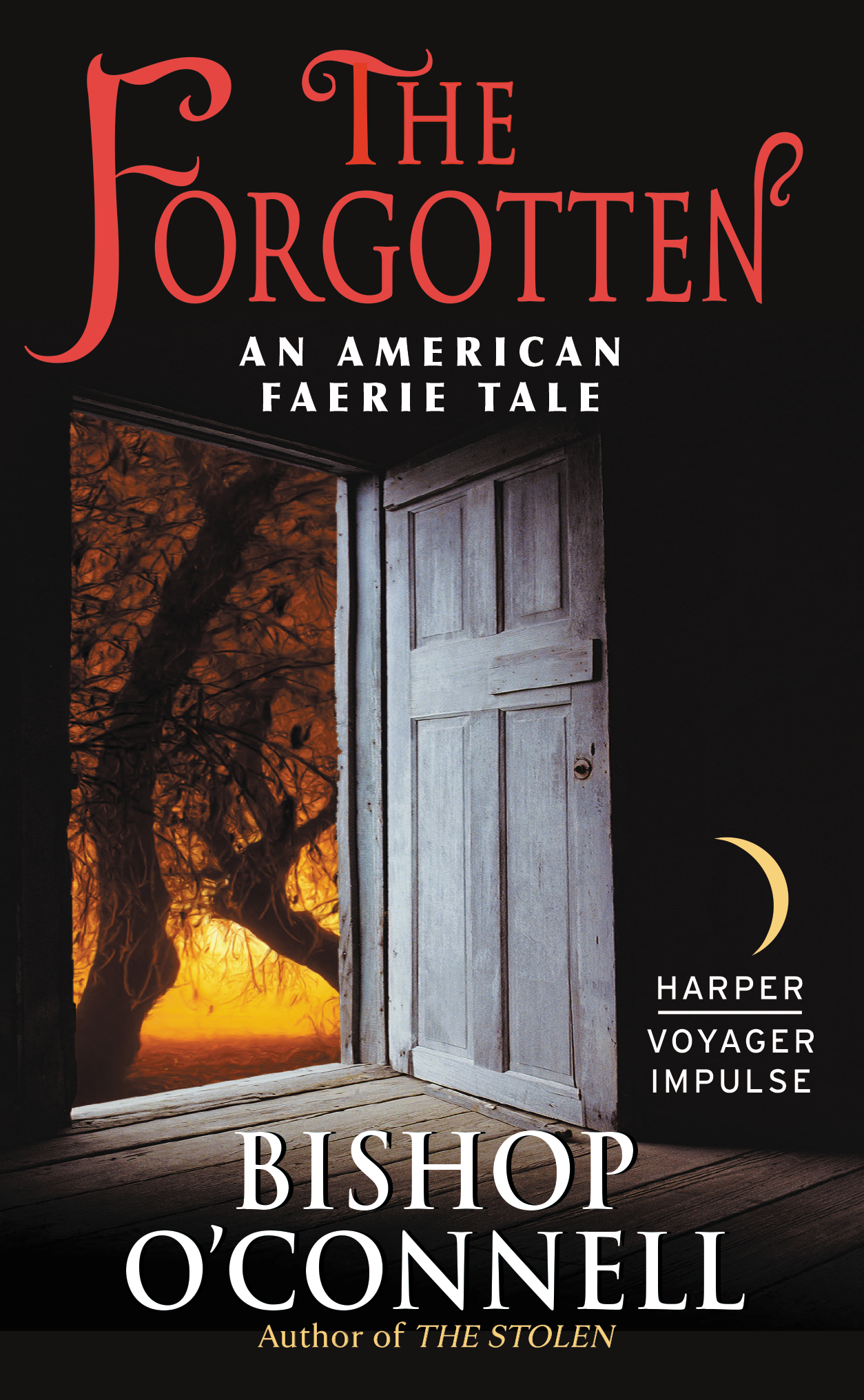
 Bishop O’Connell is the author of The Stolen an The Forgotten, modern faerie tales, bringing traditional faerie stories into the current era.
For those not familiar with your An American Faerie Tale series, can you tell us a bit about it?
The series is an urban fantasy. It’s set in our world but with magic and faeries hidden just beneath the surface, unbeknownst to most of humanity. In this series though, the faeries have been hiding in plain sight for centuries (camouflaged by their magical glamour so they appear normal). As a result of having lived alongside mortals for so long, they’ve evolved along with us. Most reside in cities. They own nightclubs, drive sports cars, use cell phones, and carry guns. In short, it’s faeries for the twenty-first century.
Can you give us some insight into your main characters?
The main characters represent differing levels of knowledge about the world as it really is. However, I knew that any “normal” person would need a really good reason not curl into a ball in the corner when faced with the reality of magic and monsters living all around them. I also knew that, keeping with tradition, I wanted archetypes: a wizard, a warrior, and a princess. Like my faeries though, I wanted them to be real, not stuck in idealized notions.
For the warrior, I took the myth of the Fianna and brought it to the modern age. Brendan is strong and fast. But, after a living a long life of violence, he’s also scarred and haunted. He’s a guide to the hidden world, aware equally of the wonder and the danger it presents.
Now the wizard: not inept, not all-powerful, but fully, utterly human. Edward would be the stand-in for me and my fellow fantasy geeks. He knows magic exists, as do all kinds of fantastical creatures, but he’s never encountered them outside a book. Reading about grizzly bears is one thing, but standing in front of one in the wild is quite another. That meant he would need a reason not to run away screaming like a squeamish kid being chased by a bully with a slug.
Enter the princess. And then forget everything you know about princesses, because Caitlin certainly isn’t one. Caitlin is a single mother whose knowledge of faeries and magic extends as far as Disney movies and the stories her immigrant grandparents told her. She can’t hurl magic or wield a sword, and she isn’t “the one” mentioned in any prophecy. Her only super power is the ability to make a little girl laugh, and give that child a good life. When her daughter, Fiona, is kidnapped, Caitlin has a reason to face a dark and terrifying reality, but she’s lacking in the skills to survive it on her own.
What is it with faeries you find fascinating?
A lot of different cultures have faerie stories in one form or another. That’s always been remarkable to me. Celtic, Nordic, Slavic, and even Asian mythologies have types of faeries. I think the timeless appeal of faeries come from them being so very close to human, but not quite. Maybe that’s what allows us to almost believe in them, even if it’s just in a small corner of our minds. Isn’t that why we read fantasy and science fiction? To escape for a little while and believe the fantastic is possible? Well, that’s why I read them anyway.
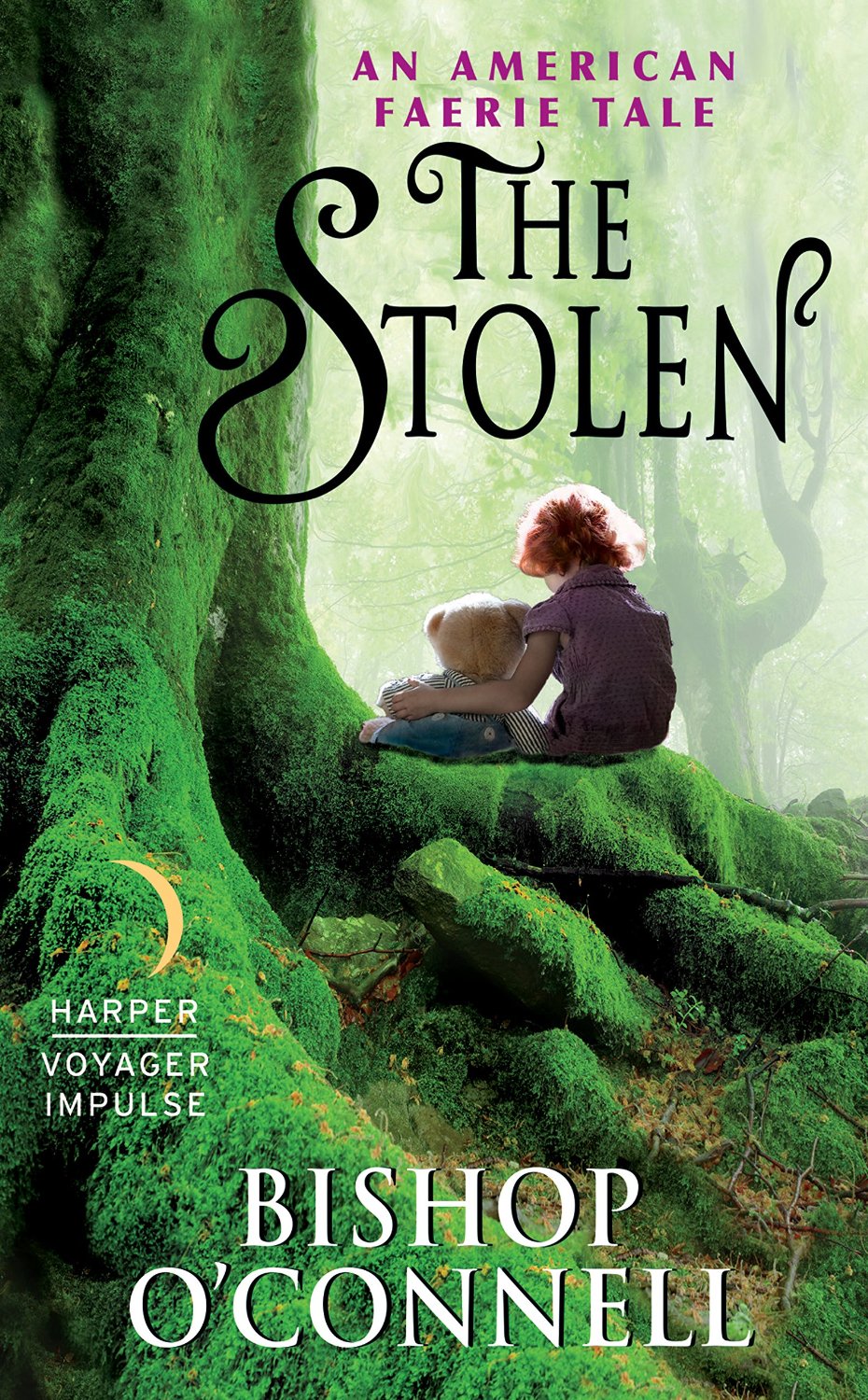 You are published through Harper Voyager’s new Impulse imprint, how did that come about?
That was a very long road. The Stolen started its path towards publication in the usual way: lots of query letters to lots of agents, 118 of them to be exact. I got a few requests for the full manuscript, but in the end, they all passed. By October of 2012, I was starting to run out of traditional options and was considering self-publishing. That’s when I heard about an open submission window Harper Voyager was offering to find authors for its new “digital first” imprint. In short, authors who had no agent could submit directly to the publisher. This was the first time a major publisher had opened its doors, even if only a crack, to the general population in several decades. I submitted The Stolen and held my breath. As it happened, they received significantly more submissions than they expected, just under 4,600. This meant their initial time frame was extended. So I waited, and waited, and waited, and…well, you get the idea. Updates were posted every few months, and I tried to forget about it by starting to write The Forgotten, the second book of the series. After more than a year, in December of 2013, they announced all selectees would be contacted by January 16th (2014). On January 14th (2:49 p.m. eastern time) I got an email saying they were delighted to offer me publication. I squeed like an eight-year-old on Christmas who found not the Millennium Falcon toy he wanted, but the actual ship parked on his front lawn and Han Solo offering the keys. It got even better when I learned The Stolen was set to be the first book released by the new imprint. It’s been just over a year, and I still feel like I won the lottery. I’ve done signings, readings, and was on a panel at the New York Comic Con, but I still smile when I think about not just getting published, but how I got here. I’ve never been “normal” so, why should my life as an author be different?
How did you start writing? Was there a particular book or moment in your life that spurned you on?
Much to the chagrin of my parents, I’ve always been an imaginative storyteller. I started reading when I was young and was never shy about enjoying attention. My first taste of authorial fame came in Mrs. Bugg’s first-grade class. I would write stories, which I’m sure were terrible rip-offs of stories I’d read, and she would read them to the class at story time. As I grew up, I found J.R.R. Tolkien, Terry Brooks, Ray Bradbury, Piers Anthony, and the other greats. I was immediately hooked on fantasy and sci-fi. Shortly thereafter, I discovered Dungeons & Dragons and other RPGs. My storytelling took the form of new worlds and adventures for my friends to explore over tables laden with pizza and Mountain Dew. In high school, I started writing poetry. It was what you’d expect from an unpopular geek who fancied himself a romantic. Some of it wasn’t bad, and this was at the start of the 90s coffeehouse craze. In college, I found some minor celebrity among the coffeehouse regulars for my poetry. I wrote some short stories and started a novel, but I was “that guy” for a long while. You know, the one “working on a novel.” I’d like to formally apologize at this point. Ten years after starting it, I finally got the kick in the pants I needed to get serious and I finished my first novel, a high fantasy story that I’m rewriting to fit into the American Faerie Tale universe. I sent out queries, but I wasn’t ready to be published. My storytelling was good, but my writing skill needed work. I put the high fantasy novel aside and started on what would become The Stolen. I finished it in three months, then decided to hire a freelance editor to help me give it the best chance it could have. That did more to help improve my writing than just about anything else. It also taught me a very important skill: how to take criticism.
What sort of challenges, as a writer, might you have faced over the years? Any insights you would be able to share for those aspiring writers seeking advice?
There are two skills every writer needs: determination and being open to criticism. Getting into the publishing world is grueling. It’s packed with rejection, and not always of the gentle sort. Writers have to be able to face rejection and get back up when you fall (or are tripped, kicked, backstabbed, or otherwise hindered) and do it over and over and over and over again. At the same time, you have to be able and ready to look at your work and see room to improve it. Yes, you need to believe in your work, but if you’ve received forty rejections, it’s worth looking at the manuscript again. In the end, there is no guarantee for success, only one for failure: giving up. If you give up, you’re certain to never succeed. Others might get to decide if you’ve succeeded, but only you get to decide if you’ve failed. Keep writing, but also keep improving. Your work, your potential audience, and you deserve the very best you have to offer.
Have you ever struggled between what you would like to happen to a character and what you considered more sensible to occur? Can you tell us when and what did you do at last?
Constantly. I hate to see bad people win, or come out ahead. When I see characters like Joffrey Baratheon, I want a hero to come in and clean house. But, that doesn’t make a very good story. I still struggle at times with giving my characters too much power and making them a juggernaut of ass-kickery, but I always catch myself and bring them back in. Brendan is a perfect example. In the very early drafts he was handsome, fast, strong, and fast healing. Think Wolverine who also could model as a side job. That first freelance editor explained that no one would care about him because they would know he’d succeed. How could he not? So Brendan got some scars, a bloodthirsty monster inside his head, and lost his healing factor.
I also struggle with what I want and what the characters want. I always start my stories with an outline, but after a couple of chapters, the characters have decided on a new path. In the end, I give up on keeping an outline up to date and just let the story grow on its own. I’m not sure how this sounds, but in some ways, I’m as much a spectator during the first draft of my story as my readers are when the pick up the book. Sure, I’m the one doing the writing, but if something happens that isn’t true to a character, then I go back and try again until it is right, and I think the story is better for that.
What are your thoughts on good/bad reviews?
Good reviews mean I’m the greatest writer who ever lived. Bad reviews mean I’m a talentless fool who needs to stop writing and move on with my life. Okay, that’s how it feels. In truth, I’m grateful for every review I get, even the bad ones. If someone picked up my book, and read it, they’ve earned the right to post their opinion of it. Yes, bad reviews cut, but I read through them to see if there’s any place I can improve my writing. Not to say everyone who posts a review sends me down a path of self-improvement, but if I see a valid point, I genuinely consider it. I’ve been lucky in that my “bad” reviews were tepid at best. I’ve read some bad reviews of authors and books I love, and I learned quickly I have no room to complain about my reviews. The good ones stay with me though. When I read about someone enjoying my story, that it or my characters stayed with them, I know why I write. Yes, I write for myself because if I didn’t my head would explode, but I also write for others in hopes my stories b someone a little escape and bring them some enjoyment.
How do you define success as an author?
Success as an author is just publishing a book. Sure, seeing the book do well is fantastic, and it means I can continue to be an author, but even if it bombs, that doesn’t mean I’ve failed. So, as far as I’m concerned, I’ve already succeeded.
For your own reading, do you prefer ebooks or traditional paper/hard back books?
For practicality reasons, the majority of my “reading” is done with audio books. My day job has a lot of travel and driving involved, and I love listening to audio books. However, I much prefer to hold a book and read off the page. The smell and feel of a page can’t be beaten. I love paperbacks because they’re made to be bent and folded. Hardcover books feel too nice to me; I’m always worried about damaging them. There is something truly beautiful about a paperback with a spine covered in lines, its cover bent and scarred. That book has seen mileage and was well and truly enjoyed.
What kind of books do you read, any favourite authors?
I have a really wide variety of tastes. I like just about everything, though I have a special love for fantasy and sci-fi, obviously. One of my all-time favorite books is Zen and the Art of Motorcycle Maintenance by Robert Pirsig. It was the first book I was given, and it had a huge impact on my adolescence and life as a whole. Close behind that are Faerie Tale by Raymond Fiest and The Wood Wife Terri Windling. I’ve probably bought and given half dozen copies of those two books away to friends. Neil Gaiman is a brilliant author, though if I had to pick one, I’d say Underworld is probably my favorite of his books. More recently I’ve become a huge fan of The Dresden Files series by Jim Butcher. Within the last few years, I’ve also become a big fan of John Scalzi. His Old Man’s War series is fantastic, though I also really enjoyed The Andriod’s Dream. I really like his writing style and his sense of humor.
What do you do when you’re not writing, any hobbies?
I love movies, can’t get enough of them. As is probably no surprise, I love sci-fi and fantasy movies especially. I also enjoy travelling, and it’s hard to top the combination of good beer and good food with good friends.
What’s next, what are you working on now?
The Forgotten, sequel to The Stolen, just went through copyediting and is off to production. So, I’ll be taking a short break. After that, I’m going to do a collection of short stories. This came about because of some cuts from The Forgotten. I just couldn’t fit everything into the novel without it feeling forced. These pieces will give readers a deeper insight into some of the characters. After that, I have a standalone fiction piece that needs to be edited. Then there’s the third book in the AFT series. My intention is for the AFT series to be a long one. On top of that is the high fantasy book (first of a trilogy) I’m reworking as a side series in the AFT universe. I also have a fantasy/western short story that I want to expand into a full. Now you see why I have to write or my head will explode.
* * * * * * *
Interview by Dag Rambraut – SFFWorld.com © 2015