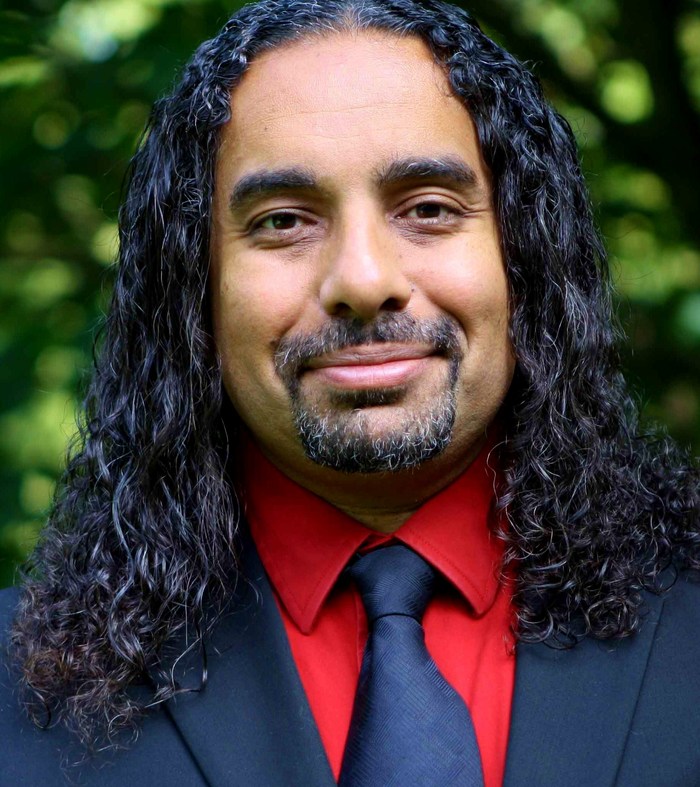
 Ramez Naam is the author of More Than Human: Embracing the Promise of Biological Enhancement, and is also the recipient of the 2005 HG Wells Award for Contributions to Transhumanism, awarded by the World Transhumanist Association. We have talked to him about his Nexus series.
For those not familiar with your Nexus series, can you tell us a bit about it?
The Nexus books are thrillers, set in a pretty near future, about control of technology and human evolution. In the books, Nexus is a nanotech drug that can link minds electronically. It’s illegal, because technologies like it have been used for mind control and manipulation in the past. But it also has awesome potential to be used in good ways. When a young scientist finds a way to improve on Nexus, and make it permanent, all hell breaks loose as competing countries and groups try to control the tech.
Really, in one way, Nexus is a civil liberties novel, about the War on Drugs and the War on Terror gone mad. In another sense it’s about how society responds to disruptive technology.
The final book in the Nexus series, Apex, was released in May. What can your fans expect?
It takes the action in the Nexus series to a crescendo, with hundreds of thousands of people now using the technology, and protests and clashes with police breaking out all over the world. Chunks of it were inspired by the Arab Spring and Occupy. And a good chunk of the book takes place in China.
How did you come up with the idea for this series? Has your background in software development been an influence?
I’ve always been fascinated by the brain. I wrote a lot about brain-tech in my first non-fiction book, More Than Human. So when I decided to write science fiction, that was the technology I gravitated towards. And as for the plot – I’m a civil libertarian. I think the War on Drugs and the War on Terror are, by and large, terrible in their abrogation of human freedoms. So the collision of those two heavily informed the books.
What goals might you have set for yourself when writing the Nexus series and how do you feel about the end result? If you had the chance, is there anything you’d want to go back and change?
I wanted to write something that added a new perspective, that was near enough in the future that people who don’t normally read science fiction could enjoy it, and that looked seriously not at just science and technology, but at how societies respond to it.
And, of course, I wanted to write books that people couldn’t put down.
I feel good about all of those. Are there things I would go back and change? Of course! Plenty of them. But I’m happy with the result.
What is it with Science Fiction you find so fascinating?
Science Fiction is the most exciting genre of literature that exists, IMHO. It’s the literature of ideas. It looks at where we might be going, or where we want to avoid going. Science fiction has the highest density of important ideas and important questions of any genre.
How did you start writing? Was there a particular book or moment in your life that spurned you on?
I wrote my first book More Than Human as a response to George Bush, actually. J Well, sort of. It was 2003. George W. Bush was president. And he had formed a President’s Council on Bio-Ethics, which was looking at topics like slowing human aging, boosting human intelligence, genetically modifying people, and so on. And this council was releasing report after report, and book after book, saying that these were bad things. I thought that was crazy. So my first book was about explaining the science of human enhancement, and arguing for why, with some reasonable precautions, it was likely to be a pretty good thing for society.
Have you ever struggled between what you would like to happen to a character and what you considered more sensible to occur? Can you tell us when and what did you do at last?
Oh yes. There are times that you have a plot in your head, but then you find that the characters don’t want to do that. When you’re looking at the story from the outside, you can create whatever twists and turns you want. But when you’re writing, you’re inside the characters’ heads, and you see that they may be motivated to do something different.
In those cases, I’ve had two options: I can do what the character wants to do. Or I can go back and insert something earlier in the story – some encounter or suspicion or piece of information – that puts them in a different mental state here.
Either way, you have to be true to the character’s motivations.
What sort of challenges, as a writer, might you have faced over the years? Any insights you would be able to share for those aspiring writers seeking advice?
I think of two challenges as the biggest. First, the discipline to write, whether you feel like it or not. If you only write when the muse strikes, you won’t get anything done. You have to write consistently, when your schedule says you should. And that’s hard.
The second challenge is getting noticed. The biggest challenge for a book is that there are hundreds of thousands of other books, and it’s tough to get readers to know that your book exists. There’s no easy answer for that, except perhaps to write something unique and remarkable.
How do you develop your plots and characters? Do you use any set formula?
I daydream a lot to get under the skin of my characters and to make up key scenes. Then I slowly turn that into an outline for the whole book – a pretty detailed one. At first it won’t make sense, because the things I’ve daydreamed aren’t really compatible with or consistent with one another. But after a few revisions the outline comes together. Then I write to that.
For your own reading, do you prefer ebooks or traditional paper/hard back books?
I read ebooks, mostly because I travel a lot, and that way all my books are with me. I buy paper books if I can get them signed.
What kind of books do you read, any favourite authors?
I read a lot of sci-fi myself. John Barnes has been a big influence. Neal Stephenson. Daniel Keys Moran. Ian MacDonald. Alastair Reynolds. Those are some authors I love.
What do you do when you’re not writing, any hobbies?
I do a lot of speaking about energy and environment. But that’s more a second job than a hobby. Hobby-wise, I love the outdoors – hiking, biking, kayaking, swimming, scuba diving. Because I spend almost all of my life in front of a screen, time in nature is especially important, I think.
What’s next, what are you working on now?
Next is another science fiction novel, not in the Nexus universe. That’s all I’ll say for now. J
* * * * * * *
Interview by Dag Rambraut – SFFWorld.com © 2015