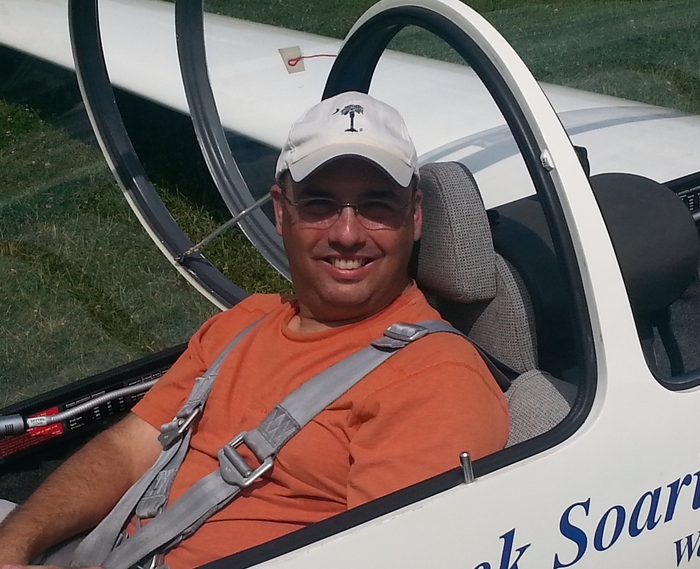
We’ve talked to Patrick Chiles, author of science fiction thrillers, Perigee and Farside, both published by Baen Books this year.
Welcome to SFFWorld Patrick, many thanks for giving us some time here. In your own words, who is Patrick Chiles?
Grew up in South Carolina, live in Ohio, and have spent my adult life in aviation (military, airline, and corporate). I’m a husband of twenty-two years, a father of eighteen years, and an unrepentant nerd. I write to make the voices in my head shut up.
First of all can you tell us a bit about Farside? What do you feel is unique about your story?
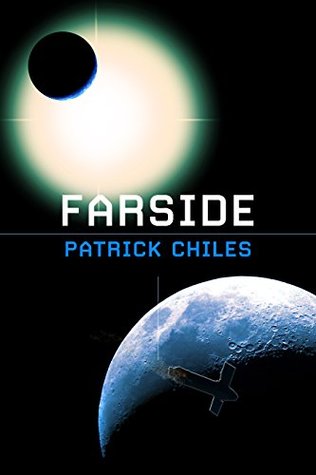
Farside is a sequel to my first novel, Perigee, originally published in 2012. It’s about the disappearance of a commercial spacecraft that was on its way to flying tourists into lunar orbit. During the course of searching for the missing ship, our protagonists back on Earth find out through shadowy government contacts that it’s actually been hijacked and gone dark. The hijackers have competing motivations, but they’re trying to gain control of something hidden on the far side of the moon which would be very bad for the rest of us. Think of it as a bit of a mashup of Apollo 13 and The Hunt for Red October and you won’t be too far off.
I think what sets it apart is that I use my own experiences in the airline business to extrapolate what commercial spaceflight might be like in the near future. I’ve never been able to find enough science fiction that was grounded in present-day reality (think Stephen Baxter’s Voyage). I wanted SF as if it were written by Tom Clancy: highly realistic, with ordinary people whose jobs throw them into extraordinary circumstances. I couldn’t find anyone doing that at the time, so I struck out on my own. Now we have books and movies like The Martian and Gravity which hopefully represent an emerging trend. I can’t do it all myself! And a movie deal would be nice…
 How did you get the idea for the story in the first place?
As Perigee was nearing the finish line, I was mulling over what should come next. It’s a bit of an ensemble piece and I was really happy with how secondary characters like Simon and Audrey were fleshing out. They’ve settled in at my fictional spaceline (Polaris AeroSpace), and it was time to give them the run of the place. About this time I was reading about a couple of intriguing concepts: first was the Russian plan to fly a couple of tourists around the moon in a beefed-up Soyuz (which isn’t all that far-fetched, it’s what Soyuz was originally intended for). Second was a study the Marines had done on rapid troop insertion using suborbital spacecraft called SUSTAIN (Small Unit Space Transport and Insertion). A sequence formed in my mind with old characters dropping off new characters into a very unusual hostile landing zone – next thing I knew three chapters were finished. It didn’t start out as military sci-fi, but that’s where it ended up. I was tempted to give it the tagline, “Marines on the Moon: ‘Nuff Said!”
I’ve recently read the Lunar Soyuz is still being pursued (and if I’d dropped $150 million for a ticket, you can bet I’d be making a fuss about it), but if Jarheads In Space ever becomes a thing I suspect we wouldn’t know about it for a very long time.
What is it about Space you find fascinating?
Probably for the same reason I’m drawn to the mountains: because there’s always something new and spectacular around the next bend. I look at either vista and my mind says, “GO.” It’s just so unlike anything else in our experience: limitless potential amidst stunning backdrops. I’ve been fascinated (my wife might say “obsessed”) with space travel since I was little. When my grandparents explained what those Apollo missions on TV were all about, I was hooked. You couldn’t tear me away from it. I was lucky enough to see a Saturn 1B launch in person; fascinating as space is I might be even more fond of the machines we use to get there. I used to be heavily into astronomy and am still active in high-power rocketry, so go figure!
Can you tell us a bit about your road to being published? Is it a dream come true being published by a big publisher such as Baen?
I went through a couple years of the query-reject-repeat cycle with my first novel, which felt way too much like high school dating for my tastes. (Do they like me? What if they don’t? Did I say something wrong? Maybe I used the wrong color paper?) I had a few nibbles that ended up going nowhere, which is perhaps even more depressing than 100% rejection. Around this time I became aware that self-pubbing might no longer equal career suicide, and one particular blog essay by Kristine Kathryn Rusch convinced me to take the plunge (the writers out there know exactly which post I’m talking about). I was fortunate enough to have close personal connections with a freelance editor and a book designer, so the up-front costs were much less than might be expected.
Baen picked me up last spring thanks to a newspaper reviewer who knows Toni Weisskopf and liked Farside enough to get it in front of her. They contacted me a couple of months later with an offer to sell my first two novels under their ebook imprint and I’m currently working on more. It was very exciting since they were the only publisher I was interested in for a number of reasons. So far they’ve been every bit as great to work with as I’d heard they’d be.
 You also have to tell us a bit about your other book, Perigee.
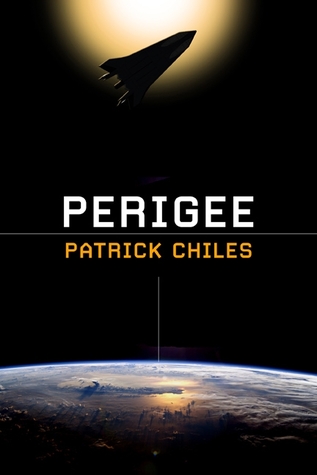
Commercial spacecraft full of high-income, high-maintenance passengers gets stranded in Earth orbit. Oops…
The idea for it sprang out of the media buzz surrounding Richard Branson using SpaceShipOne as a springboard to found Virgin Galactic. That venture hasn’t worked out as expeditiously as he’d hoped, but that’s the difference between building a radical new vehicle versus building an airline around proven equipment. But what he hopes to eventually do – point-to-point suborbital travel – really excited me as an airline guy. Doing the research, I realized a sufficiently long-distance suborbital flight comes awfully close to the velocity needed to make orbit. Now the energy required increases exponentially, but still…what if something never meant to be in orbit ends up stuck there? Now what? And for the sake of dramatic tension, why would that happen? It couldn’t just be a rescue yarn, after all. That’s been done.
It took a lot of work to build in the details that make the story feel realistic, but I also knew that if VG ever flew it was going to look a lot like an airline. And that was a world I knew very well. I’d also served in the Marines with a pilot who went on to become an astronaut, so I’d had some exposure to the personality types. I wasn’t comfortable building the characters and story arc until the “engineering model” was closed, but the technical aspects were fun to learn since I’m interested in that stuff anyway.
Can you tell us a bit about your book covers?
Since my first two books were self-pubbed, I hired out the covers to J. T. Lindroos (www.jtlindroos.carbonmade.com
How do you go about the marketing aspect and especially related to your online presence? Anything you’ve seen work better than other things?
Marketing was in some ways easier as an indie since I had direct control over pricing and access to sales reports in real time. Being able to undercut the Big Five is the single most powerful tool in the toolbox. That’s also where Baen is killing them, because they understand that nobody wants to pay trade paperback prices for an epub file.
I got lucky with Perigee. In early 2012, everyone was jumping on the indie bandwagon and doing the free promotions with Kindle Select. It was an easy way to spike your visibility because at that time “free” carried as much weight as “paid.” So after Perigee had been out long enough to collect a dozen or so good reviews, I put it up for free. It hit Number One in Amazon’s Hard SF and Technothriller genres by the second day. Once it reverted to paid status it remained on both top ten lists for several weeks, which was amazing. Seeing my title up there with Clancy and Crichton was the single biggest thrill I could’ve ever hoped for.
Unfortunately I didn’t have another book in the queue to take advantage of that momentum. The “second book curse” is real – Farside took way longer to finish than I’d anticipated. The best marketing is to (surprise!) write well, tell good stories, and do it often. I haven’t seen much return on investment from paid ads, but good reviews always sell books.
My blog, www.chilesfiles.wordpress.com, is updated in fits and starts. It all depends on what’s happening in the world and how I feel about it. Most of my social media time is spent on Facebook just because most of my family and friends are out of state. Social media is easy to abuse: does anyone pay attention to the desperate “buy my books” posts on Twitter? That stuff is much more effective coming from a publisher or an independent reviewer. It’s important to be out there and engaged, but know your limits: time is your scarcest and most valuable quantity. Don’t waste it on snipe hunts. Ultimately, blogging and tweeting doesn’t sell books: writing books sells books. And I’m hoping this all gets easier whenever the day comes that I can write full time and devote more attention to it.
What’s next? Do you have more new and exciting projects you’re working on?
Frozen Orbit, the first chapter of which is included at the tail end of Farside. It’s a standalone story that came to me around the time New Horizons was arriving at Pluto last summer. I wondered how cool it would be to find something completely unexpected out there, like an old Soviet spacecraft. How’d it get there? Why was it sent? The individual elements had been stirring in my mind for months but I couldn’t find the compelling thread that would tie them all together. It finally came to me one day on my way home from work, and it hit me so hard that I had to pull off the highway and write it all down so as not to lose anything! It’s going to explore different ideas about who we are, how we got here, and why haven’t we found anyone else out there? It’ll be the most “science fiction-y” thing I’ve written by far and I’m very excited.
Once again, thank you very much for your time.
* * * * * * *
Interview by Dag Rambraut – SFFWorld.com © 2016