

It has been a pretty good year for Epic Fantasy in 2014 and the upward trend continues with Kameron Hurley’s The Mirror Empire, her first novel for Angry Robot Books and the first installment of The Worldbreaker Saga. Set in a milieu of parallel worlds featuring gender roles swapped or showcased in a different light, invading forces, blood magic, orphans, and bears-as-mounts, swords made of vegetation; to name only a some features, few Epic Fantasy novels/stories truly embrace the notion of Epic Fantasy to the same degree as Hurley’s ambitious tome. This should come as no surprise to people who have read her previous work (debut novel God’s War which received multiple genre nominations and the Kitschy for best newcomer) or her many opinion pieces around the genre web. Those who haven’t read anything by Kameron Hurley or aren’t familiar with her work (of any kind) are in for something incredible when they dive into The Mirror Empire.

So let’s get started with the publisher’s description:
On the eve of a recurring catastrophic event known to extinguish nations and reshape continents, a troubled orphan evades death and slavery to uncover her own bloody past… while a world goes to war with itself.
In the frozen kingdom of Saiduan, invaders from another realm are decimating whole cities, leaving behind nothing but ash and ruin. As the dark star of the cataclysm rises, an illegitimate ruler is tasked with holding together a country fractured by civil war, a precocious young fighter is asked to betray his family and a half-Dhai general must choose between the eradication of her father’s people or loyalty to her alien Empress.
Through tense alliances and devastating betrayal, the Dhai and their allies attempt to hold against a seemingly unstoppable force as enemy nations prepare for a coming together of worlds as old as the universe itself.
In the end, one world will rise – and many will perish.
The land of the Dhai is the primary physical location for the action of the novel, it is a land where celestial bodies, (satellites in their parlance), rule the shifting lives of those who live under them. The satellite+ (Is a star? A comet? A moon?) Oma is set to return to the planet’s orbit, which portends a catastrophe that could shatter multiple nations. When a young girl, Lilia, and her mother are traveling, Lilia’s blood-mage mother makes the ultimate sacrifice and thrusts her daughter through a portal to another world so she can escape an invading force. Not known to Lilia is she is an omajista, a wizard who can manipulate the power of the star Oma. Lilia is a very young girl and is soon taken in by the Kai a seemingly monastic order and the narrative jumps twelve years. The young girl is permanently wounded, with a bum leg but she comes to realize the truth about the mirrors she sees: each can be a portal to another world where a double our counterpart of everybody she knows exists. However, the only way for one person to travel to a parallel world is if their double is not alive in the other world.
(+ I think Hurley deliberately using the word “satellite” as a descriptor for the celestial body, which has a much more modern feel to it than the word “moon,” therefore throws another mystery [to me at least] of when or where the action takes place. Is it post-apocalyptic with the term satellite an archaic carryover? Is this world one settled by humans in the far future? Are these satellites naturally occurring like the moon or are they an artificial construct like those which orbit our own world or even like Jovah in Sharon Shinn’s Archangel or the Oversoul in Orson Scott Card’s Homecoming saga?)
Lilia is the point of view character we see the most, so by default she’s the protagonist. (Though I suspect using the term “default” in a review of this work which challenges so many “default” gender and power assumptions could be a risk on my part.) Lilia interacts with the widest variety of characters in the novel. From her mentor Gian who saved her life when Lilia crossed words to the harsh and brutal warrior named Taigan who conveys anger towards Lilia and only occasional begrudging respect, Lilia sees quite the range of people. Despite Taigan being her captor, Lilia does not give into despair; she continually tries to prove herself; her own abilities and actively attempts to break away from Taigan; and does not waiver from the promise she made to her mother to save her. And oh yeah besides Taigan being both a warrior and spell caster, Taigan uncontrollably gender changes from man to woman.
Other characters include the young man Roh who escapes death and yearns for a life beyond the farm to which he was originally destined. There’s the Patron, the leader of the Siduan who assumes the throne after murdering the previous Patron. Perhaps the most brutal and uncompromising character is Zezili, a Captain in the Empress’s legion, she never questions the Empress’s orders and has killed many in her campaigns, her husband Anavha is a quivering, cowering man who lives in fear of his abusive wife who sees him as something barely above sex-slave property. The smallest bit of compassion Zezili shows is in her “care” of Anavha, whom she treats as a weak child. So while Lilia provides us with a strong protagonist and a through-line of narrative, each of these other characters (particularly Roh, Taigan, and Zezili) have arcs of their own throughout the novel.
As for the gender roles, the women warriors are dominant in much of the world. They are aggressive and, at times abusive to their husbands both mentally and physically. Men are treated, in many cases, as sex objects and holders of the seed for procreation. Many of Hurley’s characters can have one of five gender identities male assertive, male passive, female assertive, female passive and ungendered. And oh yeah, characters like the aforementioned Taigan can change genders in mid story. There’s a risk a writer can run when featuring such drastic, sweeping changes to conventions of fiction (and history and life, for that matter) in their fiction. It can be handled sloppily and distort the story, it can put readers off of the work. In the case of what Hurley is doing in The Mirror Empire, it was an ambitious, brilliant eye-opening embracing of what it means for a writer to truly push boundaries while still keeping a strong and powerful narrative alive and vibrant with a solid and engaging story. In short, just about everything Hurley has put in “behind the scenes” of the novel allows the novel to come across as a generally well-executed piece of art.
Another aspect of Epic Fantasy Hurley plays with in The Mirror Empire (and likely The Worldbreaker Saga) is the trope of Destiny. With two of the main characters, Roh and Lilia, Destiny comes into play over the course of the story arcs. For Roh, he is fighting against his destiny of being a meager farm boy, he wants to be more. For Lilia, she has a destiny, that for most of the novel, which does not become clear to her despite what other people know of her.
Hurley is one of the most brutally honest writers spinning words in the genre today whom I’ve read; nothing is safe in her fiction (or her non-fiction for that matter). The world is uncompromising to a degree surpassed only by some of the more steadfast characters in the novel (Zezili, I am pointing my finger at you, and don’t think I’ve forgotten how much you are sticking to your guns with your promise to your mother Lilia). The world building here is nothing short of imaginative and eye-opening. In addition to the recast genders, Hurley leaves no leaf unturned. Well, rather, some leaves are best left unturned in this world because they’ll eat you, the plant life gets hungry. Some leaves and plant life are fashioned into swords and other weapons; bears are used as draft and mount animals, dogs are used as mounts, too.
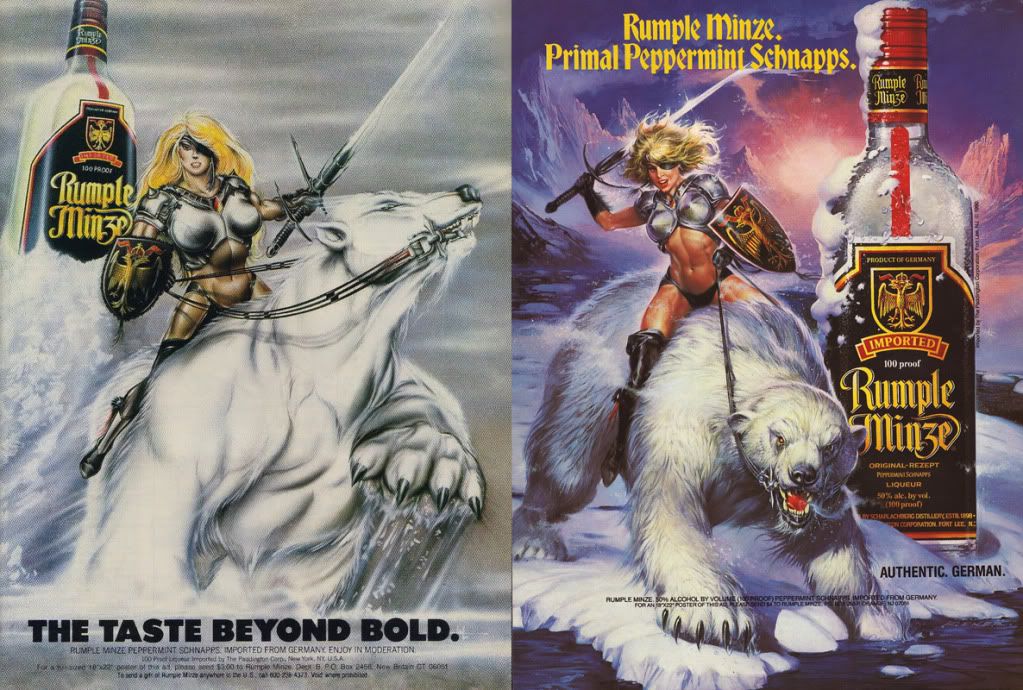
What Hurley is doing in The Mirror Empire (and I hope she continues with The Worldbreaker Saga) is to not only tell an engaging story, but tell an Epic Fantasy story in a new language. But this new language is one we can understand, it uses words with which we are familiar enough that the recasting of some of the new elements of the language can easily be deciphered and digested. For the most simplistic analogy, we all know what bears are, but aside from that 1993 Rumple Minze advertisement, how often do we see bears used as mounts? But here’s the thing…Hurley does such a good job with this one thing (and nearly every other recast element in the novel) as a feature of the novel rather than a bug – it felt natural and essentially the only way for everything else in the story to work as well as it did.
A great deal of Epic Fantasy includes glossaries and / or character lists. With the cast of characters, and changing points of view, this would have been helpful, especially in the beginning third of the novel before the story and characters fell into a smoother groove. So here we are at my only real problem with the novel, a little bit of a bumpy beginning. In those early stages, I was worried Hurley was trying to do too much in the novel, that her imagination and ambition outstripped her ability to convey such a fantastic and imaginative story. However, by novel’s end, and close to the one-third mark of The Mirror Empire, I felt more much more in synch with the characters and world(s) of the novel. (As an Epic Fantasy junkie, I still would have liked to see a glossary and / or dramatis personae, but there is a gorgeous map which I hope makes it into the final book.)

(Originally from Kameron’s Blog post http://www.kameronhurley.com/mapping-the-days-of-my-life-mirror-empire-map-in-full-color/)
Hurley tackles so many themes and topics in The Mirror Empire, but perhaps the most prominent is that of assumed gender roles and the shattering of the patriarchal view. A majority of the characters are female, especially those characters with either clearly defined roles of power or those with the strongest narrative journeys in the novel. The greatest advice for reading this novel is to question all assumptions, there is no “standard” in Hurley’s world, it is truly Epic and pushes the limits of story and imagination. With The Mirror Empire Kameron Hurley put other writers who ply their trade in Epic Fantasy on notice as to just how Epic and Fantastic the genre can be.
The hook that I saw Kameron use in describing the book (or maybe it was the publisher) is Fringe meets A Song of Ice and Fire, which is a fairly accurate assessment but still sells the book shy of just how deceptively complex, ambitious, and impressive The Mirror Empire is.
As of my writing of this review, Hurley had recently received the Hugo Award for Best Fan Writer and her guest post “We Have Always Fought: Challenging the ‘Women, Cattle and Slaves’ Narrative” at A Dribble of Ink, Aidan Moher’s recently Hugo-award winning Fanzine/ Blog, netted Kameron the Hugo Award for Best Related Work. Even before that, a great deal of hype and pre-publication buzz surrounded The Mirror Empire, enough that not acknowledging it even as something of a post-script such as this would be nonsensical. I will admit the last few books I read that had such pre-publication buzz wound up disappointing me on multiple levels even if those books had some merit, the whole was less than sum of the parts. This is far from the case with The Mirror Empire – by midway through the novel, my hesitations were unwarranted and I enjoyed the novel a great deal. I expect to see it on many awards shortlists in the next twelve months.*
Highly, highly recommended.
© 2014 Rob H. Bedford
http://www.kameronhurley.com
August 26th 2014, Angry Robot Books
Trade Paperback, 554 pages
ISBN 9780857665560
Excerpt: http://www.tor.com/stories/2014/05/the-mirror-empire-excerpt-kameron-hurley
* The only other book that might give it some competition in my mind is Robert Jackson Bennett’s City of Stairs, a book that is similarly deceptively complex. The two books really can go hand in hand as sign-posts as things that came “before” and “after” them.




City of Stairs and Mirror Empire make for an interesting pairing, I think
Sounds like an incredible book. I’ll have to give it a go.