On the eve of the paperback publication of his excellent book, The Electric, we interviewed Andrew David Barker.
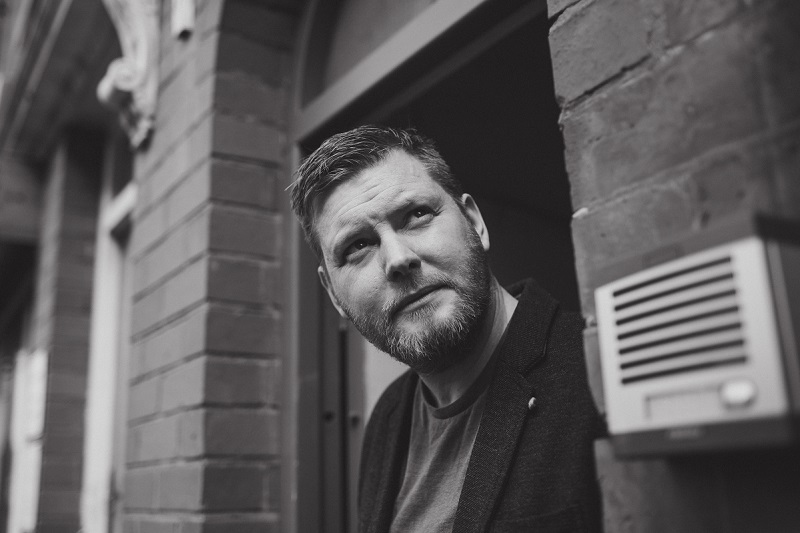
Hello, Andrew: welcome to SFFWorld.
Let’s start with your new book, The Electric.
Q: Can you tell us a bit about your novel, please, for anyone who doesn’t know already?
A: The Electric is about a cinema that screens movies made by ghosts. For ghosts. Three teenage friends discover the decaying old picture house during the summer of 1985, their last summer before childhood slips away from them, and their lives are irrevocably changed.
It’s a very personal novel to me, for many reasons.
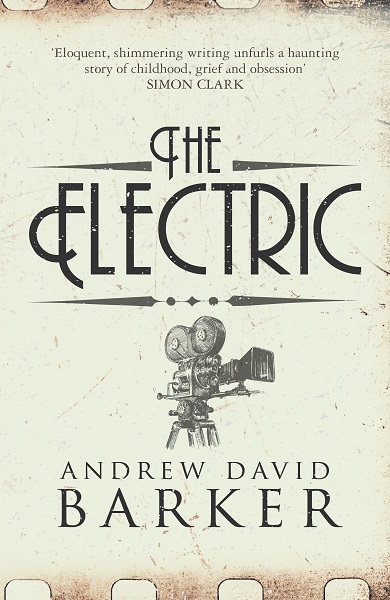
Q: I found that as the plot develops, it is pretty clear that The Electric is a multi-layered examination of many things. When I read The Electric, it felt very much like a British version of a Stephen King novel, in that it was primarily a ‘rite-of-passage’ novel, evoking memories of British childhood for a group of children growing into adults in a small urban area. Along the way they have to deal with many challenges – life, love, personal loss and those tricky relationships, amongst other things. How important to you were those aspects of the plot?
A: I was certainly influenced by Stephen King, especially his more nostalgic work, such as The Body, It, Hearts In Atlantis and Duma Key, but equally I was influenced by Steven Spielberg, who has similar sensibilities as King when it comes to depicting childhood. Certainly his career from Duel up to Empire of the Sun.
I think those years – teenage years that is – shape us. All that we become is made during that time. It was certainly that way for me. And also, it’s fertile ground for a storyteller, as we go through many things for the first time – first love, first loss – that growing sense of awareness of what this life really is. I had a great, if bittersweet, time reliving a lot of what I felt and experienced during my teenage years while writing this book.
Q: Combined with this, I loved the atmosphere of memories and loss created by the old-style cinema setting. As someone who spent time working in a cinema as a teenager, I recognised certain aspects of it, but The Electric has a wonderful homage to Hollywood of the 1920’s and 30’s. I detect a love of cinema, there! How much research did that aspect of the story involve?
A: Well, I’ve a life-long love of the movies. I am a child of the Spielberg/Lucas generation, and they instilled in me that early love. As I grew I explored the history of cinema, and continue to do so. I’m fascinated with Hollywood history, particularly early Hollywood, and certainly wanted to touch upon that in The Electric.
The only thing I had to research with this book was the mechanics of how a movie projector worked, and I’m sure if a projectionist were to ever read this book, they’ll probably just roll their eyes, but I tried my best. Everything else just came from being a movie fan really.
Q: You have one night for a free showing of any film you like at The Electric. What would you choose, and why? (You can have a double-bill if that helps.)
A: I had a great time creating the films in The Electric and had to curb myself writing more of them. It also gave me a chance to play with different genres and tones within the story itself. And gave me a chance to use film ideas I’ve had, that I know I’ll never get to make myself.
I guess my favourite films in The Electric are ‘A Murder of Crows’, my horror film with Karloff, Lugosi, Theda Bara, Lon Chaney and Peter Lorre, as I got to play around with my lifelong love of Universal monster movies, and horror films in general – and ‘Mad Dogs’, my supernatural comedy starring Harold Lloyd and John Belushi. Had great fun with that one. So I guess that would be my double-bill.
To be honest, I’d like to see those two at a late night Drive-in.
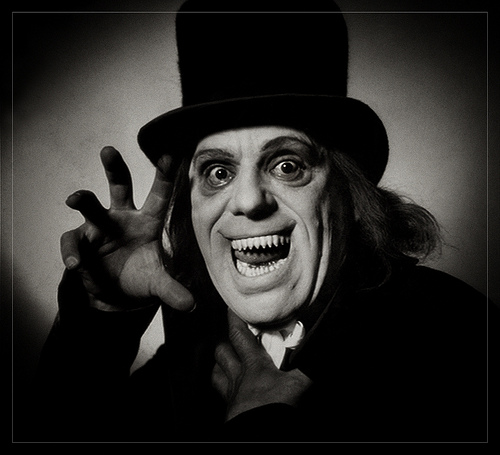
Or do you mean just a film in general? Well in that case it would be the lost Lon Chaney/Tod Browning flick, London After Midnight, which also features in The Electric.
Q: I understand The Electric is your debut novel, how long did it take to write?
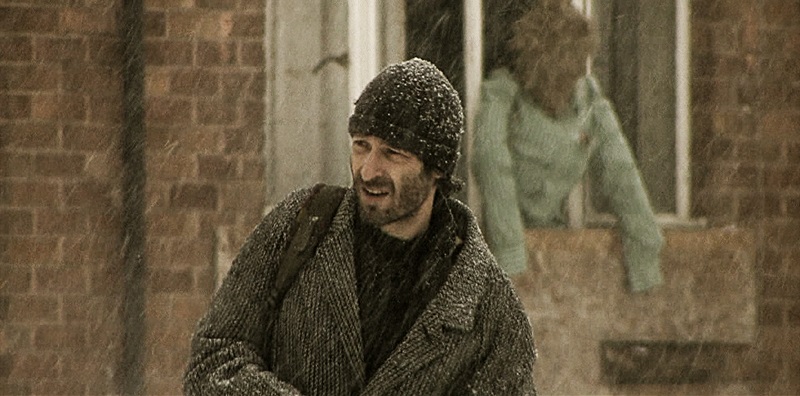
A: It took about a year and a half to write, but during that time life was pretty crazy. The writing of this book was kind of therapy to be honest. I wrote it coming of the back of a very difficult time surrounding a feature film I directed called A Reckoning. It was… is… a last man on earth type film, made on an extremely low budget, back in 2009. For reasons I still don’t fully understand, there was a falling out with the financiers of the film and they blocked it from seeing the light of day. It got some great reviews from the few who did get to see it, but the situation certainly destroyed my chance of a career in film, so I walked away from it all, got my life straightened out, and wrote The Electric. So something good did come out of it all.
Q: Can you tell us a bit about the process that led to the book being published?
A: Well I self-published it to begin with. After the fallout of A Reckoning I just didn’t want to deal with anyone, to be honest. I just wanted to be in my own little corner doing my own little thing. But that said, before I published it independently, I’d sent the book to Alex Davis to proofread for me – that was all, and he got back, after he’d proofed it, saying that he loved the book and that he was considering starting a small press and that he would love to publish it. I was thrilled, but carried on with putting it out myself, thinking nothing would come of it. Then Alex did indeed set up Boo Books, and all of a sudden it was on.
Boo Books released a special limited edition hardback in the June of 2014. There was only a 150 copies and they all sold, and now the paperback is coming out. I’m thrilled by all of it. The reviews have been utterly amazing to me, and a lot of people have told me how the book moved them, which is reward enough.
I also love that Boo Books are based in Derby, England, which is my hometown, so that means a lot. And The Electric is set in a very fictionalised version of Derby.
Q: Now that you have your first novel written, what is the one thing that you’re most proud about it?
A: Just getting it done and out there I guess. There are a few moments in the book itself that I’m very proud of, which people have picked up on and said resonated with them, and that has just been absolutely wonderful to hear.
When I was younger, abandoning countless half-finished projects here and there, I never thought I’d be able to complete a novel, let alone get it published and on people’s selves. And as my film never got a chance to get out there, it is very gratifying that this one has. It has certainly set me on my path. I see my life now as a novelist, first and foremost. Creatively anyway.
Q: And I guess we have to follow that question up with ‘What was the hardest thing about writing it?’
A: Just sitting down and doing it really. I’ll do almost anything to put off actually sitting down and doing the work. ‘Oh look, the kitchen needs tidying… this draw needs sorting… I’ll just do this, then I’ll write.’ That’s me. Yet, once I sit down and actually start – it usually takes me an hour of staring at the screen and playing on Twitter to actually get going – I love it and can’t understand why I was putting it off. Well, usually I love it anyway. Some days the words just won’t come and the doubt demon begins to creep in. Those days aren’t great.
Let’s move away from the book a little.
Q: How did you start writing? Was there a particular book or moment in your life that spurred you on?
A: I’ve always had ideas for stories – usually fuelled by my love of movies – but when I was a teenager I lacked any enthusiasm or ability to actually sit down and write anything. My education was pretty appalling for various reasons and I left school at 16 not really able to read or write, not well anyway. In fact, it wasn’t until the summer I left school that I picked up a novel to read by my own choice. It was by fantasy and sci-fi writer Clifford D. Simak, called Out of Their Minds – not a great book, but it was enough for me. It opened the door. My mate Ben and I started writing a ridiculously epic fantasy trilogy soon after. We never finished it, but we had great fun working on it and I remember being in Ben’s room one night, writing, and thinking that this felt absolutely right. Writing just made me feel complete somehow, and has always remained the only creative pursuit that has ever made me feel that way. Films are frustrating – an understatement – and being in a band – which I was for a long time in the late 90s – was just chaos. But got to admit, that was fun.
So my writing took a long time, and from my early 20s I’ve just read and read and read, and tried to educate myself.
Q: What is it about the genre that you like?
It’s the extraordinary in the ordinary I like. Which is why I respond to King so much I suppose. When I was younger I used to read heroic fantasy, mainly David Gemmell, but I don’t read too much of that anymore. Nothing wrong with it, just my tastes and sensensiblties changed. I love how writers like Michael Chabon and Paul Auster play with genre and subvert it.
With The Electric I wanted to mess with the conventions and trappings of the ghost story – try and make it feel familiar, but also different somehow.
Q: For your own reading, do you prefer – e-books or traditional paper/hardback books?
A: I do have a Kindle. I thought I wouldn’t like using it, but did end up liking it. That said though, if I read a book on the Kindle, I then have to read an actual book afterwards. I soon miss pages, and I will always prefer an actual book. I love the feel of a book, and the smell. I love the smell of old paperbacks. But e-books are just another way of consuming stories, and if they get more people reading, and allow more writers to get their work out there, then I’m all for it.
Q: What kind of books do you read for pleasure, any favourite authors?
Well, Stephen King has always been a mainstay. I always come back to him. I also love Dickens. Other writers I admire are Bret Easton Ellis, F. Scott Fitzgerald, John Irving, Richard Matheson… Paul Auster… to name a few off the top of my head. I’m always looking for a new writer, a new book, to excite me. I still love genre novels as well. I’ve a soft spot for the unrelenting murder and mayhem of Richard Laymon. His novel The Travelling Vampire Show had quite an influence on The Electric. I also enjoy Graham Joyce, Simon Clark, Clive Barker, and the ghost stories of Susan Hill. Oh, and Ray Bradbury, of course.
Q: What do you do when you’re not writing, any hobbies?
Watching movies has always been a favourite hobby, I suppose. Reading, of course. I walk a lot, cycle… a summer’s afternoon in the pub is a fine day for me.
Q: And finally, what’s next after The Electric?
Well, the paperback is out in May, and then I have a novella coming out later in the year, which is set during the video nasty “moral panic” we had in the UK during the early eighties. That’ll be coming out through Boo Books again. Also, there’s still film stuff rumbling in the back ground. I’ve written a couple of horror films with filmmaker David Bryant which are, hopefully, looking like they might happen. One of them is looking that way anyhow. Plus, I’m working with a company in the States to try and get a film version of The Electric off the ground and that is currently making the rounds in Hollywood and gaining a lot of interest. But you never know with these things.
I’ve got a children’s Christmas story I’ve written that I really want to find a publisher for as well. I really want to see that one out there.
Other stuff. I’m also hoping to get a Podcast going with author Matthew Waldram, which will be about writing and writers and all that jazz. We hope to interview an author each episode and discuss the creative process, publishing, and anything else that comes to mind really. Check out Waldram’s fantasy novel, Monsters of Elsewhere, it’s great.
And I’d like to try and get an agent. But it seems that’s about as easy as getting a film made.
The main focus for me this year though is writing a new novel, which I’m going to be starting very, very soon. Although, I said that two months ago!
Many thanks: all the best with the book publication!
Mark