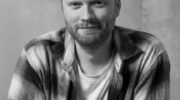
Hello, Allen: many thanks for giving us some time here. Welcome to SFFWorld.
We’re writing these questions as Open Road Media are releasing more of your older work in the USA as e-books.
Of the current list just being released (Time Loves a Hero, Lunar Descent, Oceanspace and Clarke County, Space). Have you got any particular personal favourites in that list?
Although I’ll assert that I like all those books — really, I wouldn’t have written them if I hadn’t — I think my personal favorite is Time Loves A Hero. It began life as a story I started thinking about while in high school, and many years later it became a novel that I had to delay writing because of personal needs. So it became a novella instead, and after it won a boatload of awards, I decided to revisit it and expand it into the novel I’d intended it to be. So the novel had a long genesis and I’m particularly happy to see it reappear, this time under the title I prefer.
Time Loves a Hero may be known to some as its older title, Chronospace. How and why is this edition different?
It came hard on the heels of my previous novel Oceanspace. That book was pretty successful, so my editor at Ace pushed a similar title on me. I didn’t want to call it Chronospace because it implies a connection between the two novels that really isn’t there — and indeed, the similarity confused some readers — but my arm got twisted and I went along with the change. So when Open Road Media decided to release the novel again, I requested a restoration of the original title, which was derived from a Little Feat song (and if you listen to it, you’ll know why).
During the last few years you have had several older books released as ebooks, how has the response been?
Gratifyingly good. I’ve picked up a lot of readers in the last ten years or so, mainly because of the popularity of the Coyote series, and quite a few of them were unaware that I had a large body of earlier work published before Coyote. I’m like one of those rock bands who put out albums for years and years before producing a big hit, at which point many listeners think they’re a new act. So it’s great to see these early novels find a new audience, something that digital publication makes possible.
How comfortable are you generally with seeing the re-appearance of older work? Is it something you’re happy to do, reaching a potentially new, wider audience, or are they something from your past but something you’ve moved on from?
As I said, it’s been a pleasure to find that readers are discovering my older works, and even when some of them are a little dated — particularly the novels taking place in the near-future, like The Jericho Iteration or Orbital Decay — most readers are willing to accept this. And I haven’t really moved very far from some of this stuff. I still write the occasional Near-Space story, and my last novel, V-S Day*, is sort of a prequel to The Tranquillity Alternative. So it’s a good thing to have the older work out there so that new readers can catch up on the stories and novels that preceded the newer material.
Thinking back, how did you start writing? Was there a particular book or moment in your life that spurred you on?
I started writing in grade school, when a teacher assigned my class to write little stories based on pictures she’d clipped magazines. The one she gave me was an illustration of a family in a flying car. It was one of the few homework assignments I ever enjoyed, and I discovered that I actually liked writing short stories. So I continued doing this as sort of a childhood hobby until it reached the point, when I was about 15, that I decided that this was what I wanted to do with my life … I wanted to be a science fiction writer. After that, there was no turning back.
What is it with the Science Fiction genre you find fascinating?
SF is possibly the most flexible form of writing ever invented. No other genre allows for as many permutations, not even fantasy. Through science fiction, a writer can address virtually any issue, from technological change to social problems, in any era of history whether it be past, present, or future, with characters who don’t necessarily have to be human or even organic. It’s the Swiss Army knife of literature. So because SF writers can tackle just about anything, readers can find a vast range of different forms and subjects. If you don’t like a certain kind of SF, don’t worry … there’s plenty of other kinds out there.
As you’ve said, you have several books in the Alternative History genre. What do you like about writing Alternative History? We’ve been told that it’s rather like being able to be God, as you have the power to move things around and see the consequences of alternative choices of your choosing? How true would you say that is?
It’s not so much like playing God as it’s like playing historian. In alternate history, you get to second-guess conventional historical analysis by postulating how events may have turned out differently if there had been a certain discrete change here or there.It doesn’t have to be a big, sweeping change like, say, the American colonies losing the War of Independence. It can be something a little smaller, like Hitler giving the green light to a proposed alternative to the V-2 rocket program. That’s the basis for both V-S Day and The Tranquillity Alternative, along with several other stories I’ve written in the same alt-history.
Writing ‘an alternative’ suggests that you know much about the ‘real’ version of events. How much research do you have to do, to ‘get the facts right’, so to speak, before you start changing it?
I think that, if you’re going to do alt-history right, you’ve got to do as much research as you would if you were writing an actual historical novel, or even non-fiction. V-S Day had two earlier versions as short stories that needed extensive revision for the final novel version because contemporary research has given us much more information about the Nazi rocket program. But at the same time, the writer has to fulfill his primary objective, which is telling a good story, without getting bogged down in minute details like how many buttons are on a German officer’s uniform. So it’s a real balancing act, and that makes alt-history a particularly challenging subgenre.
Undoubtedly, the science fiction field is a genre that has grown in style, maturity and complexity over the years. Do you find yourself still reading for entertainment much? Or do you tend to read away from the genre?
I go through periods when I’m hardly reading SF at all, or at least not anything recently published. That’s usually while I’m writing a novel of my own, and I don’t want to get someone else’s SF story mixed up with the one that I’ve got playing out in my head. So if I’m reading fiction, it’s usually mysteries or suspense novels, and I’ve got a real affection for pulp fiction of the 30’s and 40’s, When I get done with a novel and have turned it in, I can relax a little bit and catch up on the SF novels people have been raving about.
And what of newer authors? Are there any personal favourites?
There’s some new writers out there producing short fiction who are really quite good. I’m impressed with Jamie Todd Rubin, Lavie Tidhar, and Derek Kunksen. Ann Leckie has made one of most astonishing debuts I’ve ever seen in the genre. And once I get through with my current novel-in-progress, I’m looking forward to reading The Three-Body Problem by Cixin Liu and translated by another impressive new writer, Ken Liu.
Though we perhaps know you best for your novels, you also write short stories. Some of your novels have been expanded from shorter versions. How different do you find writing short stories rather than novels? Do you have a preference?
When I’m working on a novel, I’m heavily into that sort of long-form writing, where you can stretch a story out over hundreds of pages. But when I’m done with that novel … or, as in the most recent case, where I’m writing two novels back to back with no break in-between … I generally revert back to short fiction, which is a more compact and elegant form of writing. I don’t think I have any particular preference between the two, really. Both forms pose interesting challenges, and I like to challenge myself when I write.
And a question about the writing process now. Do you have a process you follow when creating novels and short stories? Does a well-formed idea come to you and you just polish it, or do you spend a long time maturing ideas and mixing them together until you find something that clicks?
The latter. Very seldom have I gotten a brainstorm for a story and rushed straight to the keyboard with it, and even more seldom have I been satisfied with the results. Most of my stories and novels are developed over long periods of time … typically several months, but also years and even decades. I’ve had works that I’ve tried to write two or three times, only to shelve them for quite a long while before I finally figure out how to make them work. So I’m typically mulling over several stories at any given time, doing research and taking notes, while I’m actively working on one project in particular. One nice thing about this system is that I almost never get writer’s block.
Would you care to pass on any advice to writers starting out? What was the best advice you were ever given when starting out?
What a reader wants more than anything else is a good story. Everything else is a secondary consideration. One mistake I often see among new writers — in fact, I used to make it myself when I was novice — is thinking that style comes first. So you see stories that are long on technique — usually something that’s currently in vogue — and short on essential substance like character, plot, exposition, theme, and so forth. Generally, stories like that go nowhere, because most readers aren’t willing to put up with a writer who’s only indulging himself by showing off. But if you can learn to tell a story that someone else is going to want to read, then you can become a successful writer.
The best writing advice I ever received came from one of my old professors, the late Roy Fisher, who was the Dean Emeritus of the University of Missouri School of Journalism. Roy perceived that I was getting this whole substance vs. style thing bass-ackwards, and one day he said something to me that cleared away a lot of cobwebs: “You can’t just write well enough to be understood. You must also write so that you can’t possibly be misunderstood.” Roy was criticizing my newspaper writing, but his advice works just as well for fiction … and science fiction in particular.
How are you finding the e-book revolution? Personally, are you happy with an e-reader these days, or do you still prefer ‘tree-books’?
I belong to that demographic that no one predicted when ebooks came into existence: the constant reader who buys both paper and digital books, and even sometimes both versions of the same book. I’m a book collector as well, so I spend a lot of money on first editions, and often have a book on my bedside table that was published long ago, sometimes even before I was born. At the same time, though, I download a lot of newer material I read, and find it convenient to have a “virtual library” stored on the cloud. So the two recent books I’m reading now — a non-fiction biography and a thriller — are both ebooks, but the older novel I just finished is a paperback that was published in 1976.
And, in 2015? What are your aspirations today?
At the moment, I’m on the last pages of a novel that I’ve been working on for the last seven months, Avengers of the Moon. This is one of those long-term projects I was speaking of earlier, something I’ve been wanting to do for a long time: it’s the first new Captain Future novel since 1946. This novel follows Arkwright, the literary hard-SF novel I turned in last year, which means that Tor will have two books by me in their inventory. Once this book is done, I’m going to return to short fiction for a while. I have three or four stories I’ve been meaning to write for awhile, and I’m looking forward to spending the rest of the year and the early part of next year working on them. So my aspirations today are what they’ve always been: write stories that someone else is going to want to read.
Oh , we’ll look forward to those ones! Once again, thank you very much for your time, Allen.
My pleasure.
*******
(*Our review of V-S Day is HERE.)
Interview by Dag Rambraut & Mark Yon – SFFWorld.com © 2015