

There are those of a certain age in the UK to whom “5.. 4.. 3.. 2.. 1… Thunderbirds Are GO!” is an instant memory, a strident herald from their childhood.*
The puppet series created by Gerry Anderson and his wife Sylvia is one of the most iconic series of the 1960’s, up there with Doctor Who, the Daleks and The Prisoner. The story of the Tracy family and their fantastic machines dealing with rescues around the world were a staple of many a childhood of that time. Despite only being 32 50-minute episodes, transmitted in 1965-66, their delights have often been repeated through the generations. Their repeated showing on the BBC (rather than the traditional ITV television network) in the 1990’s created a new media frenzy, with shops in 1991 selling out of most Thunderbirds merchandise just before Christmas. (And as a parent, at this stage, I well remember the frantic searching, pre-online shopping, in desperation to get the sold out toys for my children who dreadfully wanted a Tracy Island and the respective vehicles for Christmas.)

My reason for mentioning all of this is that we are now, as of September 2015, at a point where it has been 50 years since that first transmission. (The first episode was shown on the 30th September 1965.) And with that date there is a whole new raft of material to illustrate, celebrate and remind us of those halcyon days.
Thunderbirds the Vault is the big coffee-table-book sized tome designed to remind all those fans of whatever generation realise the cultural impact of such a television series.
I must admit that I was a little disappointed initially with this book, as most of the other similar books I have with the word ‘Vault’ in their title have had faux copies of tickets, production plans, artwork, letters, concert programmes and other merchandise that fold out, pop-up and detach. This is instead like the Doctor Who: The Vault book in that there’s nothing so overtly fancy here, alas, but there is a wealth of photographs of rare ephemera from the 1960’s and 90’s. Though the book is mainly of the Thunderbirds era, the first section of the book is about how Thunderbirds came into being built upon the success of other earlier Gerry Anderson productions – Torchy the Battery Boy, Fireball XL5 and Stingray.
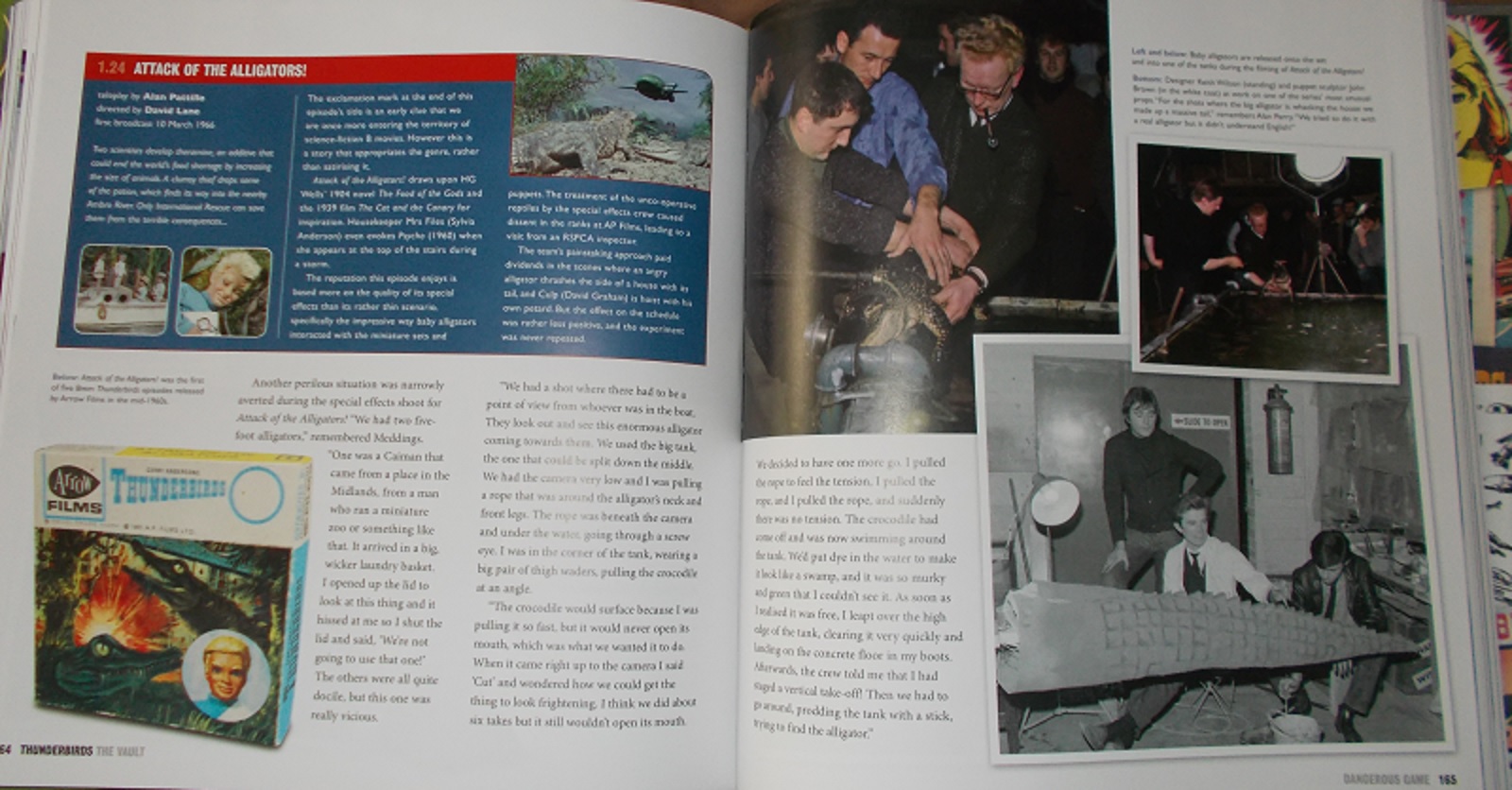
When we get to the Thunderbirds era properly, each episode is précised in order of transmission and there are comments about each about their relative merits and failures. A lot of the photographs are of the production of the programme and show what a difficult programme it was to make – at the time of its manufacture in the 1960’s it was the most expensive programme on the ITV television network, with each 50 minute episode costing the equivalent of £600 000, a figure unheard of at that time for a children’s television programme.
Marcus Hearn, writer of the Hammer Vault and the Doctor Who Vault, does a serviceable job of incorporating a historical narrative with observations and interviews with many of the remaining production crew about how the series were made, mishaps and triumphs all. My overriding impression from this is that it was a very tough and demanding job to work on, not least because of Gerry Anderson, but one in which those who were involved are very proud of, even today.
Rather surprisingly, there is no real mention of the rather good new animated version of the TV series, though perhaps the dreadfully awful live action movie of 2004 is mercifully forgotten. But it is quite clear that this is a book that concentrates on Gerry and Sylvia Anderson’s original vision. With Anderson’s involvement in the subsequent series less, due to the selling of his rights, it is understandable that such things are not covered, though perhaps a little annoying for the completist. The book ends with the rest of Gerry’s ‘uneven’ career briefly summarised and photographs of tributes at Gerry’s funeral, who died in 2012.
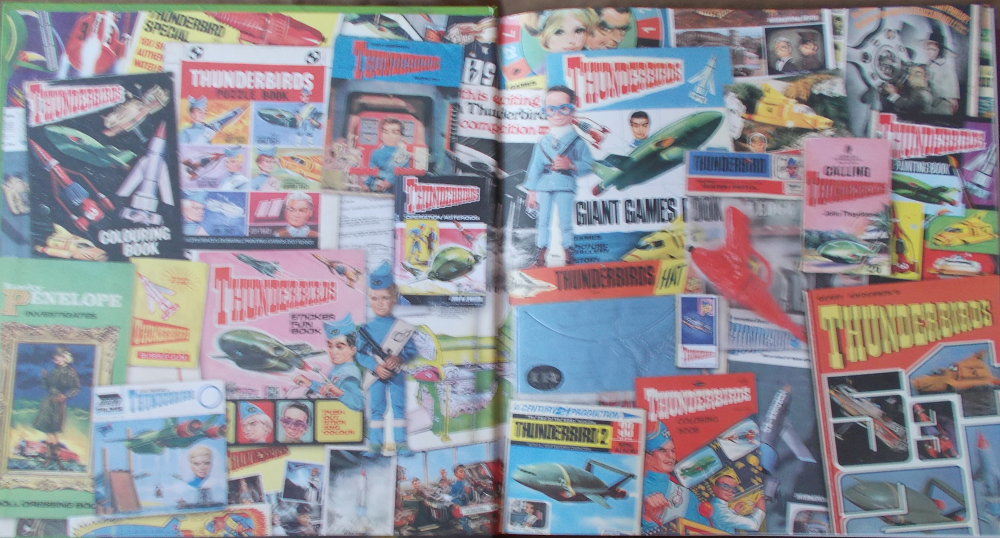
In summary, this is a worthwhile wallow in nostalgia that fans of the original will appreciate. It was one of the most merchandised programmes of its time, with over 3000 products of related merchandise recognised today. Looking at the many pictures of the multifarious merchandise (books, magazines, figures, toys, and records, amongst many others) will bring both a rush of nostalgia and perhaps also a pining for things once owned and now lost, whilst the story of its production will leave you with admiration for those involved.
Most of all though, this is a worthy celebration of an iconic moment of 1960’s British television. Happy birthday, Thunderbirds!
*I am one of those.
Thunderbirds the Vault by Marcus Hearn
Published by Virgin Books
240 pages
ISBN: 9780753556351
Review by Mark Yon






I loved this series. I actually forgot about it until this post. Think I’ll go see if I can watch it on youtube.
That is my plan for this evening too, Jevon: but on DVD here!