
 There’s this strange idea that literary fiction and speculative fiction are in fierce opposition to each other, but in reality, both forms of literature are nothing but different techniques in which to tell a story. There’s this even stranger idea that speculative fiction—call it genre fiction, sci-fi, horror, fantasy, you get the gist—is somehow “lesser” than literary fiction, and thus that it must be looked down upon, and put on a lower shelf. This attitude leads to bizarre developments, such as how Kurt Vonnegut—who is clearly a science fiction author, considering all his writings about Tralfamadorians, timequakes, and more—is not generally regarded by the literary establishment as a writer of science fiction, mainly because the cultural importance of his work means that if they were to admit such a thing, they would also have to acknowledge that sci-fi can be just as significant as literary fiction.
Obviously, there’s no reason that speculative fiction should be snubbed. While one can point to any number of cheesy sci-fi, fantasy or horror stories and make snide remarks, these same remarks can be made about any number of cheesy pieces of literary fiction. In fact, genre fiction has produced some of the landmark works of literature, including 1984, Lord of the Rings, and Frankenstein.
As speculative fiction fans, we already know this. But it’s about time that the world starts recognizing it, too.
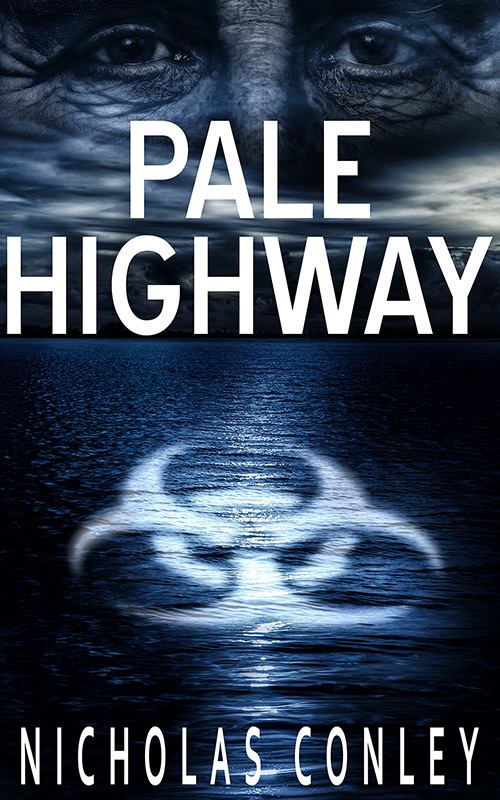
My upcoming novel Pale Highway is, first and foremost, about Alzheimer’s disease. It is also a science fiction novel, wherein the narrative is centered on a Nobel Prize winning immunologist’s effort to find a cure for a horrific new superbug. As a writer, I’ve often been asked why I choose to write fiction that contains speculative elements. I’ve been asked why, when writing about Alzheimer’s, I chose to write it as a science fiction story instead of a literary one.
My answer is that, first of all, my favorite works of fiction tend to fit loosely under the sci-fi/fantasy/horror umbrella, and one should always write what they love. Second of all, writing this story as a science fiction tale gave me the freedom to speak about Alzheimer’s in a way that was truthful, personal, and specific to my particular voice, using those speculative elements to illustrate abstract concepts.
That’s what makes fantasy and sci-fi so interesting to me: through using fantastical story elements, a writer can discuss serious topics in a unique way that broadens the conversation, and hopefully exposes it to new audiences.
Consider Star Trek. In the original series, there was a landmark episode in which the Enterprise encountered a fugitive from the planet Cheron, an alien whose face is black on one side, and white on the other. This alien is tracked down by another from the same planet, who is identical other than the fact that his black and white sides are reversed—something that seems irrelevant to the Enterprise crew, but is revealed to be the cause of racial segregation on the planet Cheron.
What elevated Star Trek from a fun space western to a worldwide phenomenon were stories like this one, which spoke out about contemporary political issues through the guise of genre fiction.
But Star Trek is hardly alone. Consider a movie like District 9, which uses aliens to speak out about apartheid. Consider the famous dystopian novels: Orwell’s 1984, Huxley’s Brave New World, and Zamyatin’s We. Though much of the technology written about in these novels has now become commonplace, at the time these were works of science fiction which pointed out the dangers facing society, problems which still exist today—and some might argue have gotten worse, considering that Orwell’s horrifying telescreens feel closer to reality every day. More recently, Dave Eggers’ The Circle takes the same approach, crafting a negative utopia ideally suited to our contemporary privacy fears. The book Under the Skin by Michel Faber is an uncomfortable warning about factory farming.
Science fiction is not alone in this regard. Sure, Rosemary’s Baby is about the birth of the antichrist, but it has a lot to say about the sexism in society, represented by a demonic coven that attempts to control what Rosemary eats, which doctor she goes to, and who she socializes with. George Romero’s first three Living Dead movies are brilliantly gritty works of art, using zombies to illustrate the ills of consumerism. Fantasy is no different. Both World Wars—the one that had happened and, at the time of its writing, the one that was happening—weigh heavily on the narrative of Lord of the Rings. The political themes of Game of Thrones are fairly self-evident.
Today, the mainstream acceptance of speculative fiction is at an all-time high. We live in a world where Stephen King has become a household name, and a movie like Gravity wins Academy Awards. Still, not everyone is convinced, and some still place speculative fiction on a lower shelf.
It shouldn’t be a competition. It shouldn’t be a fight. Good storytelling is good storytelling, whether it contains speculative elements or not, and the only scale a story should be graded on is quality. So let’s put everything on the same shelf, enjoy it for what it is, and give this tired argument a rest.
***
Nicholas Conley is the author of Pale Highway. More information can be found at www.NicholasConley.com.





Excellent stuff.
Every literary and film masterpiece depicts real-life problems. These issues may be hidden in different parts of the plots, but the thing in science fiction is that these concerns are being shown in a different way that people would not see coming.