
Welcome to SFFWorld.com Daniel.
 First of all congratulations on your recent Andre Norton Award nomination. How does it feel to have your book nominated for such a prestigious award? What was your first reaction?
Thank you! The first thing I said when I found out was “Whoa Jesus!” and then I did a little dance. It feels amazing to have Shadowshaper recognized and celebrated, the honor is gigantic.
I’ve read the first book of your Bone Street Rumba series, Half-Resurrection Blues, but for the benefit of those who haven’t, please tell us a little about the story.
The Bone Street Rumba is about Carlos Delacruz, the half-dead henchman for death’s sprawling bureaucracy. He inhabits that messy borderland between the living and the dead, has friends and enemies on both sides and ends up falling in love and causing a whole lotta trouble along the way.
I like your main character, Carlos Delacruz. He seems to view the world with honest clarity (when he hasn’t been drinking too much or pummeled by a ngk or after a girl). Can you tell us a little more about him? Is he based on someone you know?
Ha – thank you. I pulled Carlos’s voice directly from my own blogwriting actually – I was a paramedic for ten years and I’d come home and post about what I’d done and seen the night before, tell this quirky and tragic and hilarious little stories, and I realized it was pretty easy, and the stories were cool, and if I just made stuff up and threw some ghosts in there, well, that’d be fiction! So I did. Carlos isn’t me, but his voice does come from mine, if that makes sense. And we’ve made some of the same dumbass decisions, but fortunately not all the same ones.
Some of the other characters in Half-Resurrection Blues are just as intriguing, like Kia. She reminds me of someone I know. Do fans often tell you that reading one of your books is like hanging out with their friends and family?
Yes! And that it’s like home, which I think is the best thing to hear from readers. I love that. And Kia is one of the characters that demanded more space on the page. I originally wrote her just as a kind of side-character but she took over and I love that she did. She’s so fully alive in my mind, what ends up in the book is barely the half of it.
I’ve never been to Brooklyn, but the novel is filled with references to place. From reading your novel, I have good spatial sense of your story world (and I love the map). How much does it match the real world?
It’s pretty much street for street, building for building Brooklyn. I love this place and how it sounds and feels and moves, the rhythm and history of it, so I do my best to get all that onto the page when I write.
I also enjoy the diversity of characters in Half-Resurrection Blues. Is that a reflection of the neighborhoods in Brooklyn or New York that this story is set in?
Very much so. You can’t write New York without people of color – many different kinds of people of color. I mean, you can, but it’s not true. And I’d add to that, there are layers of complexity and power that function within those communities that are part of that story, part of any New York story, and only add to the depth of a narrative.
The second novel in the Bone Street Rumba series, Midnight Taxi Tango continues Carlos’ story…or should I say death? It features Kia, right? How many books in this series do you have planned? Since Carlos can’t die twice (or maybe he can?), do you plan to keep writing in his story-world indefinitely?
Later this year, I’ll be re-releasing a deluxe e-book edition of Salsa Nocturna, which is the short story collection that started it all in a sense. Chronologically though, it takes place after Midnight Taxi Tango, literally starts the day MTT ends in fact. I’m adding a few more stories and an intro, filling out the world a little more in the run up to the release of Battle Hill Bolero next January, which will be the third and, as far as I know right now, final novel in the Bone Street Rumba. I’m sure I’ll keep writing stories in that world, and maybe one day another novel, but for now, I’m putting it down to rest. The cycle is complete, so to speak. You’ll see what I mean…
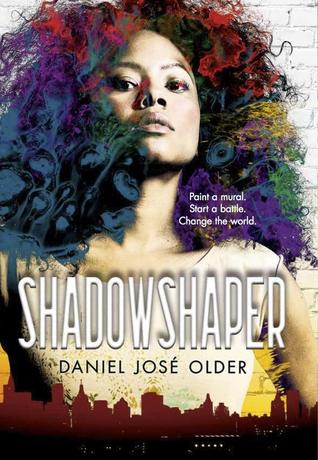 You also have another novel, Shadowshaper. This was intended as a young adult novel, no? But it seems similar to your other work with an urban setting and supernatural aspects, so how is this different? What makes it young adult and what does that mean to you?
It’s definitely in the same world, and there’s some cross over in characters and settings. To me, YA is defined by its centering of a crisis that forces a young person to actively step towards adulthood and shed some of the myths of childhood. So while MTT features a teenage protagonist and she does grow up a lot during the book, that’s not what the book is about and therefore it’s not really Young Adult. In contrast, Shadowshaper really revolves around Sierra’s journey to an understanding of herself, her family legacy, and taking steps to defend it and live up to her destiny. Total YA.
In preparation for this interview, I visited your website and I’m very impressed. You also have a band (Ghost Star)! Which came first, music or writing novels? Do you ever mix the two?
I always wanted to write, was never really sure what to write. Spent most of my twenties jumping around to different mediums and genres, and music was one of the main ones. I love it with all my heart, but prose is my first language. The two are definitely in constant conversation in my mind though, and they inform each other. At most of my readings, the band backs me up and it really brings the stories to life on a whole new level.
Okay, so I walk into my apartment to find my brother sprawled at the bottom of the stair case. At the edge of my vision, I catch a glimpse of something hovering at the top of the stairs. Do I: call 911 for an ambulance or Carlos? Or would I be doing both?
Ha! Being a medic certainly brought me face to face with many different forms of crisis, from the mundane to the utterly batshit and everything in between. So I learned a lot about how humans respond to disaster and how we heal, both physically and spiritually, and that all plays a part in my fiction. On a more basic level, it was helpful being around all that procedural emergency type-stuff for so many years, just to have a real sense of the rhythms and flows of unfolding tragedies. I mean – that’s what books are made of, right?
I noticed you were co-editor on the Long Hidden: Speculative Fiction from the Margins of History project put out by the now defunct Crossed Genres. You also write about diversity in genre fiction (example here). As a person of color, how important was it to you to be part of that project? Do you think it changed people’s perspective? The industry?
Oh this was an amazing project to be part of – I think it really fulfilled a dire need people have to see themselves in stories, and part of the way we saw that was the astounding success of the Kickstarter campaign we launched in support of it. We absolutely exceeded all expectations, shooting past our original goal in just three days and then doubling and tripling the amount in the month to come. People need these stories, and it was so terrific to be in a position to help usher them into the world.
I write too, and a person of color. But my motto has always been to put my stories first, and I tend to ignore all that other crap (or try to), even though I get irked about things on a daily basis. But you don’t ignore it. Do you ever get tired of having to explain your position or correct your colleagues? Because I imagine you’d have to do it on a daily basis.
Hehehe – I mean, I pick my battles. I think more often than anything else, I feel inspired by all the amazing, outspoken, badass folks raising their voices and telling untold stories on my timeline and in my writer community every day. That’s really the take-away from this amazing time in literature – people are taking risks and being ferocious and we’re seeing the results of that, both in the changing faces on the bookshelf, in the industry itself and in the pushback. But the pushback – people being willfully ignorant and angsty about everything not being about them for once, well, that’s just one way we know we’re doing something right. Sometimes it’s annoying, mostly it’s hilarious. What’s not funny is the children’s book industry thinking it’s okay to have books showing smiling enslaved people, and yeah, shit like that does make me shake my head and sound off in essays, because seriously – it’s 2016. Come on.
I really enjoy your stories, Daniel. Can you tell us a little about what you are working on right now? What can we expect from you in the near future?
Thank you so much! As I mentioned earlier, I’m working on the re-release of Salsa Nocturna, and then Battle Hill Bolero, super excited about that. Up ahead, you’ll be seeing more YA from me and I have some Middle Grade projects I’m working on now that I can’t wait to tell the world about…stay tuned.
*****
Interview by N.E. White and KatG – SFFWorld.com © 2016





Excellent interview.