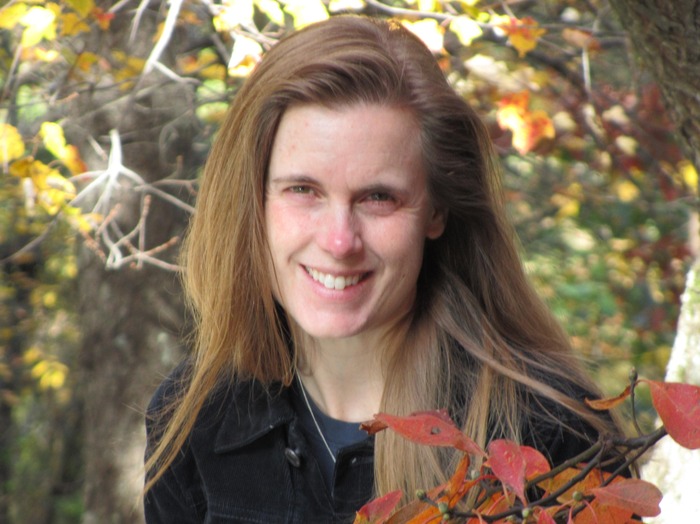
 Welcome to SFFWorld, many thanks for giving us some time here. In your own words, who is J.B. Rockwell?
In four words: Wee woman from Connecticut. Okay, so that doesn’t tell you much. I’ll skip the stuff about Guam and SCUBA diving and archaeology and other blah-blah-blah anyone can read in my bio and offer this instead: I’m one of those people that still hasn’t quite figured out what she wants to be. That said, I’ve sampled a lot of occupations over the years and have a pretty good idea of what I don’t want to be. Writing, though…Honestly, I never even thought about being an author until about 5 years ago, despite being an avid reader since I first deciphered the alphabet. Not sure if the decision to try my hand at writing was naïve or crazy, considering I have absolutely no formal training in the area (unless you count all the papers I had to write for my archaeology degree) but here I am! Oh, also? I have this dream of owning a fox and otter habitat, and—what? It could happen!
How would you describe Serengeti in your own words?
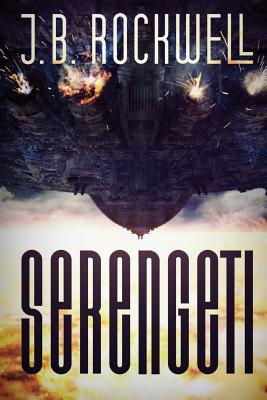
Serengeti is about an AI warship (named Serengeti) who’s wrecked in battle and ends abandoned and alone, trying to save her marooned crew. It’s one of those stories that’s not quite this and not quite that—not ‘hard’/heavily science sci-fi, that’s for sure, part space opera, part military sci-fi, and part Robinson Crusoe survival story. If that makes any sense. Basically, you get the best of both worlds: lots of spaceships and intense space battles coupled with some very close, very intimate and emotional moments between the central characters. Surprisingly, there are scenes in the book that seem to have made a lot of people cry—sorry/not sorry!—and others that had them laughing out loud.
Your main character is a sentient AI warship with a deep affection for her crew. How did you come up with the idea for the book in the first place?
Serengeti started off as a short story that was essentially a much more simplified version of the second half of the book (sorry being vague, trying to avoid spoilers here). Like most of my stories, that original idea started with a single image in my head (a wrecked ship drifting) and a line I scribbled down in a notebook that read something like: ‘She dreamed of dying, but never of death’. I think the whole idea came to me while I was running one day, which is my usual MO for book and short story ideas. Evidently my brain only fires on all cylinders when oxygen deprived. Anyway, that idea lived in that notebook for a long time before I finally figured out what to do with it, and everything seemed to snowball from there. Interestingly, Serengeti herself seems to be the most polarizing aspect of the book when it comes to reviews. Some love that I made her very ‘human’ in the way she experiences emotions, some wanted an AI seems that followed the more familiar thread of either being ‘evil and self-serving’ (think HAL 9000 or the AI from Ex Machina) or very mechanical and computer-like (think the ship AI on Star Trek or even the portrayal of Data). Well, I didn’t want that. I wanted to show the opposite possibility: an AI with personality—real personality. Who cared for and felt protective of her crew—human and robot both. Basically, I wanted readers to connect with Serengeti as much as the human characters in the story. And, for the most part, I think I succeeded.
 Serengeti immediately brings to mind African savannas. Why Serengeti?
Don’t hate me, but I’m going to give you three answers for that, because that’s the truth. Answer #1 (which is the most straightforward) is that I pick character names—in this case a ship—based on what sounds good to my ear. Serengeti is a female character and Serengeti ‘felt’ female to me, while also having a strength to it that fir the character of an AI warship. Answer #2 is that all the Valkyrie class warships in the book are named after deserts and islands. The military does something similar (ex. Coast Guard buoy tenders are all named after species of trees) so I borrowed that tradition for Serengeti. Answer #3 is that—believe it or not—I did consider the setting. Space is the big empty—a vast stretch of openness that reminds me in many ways of the African savannahs and deserts like the Serengeti. Except for the sun, of course. And the heat. And the lions…
What goals might you have set for yourself when writing Serengeti and how do you feel about the end result?
The original goal was just to finish the book and have someone like the story. I was honestly nervous about that second part because (1) the main character is a sentient AI—not your typical protagonist and not even human—and there are many and varying opinions on how an AI should act; and (2) the ‘feel’ of the first half of the book is very different from the second. I wasn’t sure if ‘’d lose people by switching from full on more traditional military sci-fi/space opera setting complete huge space battles and resulting carnage to the more intimate and emotional setting of the Robinson Crusoe part of the story. Personally, I love the end result and I love this book. I might be biased, but my agent loved it too—that’s why he signed me—and based on the number of requests for a sequel I’ve seen, readers seem to have really enjoyed the book. So, yeah. I’m happy. Ecstatic, actually, that readers have connected with my little book.
There are rumours you have plans for a sequel, anything you can reveal?
Yes! There is a sequel and it is already written and patiently waiting for its time to be revealed. So, what can I tell you about it…well, Serengeti is back. And her little robot buddies. Some new characters are introduced and I get to expand the universe a bit by bringing in some new layers. Other than that, you’ll get the same mix of space battles and intimate moments, so if you liked that you’ll be happy. And if you didn’t…well, you’ll want to steer clear.
What is it with Science Fiction you find fascinating?
I love the wide open imagination it offers. Granted, as an author, you still need to stay grounded in scientific realities but you can create new tech (like liquid laser) and as long as your setting is far enough in the future, who’s to say that any idea you come up with couldn’t be? Add to that the enormous universe you have to play in with planets and spacestations and interstellar ships—there’s just so much there to work with. It’s really an author’s dream.
What books inspired your career as an author, and what authors do you enjoy now?
I’ve read so many books and every last one of them—the ones I liked and the ones I didn’t—inspired me a in a different way. If I like a book, it makes me to try and write something as good as what I just read. And inevitably the writing style or plot ideas or parts of that universe end up influencing my own writing. Of course, books I don’t like can also be motivational, as in ‘surely I can write something better than this’. I read widely, but sci-fi and fantasy are my first loves. Unsurprisingly, my favorite and most influential authors are speculative fiction writesr. Two favorites are C.J. Cherryh (especially her Company Wars books) and Neal Asher (notably his Polity War books).
What is your favorite and least favorite part of the writing process, and why?
Favorite part is that moment of excitement when a new book idea hits you. That and completing the first draft—just finishing is a huge relief and gives you a great sense of accomplishment. Worst part is that 6th or 7th draft where you stop really seeing the story and start almost hating the book because you’ve read it so much. That’s the point where you start questioning if it’s any good at all and get tempted to chuck it all in.
What’s next? Do you have more new and exciting projects you’re working on?
I’ve got a couple of books ready and waiting for my agent to say go. One is the Serengeti sequel mentioned earlier, the other is a standalone sci-fi set in a different ‘universe’ than Serengeti. I’m describing that one as ‘Ali Baba and the Forty Thieves in Space’. I also dabble in short stories and have the last book in my Breakshield fantasy series coming out this fall. Oh, and a graphic artist friend and I have this idea for a graphic novel. We’re still in the early stages of that project but hoping it will someday become a thing. I seem to always have a few irons in the fire—makes me nervous when I don’t have anything in the works.
*****
Interview by Dag Rambraut – SFFWorld.com © 2016