Alternate History (or “alternative history” for the grammatically strict) has been asking “what if things had gone a little differently?” since the days of the Roman scholar Livy. He pondered what might have happened if Alexander the Great had marched west against the Roman Republic instead of storming the Persian Empire. In accordance with civic pride, Livy of course concluded that the Romans would have defeated him.
The “what if?” is the core of alternate history, with the initial change to the timeline known as its “POD.” POD stands for “Point of Divergence” or “Point of Departure,” depending on taste. I personally enjoy “departure” as it illustrates the hypothetical journey that you are about to take as you map a new timeline.
Common what ifs stem from big events, the most famous being the South winning the American Civil War or Nazi Germany winning World War II. Other PODs may be smaller, such as if the Baruch Plan had been endorsed and there were no nuclear stockpiles for Mutually-Assured Destruction, or if the streambeds full of gold had been discovered in northern California by the Spanish, English, or Russians. A lot of alternate history immediately jumps into the fallout from such a change, not worrying about the exact details of the POD. That may not really matter and only distract readers from the alternate present where perhaps the western trenches of World War I stretch from the Appalachians to the Rockies or Jesse James teaches Oscar Wilde how to fistfight after avoiding being shot from behind.
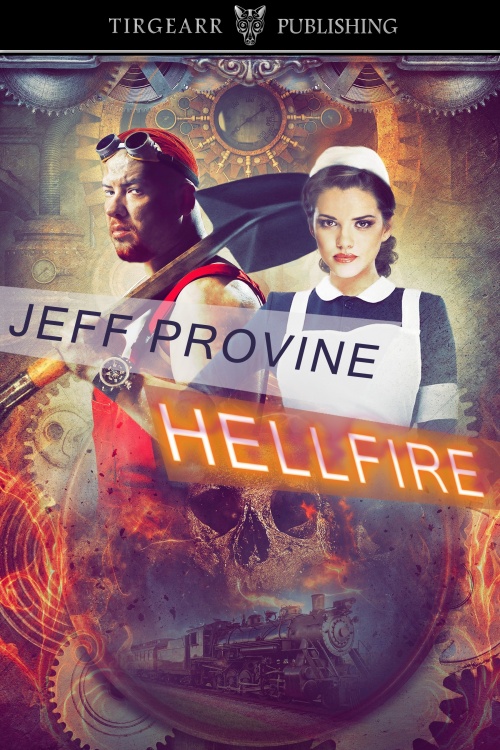 In my latest alternate history novel, Hellfire (released June 8 from Tirgearr Publishing), the POD is distant from the actual story, which takes place in Gloriana, the state west of the Mississippi founded by Aaron Burr after his duel with Alexander Hamilton. The background of this steampunk world begins when Isaac Newton discovers a crystalline catalyst that makes fires burn hotter than they should for the fuel present. Called “last of the magicians” by John Maynard Keynes, Newton wrote more than a million words about chemistry, and rumors say that a lot more of his work was burned in an accidental fire. What if something revolutionary had survived?
In addition to PODs, alternate histories explore the “butterflies,” those seemingly indirect consequences that create major changes for the timeline. Drawing its name from the classic Bradbury short story “A Sound of Thunder,” butterflies may determine who was not born thanks to would-be parents never meeting, what inventions were made or missed, and even what nations rise or fall. Like a butterfly being killed in the time of the dinosaurs or a drop of water trickling down the hand of a paleobotanist, when one little thing changes, the whole course of events change. If Alexander the Great hadn’t overthrown the weakened Achaemenid Persians, perhaps the empire would have been ripe for the plucking by Livy’s Romans instead of centuries of failed campaigns that arguably left the West and East divided.
 During Newton’s lifetime, a discovery like a catalyst for hotter temperatures from a fire might be little more than a curiosity, like much of Robert Boyle’s work with gasses. As the industrial revolution begins later on, “free” heat from a fire is world-changing. Steam engines become much more efficient with less coal or wood needed to boil water. Factories can churn out more goods more cheaply. Further, without needing to haul fuel around, transportation booms as locomotives and steamboats conquer distance with ease. A small, intensive furnace could heat up ambient air to fill a balloon, giving rise to airships in the sky.
According to the Law of Conservation of Energy, the extra heat has to come from somewhere. With catalyst-driven fires giving a stink of sulfur, superstitious folks say the catalyst acts as a wormhole, opening gates into hell itself, leaching the heat of the Lake of Fire while it lets slip the words of the damned. Many people won’t even have it in the house. Some say that amid the roar of the flames, they can hear voices that whisper evil ideas. Those who spend a good deal of time near fires using catalyst go mad, often violently. Over the course of generations, this “Stoker’s Madness” becomes accepted as a part of life, a trade for having trains, factories, and airships.
Following the flight of butterflies away from the clear technological impact of the catalyst, the world of the nineteenth century becomes a very different place. Those who are willing to use it thrive economically. With widespread consumer goods readily available, materialism becomes the major social force. Over the course of time, religion is marginalized. Mental institutions are put up near industrial centers, prompting an earlier rise of champions like Dorthea Dix and formal study of psychology.
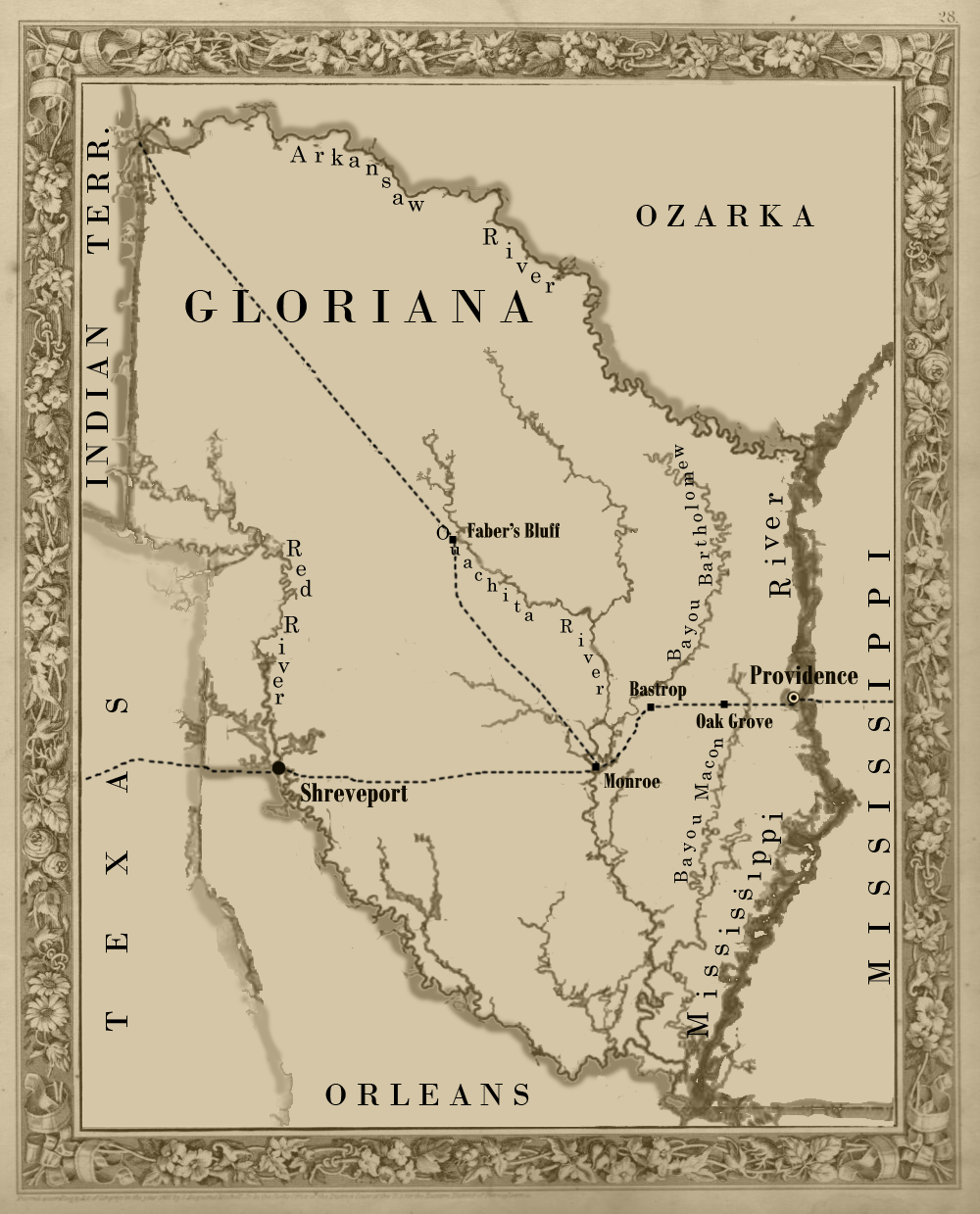
As a more specific butterfly, the improved communication and transportation gives Aaron Burr an early start to his defense. Burr had leased a huge parcel of land known as the Bastrop Tract in what is today northern Louisiana. In our own timeline, he was arrested for treason on suspicion of conspiracy toward sparking a war with Spain, and the colony fell apart. For Hellfire, however, Burr successfully defended himself before Congress with such vigor that he not only won attention for his colony but embarrassed Thomas Jefferson and his supporters for legal shenanigans, causing James Madison to lose the 1808 election. There is then no war of 1812, and instead American-British relations improve as Burr spends a great deal of money importing Newton’s Catalyst to establish a city of industry at Lake Providence on the western banks of the Mississippi. The settlement grows into a territory and finally Gloriana, a powerhouse in the western South. Yet progress comes at a cost: people work endless hours pursuing wealth, and stagnant putrid clouds linger over the city from the many catalyst-driven fires.
Hellfire opens in 1856 with Newton’s Catalyst practically commonplace around Gloriana. Then something more than whispers begins to break through, as seen in this excerpt from chapter 1:
Even with the gushing hot wind from the furnace, Nate shivered. He lifted his boot from the pedal and let the doors swing shut again.
“Everything all right?” Jones called.
Nate shook his head slowly. “No. I don’t know what it is, but it’s not right. There’s something in the fire.”
“Can you dump it with the ashpan?”
Nate kept shaking his head. “I don’t think so.”
A jarring bang rang from the firebox doors. Nate jumped back and held up his shovel like a weapon.
The doors rattled again, and then the one on the right shifted open just a crack. A fresh sound of wailing poured into the cab. Something not quite black and not quite gray slithered out like a headless snake.
“What is that?” Jones screamed.
Nate swung at it with the shovel, whacking it with the dull side. A roar like the wind out of a cave came from the firebox.
Jones screamed louder, “What was that?”
The tendril grew longer and pushed back the firebox door. Steadily, fighting the weight of the heavy door, the thing climbed out of the firebox. The tendril was like a tail reaching from a shoulder. Its five other legs were segmented like a spider’s, but its body was fat and grotesque like nothing Nate had ever seen. It had eyes, shining, black eyes that blinked all over its bulbous body.
It cleared the door and fell to the metal plate floor of the cab. Sounds came off it: gurgling, whining, and guttural spitting. Nate stood frozen, watching the horror as it squirmed.
Jones jumped forward and stomped it with his boot.
The thing squealed and wrapped its legs around Jones’s boot, somehow bending them backward by twisting its own knees out of socket. Jones gave a horrified shriek. He stomped again and again, but the thing didn’t seem to get hurt.
Nate shot forward with his shovel. “Hold still!”
Jones froze with his leg in midair. The thing held tight around his boot.
Nate whacked it with his shovel again. It gave another unholy rumbling scream. Several of its legs came loose and wagged in the air.
Nate lifted his shovel and stabbed downward with the blade, running it just underneath Jones’s sole. It caught the thing on its belly or back, Nate didn’t know if he could call it either of those, and the force was enough to shove it off.
The thing fell to the floor again and writhed.
“Throw it back in!” Jones shouted. He had pushed himself against the side of the cab as far as he could.
Nate whacked it again with his shovel and then scooped it up. Its legs wriggled, but they didn’t seem able to grab hold of the blade. He stomped on the pedal to open the firebox.
The heat and wailing of the flames leaped out at him. Nate fought past and shoved the thing back inside. He stomped the release and sealed the doors again with a clang.
Hellfire is available on Kindle US, Kindle UK, Smashwords, Apple, Kobo, and Nook. Check out more alternate timelines from Jeff at his blog, This Day in Alternate History.