

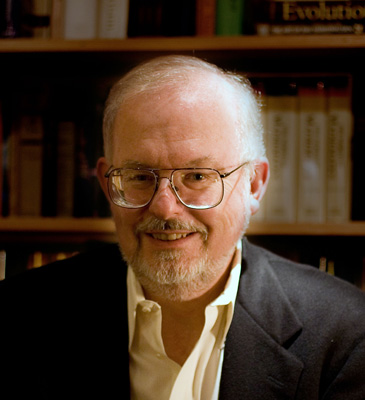
Greg Bear is the recipient of two Hugos and five Nebulas for his fiction, he has been called “the best working writer of hard science fiction” by The Science Fiction Encyclopedia.
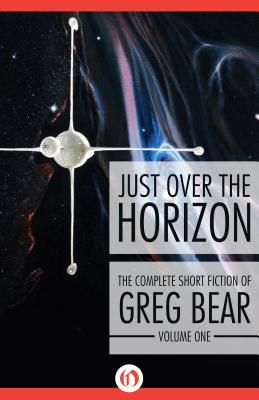
Hello, Greg: many thanks for giving us some time here. Welcome to SFFWorld. Open Road Media has just released Just Over the Horizon which is the first of three books with your complete short fiction. Can you tell us a bit about it and do you have any personal favourites?
The short stories came first, and novels took a big longer to sell, so I have many memories and many favorites. This volume has both of my double award winners, which kick-started a career already cranking along! And conceptually, “Blood Music” led to both the novel and suggestions I wasf engaging in metaphor and prophecy—metaphor for the HIV epidemic just beginning to be recognized, and prophecy for nanotechnology, which K. Eric Drexler was seriously promoting in books, essays, and lectures. Functionally, the story never struck me as being about HIV—but took a side on the nanotech protein/biology “slime vs. silicon” debate. So far, biology is the dominant winner in the contest. There are also a couple of my favorite fantasies, including “Sleepside Story,” which owes a great deal to both “The Wiz” and Jean Cocteau. “Dead Run” became an episode of the 80’s TWILIGHT ZONE, much to my delight.
I must say I really enjoyed the comments accompanying each story. How has it been to go back and revisit stories from your early career like this?
Fun for me as well. I’ve always been fascinated by the history of SF and SF culture, and the eighties, when most of these stories were published, was a rich time for the field. Being part of it was heady and a delight.
 In Blood Music you explore nanotechnology with nanobots gone horribly wrong and when reading Silicon Times e-Book Review I couldn’t help drawing parallels to Japan where recently an AI program successfully entered a writing contest. Do you sometime get deja-vu moments when something you’ve written about suddenly almost is a reality?
When robots commit story, do they suffer the same egotistical pangs as organic writers? Maybe—and they could also form clans and support groups, just as we do!
I guess it’s safe to say that Science Fiction can impact how we view our own future. Is that something that has been important for you?
Hard to tell the difference. I’m so steeped in SF ideas that every time a real accomplishment pops up, I feel the urge to add a footnote. But how much SF contributes to science and tech progress is a fascinating question. Many of the best scientists read it, or read it when they had time—in their younger years!
On the topic of Artificial intelligence, it has been a hot topic in the media the last years. What do you think the consequences of humanity creating artificial intelligence will eventually be?
Building friends and helpers, very likely. I’m sure someone will come up with an autonomous super-intelligence someday… perhaps we will know when there are only empty booths and word balloons or tweets on JEOPARDY!
In one of the stories you touch upon the fact that the science is not correct. Nonetheless I feel that being scientific accurate is important for you. Am I wrong and do you do a lot of research for your writing?
I do, and try to get the known science right—but when speculating, or writing about future science, you have to step off the page and make some educated guesses, and that can be problematic. But still fun.
This is just a personal observation and might not be correct, but I feel that short stories seem to give authors a way to experiment much more and by that also sometimes end up with truly thought provoking ideas compared to what I see in novels. Do you think there is some truth to this?
Of course. Not as much time and effort is committed to most short stories, and so one can be free to explore an off-the-wall or particularly odd idea. As well, science fiction often works best in the novella length—when an idea can be fully developed without overdoing it.
How are you finding the e-book revolution? Personally, are you happy with an e-reader these days, or do you still prefer ‘tree-books’?
My Kindle is loaded with books of all sorts, and I love the upset brought about by modern self-publishing, e-books, the whole process. I think even in the short run the effects have been interesting and positive, helping diversify a business now made up largely of huge conglomerates, and opening up space and opportunity for smaller publishers—and individual writers with a pioneering streak.
Sixteen years ago I actually asked you a question in an interview that I would like to ask again. What has the Internet meant for you as an author since then?
Great tool for research and for getting news and insight into modern culture worldwide. Interesting echo-chamber for some folks who don’t have the same level of curiosity—good and bad effects all around. Humanly unavoidable!
Let’s finish with the age old, but always interesting question. What’s next, which new and exciting projects are you working on?
GB: Just finished TAKE BACK THE SKY, the third book in the War Dogs sequence, filled with lots of big ideas and scary ideas and astronomical speculations. Not at all easy to finish a trilogy! So I may slip back into single volumes for a while. Or work on a fantasy!
Once again, thank you very much for your time, Greg.
My pleasure!
*****
Interview by Dag Rambraut – SFFWorld.com © 2016




Many thanks to you both for that interview, I enjoyed reading it. Greg, you have such a spirit of adventure about the future, and I really admire that.
Greg Bear’s “raw insight” is unparalleled among novelists and unmatched by those who have since linked angstroms to ecosystems in all living genera and those who have linked viral latency to all pathology.
“…viral latency is responsible for life-long pathogenesis and mortality risk…” Paul M. Lieberman “Epigenetics and Genetics of Viral Latency” http://dx.doi.org/10.1016/j.chom.2016.04.008
For comparison, “Darwin’s Radio” and “Darwin’s Children” exemplified how ecological adaptation occurs in the context of biophysically constrained energy-dependent protein folding chemistry. Starting with the representations in “Blood Music” to arrive at the potentially apocalyptic demise of specific human populations in “Quantico” established Bear’s works as those that should be required reading by all serious scientists who would like to learn how cell type differentiation occurs.