
In this series, we are going to speak to some of the leading science fiction authors about a theme, technology or event which they have written about.
Today, we are joined at SFFWorld by Andy Weir, international best-selling author of the phenomenally successful novel, The Martian. Today though, we’re going to move away from Mars and talk about crime in space, something which features heavily in his yet to be titled next novel.
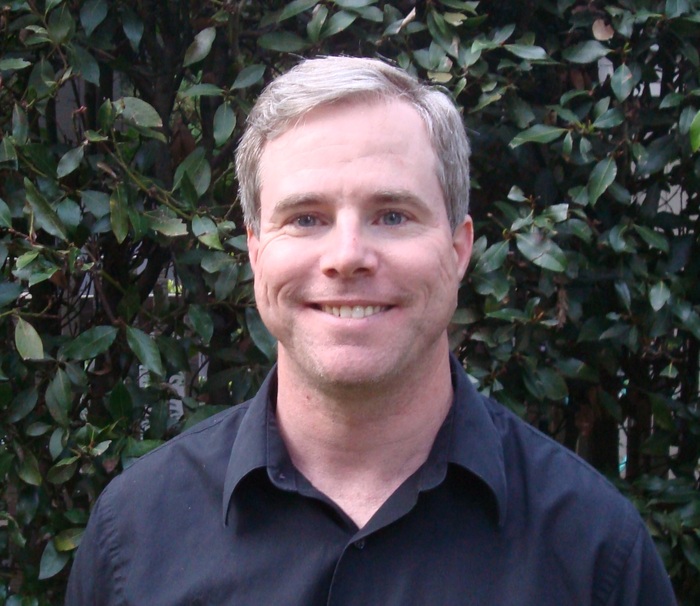 Hi Andy, welcome to SFFWorld. Allow me to congratulate you on your monumental success with The Martian. As both a police officer and a huge hard science fiction fan, I can’t wait to see what you do with the theme of crime in a realistic space setting. For those who may not know about your next book yet, can you tell us a little about it?
It takes place in a city on the Moon in the 2080s time frame. The main character is a woman who is a low-level criminal who gets in over her head.
At the moment, our astronauts and cosmonauts belong to sponsor nations. Now hypothetically, had Buzz Aldrin stolen Neil Armstrong’s toothbrush on-board the Eagle, it seems clear that it would be tried under US law. How would this work on the International Space Station, and how might it work as we expand further throughout the Solar System?
By law, anything not inside a nation’s borders is “international waters” and maritime law applies. The International Space Station is, technically, a collection of vessels operating under different flags. Each country owns their module. So, the court system with jurisdiction over the Great Toothbrush Caper would depend on where the event occurred. If it happened in the Freedom Module, it would be tried in the US. If it happened in the Zvezda Module, it would be tried in the Russian Federation.
Barring a new international agreement, this is how things would continue as we expand into the solar system. A ship is the jurisdiction of the nation whose flag it flies. A permanent installation (like a Mars base) is legally identical to an offshore oil rig, which is in turn identical to a ship. So it all comes back to what flag they fly.
Realistically, though, when we reach the point where we’re colonizing the solar system, we will have to change the laws. At present, no nation can claim territory off Earth. But if a country sinks 100 billion dollars into making a Mars colony, they’re damn well going to want to own it. The Outer Space Treaty will eventually be amended to allow territorial claims off Earth. There’s just no other way.
 In The Martian, Mark Watney joked about becoming the first ‘Space Pirate’. It’s clear he had the means, motive and opportunity (three important aspects of a crime) to commit this heinous act. Do you see any of those aspects being unique to space exploration or a future economy?
Once you’ve worked out what entity has authority to enforce laws, that entity gets to decide what actions are crimes. Though, in general, crime broadly falls into three categories:
- People victimizing each other via injury or theft/destruction of property
- Failure to pay taxes
- Safety regulations
Pretty much, that’s it. In space, there are limited resources that are omnipresent on Earth (like oxygen) and there are dangers not present on Earth (like explosive decompression). So the laws would apply to these things like they do to anything else, but they would still fall into the three categories above.
So, we can envisage that we may have criminals whose objectives may be somewhat different to those we have now, and we can see reasons why someone might have many and varied motives for committing a crime. One thing seems clear, though, where there’s criminals, there would eventually have to be people who try to stop them. The police and criminality are in a constant leap-frog race to get ahead of each other. How might law enforcement have to evolve to defeat this new breed of law breaker?
Across all societies, the most effective law enforcement is drawn from the same pool as the criminals. In other words: The police come from the same society, live under the same social constructs, and know every written and unwritten rule of the society from which they came. So they are armed with all the same information as criminals.
The cool thing about this is that law enforcement evolves automatically to be on par with criminals. They grew up in the same world.
Further in the future, whole new cultures may develop on the many and various worlds of our Solar System and maybe even beyond. As we go into deep time, do you think crime will continue to exist? Will it evolve further? And will space be the next wild west?
Crime will always exist. But the nature of crime may change. A large percent of modern-day crime is rooted in poverty or desperation. If we had a post-scarcity society, where technology has trivialized food production, shelter generation, medical care, and other life necessities, then crime would be dramatically lower.
But not zero. Because the emotional motives for crime will remain for as long as civilization exists. It doesn’t matter how much free food and healthcare a man has, he’ll still murder the guy who screwed his wife.
Thank you very much for your time and that fascinating glimpse into the how crime may look in the future. Andy. It’s been an honour to interview you. I wish you the very best of success with your next novel and I hope you will come join us again at SFFWorld soon.
On the next Ralph Kern puts the Worlds to Writes, we will be featuring the internationally best-selling author, Peter Cawdron – author of Xenophobia, Galactic Explorations, My Sweet Satan and many other books.
Bio
ANDY WEIR was first hired as a programmer for a national laboratory at age fifteen and has been working as a software engineer ever since. He is also a lifelong space nerd and a devoted hobbyist of subjects like relativistic physics, orbital mechanics, and the history of manned spaceflight. The Martian is his first novel.
Buying links – Amazon.com
Website – andyweirauthor.com
*****
Interview by Ralph Kern – SFFWorld.com © 2016





What a great interview, thank you for posting it!! Can’t wait to read his new book!
Thanks JR, was an honour to have Andy on and get some small heads-up.
On a general note, this is an excellent idea for a themed set of interviews, and it’s great to see SFFWorld doing this! More specifically, nice interview, and some very good comments from Andy there.