I’ve always had a love affair with science fiction. When I was a kid, I gobbled every SF story I could find. I especially loved following authors into the farthest reaches of space to explore bizarre, alien planets beyond the limits of our technology but not of our imaginations. So — somewhat to my own surprise — when I began work on my own first science fiction trilogy, I didn’t stretch out into the galaxy beyond our solar system; instead, I turned inward and discovered that weird, magical, miraculous worlds loom much closer than we think.
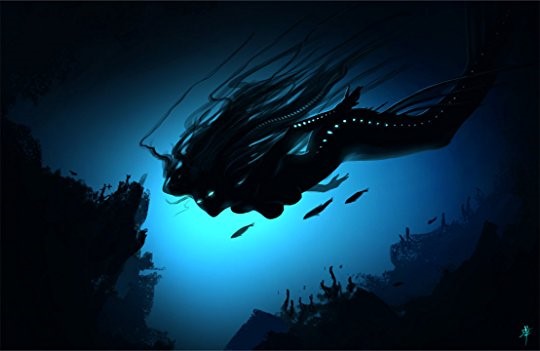
The Aquarius Rising novels take place primarily beneath the waves of Earth’s own oceans in a future where climate change, and a disastrous attempt to reverse it, have wreaked havoc on the land. The Aquarians, human-dolphin hybrids, have built thriving reef communities amid the ruins of drowned coastal human cities. Imagine these sleek, streamlined creatures drifting through a maze of submerged buildings, tending lush gardens planted in the wreckage as surf crashes against the crumbling upper stories. For a landlocked Midwesterner, this was a daunting setting to create… but that’s what I love about speculative fiction. For writers and readers of SF, the only boundaries that exist are the ones we impose on ourselves. Even someone stranded thousands of miles from the nearest seashore can use imagination — and an internet connection — to dive beneath the waves with a race of marine humanoids as guides.
I learned so many amazing things while doing the research for these novels. An online forum of marine biologists and oceanographers helped me build Aquarius with their insights. For example, how do cetaceans (whales and dolphins) avoid drowning when they sleep? They only shut down half of their brains at a time, so that the active half can keep them surfacing and breathing. Do they dream? Are their dream states entangled with unbreakable threads of reality intruding on their senses? Whales and dolphins descend into the depths and resurface without being crippl
ed by the Bends. How? Their lungs collapse and compress oxygen into thickened membrane linings that prevent deadly nitrogen bubbles from leaking into vulnerable tissues. How would that feel to an Aquarian, half-human and half-dolphin, fleeing from a ravenous smart-shark? Would the process merely be uncomfortable or utterly excruciating?
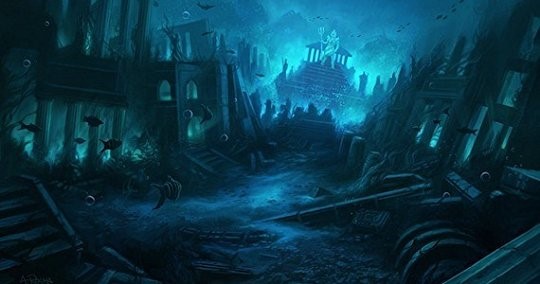
Mother Nature (and Mother Ocean) boast a far more inventive palette than I do. She inspired Aquarius to bloom in unexpected ways. Coastal kelp forests morphed into flashing, flickering jungles of electrified lightning-kelp, hostile places where mutant monsters prowled. Arctic seas, their ice floes melted by global warming, bobbed with artificial isle-bergs created by human scientists desperate to salvage polar ecosystems. Aquarian artists used biosculpting to craft living works of art with DNA, to decorate their reefs with flora and fauna that could sustain their hungry populations. Abyssal ocean bottoms hide lakes of brine so dense, salty, and concentrated that they refuse to mix with normal seawater, spawning their own submerged shoreline ecologies in the midnight zone. Vicious super-sharks and warrior Orcans wage savage battles beneath the waves, spinning and slashing and stabbing in their wicked, deadly dance. Wolf-eels evolve into dragon-eels; spider-crabs spin sticky webs between stalks of lightning-kelp; devilfish transform into nightmarish predators worthy of the name.
Don’t get me wrong: I still adore SF stories that transport readers to uncharted planets orbiting distant stars. I still crave that taste of alien worlds. But I’ve seen how mysterious and marvelous our ocean realm can be. Ours is a water planet. Seas cover more than two-thirds of its surface. We’ve done a far more thorough job of mapping the obscure corners of the Moon and Mars than we have of tracing the contours of our own seafloor. What’s down there? Better yet — what can we imagine lurking in the black abyss, slithering along the continental slopes, skulking toward the edges of unsuspecting human civilization?
I invite you to join me, and other writers of “sea-fi,” to find out!
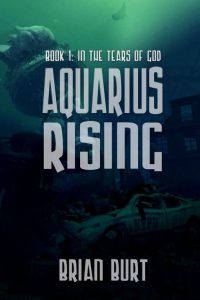 | 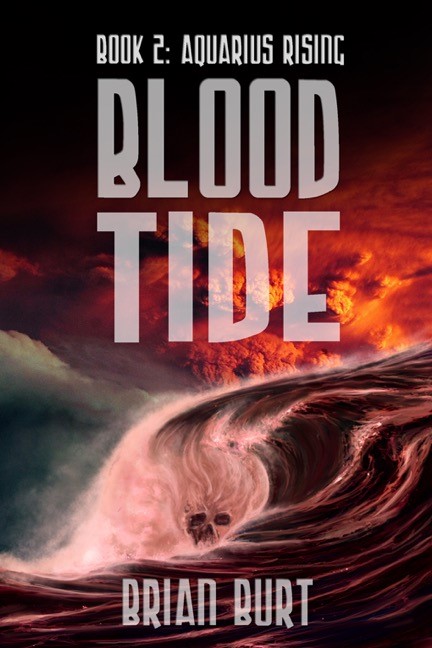 | 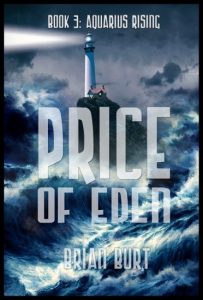 |
Brian Burt writes both short and novel-length speculative fiction. His short story “The Last Indian War” won the Writers of the Future Gold Award and was anthologized in Writers of the Future Volume VIII. His debut novel, Aquarius Rising: In the Tears of God, won EPIC’s 2014 eBook Award for Science Fiction. The sequel, Aquarius Rising: Blood Tide, won the 2016 Readers’ Favorite Gold Medal for Science Fiction. Book 3 in the trilogy, Aquarius Rising: Price of Eden, has just been released from Double Dragon Publishing. Brian’s no mariner — he gets seasick on amusement park water slides — but that doesn’t keep him from sailing uncharted waters in his mind.