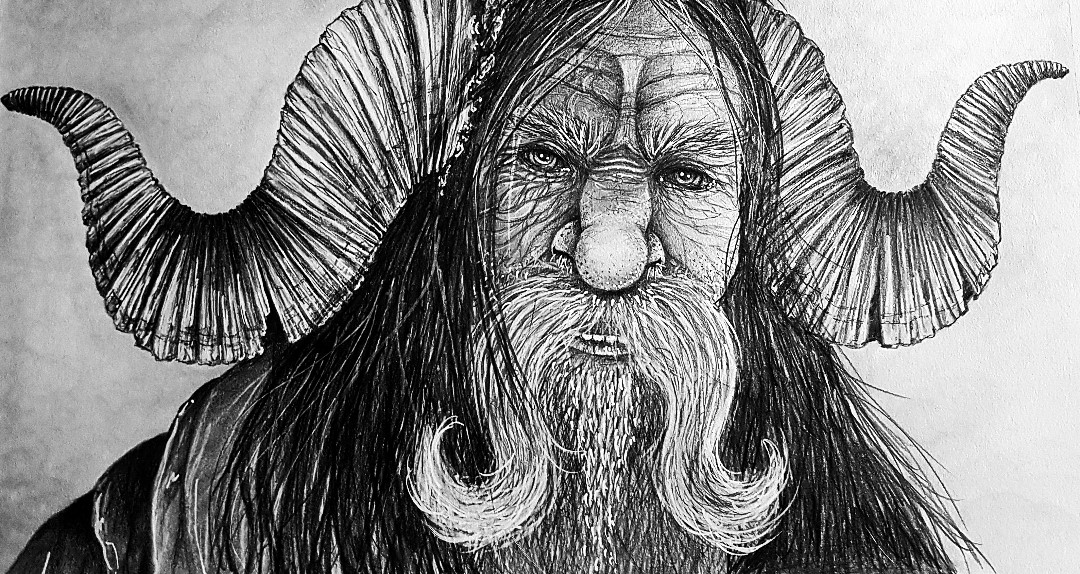
Launched at FantasyCon 2017 in Peterborough, Tyrant’s Rex features genetically modified beings in a post-apocalyptic future. In this book, we follow Mycul. Trapped by prophecy and uncaring family, he seeks revenge with the help of monstrous mordonts, a prince, an assassin, a necromancer’s daughter, and assorted strange personages and/or creatures.
The Blurb:
In a distant future where technology and fantasy intertwine, Mycul Zas, an idealistic young man cheated of his inheritance by his uncle, is thrust into a perilous world of betrayal, prophecy, and genetically engineered monsters.
‘Sent’ by his uncle to ‘see the world’ and find his missing father, Mycul soon discovers the depth of his betrayal when he is sold to a geneticist. Here he meets the mordonts, human monsters engineered millennia ago to be great warriors. With their help he escapes and vows revenge, not just for himself, but for his father, the mordonts, and against the oppressors that let this happen.
Torn between fate, loyalty, equivocal prophesies and the enmity of the Protector, he teams up with a one-handed assassin, an exiled prince, a scientist with a murky past, a drunken giant, and a necromancer’s daughter. Together they strive to overthrow a tyrannical regime and destroy the restraints of destiny itself.
Welcome to SFFWorld, Clint, what sets Tyrants Rex apart from other post-apocalyptic fantasy worlds?
I believe there are several unique things setting Tyrants Rex apart: the novel has an optimism about the survival of humans and the continuance of civilisation. It also has a positive message about the qualities of being human in the face of prejudice and how genetically modified humans like mordonts, deserve equality. What makes Tyrants Rex post-apocalyptic is that our environmental damage, even after thousands of years, shows little sign of recovery. Genetically modified plants have taken over vast areas and global warming has made our landscape unrecognisable but still there are people making a living and enjoying themselves.
Mycul finds himself a pawn in a battle between fate and prophecy. With all these elements seeking to control him, did you enjoy writing him?
Mycul’s character was the start of the novel. I gave him a timeline and jumped in as he was about to turn eighteen. At first I thought he might be a pawn in the plot but his character developed and I enjoyed seeing him progress to take control of those fighting for freedom. Mycul is more complex than the opening suggests and has his own demons, particularly his desire for revenge against his uncle and Ceelan, Protector of Faires.
How much of your chemistry background influenced your world building?
Chemistry shapes all our lives and has a place in my novel. The characters know our addiction to burning fossil fuels has caused irreversible climate change and sea-levels are much higher. On a more basic level the glass I imagined we develop in the future, is decaying, causing building failure. Sartesh of course is a scientist and re-inventor. He tells Mycul how to make hydrogen and several other useful materials. He always seems to have some knowledge of The Adee up his sleeve! He is Keeper of the Seventh Law of the Adee, after all and in charge of The Protector’s gold mine.
What was the inspiration behind the genetically modified mordonts?
I suppose HG Well’s The Island of Dr Moreau would be a start but I wanted a character which wasn’t human but had more humanity. The mordonts evolved slowly in my imagination. At first they were just conduits of the novel’s central prophecy but they developed into the frightening creatures which are, “more sinned against than sinning.” Of course a dictator like Ceelan would love to have an army of these creatures. They were bred for strength and to resist radiation. They also provided another link back to our times. I imagined what might happen if present genetic experiments were allowed to get out of control.
Do you have a favourite in Tyrants Rex; who do you wish you could have devoted more time to?
When I was doing the final edits, I thought what a fantastic team my characters make. I love aspects of all of them. Ceelan, being beautiful and evil, gets some good one liners but also has moments of vunerability. Tahoola’s unwavering resolution to become a gen of the army, despite having only one hand. Then there’s the Necromancer who is afraid of death. You’re making me nostalgic enough to start writing the sequel and that novel has to have more about Stazman and his mother, Irana Zem!
A key part of your world is re-invented technology. What lost tech would you re-invent and why?
There’s a point where Sartesh discovers recorded music. A solo flute ethereally plays over the machinery of an airship. That would be my reinvention— finding an archive somewhere. I’d have fun deciding the soundtrack! I also think people might realise they enjoy our music and gain a better understanding of our times as a result.
You have also written crime and poetry, which do you enjoy working in most?
My crime novel, The Geology of Desire was written, trying to connect geology and one man’s quest for a fulfilling life. It’s a stand-alone novel and I learned a lot about writing, editing and what happens after publication, as a result. Tyrants Rex couldn’t have happened without it and it made me focus on a genre I really could be enthusiastic about. I knew I wanted to keep the cast  relatively small and tell the story, primarily from one person’s point of view. When I’m writing the most important point, in my mind, is having something to say and some entertaining way of saying it through my characters. I’ve lived with the characters of Tyrants Rex for several years I guess what I’m saying is the last piece of fiction is always the one I enjoy the most. Seeing all those plans come to a conclusion and hopefully find an audience!
What was the first book that made you think “I want to be a writer”?
I’m not certain there is a single book. I started my writing career creating short stories for The Yorkshire Journal and The Weekly News, so the short stories of Somerset Maugham and Guy de Maupassant were early inspirations along with the novels of Ursula K. Le Guin and Stephen Donaldson. Walter de la Mare for his ghost stories and poetry must be up thereand there are others I’ve read along the way. One thing I’m certain of, I wouldn’t be here without the writing classes Daphne Glazer put on in Hull in the late 1980’s. She’s a formidable teacher, listener and editor. I love her short story collection, “Dressing Up” and her novels. She always said, “if you’ve got something to say then say it and don’t be boring!” I try to live up to her advice!
Thank you for taking the time to answer my questions Clint. Tyrants Rex is available direct from Stairwell Books, the publisher. You can find out more about Clint on his website here and follow him on Twitter.
*****
Interview by Shellie Horst – SFFWorld.com © 2017