Although it’s not quite October, here’s a review that we thought couldn’t wait as a precursor to our usual “Countdown to Hallowe’en.”, written by our Horror Expert Randy.
————————————
Horror has been penned by men and women alike, but it’s important to acknowledge that women have been contributing to the genre since its inception. As you’ll discover in the following pages, the horror genre that readers love today would likely be unrecognizable without the contributions of these women.
– From the Introduction
 “Horror: We use this term broadly. If it scares, if it horrifies, if it causes the creepy-crawlies, then to us it is horror. Horror fiction can involve supernatural elements, but it doesn’t always.”
– From the Glossary
How do you cover almost 400 years of women’s literary history in slightly over three hundred pages? Kroger and Anderson answer that question with a breezy, informal, informative survey in which most chapters focus on a specific writer starting in 1623 with Margaret Cavendish and proceeding into the early 2000s with Helen Oyeyemi. Authors covered include the famous, like Mary Shelley, Elizabeth Gaskell, Shirley Jackson, Daphne du Maurier and Anne Rice, but also many writers relatively unknown or completely lost to time: Regina Maria Roche, Charlotte Dacre, Margaret Oliphant, L. T. Meade, and Everil Worrell, among others. Those chapters are followed by five brief chapters devoted to more recent work and split between Lovecraftian fiction, haunted houses, vampires, serial killers, and the apocalypse. Also included are end notes, a list of suggested readings, indexes by subject and title, and a glossary of relevant terms.
Writer by writer, these thumbnail sketches of their lives and major work(s) make a compelling argument for the ubiquity of and influence on the ghost and horror story by women authors, an influence not always acknowledged in critical works. Kroger and Anderson follow their sketches with references to other relevant works by and about the given author and works of similar interest by other writers. For example, a brief biography of Daphne du Maurier (1907-1989) includes discussion of her novel Rebecca, describing it as “a Gothic tale with domestic horror at its heart,” then the authors extend their discussion to point out short stories like, “The Doll,” “The Birds,” and “Don’t Look Now,” (both story and the film based on it), as well as the novel, My Cousin Rachel, describing it as a precursor of works like Gillian Flynn’s Gone Girl. They continue, citing her Gothic romances, and end the chapter with a consideration of some works by Patricia Highsmith that might appeal to those who enjoyed “The Birds,” specifically, Highsmith’s “The Snail Watcher” and “The Quest for Blank Claveringi.”
Again, Kroger and Anderson do not skimp on less well-known writers; for instance, Marjorie Bowen (1885-1952). Bowen’s childhood reads a little like a character from a poor home in Dickens until the sale of her first novel, The Viper of Milan, became a best-seller. Kroger and Anderson cite her novel, Black Magic and her collection, The Bishop of Hell and Other Stories (recently reissued by Valancourt Press in connection with Monster, She Wrote), and single out her short story, “Scoured Silk,” remarking it “almost predicts the domestic themes of Daphne Du Maurier’s Gothic horror novel Rebecca.” Of works of similar interest, they suggest E. Nesbit’s “John Charrington’s Wedding.”
For any interested reader, this approach may have you creating a reading list almost from page one. While Kroger and Anderson are trying to rectify the obscurity of so many writers important to the genre, they are also enthusiastic readers pointing other readers with similar tastes to works of fiction they may want to know. Monster, She Wrote probably is not a necessary reference for long-time devotees of ghost and horror stories, though even they might enjoy dipping into it, but it would certainly be a useful tool in grade schools or colleges, and for anyone with a budding interest in or looking to learn more about the history of those works that led to the current state of the art or for readers with an interest in the writings of women. For myself, there was enough new that I find the book valuable and Kroger and Anderson able, entertaining guides.
2019 Bram Stoker Award(R) Winner for Superior Achievement in Non-Fiction
2020 Locus Award Winner for Non-Fiction
A 2019 Booklist Editors’ Choice in Arts and Literature
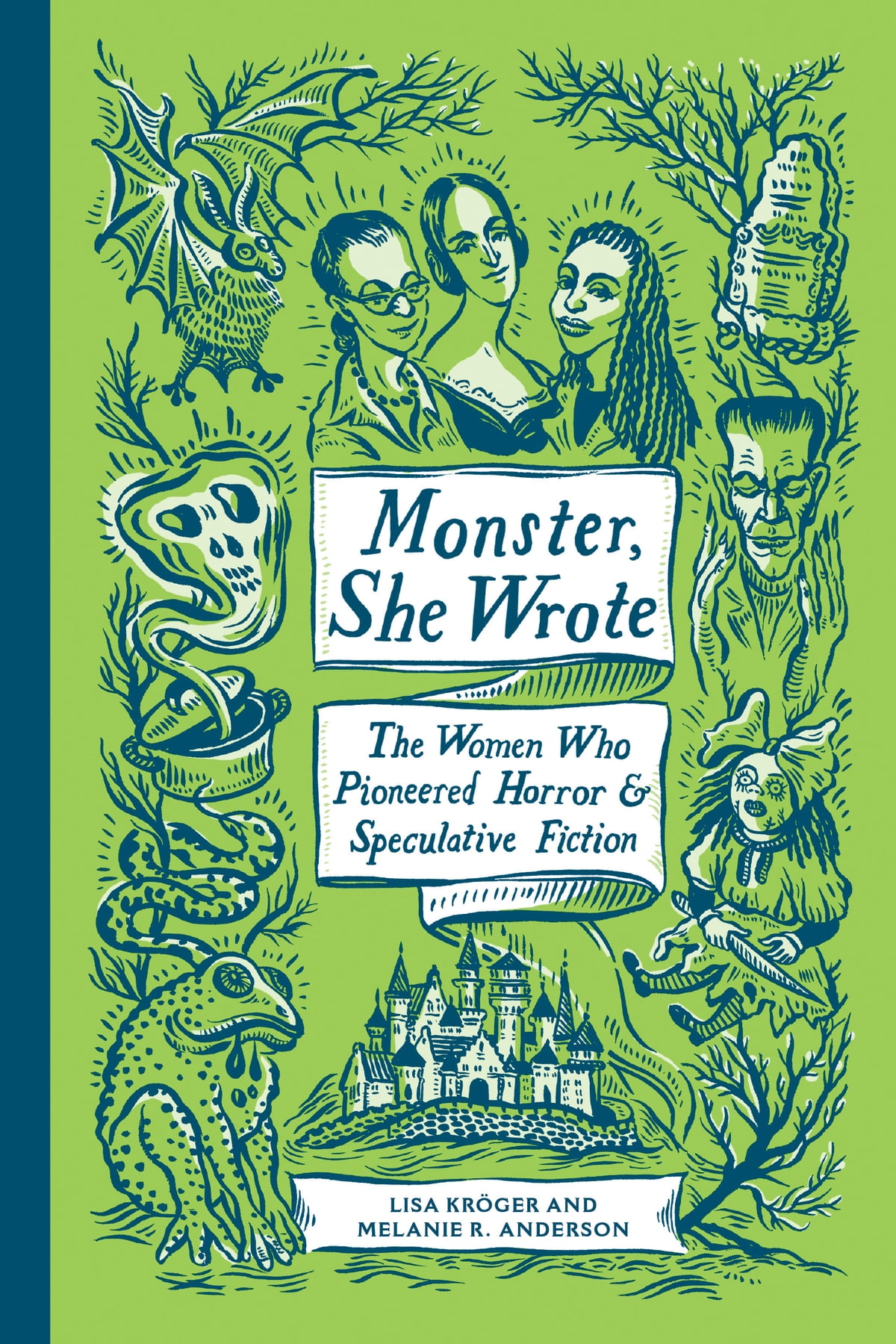
MONSTER, SHE WROTE by Lisa Kroger and Melanie R. Anderson
Quirk Books, 2019
ISBN: 9781683691389
352 pages
Review by Randy M. Money
Hope you enjoyed the early preview. There’s more like this to follow all the way through October!