
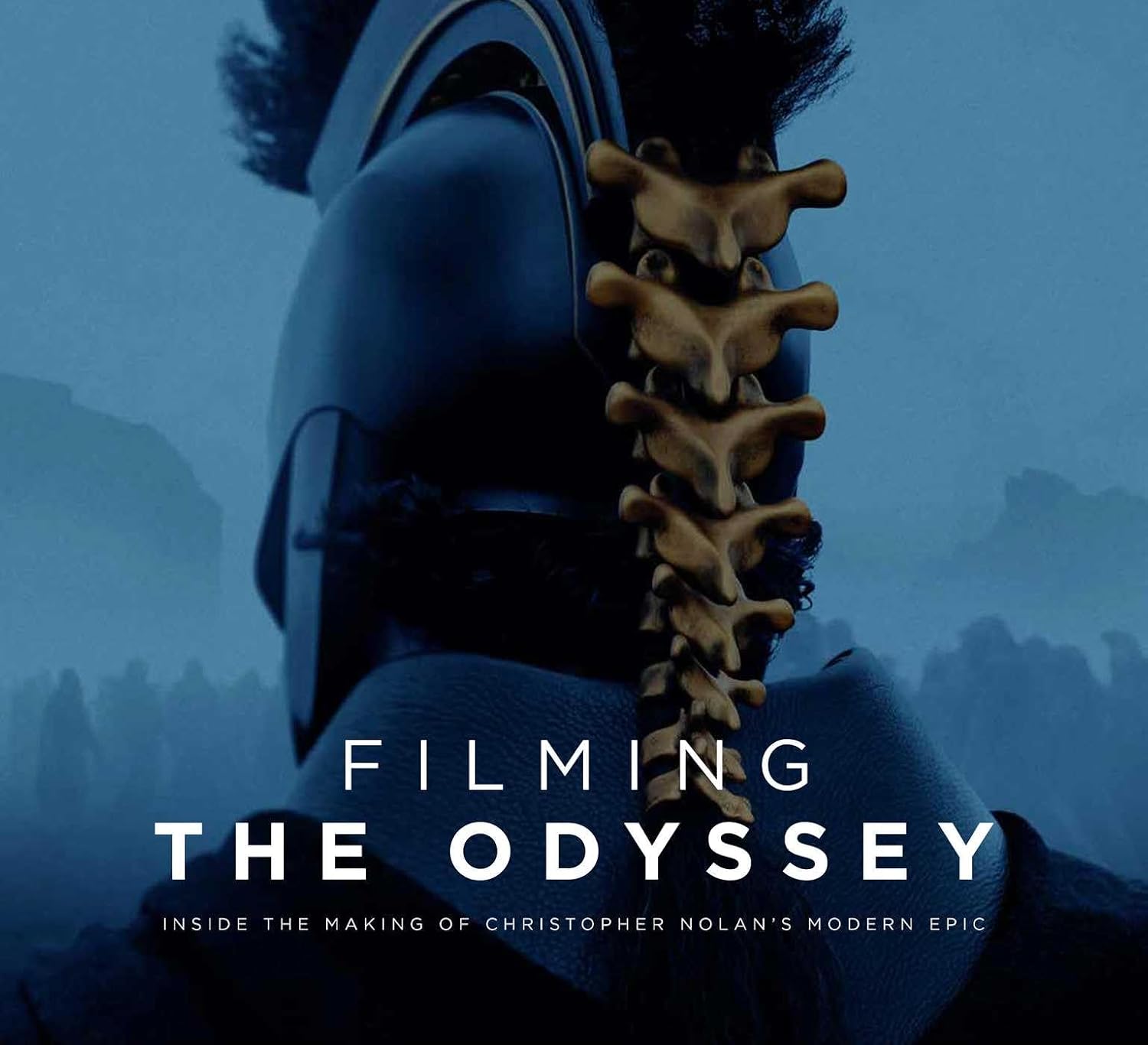
 One of the biggest movies of the year – and most anticipated – has undoubtedly been Christopher Nolan’s version of Homer’s The Odyssey. The reviews have generally been positive-often VERY positive- with praise being given for the film’s cinematography, its bold soundtrack and ensemble of actors. Though Nolan has not stuck strictly to the original source material, many have been impressed at the scale of the film and Nolan’s vision, although it must be said that some have criticised this aspect.
Personally, I thoroughly enjoyed it, and was impressed by its pacing over nearly 3 hours.
With all of this in mind, we have here the Art Book of the film. a record of the film’s concepts, director’s vision & visual imagery.
The book shows off this mammoth undertaking (over 2 years in the making.)
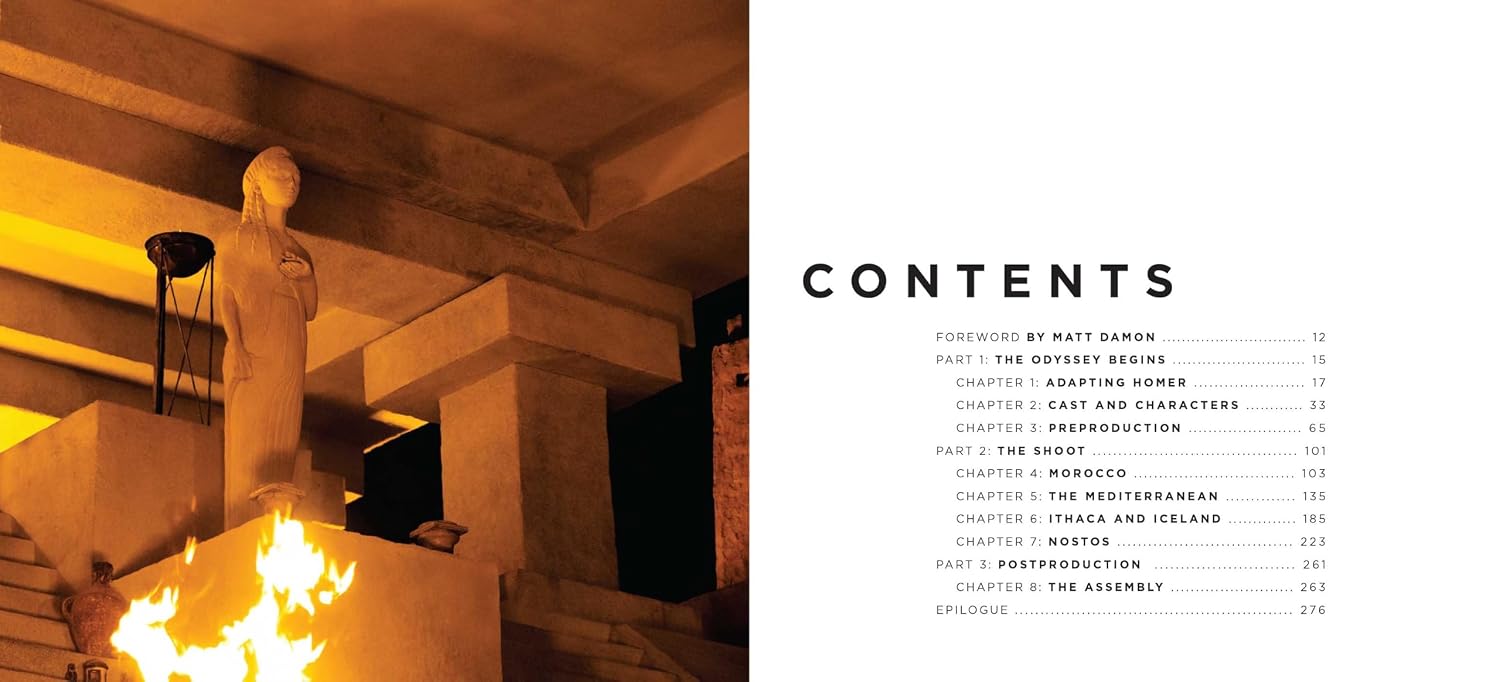
The text is split into 3 sections -The Odyssey Begins, which gives us details of the meticulous planning and Nolan’s vision before making the film, the casting and the characters; The Shoot, which looks at each location in Morocco, the Mediterranean, Los Angeles, Iceland and Nostos in Scotland; and Postproduction, showing details on how the film was edited sounds added and soundtrack completed.
An Epilogue summarises the reception after preview, with footage shown at cinemas in July 2025 with showings of Jurassic World: Rebirth“. I was shocked but impressed to find that the sound was still being worked on in March 2026, only a mere three months before the film was released.
In many ways, it would be easy to say that this ” Filming the Odyssey” book is typical of its type – it is big, a hefty and weighty 280 pages in a coffee- table sized book format, as is usually the case in such things. It is meant to impress, and it does.
But as well as that, the text, the images, the many, many interviews of the cast (I counted 15) feel like more than the usual. Most of the main cast – from Matt Damon (Odysseus) to Bill Irwin, the person playing the Cyclops – have been quoted by James Mottram here, as well as Nolan his producer wife Emma Thomas and many of the production staff to give a fuller picture of the making of the film. The range and detail of commentary gives more than just the usual homilies, although (unsurprisingly) there’s nothing too negative – it’s all rather polite, though not excessively so.
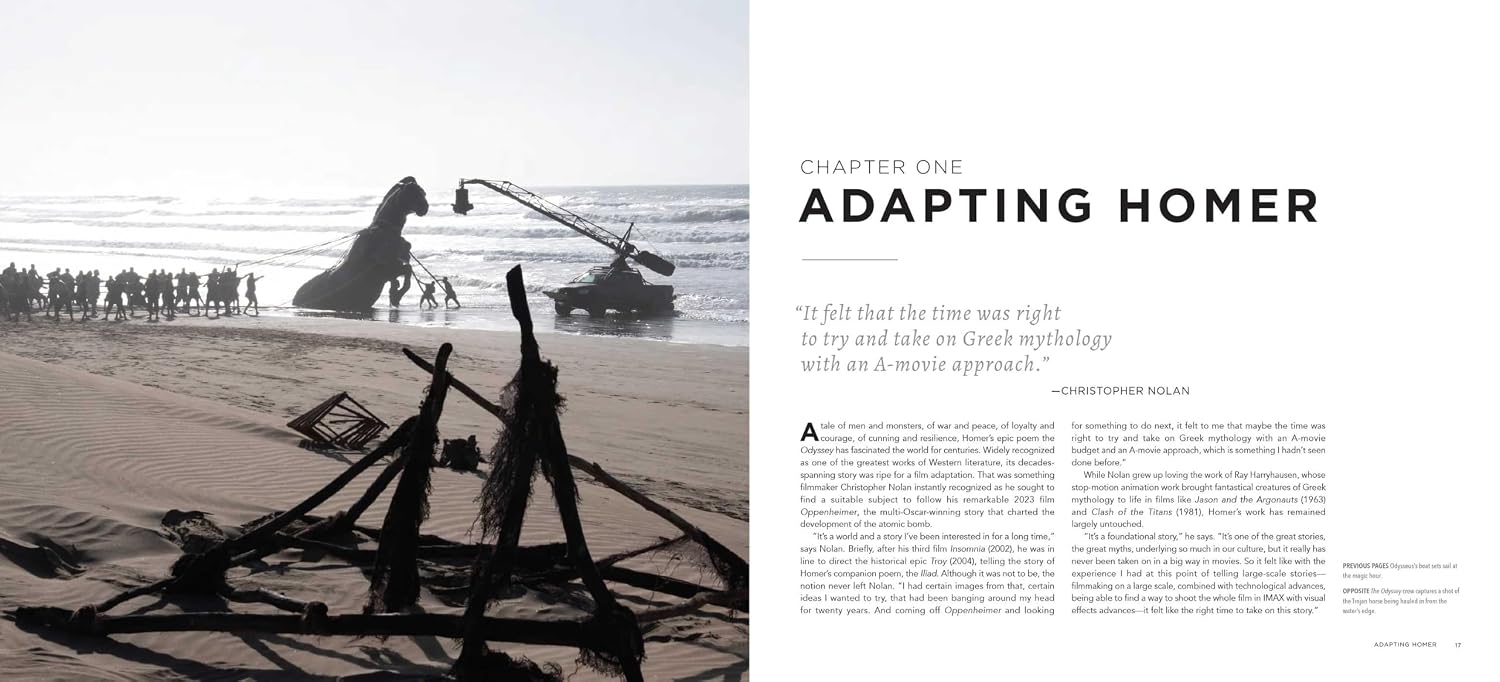
It is clear from the start that adapting Homer’s poems has been a long-time interest for Nolan. Bought up on movies such as Clash of the Titans and Jason and the Argonauts, it is very strongly put that he sees The Odyssey as a set of foundational stories, large-scale stories that need showing in a large-scale film, to which Nolan now feels ready for.
It was interesting to read that from the start Nolan felt it was important to balance the fantastical mythical elements with the human-created events, to show respect for the gods but keeping human relevance – after all, the gods have been looked at in detail in these older films.
Much of the book deals with Nolan’s determination to push himself after the success of Oppenheimer, mentally and physically.
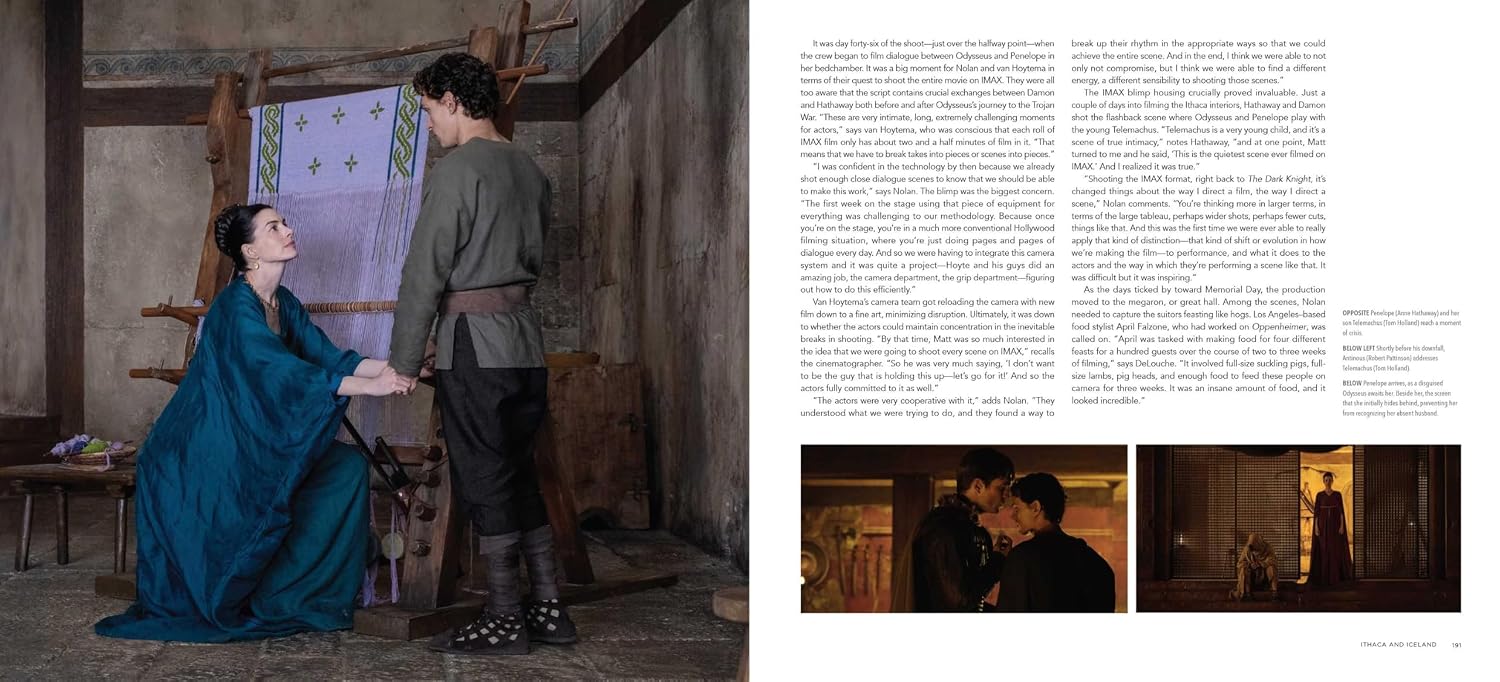
Filming it all in IMAX was a decision made from the start, but it was not without its challenges. For the production team, getting these cameras in place in often difficult locations was a big challenge. For the actors, performing with an IMAX camera was also different – Tom Holland for one – found it a bit of a shock as the IMAX cameras are so noisy to act against. As a leader in IMAX technology, the book explains Nolan’s development of ‘the blimp’ – sound proofing created around the cameras to reduce – but not silence – the cameras whilst filming.
When I wrote of the challenges in making Dune Part 2 in my review of the Dune Photography art book, the difficulties seemed problematic enough. This seems to be another level of difficulty.
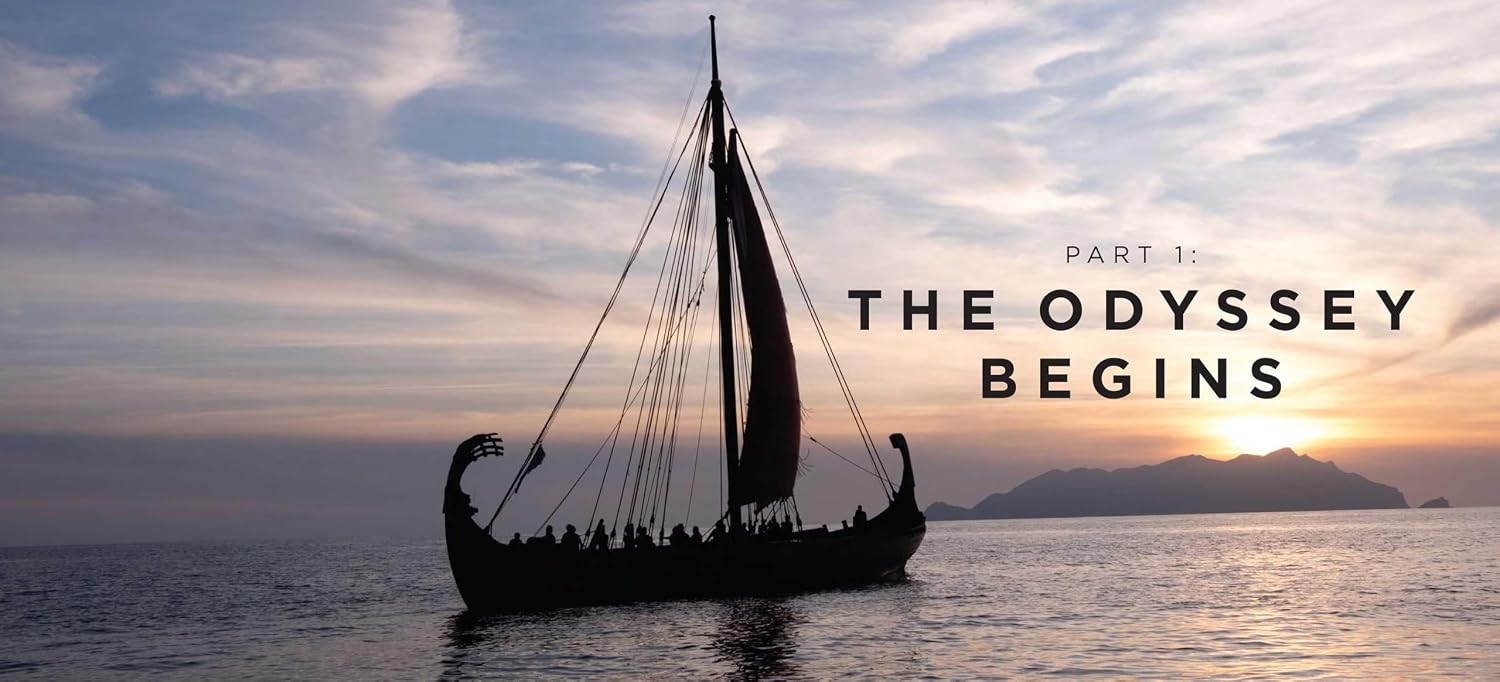
Such a challenge does have results, though. Most of all, page after page, I was surprised by the quality of the pictures from the film, you can see some here. Clearly the IMAX adds something in terms of detail and clarity, but the cinematography, by regular Nolan collaborator Hoyt van Hoytema, is some of the best I’ve ever seen in a film.
The book does go into the details of scriptwriting, casting, prop design, sound and location hunting in all of this time. It is clear that it is a massive collaborative effort.
Having seen the film, I am pretty sure that The Odyssey will be a defining film in many ways – the epitome of what can be done in film in 2026 and a benchmark for future epic films to look to as a standard.
I see it as this generation’s Lawrence of Arabia, Cleopatra, Ben Hur or Doctor Zhivago – a historical story, epic in scale and length, with visuals to be in awe of, and a surround-sound audio to enshrine it.
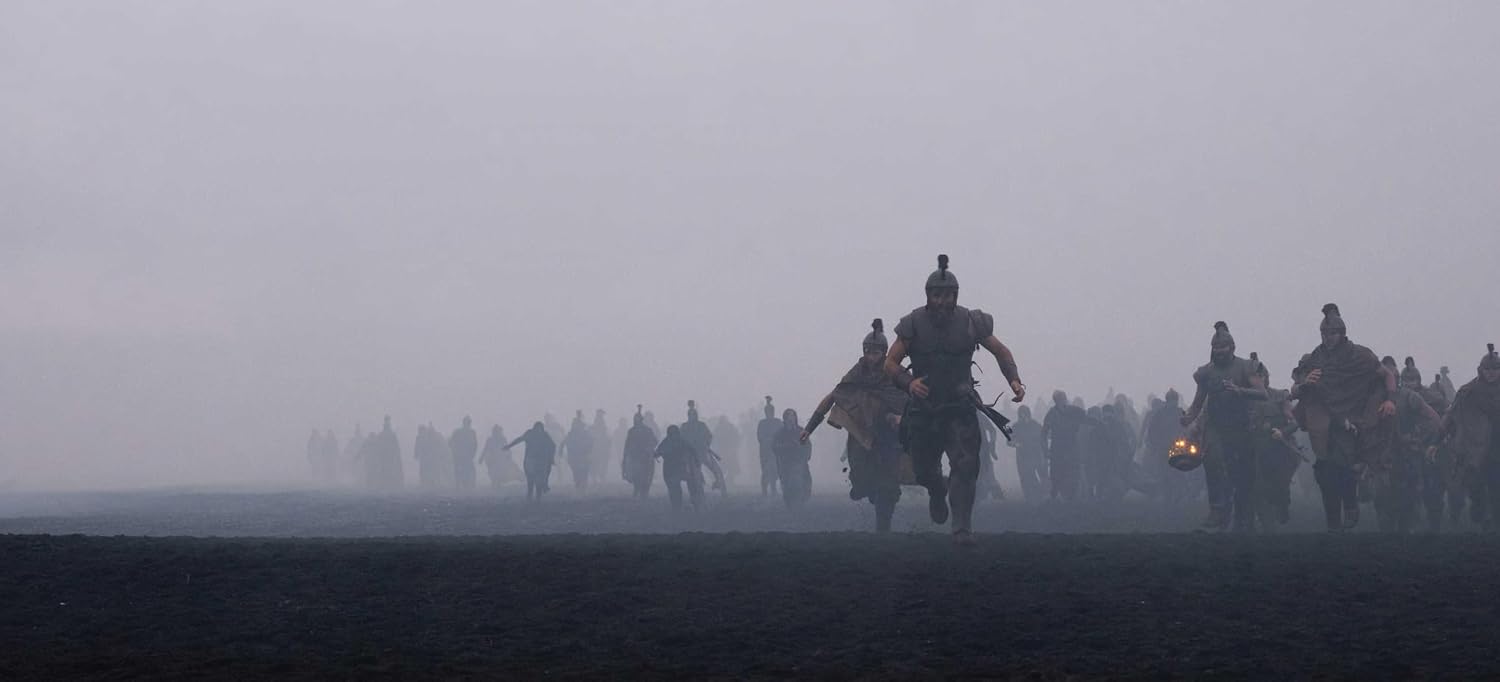
It seems fitting that this big luxurious, gorgeous looking book has been produced to go with the equally luxurious and glorious-looking film. At the end I was as impressed as Matt Damon in his Introduction by the efforts of all those involved, their dealing with the challenges faced, and the willingness of anyone involved to do the best they possibly could.
It suits the fact that this is Nolan’s most ambitious film to date, using different physical and digital techniques, determinedly- challenging narrative structures, technical challenges- the culmination of everything Nolan has done over the last 30 years.
It is simply one of the best books of this type that I have ever read.
© 2026 Mark Yon
Hardback | Titan Books
FILMING THE ODYSSEY: Inside the Making of Christopher Nolan’s Modern Epic by James Mottram
July 2026 | 280 pages
ISBN: 978 1835 419 403




This Norse adaptation of the Odyssey is not my thing. I will wait for a Mediterranean one, preferably a Greek as well.