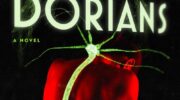
Today’s Countdown to Hallowe’en is a once near-forgotten novel that has been given a recent reissue:
… [A]ll our reactions must also have been to some extent unusual, because of the fact that almost everyone who might have been connected with the mystery was also connected with the medical school. Ordinarily, the very presence of a dead body is a deeply disturbing factor in community life. People in general cannot rest content until they have put a corpse out of the way, underground or in the crematory oven. […] New students sometimes get sick on their first day in the dissecting room. I did, I know. But it takes only a week or so to get thoroughly used to the working in a room full of mutilated dead bodies; presently you reach a point where you think nothing of holding a dead woman’s face steady with your foot, while someone saws the top of her head off. In such surroundings, the remains of violent crime do not seem quite as appalling as they must among good ordinary citizens.”
Laing presents his novel as a received manuscript, opening with a note from the “editor” which he initials and which concerns minor adjustments in presentation; following the note is an authorial statement of intent. The narrator is David Saunders, a student at the (fictional) Maine State College of Surgery in (fictional) Altonville, Maine. Saunders claims to have been involved with the events surrounding the disappearance of Dr. Gideon Wyck and with events after Wyck’s corpse was discovered. Feeling he knew too much and not sure who to trust, Saunders put his experiences to paper and sent it to the publisher with the aim of adding to it if he survived. Saunders is helped by Daisy Towers whose position as one of the college’s switchboard operators gives her access to secrets without which Saunders would have floundered. As is, he flounders quite a bit even with her crucial help and counsel.
Wyck was a hard, demanding professor, unpopular with students, staff and townies, impatient with small mistakes, unforgiving of breeches of conduct, except his own, and not kind to those he considered fools: For instance, Saunders witnessed Wyck taunting a patient, Saunders’ landlord, Mike, whose arm Wyck had recently amputated. Playing on Mike’s superstition, Wyck terrifies the man by claiming he will be beset by demons trying to extract his soul through his stump. Later we learn there’s a question as to whether the amputation was necessary or just fit well into Wyck’s teaching schedule.
Everyone at the school acknowledges Wyck’s surgical prowess and attributes to it the reason the administration has tolerated him so long but Dr. Manfred Alling, President of the school, has another reason for overlooking Wyck’s behavior: Wyck’s scholarship in the area of demonology and his extensive library on the subject dovetails with Alling’s studies of monsters, which within the novel conforms to the Oxford English Dictionary definition, “a congenitally malformed or mutant animal or plant.” Saunders summarizes a published paper by Wyck, “… offering modern diagnoses of the symptoms legally recorded in some of the old witchcraft trials .… [citing] authenticated instances of the occurrence of extra nipples and breasts on bodies otherwise normal, and of the mental effects resulting from efforts to conceal these deformities from the world. He demonstrated, with what seemed to me perfect logic, that persons bearing such stigmata considered themselves set apart from mankind in general, were unusually susceptible to occult beliefs, and frequently expressed a grievance against their Creator for having failed to make them ‘in his own image.’”
More disturbing, their researches are helped along by several stillbirths in the vicinity of the school and its adjacent teaching hospital, the stillbirths displaying unusual features that would classify them as monsters.
On the night of Wyck’s disappearance Saunders sees Wyck ride off in a strange car and even tries to follow, but loses him. Coincidentally he’s also present when Wyck’s body is found. Among other reasons, these place him under suspicion and makes it both imperative and difficult for Saunders and Towers to investigate on their own.
In the contemporaneous novels To Walk the Night and The Edge of Running Water, William Sloane approached the weird science mystery from the direction of science fiction/weird tale; Laing approaches it from the direction of a mystery novel and in the manner of mysteries from the 1930s there is a great deal of incident offering numerous red herrings. This becomes a weakness when trying to sustain narrative momentum and there are other weaknesses, too: The characters are mostly types rather than individuals, some of the action feels a bit attenuated and unnecessary, and for readers looking for the macabre, the mystery is solved through relatively mundane means which toward the end dampens the weirdness.
Still, another element makes this novel feel a little more contemporary. In looking around the web I have yet to find any extensive, detailed summaries of The Cadaver of Gideon Wyck, and none mentioning the importance of Daisy Towers, whose intelligence and spunk solve the mystery. Cadaver becomes, then, a weird murder mystery in which an innocent man scratches and claws his way to a solution before mistakenly accused of the crime (John Buchan’s The 39 Steps, for instance); but in this instance is saved by the smarter woman. Daisy becomes incrementally more important as the novel proceeds both as researcher and as detective and that is rare in the mysteries – or other genre works – I’ve read written by men from the time period.
For a nearly forgotten book, Wyck has acquired a fair reputation, enough so that Valancourt Books reissued it last year (keeping the beautifully macabre Lynd Ward cover). In the 1980s Karl Edward Wagner included it in a list of the thirteen best science fiction horror novels which he provided for Twilight Zone magazine, and somewhat later Robert Bloch chose it for Stephen Jones’ Horror: 100 Best Books. Bloch states he had not read the novel in years and could not at that time find a copy to reread. While his brief explanation of choosing the novel is tentative, it’s easy to see what appealed to him: A murder mystery beset by outré circumstances and motives, in a setting chock full of cadavers, involving a possibly mad doctor and maybe two, two other men driven mad by their circumstances, another murder, secret experiments, odd pregnancies, a hidden underground laboratory, demonological research, and a few scenes that may have anticipated some of Bloch’s own, and all written in the language of the time. Add to the brew a pair of sleuths who could have competed with Agatha Christie’s Tommy and Tuppence for cuteness, Laing’s ability to somehow keep the novel grounded enough not to squash my willing suspension of disbelief, and in spite of its flaws I remained interested and entertained to the end. Read in the spirit in which it was written and with an understanding of how the fiction of the time worked, this is an enjoyable and sometimes grisly romp.
Other Mysteries from the 1930s-‘40s of similar Interest:
Night Has a Thousand Eyes & Black Alibi by Cornell Woolrich
The Screaming Mimi by Fred Brown
The Burning Court by John Dickson Carr
Films with a similar feel:
Dr. X (1932; dir. Michael Curtiz)
The Mystery of the Wax Museum (1933; dir. Michael Curtiz)
The Black Cat (1934; dir. Edward Ulmer)
Share this post: on Twitter on Facebook on LinkedIn