
The influences on a writer are many and varied. Here Stephen shares 4 books that have influenced his writing.
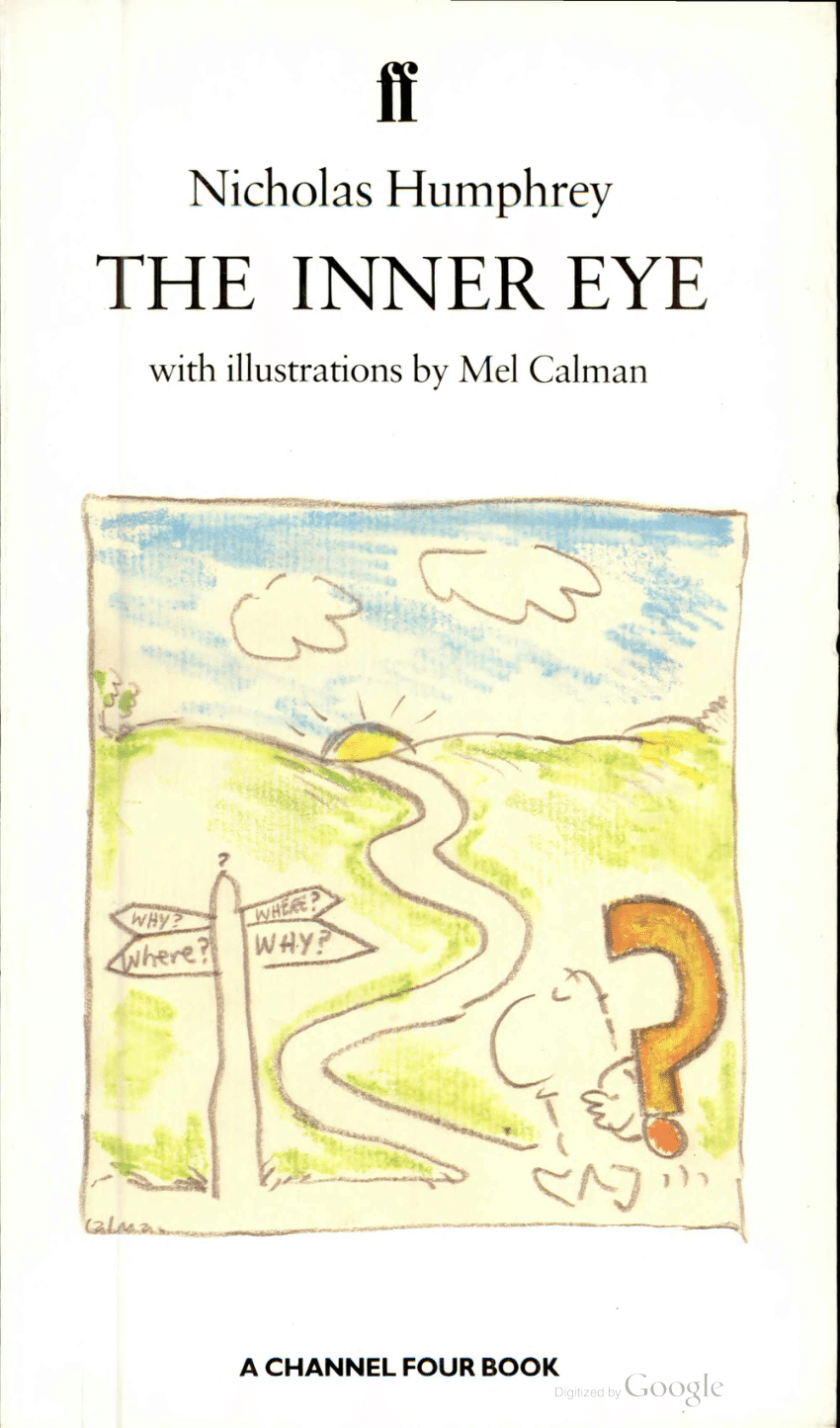 In 1986 I was lucky enough to watch the complete first television broadcast of Nicholas Humphrey’s The Inner Eye, which introduced his social intelligence theory of consciousness. It was an extraordinary series, which recently appeared on YouTube on the author’s own channel. Simultaneous with the television series came the book, which I bought pretty much as soon as I grasped how exceptional the programmes were. The book asked some fundamental questions: What is human consciousness? How did it evolve?
Nicholas Humphrey’s answer to the main question is very much set in the landscape of evolution. He says consciousness – the inner eye – allows us to feel and to understand what it is like to be ourself, and, crucially, to be somebody else. In other words, via our inner eye we use ourselves as exemplars to understand the behaviour of others. Tens, and probably hundreds of thousands of years ago that behaviour was becoming very complex, as the social life of our ancestors mushroomed into something never before seen on the planet. Consciousness was the unique evolutionary response.
Alongside Erich Fromm’s The Sane Society this book was a launching pad for my own thoughts about consciousness and the human condition. Nicholas Humphrey is still writing remarkable books, and every one of those I can recommend.
*****
 Published in 1955, The Sane Society was the first of many of Erich Fromm’s books that really had an impact on me. I bought my precious second-hand Routledge copy around thirty years ago, and it still smells of damp second-hand bookshops…
Fromm wanted to develop what he termed a humanistic psychoanalysis. He envisaged society as insane: he wanted to make suggestions for a sane society, hence the title of the book. But it was chapter three, The Human Situation, that most forcefully struck me. In it Fromm proposed five fundamental human needs that “stem from the existence” of human beings. They were Relatedness vs. Narcissism, Transcendence – Creativeness vs. Destructiveness, Rootedness (which he summarised using a psychoanalytic term), Sense Of Identity – Individuality vs. Herd Conformity, and Frame Of Orientation – Reason vs. Irrationality. This idea that the human condition could be deduced from the actualities of our existence was an extraordinarily strong concept to me.
At this time I was also reading the books of Nicholas Humphrey, and soon a template emerged in my mind: it should be possible to make scientific progress on the matter of consciousness rather than use faith-based assumptions, and it should be possible to tie in that progress with the actualities of the human condition, the things we all experience in our lives, like emotion, love, perception of time, identity, meaning-framework and so on.
Not only should it be possible, however, it is the only way humanity is going to overcome its myriad of problems at source. For as long as we don’t understand why religion has such a strong hold over us, we won’t overcome it. For as long as we don’t understand the dynamics of emotion, we won’t understand ourselves and our reactions to world events. A full understanding of the human condition is the prime necessity in my opinion for permanent human progress to a peaceful, authentic future.
*****
 In my twenties I spent a lot of time in second hand bookshops, where I hoovered up works by Nicholas Humphrey and Erich Fromm, amongst many others. Dorothy Rowe’s books were placed in the same section, and so it was inevitable that I discovered her in the end.
An Australian by birth, Dorothy Rowe first worked as a teacher and child psychologist before arriving in Britain in her forties. She spent much of her subsequent time working with depressed patients, and came to reject the medical model of mental illness, instead working within personal construct theory. Part of recovering, Rowe said, is accepting that the external world is unpredictable and that we control relatively little of it.
Beyond Fear, the first Rowe book I bought, was published in 1987. It comprehensively sets out the various reasons why fear – whether consciously felt or not – affects our lives, and what the behavioural consequences are.
I’ve now read many of Dorothy Rowe’s works, but this one had the most to offer when I was a younger man. Its insight regarding the human condition was an eye-opener to me. As Fay Weldon pointed out in her cover comment, “Dorothy Rowe shows us the path to personal and political, if only we would take it.” For compassionate humanity too, Rowe is exceptional; her compassion shines out of every sentence.
Readers of my Factory Girl trilogy will note that those three books are dedicated to Nicholas Humphrey, Dorothy Rowe, and Erich Fromm in memoriam. These three thinkers were my main influences as, many years ago, I began pondering the world around me.
*****
 A later influence was a book by the noted thinker on religion Karen Armstrong. This one slim volume called A Short History Of Myth had a particularly strong effect on me when I discovered it by chance about a decade ago.
The book opens with a chapter on the nature of myths, before, with extraordinary clarity and insight, showing the metaphors and meaning of Palaeolithic mythology, Neolithic mythology, the myths of early civilisations, of the Axial Age (800BCE – 200BCE, when major world religions were developing) and of the Great Western Transformation, i.e. the Enlightenment and beyond.
For sheer clarity of thought this is one of the most remarkable insights into how human beings, through their most profound stories, have tried to grasp the world in all its ineffable complexity. Yet it is so much more – an attack on the logos-founded Western world, a view of the deepest human need for meaning, and an explanation for the hold exerted on much of the world by the three Abrahamic religions.
This book has inspired themes in a number of my recent novels, most of which deal with moral issues, issues of religion, or other ethical considerations.
Thank you, Stephen!
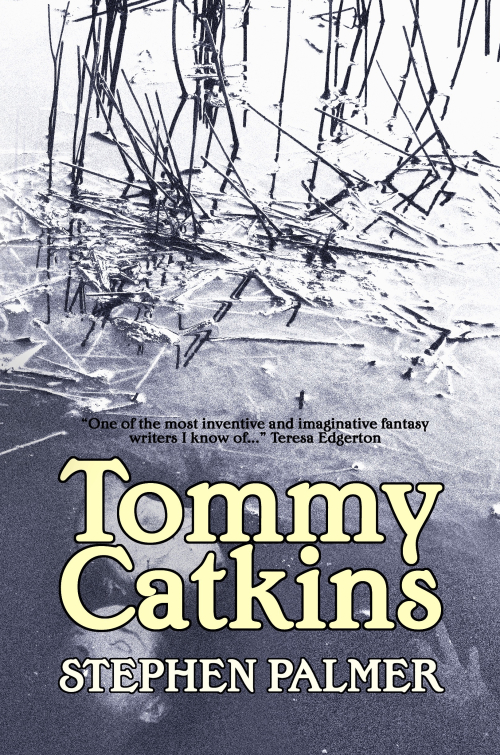
Stephen’s latest novel, Tommy Catkins, is out now.





Is Fromm’s idea of Having vs Being on a different level then Relatedness vs. Narcissism, Transcendence – Creativeness vs. Destructiveness, Rootedness (which he summarised using a psychoanalytic term), Sense Of Identity – Individuality vs. Herd Conformity, and Frame Of Orientation – Reason vs. Irrationality.
Hi Robert, apologies for the delay, I only just noticed your comment!
Fromm’s Having vs Being is a summation of all his thoughts on the modes of being in which humans can find themselves. He wrote his book “To Have Or To Be?” about 20 years after “The Sane Society,” and at that time he knew he didn’t have many years of life left. I would say the chapters in the latter book go deeper into his theories, whereas the latter book – the last major work of his life – is more general. Both, of course, I’d say are required reading!