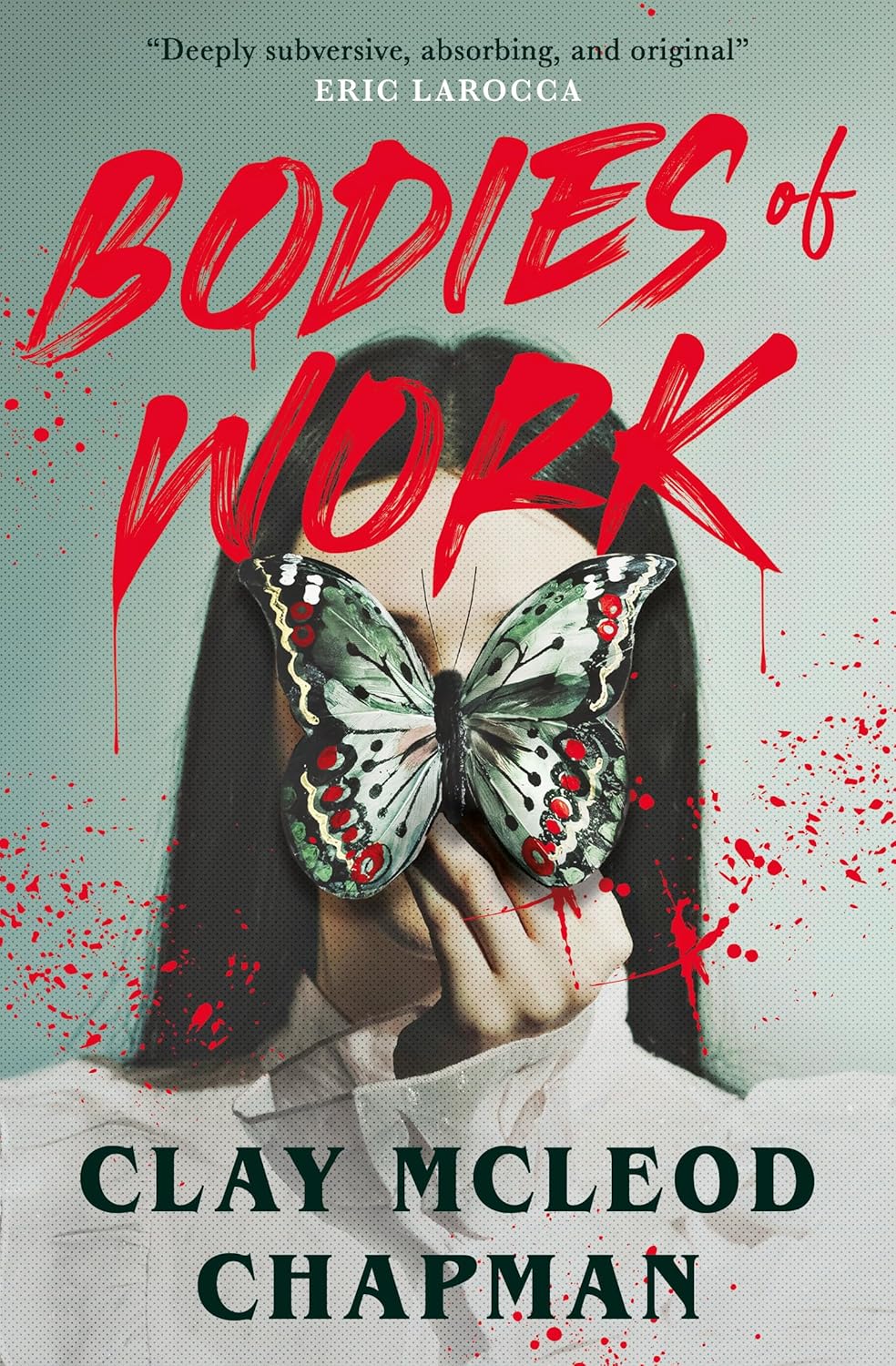
Clay McLeod Chapman is at a critical mass with his output, staying current with his novels, stories, and books is enough to keep one horror fan busy… and because he’s so damned good, satisfied. Case in point, his novella/short novel Bodies of Work, which examines a serial killer through the lens of his victims. How? Well, his victims aren’t necessarily absent (they might be dead, sure, but they are alive enough in this story).
At sixty-six years old, Winston Kemper has always been a nonentity. No one notices him. His simple existence barely registers for those who come into contact with him. Some call him feeble-minded. He is a janitor at the local church, a groundskeeper by default, and that’s it. No friends, no family. When he’s done with work, he returns home—a remote, single room apartment located above a garage—and that is where his true work begins.
Winston Kemper is a collector of voices, and his magnum opus—The Butterfly Girls—is a sprawling epic of untapped imagination. It has no single canvas, no particular frame. It is everywhere—scribbled on the walls, the floor, and countless notebooks.
Winston is creating a fantasia which exists in words, images and blood. As part of his ‘art’ he has been murdering forgotten women. Poor souls who slip through the cracks of society, who no one’s looking for. Mothers, sisters, daughters to someone, but no more.
Winston takes their lives, their voices.
But now he can hear them. They whisper to him. They talk of revenge.
Winston Kemper might not believe in ghosts, but he is about to learn they are very real. And they are very, very angry.
Wilson Kemper is a janitor at a church, a nomad of sorts going from place to place to sleep and settle in. He finds a small apartment for rent above a family’s garage and this is his second “workplace” where he is truly himself. He is creating a great piece of art using the dead girls he’s murdered, which he calls “butterflies.” Although their bodies are kept in old steel drums, they presence comes through in the story as they narrate a large portion of the story. They’ve lost their identities, but they have a unified goal, they want to free the slave children of an imposing empire in the Neverland. The narrative builds at a propulsive rate because these “butterflies” know a new girl will be joining them. In other words, they know Kemper is going to kill again.
This is a fascinating novel and Chapman’s continued ingenuity in the stories he tells and HOW he tells his stories is something to behold. The man has a gift for storytelling, for crafting characters and putting them in unique, dark scenarios. These victims interacting with each other and being supportive of each other gave this short novel so much heart. Their journey to take down these “slave masters” made for a short, powerfully emotionally-charged journey.
Alternating between the “butterfly girls” narrative is Kemper’s upbringing, which shaped is twisted, murderous nature. Connecting the narratives is of course Kemper himself, but the potent imagery and symbolism Chapman conjures. Talismanic objects like sewing shears and gas masks and the butterflies themselves. Through the girls, the Neverland seems alive through the small bits we see and absorb.
Chapman calls out Henry Darger in a short homage before the novel starts. Darger, like Kemper, was a reclusive individual and janitor, a true outsider artist known for creating what is considered the longest novel ever written (with the longest title, as well: The Story of the Vivian Girls, in What is Known as the Realms of the Unreal, of the Glandeco–Angelinian War Storm, Caused by the Child Slave Rebellion) shortened to In the Realms of the Unreal. The story concerns a rebellion to destroy child slavery like Kemper’s story. However, Darger wasn’t a murderer. Not called out is Kemper’s name… Edmund Kemper is one of the more famous serial killers in American history and a featured “character” on the brilliant, but short-lived Netflix series Mindhunter. In other words, Chapman does the brilliant thing of taking two things that might not be connected and creates something singular and genuinely fascinating.
Time and time again, Clay McLeod Chapman unleashes his horrific, powerful storytelling into the world. Each story is something unlike his previous work or much of the horror out there, but each novel/story is true to both his gifts as a tale-teller and horror as a whole.
Highly recommend.
© 2026 Rob H. Bedford
Hardcover | Titan Books
April 2026 | 176 Pages
Excerpt: https://www.fangoria.com/bodies-of-work-exclusive-cover-excerpt-reveal/
https://www.claymcleodchapman.com/
Review copy courtesy of the publisher, Titan Books