Here’s one from the SFFWorld Archives that seems to have disappeared! Originally written in May 2009, it is the first of my ongoing reread of Heinlein’s novels, through the Virginia Editions.
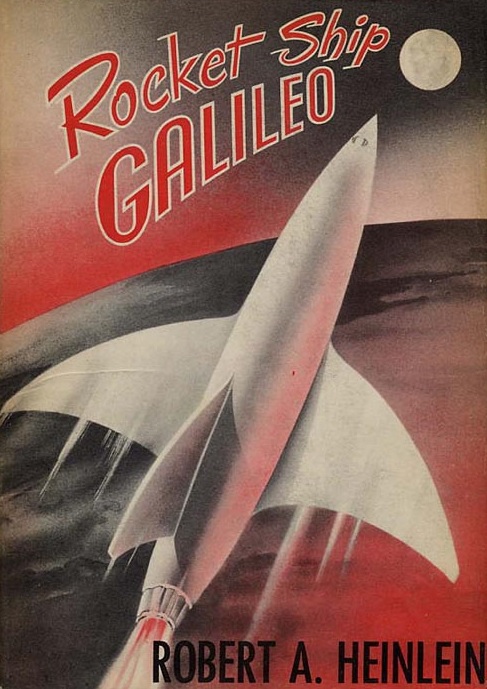
Rocketship Galileo by Robert A Heinlein
First published 1947 by Scribners;
NEL Edition (1980) 159 pages, ISBN Number: 45049795
Rocketship Galileo was first published by Scribners in the US in September 1947. The first of Heinlein’s twelve so-called ‘juvenile’ novels for Scribners, and one of the first SF novels not to be published first in the usual pulp magazines, its purpose was to create a book that boys would be interested to read.
With its format inspired by the Tom Swift novels – genius inventor (or, in this case, scientist) and his young protégés create a new invention that leads to exciting adventures – the plot line of Heinlein’s novel was pretty basic stuff. In a nutshell, three boys (Morrie, Art and Ross) with the help of their adult ‘Uncle’ Cargreaves, (conveniently an atomic engineer), test, build and fly a rocket to the Moon. Upon their arrival they find that the Nazis have got there before them and that they must fight for their lives on an unexplored world.
With such an outline, it is perhaps no surprise that a lot of the tale is basic wish-fulfillment and teenage empowerment. It is no coincidence that it is the boys who, with their enthusiasm and pluck, get the deed done, whilst the adult has a crisis of confidence about the mission and the pressure of responsibility for his young charges. It is their inventiveness and zeal that sees them land on the moon with a jury-rigged spaceship that these days would have been buried with paperwork and legislation before it ever left the ground.
Admittedly the thought of teenagers freely handling atomic spaceships and highly radioactive substances is these days a little scary, not to mention their proficient use of guns, though it is clear here that these are more than just ‘any’ boys. Their backgrounds in engineering, physics and science, as well as their adherence to scientific method, installed through the High School Science Clubs, mean that they ‘can do’, perhaps more than most. They are models of excellence, to aspire to, rather than be the ‘boy next door’.
The book is slim, presumably in order to cater for its audience’s limited time availability, possibly due to the paper shortages post-WW2, or perhaps just because that’s how long juvenile books were in the 1940’s. In these days of doorstep trilogies, it is a refreshing change.
So too is the linear narrative. None of that ‘telling-the-tale-from-other-viewpoints’ malarkey. Here the story is clear, sharp and straightforward. The emphasis is on action rather than ruminance, (though there is some of that, when emphasizing the isolation of the space travellers on the Moon.) The downside of this is that the characterization is a little flimsy and limited in its range. But then, a ‘deep’ novel was never Heinlein’s intention here, although Heinlein did try on the whole to make his stories scientifically accurate and on the whole, quite possible. As RAH wrote in his letters (recapped in Grumbles from the Grave, ‘…(Rocketship Galileo)…contains two conventional deviations from what I believe to be reasonably possible; I have condensed the preparation time for the trip and I have assumed that four people can do work which would require more nearly forty. Otherwise, I regard the techniques used in the story, and even the incidents, to be possible, albeit romantic and in some aspects not too likely in detail. But I do expect space travel and I expect it soon.) and as such, a plot with a fast-paced, linear storyline is still surprisingly successful.
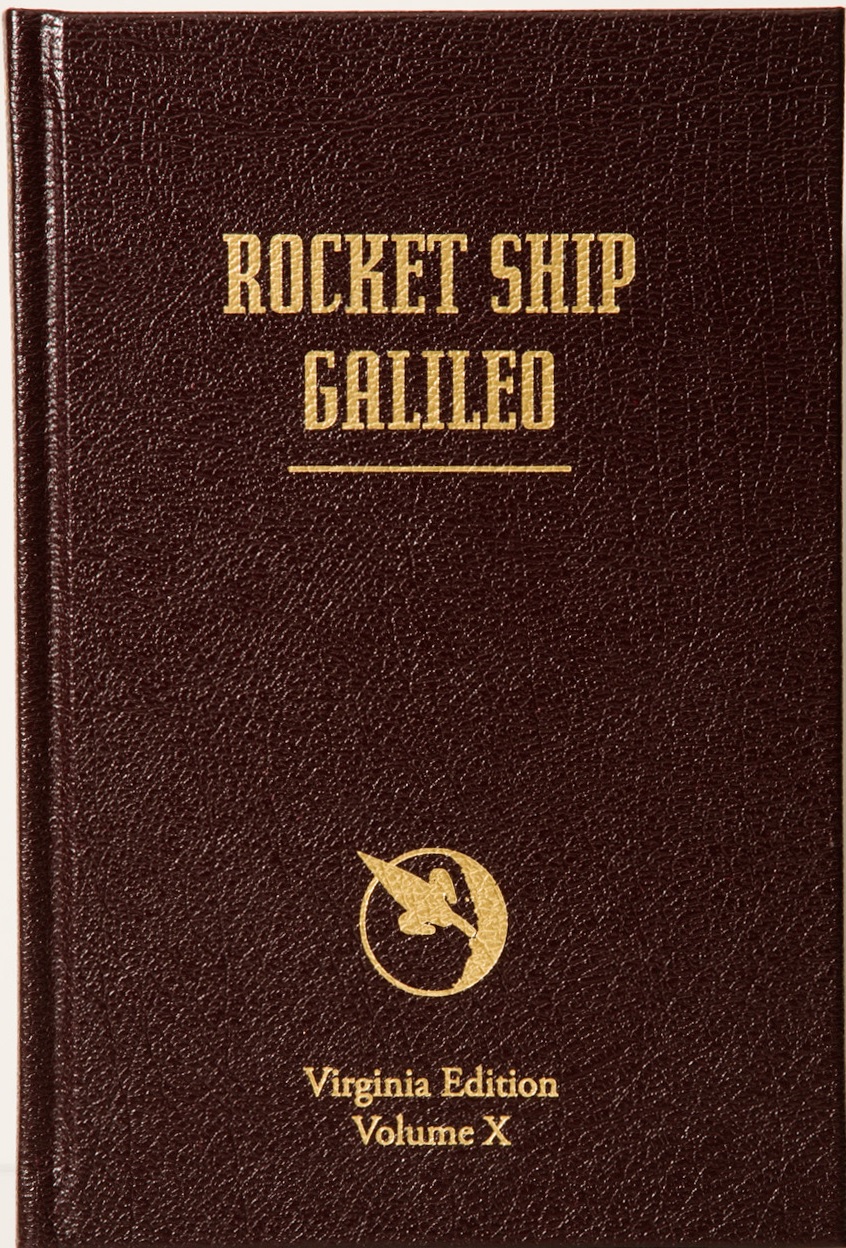
At the end of this read what the book did most for me was highlight a point in time not only important in SF terms but also globally. Heinlein’s tale reflects and involves itself with both the history and the future of the world as seen from a post WW2 viewpoint – a new world order after the destruction and chaos of the Second World War, an acceptance of new technology (albeit with some concerns) an re-establishment of cultural and social norms after major change and perhaps, most of all, an unbridled optimism for the future. Here, more than any other time towards the 21st century, do we have the beginnings of the can-do attitude, the belief that we can make things right and anything is possible.
And despite all the weaknesses (which also show how far SF has developed in the last 50 years) the book still has a fascinating and infectious positivism about it.
Mark Yon, May 2009